What to Do If Your Tennessee Dog Meets a Snapping Turtle
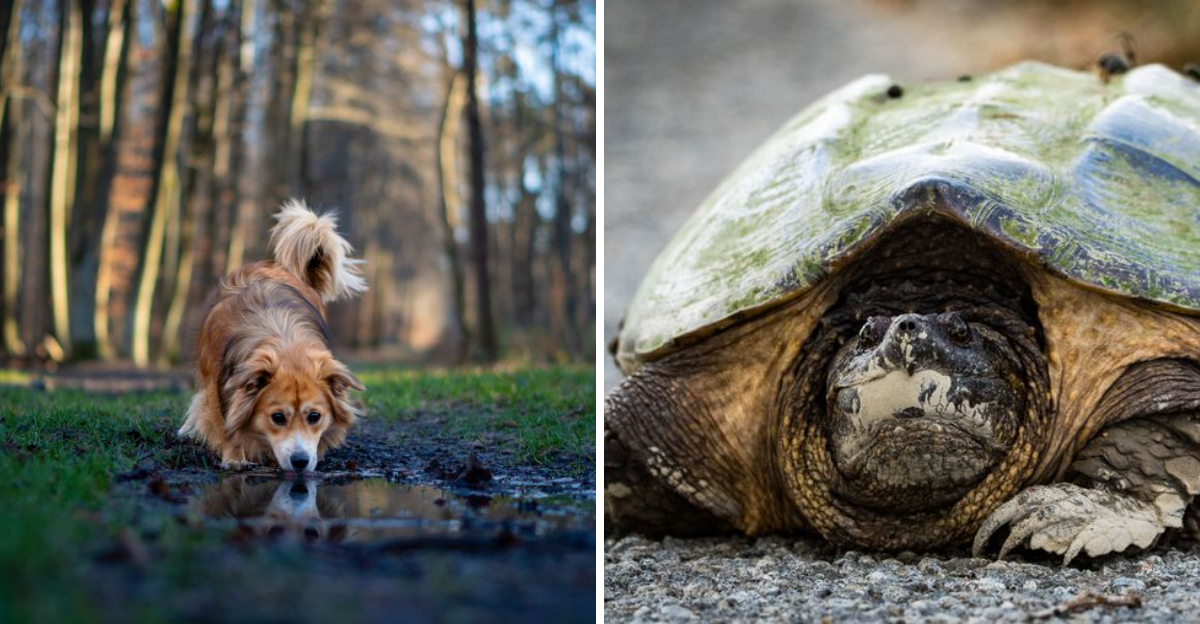
If you walk your dog anywhere near Tennessee water, you will eventually cross paths with a turtle. The state is full of ponds, creeks, lakes, and marshy edges, and snapping turtles are a normal part of that landscape.
Most of the time, they are simply traveling from one water source to another, especially in late spring and early summer when females may be looking for nesting spots. They are not hunting your dog or actively seeking confrontation.
Still, a snapping turtle that feels cornered will defend itself, and a curious dog nose is exactly the kind of thing that can trigger that response. The good news is that these encounters are very manageable when you know what to do in the first few seconds.
Almost everything comes down to distance, a leash you can control, and a recall command your dog actually listens to. Nothing here requires bravery or special equipment.
Think of the steps below as a calm playbook you can follow without panic, whether you are at a state park, a neighborhood retention pond, or your own backyard. A little preparation now can make the whole thing feel routine later.
Give Your Dog Plenty of Space
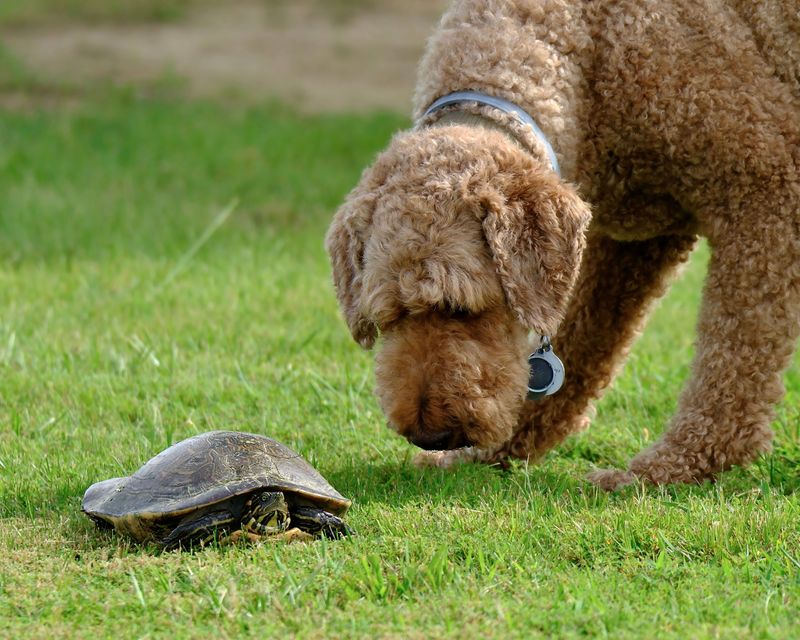
Distance solves most of these encounters before they start. The moment you spot a snapping turtle, call your dog toward you in a steady, upbeat voice.
Shouting or running usually makes a dog more excited, not less. Stay where you are and let your dog come to you instead of walking closer yourself.
Aim for several yards of separation. That gap alone removes nearly all the risk for both animals, and it keeps the turtle from feeling threatened.
Get the Leash Under Control
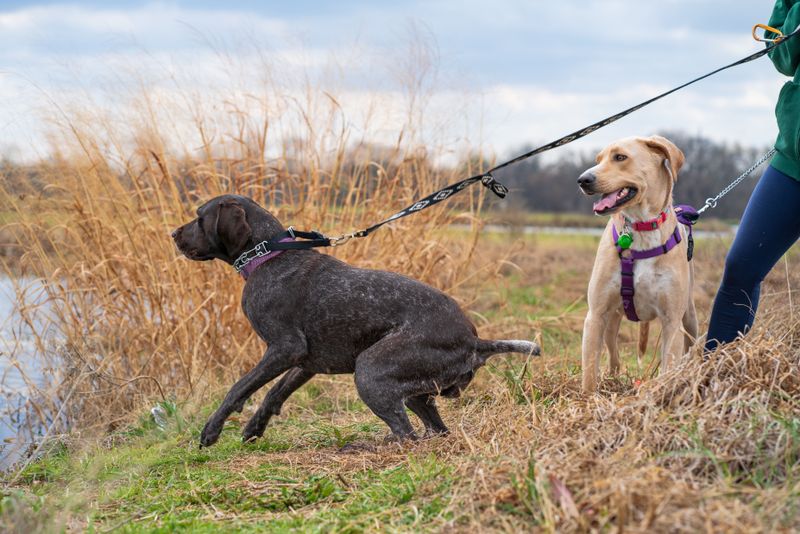
Your leash is the single most useful tool you have. Once your dog returns, gather the slack and shorten your grip near the clip.
Retractable leashes are hard to manage in these moments, so lock them short or switch to a fixed lead for water walks.
Dogs often want a second look after the first surprise. A short leash quietly removes that option and lets you steer the walk forward.
Do Not Let Your Dog Investigate
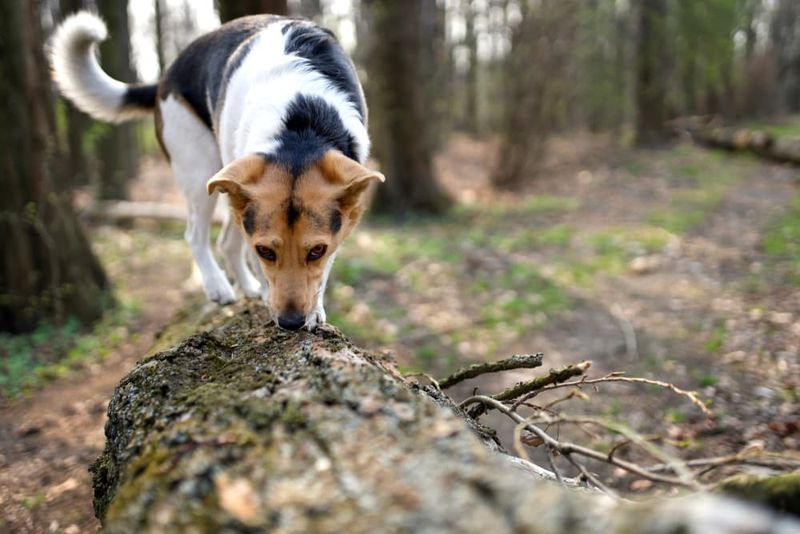
A sniff feels harmless to your dog, but it puts the nose right where a turtle can reach.
Snapping turtles have surprisingly long necks and can extend them quickly when startled. That reach is easy to underestimate from a few feet away.
Redirect attention instead of pulling and scolding. Say your dog’s name, offer a treat, or start walking in the other direction with a cheerful tone.
Curiosity fades fast when something better appears.
Stay Calm Around the Turtle
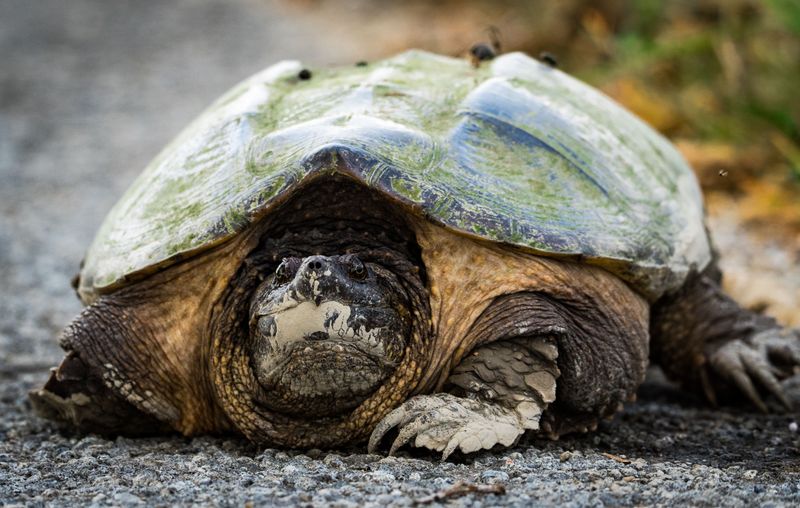
Turtles read sudden movement as a threat. Slow, controlled steps tell it that nobody is closing in.
Skip the phone photos taken from two feet away, and skip poking anything with a stick.
What a defensive turtle wants most is an exit. Leave one open by keeping yourself and your dog off to the side rather than standing over it.
Calm handlers tend to produce calm dogs, and the whole moment passes quietly.
Back Away From the Shoreline
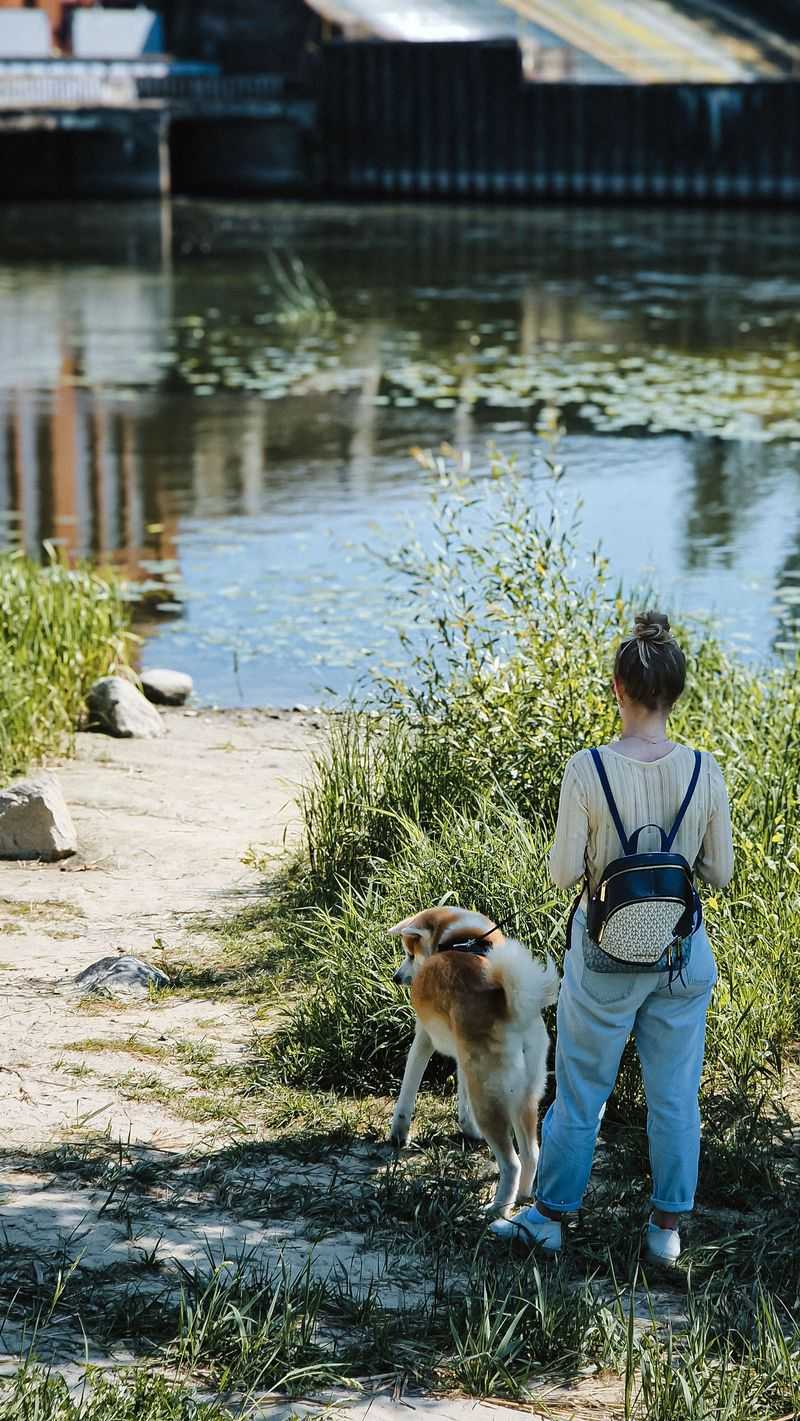
Shorelines are the turtle’s home turf, so that is where you should give the most ground.
Turn your dog around and head back the way you came. There is no rule that says you must finish the loop past a pond edge.
Muddy banks and shallow water often hide more than one turtle. Moving inland a bit lowers the odds of a second surprise on the same walk.
Never Encourage a Chase
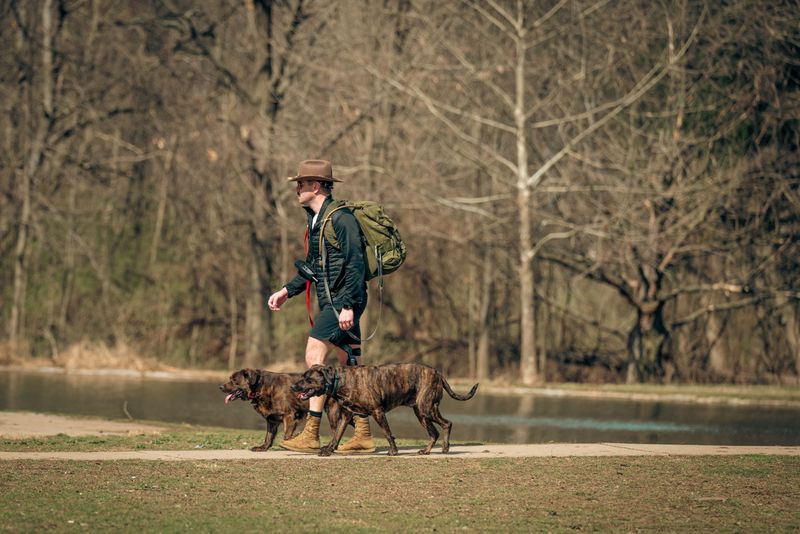
Watching a turtle inch across a trail is genuinely interesting, and dogs feel that pull too.
A chase changes everything, though. A dog that pounces gets close enough for the turtle to defend itself, and nobody wins that exchange.
Keep your voice light and keep walking. Movement forward gives your dog a job and breaks the fixation.
Praise the moment your dog looks at you instead of the turtle.
Check Your Dog After the Encounter
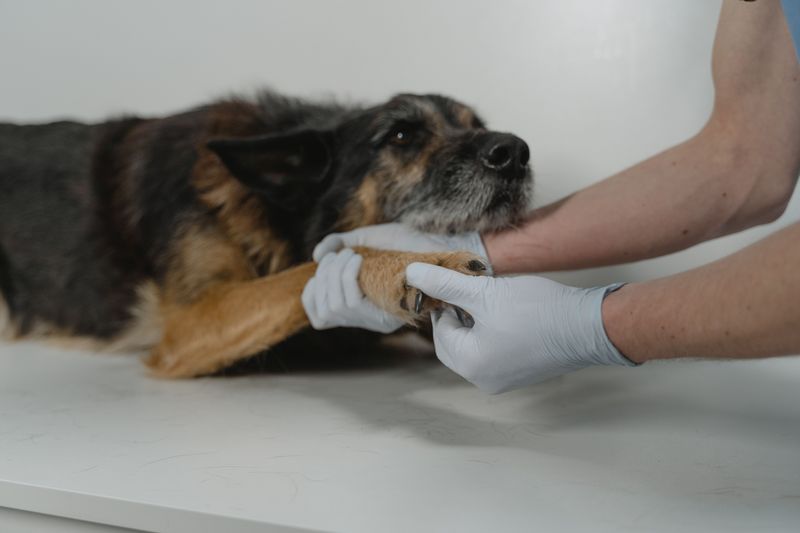
Once you are well away, take two minutes to look your dog over.
Run your hands over the muzzle, lips, front legs, and paws. Those are the areas a curious dog puts closest to the ground.
Watch for swelling, bleeding, limping, or a dog that suddenly does not want you touching one spot.
Most encounters end with nothing at all, but a quick check gives you real peace of mind.
Take Any Injury Seriously
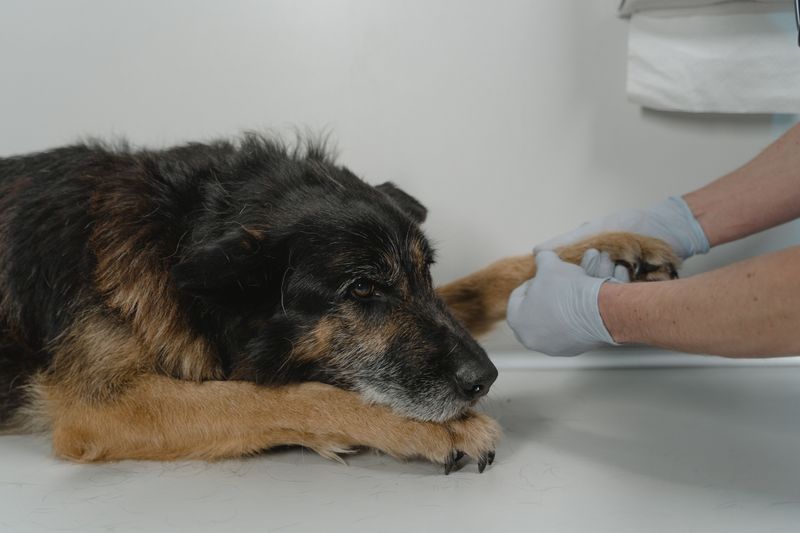
Small wounds on a nose or paw can look minor and still deserve attention.
Call your veterinarian and describe exactly what happened. They can tell you whether to come in right away or monitor your dog at home.
Avoid squeezing, prodding, or applying human ointments without guidance. Keep your dog quiet and calm while you arrange veterinary care.
Professional advice can remove the guesswork and help you decide on the appropriate next step.
Keep Your Hands Away From the Turtle
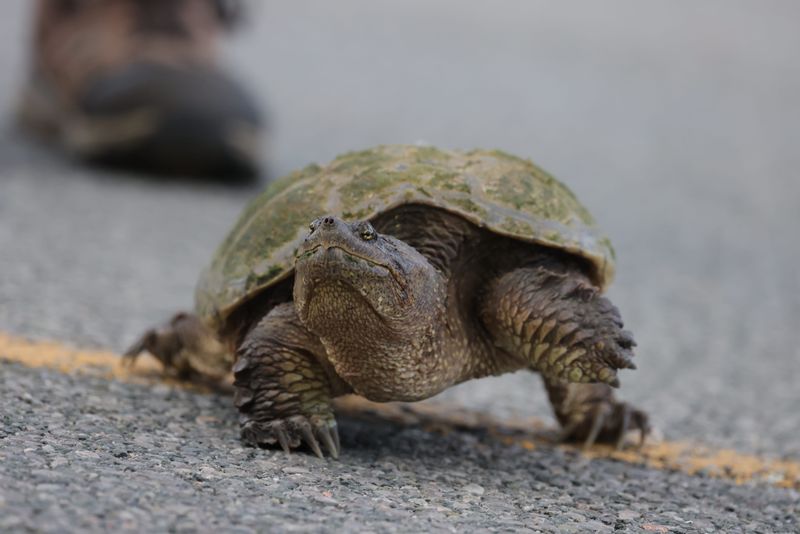
Here is the rule with no exceptions: bare hands stay off snapping turtles.
They cannot tuck fully into their shells like box turtles, so defending themselves is their only option. A hand near the front end reads as a threat.
Lifting one by the tail can also hurt its spine, so that old trick is out too.
Leave relocation to wildlife officials if a turtle is truly stuck somewhere unsafe.
Give the Turtle a Clear Path
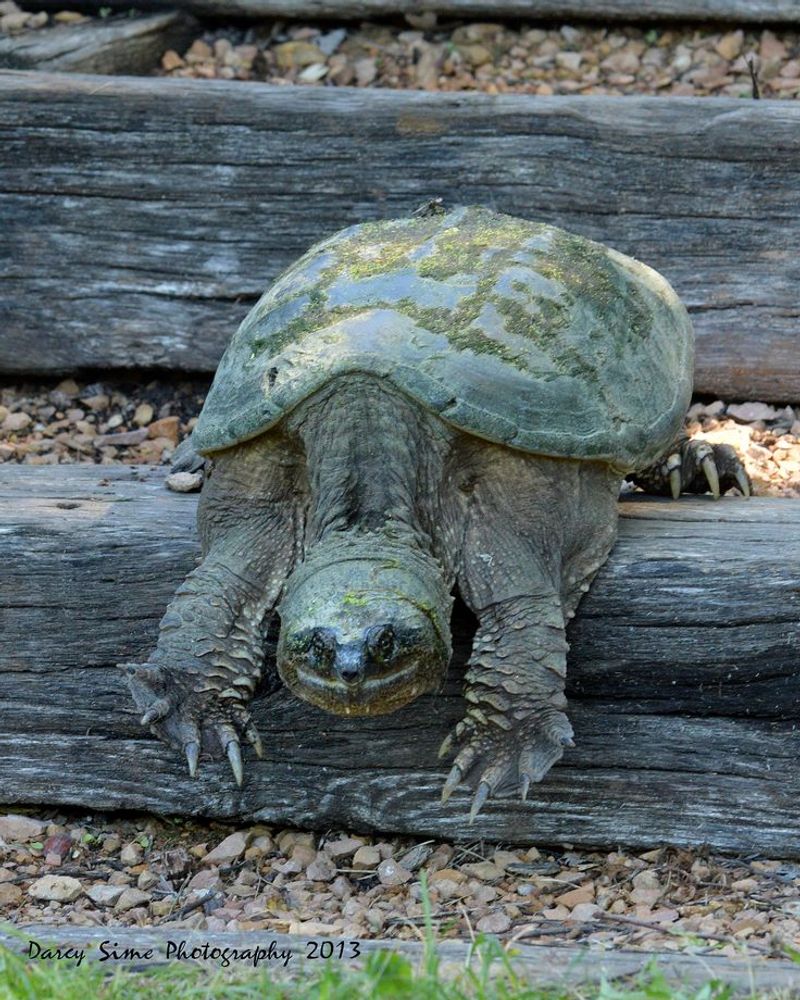
Turtles on the move usually have somewhere to be, often a nesting site or another pond.
Hold your dog back, step aside, and let it finish the trip. Patience beats intervention almost every time.
Do not herd it toward your dog or corner it against a fence. A blocked turtle becomes a defensive turtle.
Within a few minutes most of them wander off on their own, no drama required.
Be Extra Careful Near Water
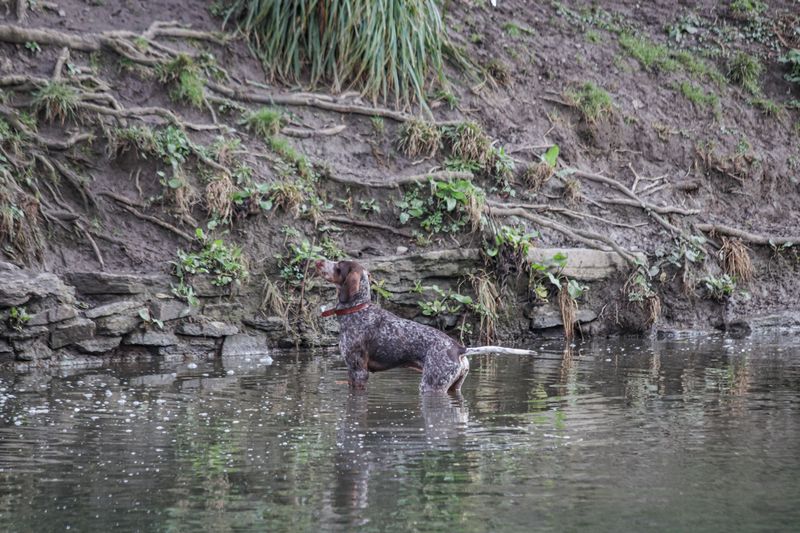
Tennessee gives turtles plenty of real estate: reservoirs, farm ponds, slow rivers, and marshy backwaters.
Around those places, shorten the leash and slow your pace. Murky water and thick mud can make wildlife harder to spot.
Late spring through midsummer can bring increased turtle activity on land, so stay especially watchful then.
Fun detail: common snapping turtles can live for decades, so the same turtle may use the same general area for years.
Watch Dogs That Love to Explore
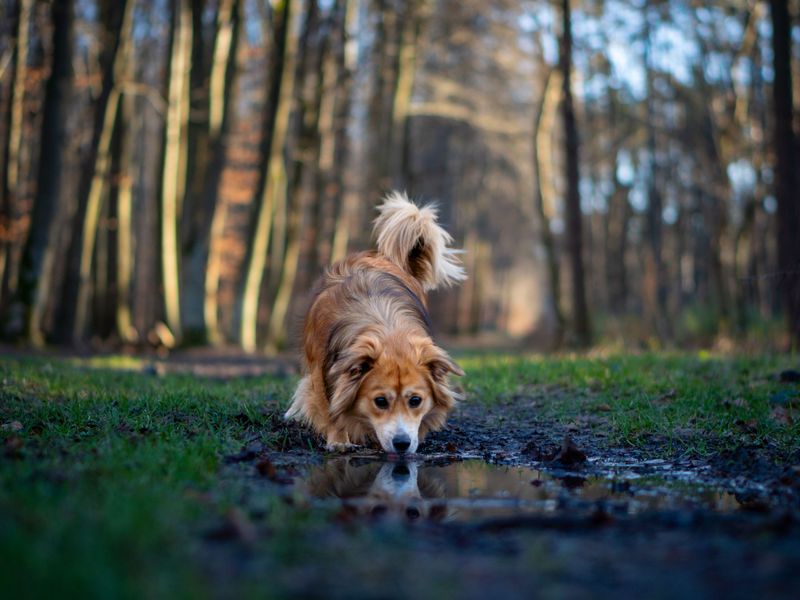
Nose-driven dogs find things their owners never see. Logs, brush piles, and reedy edges are prime turtle hiding spots.
If your dog is the type that vanishes into the weeds, keep that leash on near water.
Scan ahead as you walk rather than staring at your phone. You will usually notice a turtle first, which is the whole goal.
Supervision is not overprotective here. It is simply efficient.
Practice a Reliable Recall
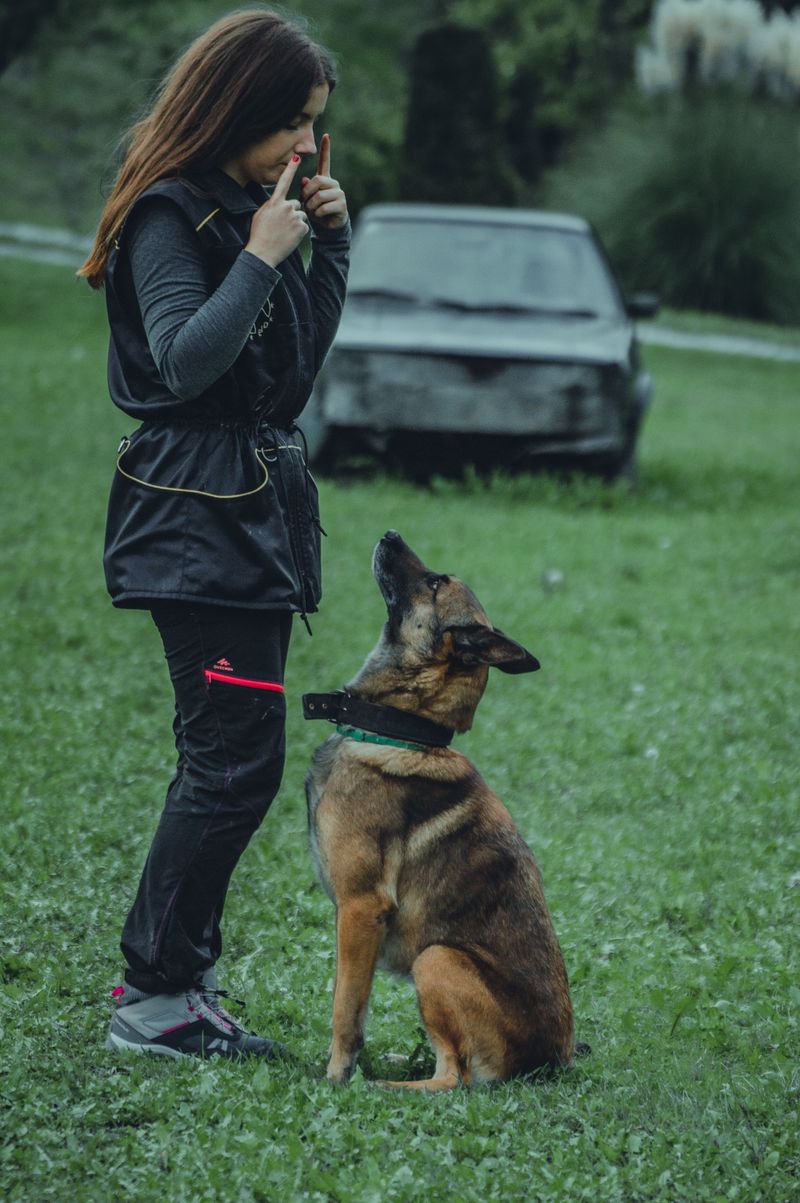
A solid recall is worth more than any gadget you could buy.
Train it in easy places first, then add mild distractions. Reward generously every single time your dog comes back.
Never call your dog to punish it, or the command loses its power fast.
When wildlife appears, one clear word can end the situation before it begins. Five minutes of practice a few days a week builds that reliability.
Prevent Future Encounters
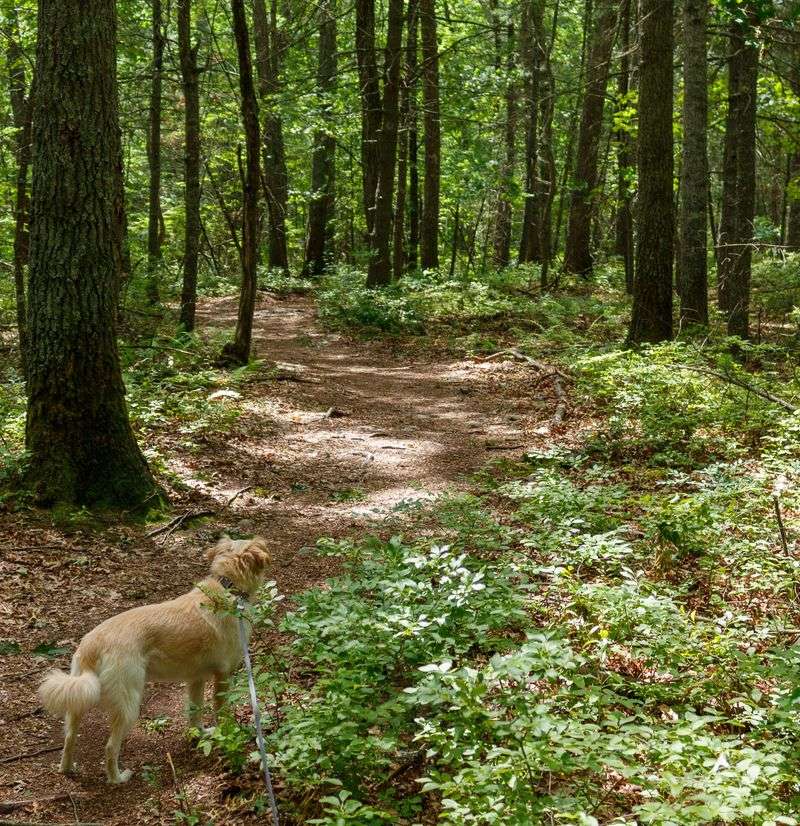
Prevention is mostly about habit, not vigilance.
Leash up in wildlife-heavy areas, stick to maintained paths, and steer clear of marshy edges during nesting season. Leash rules vary by city, county, and park, so check posted signs.
If a turtle keeps showing up somewhere unsafe, contact animal control or the state wildlife agency for guidance.
Respect the space, and Tennessee’s outdoors stays wonderful for your dog and its wild neighbors alike.