20 Things California Renters Should Settle Before Bringing Home A Puppy

Bringing a puppy into a rental home is exciting, and a little groundwork makes it much smoother. California has its own rules about pet deposits, licensing, and vaccinations, and your lease adds another layer.
Sorting these details early protects your money, your housing, and your peace of mind. Here is a friendly checklist to walk through before those little paws cross your doorway.
Put Landlord Approval on Paper

A cheerful text message saying yes is not the same as real approval. In California, landlords may enforce no-pet policies for ordinary household pets, though service animals and properly documented assistance animals are handled differently.
Ask for signed, written consent naming your puppy. Keep a copy somewhere safe.
A new law, SB 1296, takes effect April 1, 2027, requiring landlords to disclose pet policies in advertisements and applications.
Read Every Line of the Pet Addendum

Tucked inside most leases is a separate pet addendum, and it carries real weight. Inside, you will usually find upfront charges, monthly pet rent, deposit terms, and vaccination requirements.
Look for breed or weight limits and any liability insurance clause too.
Reading slowly now saves awkward conversations later. Highlight anything unclear, then ask your landlord to explain it in writing before you sign.
Ask About Breed Rules Before You Fall in Love

Choosing a puppy first and checking rules second is a common mix-up. Private landlords in California may restrict certain breeds, as long as the terms appear in the lease or addendum.
Homeowners associations generally cannot ban pets outright, but reasonable breed rules are allowed.
Service animals and documented assistance animals are treated separately under fair housing law. Confirm the specifics with your property manager first.
Think About Full-Grown Size, Not Puppy Size

That eight-pound bundle may double in weight several times over. Landlords can set size or weight caps, and many HOAs use limits somewhere between 25 and 50 pounds.
Ask your breeder, shelter, or veterinarian for a realistic adult weight estimate.
Matching expectations early prevents heartache down the road. Weight and size caps do not apply to service or assistance animals.
Nail Down How Many Pets Are Allowed

Maybe you already have a cat, or dream of a second dog someday. Landlords are permitted to set a maximum pet count per unit, and HOAs frequently do the same.
Get the number confirmed in writing before you commit.
Adding an unapproved animal later can create lease trouble, so plan your household roster now while conversations are still easy and friendly.
Budget for Monthly Pet Rent

Pet rent is legal in California, and no state cap exists on the amount. Think of it as an ongoing monthly charge rather than a refundable sum.
Fold that number into your household budget alongside food, training, and vet visits.
Landlords cannot charge pet rent for service animals or documented assistance animals. Confirm the exact monthly figure in writing before signing anything.
Sort Out Upfront Pet Charges

Here is a detail many renters miss. California law does not allow non-refundable pet fees.
Any upfront pet money is treated as part of your security deposit and must be refundable.
If a landlord labels something a non-refundable pet fee, ask questions politely.
Assistance animals and service animals are exempt from pet deposits entirely under fair housing protections.
Know the Security Deposit Cap
Since July 1, 2024, California law under AB 12 caps total security deposits at one month’s rent. That cap includes any pet deposit, not just the base amount.
An exception exists for qualifying small landlords, who may collect up to two months’ rent.
Do the math before you hand over funds. If numbers look off, ask for a written breakdown.
Verify Deposits Are Truly Refundable

Refundable means exactly that. Pet deposits collected in California count as part of the security deposit and must come back to you, minus documented damage.
Any lease clause claiming a pet deposit is non-refundable has no legal force.
Keep your receipts and written agreements filed together. Should a disagreement arise at move-out, clear paperwork makes the conversation short and straightforward.
Understand What Counts as Puppy Damage

Puppies chew, dig, and occasionally have accidents. Renters are responsible for damage beyond normal wear and tear, such as deep scratches, chew marks, or set-in stains.
Faded paint and light carpet wear generally fall under ordinary use.
Protect surfaces early with rugs, door guards, and crate training. Prevention costs far less than repairs, and your landlord will appreciate the effort.
Photograph Everything Before Move-In

Ten minutes with your phone can settle disputes months later. Walk each room and capture floors, baseboards, doors, blinds, and carpet corners with date stamps intact.
For tenancies starting on or after July 1, 2025, AB 2801 requires landlords to photograph units too.
Store your images in cloud backup. Two sets of records beat one memory every single time.
Line Up Renters Insurance With Dog Liability

Many California landlords require renters insurance, and dog liability coverage often comes bundled into it. Common minimums run around $100,000, while some communities ask for $300,000.
Certain insurers exclude specific breeds, so read the fine print or call an agent directly.
Such insurance requirements cannot be applied to service animals. Confirm your coverage before your puppy’s first day home.
Review Your HOA or Condo Rulebook

Condo living adds a second set of rules on top of your lease. Under California Civil Code Section 4715, associations with documents created or updated after January 1, 2001 generally must allow at least one pet.
Reasonable limits on breed, size, weight, and number remain permitted.
Request the current governing documents in writing so nothing surprises you later.
Divide Puppy Duties With Housemates

Shared homes run smoothest when jobs are spelled out. Decide who handles morning walks, feeding, potty breaks, training sessions, and cleanup on busy weekdays.
Talk money too, covering food, vet visits, and supplies.
A simple written schedule on the fridge works wonders. Your puppy thrives on routine, and clear roles keep everyone in the household feeling supported rather than stretched.
Learn the Rules for Shared Spaces

Hallways, elevators, courtyards, and lobbies usually come with their own pet etiquette. Leash requirements are standard the moment you step outside your unit.
Waste cleanup rules and quiet expectations typically apply as well.
Some communities designate specific relief areas or restrict pets from pools and gyms. Ask management for the written list, then practice calm leash manners with your puppy early.
Build a Barking Plan Early
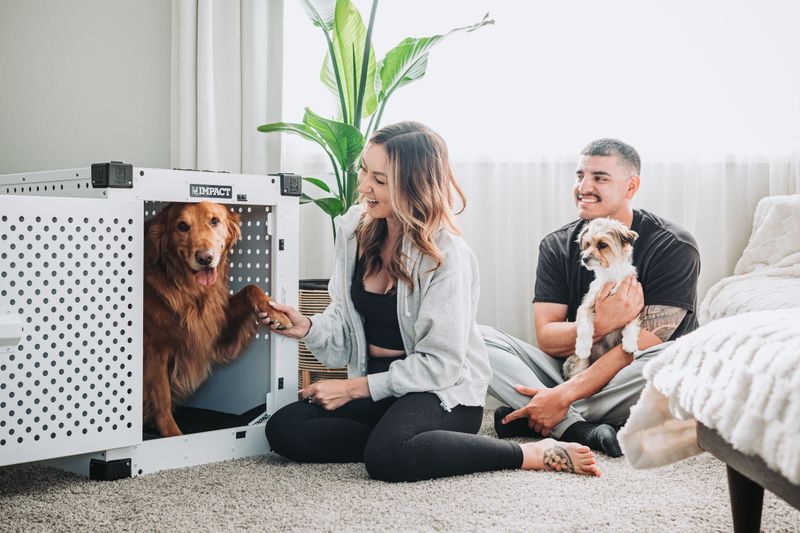
Neighbors notice noise before they notice anything else. Many HOAs include nuisance and barking provisions, and local city or county ordinances often address animal noise too.
Crate training, enrichment toys, and gradual alone-time practice help enormously.
Consider a midday walker if your workdays run long. Introducing yourself to neighbors also helps, since a friendly face buys patience during the noisy learning weeks.
Ask Before Installing Anything

Dog doors, new flooring, fencing, and permanent gates all count as alterations. Written landlord approval should come before any drill touches a wall.
Removable options like pressure-mounted gates and washable rugs usually raise fewer concerns.
Unauthorized changes can lead to repair charges or lease violations. A quick email asking permission takes two minutes and keeps your deposit comfortably intact.
Register Your Dog Locally

California requires dogs four months and older to be licensed. Some cities and counties start that requirement around three months, so local rules matter.
Licensing happens through your city or county animal services department.
Proof of rabies vaccination is generally required first. A tag on the collar also helps neighbors reunite you quickly if your puppy ever slips out the door.
Schedule the Rabies Vaccination

State law requires rabies vaccination for dogs four months and older, given by a licensed veterinarian. Certain local rules set the age at three months instead.
The first shot typically covers one year, followed by a booster, then vaccinations every three years.
Keep the certificate handy, since landlords, licensing offices, groomers, and boarding facilities all tend to ask for it.
Check Your City’s Extra Protections

Local government adds the final layer. Cities and counties across California pass their own ordinances covering pets and renters, and details vary widely from place to place.
Some areas have spay or neuter requirements for particular breeds or ages.
Your local animal control office and housing authority can confirm what applies at your address.
With these steps handled, you can simply enjoy your puppy.