What Nebraska Dog Owners Should Know About Sandburs And Grass Awns
If you walk your dog anywhere near Nebraska grass, you have probably pulled a sandbur out of fur at some point. These prickly hitchhikers and their cousins, grass awns, are simply part of life on the prairie.
The good news is that a little knowledge and a two-minute habit handle almost everything they throw at you. Here is what local owners find most useful to know, from what these plants actually are to when a vet visit makes sense.
1. What Sandburs And Grass Awns Are
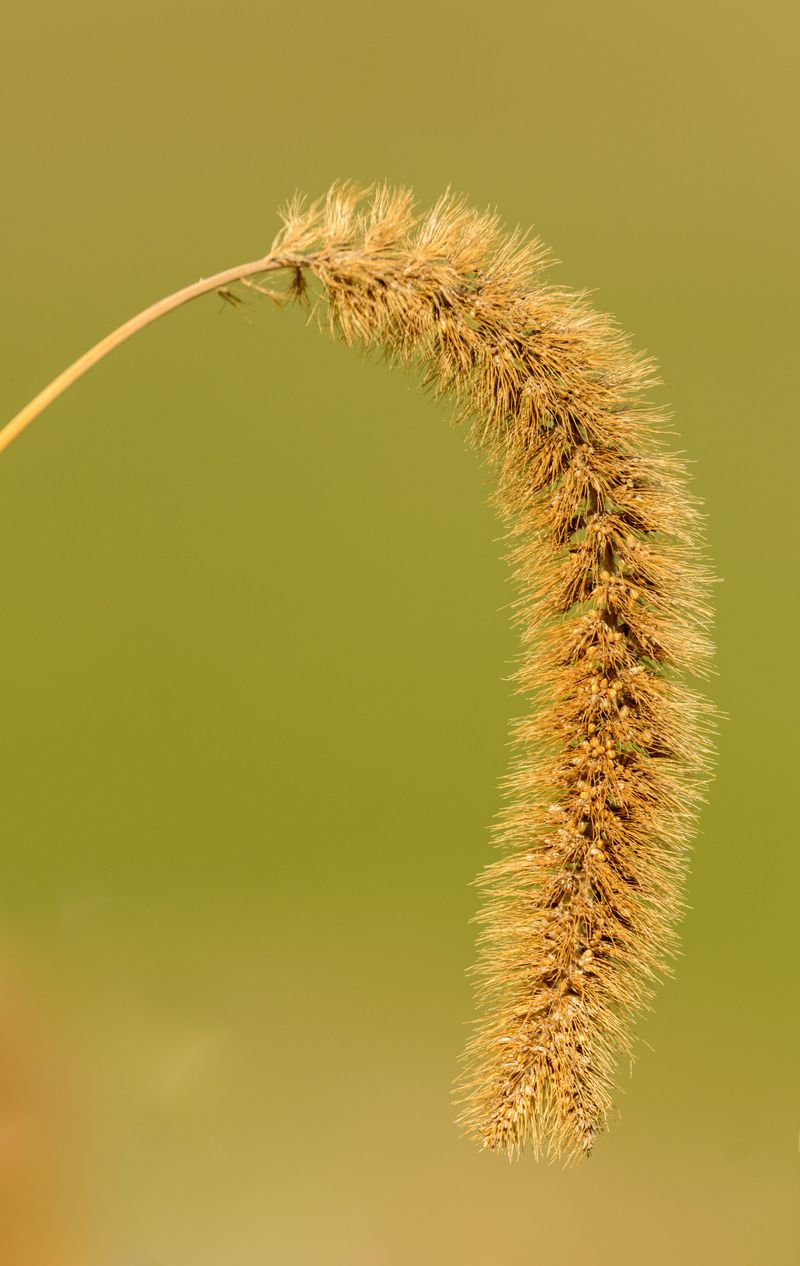
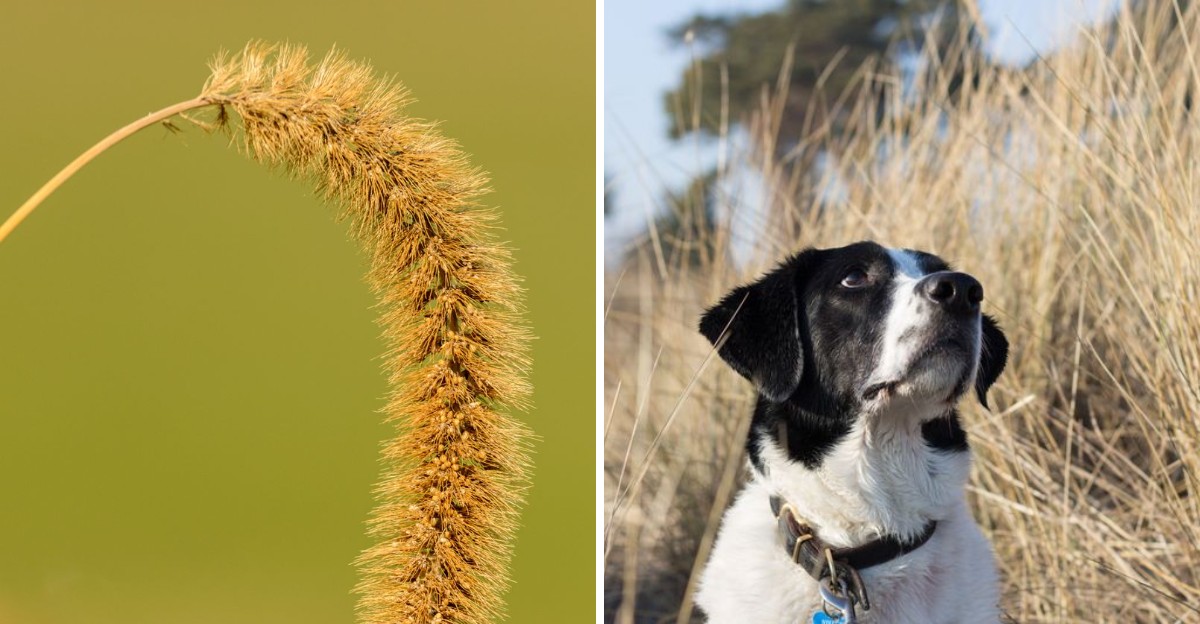
Sandburs are spiky burs produced by certain grasses. Grass awns are stiff, bristle-like structures found on the seed heads of grasses such as foxtail and other awned grasses.
Both hitch rides on fur, socks, and paw pads.
Many grass awns have structures that can help them move farther into fur or tissue rather than easily backing out once embedded.Once you can recognize them, spotting them during a post-walk check becomes easy.
2. Why Nebraska Dogs Encounter Them
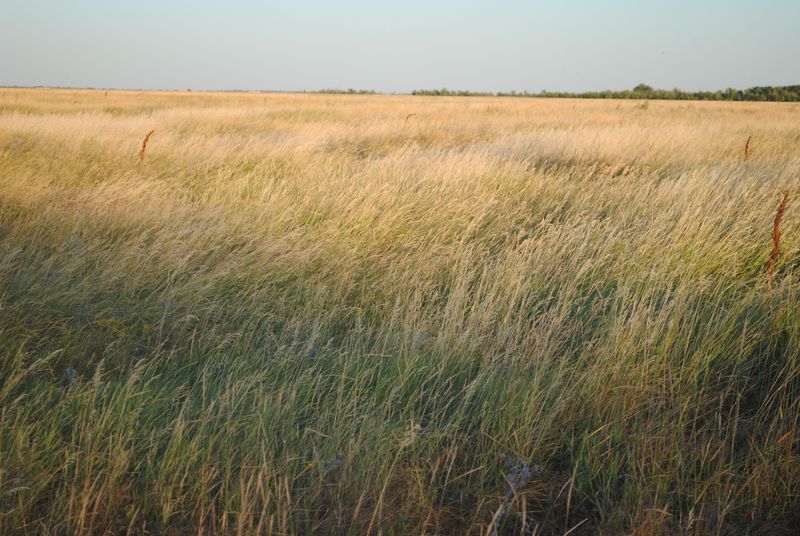
Nebraska is grassland country. Sandburs thrive in sandy soil, roadsides, pastures, and dry ditches across much of the state.
Grass awns show up in unmowed lots, field edges, and trail shoulders, especially from early summer into fall.
Dogs who hike, hunt, or simply sniff along fence lines walk right through prime territory. Neighborhood alleys and park borders count too, so city dogs are not exempt.
Dry late-season weather makes seed heads even clingier.
3. Sandburs Versus Grass Awns
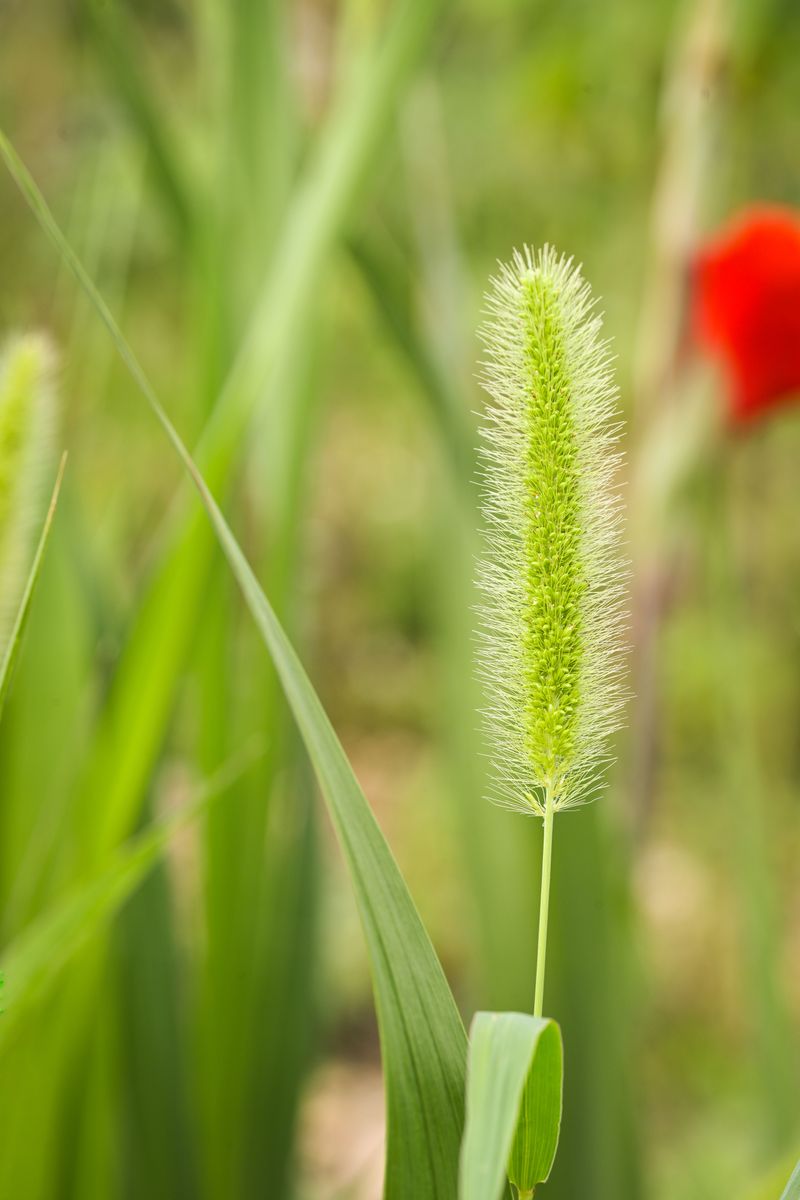
People often use the two names as if they mean the same thing. Sandburs are round, prickly packages that usually stick to the outside of fur and skin.
Grass awns are slim and needle-like, so they slide between hairs and into small openings.
That difference matters. Sandburs often remain attached to the outside of fur and can be removed during grooming, while embedded plant material may require veterinary attention.
Grass awns can work their way into skin or other tissues and may require veterinary attention when they become embedded.
4. Why Long Fur Needs Extra Attention
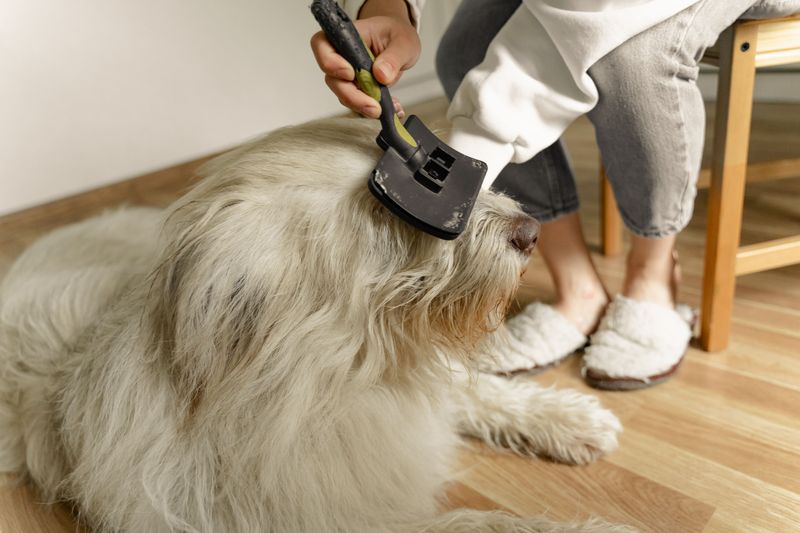
Feathered legs, fluffy tails, and heavy undercoats act like velcro out in the grass. Golden retrievers, doodles, spaniels, and herding breeds often come home carrying passengers.
Mats make things trickier, because a bur tangled in a knot presses against skin.
Trimming the hair between toes and around ears helps a lot. Shorter fur in those spots gives seeds fewer places to hide.
Keep a fine-tooth comb by the door for quick passes.
5. Check Your Dog’s Paws After Walks
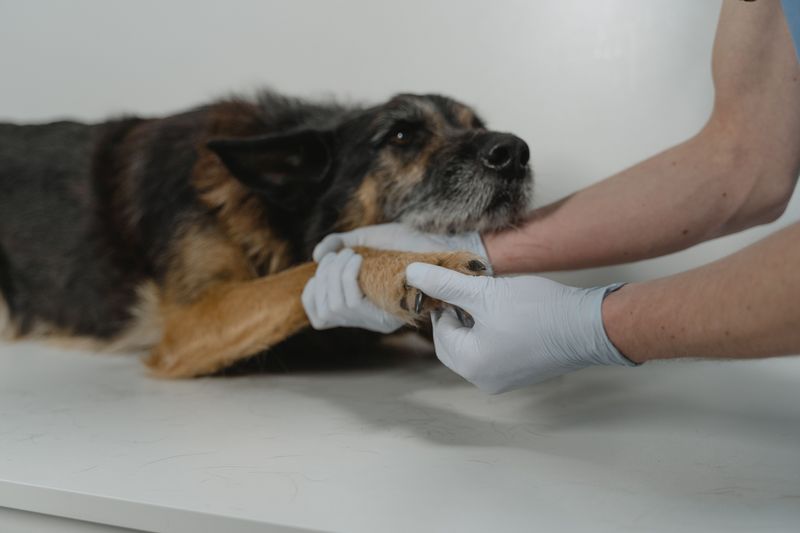
Paws take the first hit, so start there. Spread the toes gently and look at the webbing, the pads, and the soft crease behind them.
Sandburs love that tender space between pads. Running a fingertip along each gap usually finds one before your dog does.
A limp right after a walk often traces back to something small and spiky. Quick checks after every outing turn a possible vet visit into a two-minute chore.
6. Grass Awns Can Get Into Ears
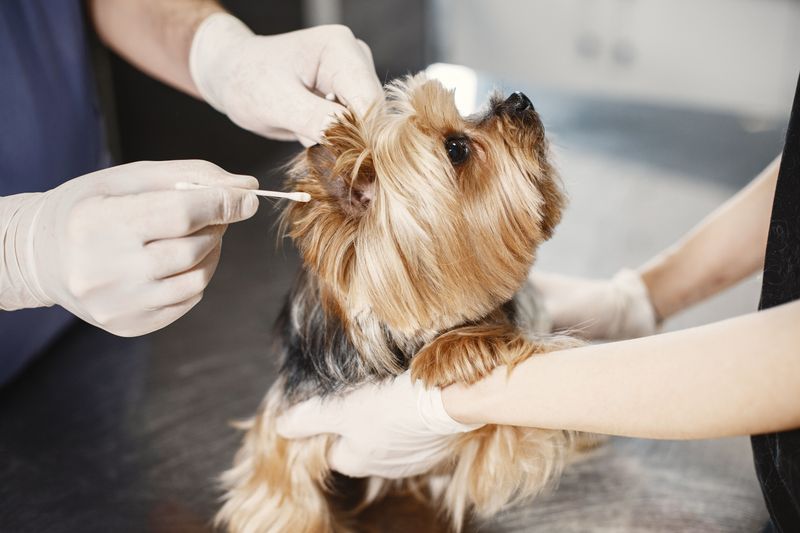
Ear canals are warm, narrow tunnels, and a grass awn fits one perfectly. Head shaking, tilting, or pawing at one side are the usual first clues.
Some dogs also whine when the ear gets touched.
Awns in ears are not something to fish out at home. The canal bends, and you cannot see the bottom without proper tools.
Call your veterinarian, who can look safely and remove it correctly.
7. Watch For Sudden Licking Or Chewing
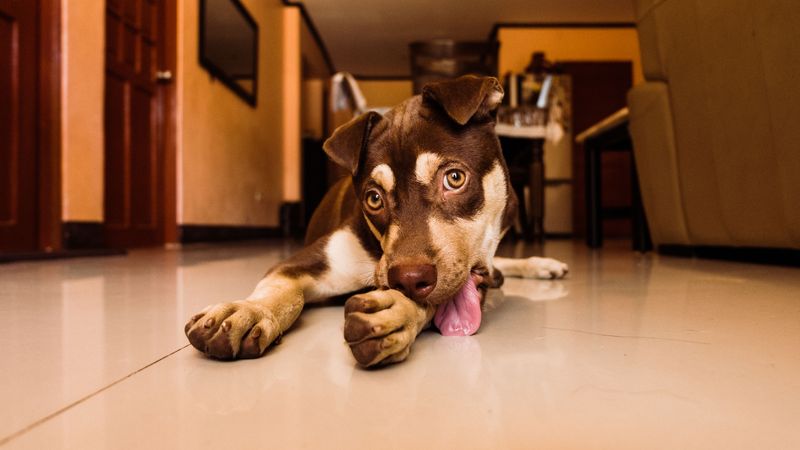
Dogs tell us things with their mouths. Focused licking of one paw, or chewing at a flank, often means something is bothering that exact spot.
Watch for a dog who suddenly stops mid-walk to nibble a foot.
Treat that behavior as a map, not a habit. Part the fur where the attention is going and look closely in good light.
Catching it early keeps small irritation from becoming a sore area.
8. Why Embedded Awns Can Be More Serious
Here is the part many owners have never heard. Grass awns have tiny barbs that point one direction, so movement carries them inward rather than out.
An awn can slip through soft skin and travel under the surface, causing swelling or a draining bump.
Veterinarians sometimes find them far from where they entered. Nothing about that is common, but it explains why professionals take awns seriously and why prompt attention pays off.
9. Inspect The Coat After Outdoor Time
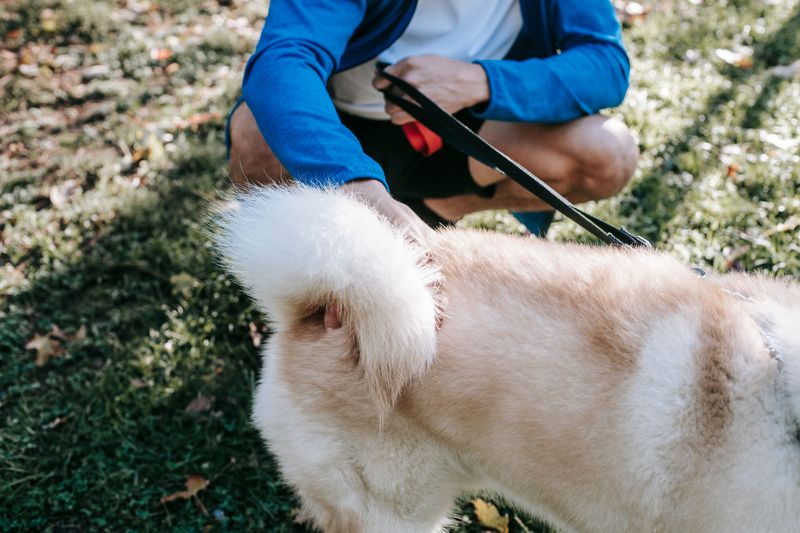
Make the post-walk once-over part of coming inside, like wiping muddy feet. Start at the nose and work back, using both hands to feel through the coat.
Armpits, groin, belly, and the base of the tail collect the most.
Fingers often notice a bur before eyes do. If your dog enjoys the routine, add a treat at the end.
Most dogs learn to stand happily for their thirty-second inspection.
10. Brush Out Bur-Prone Areas
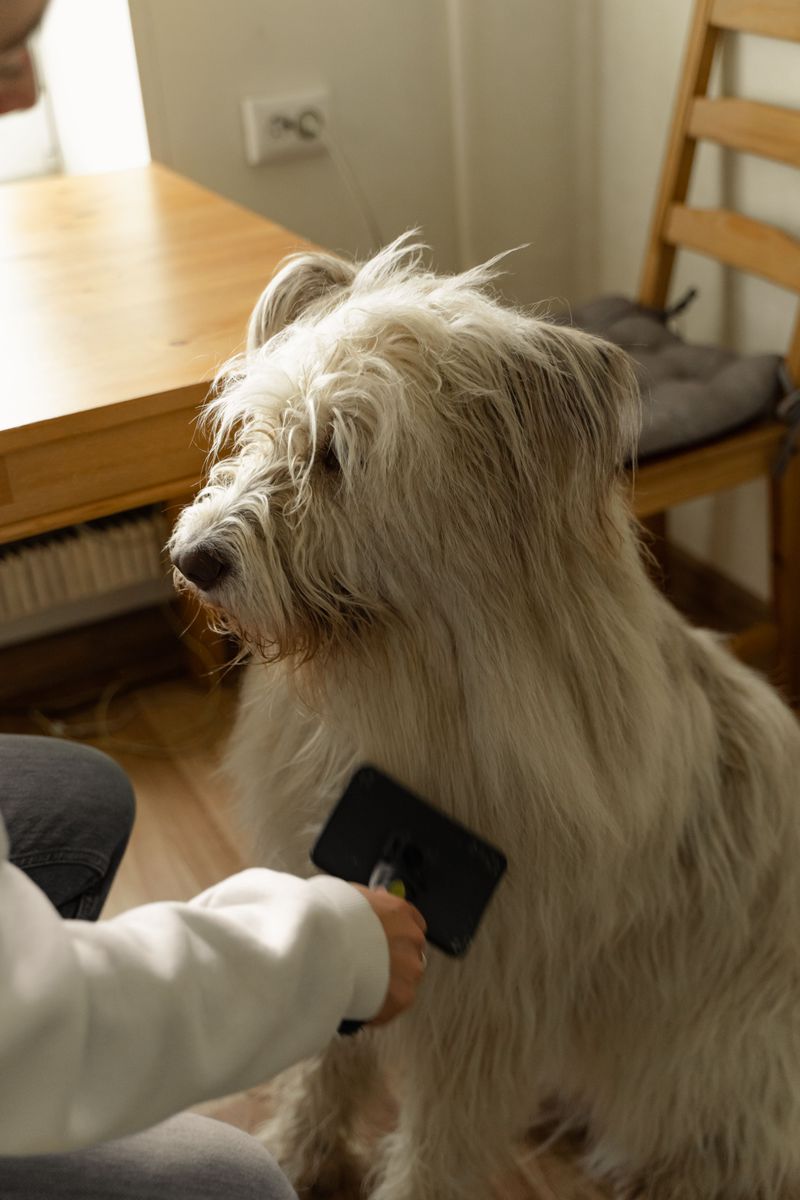
A slicker brush and a metal comb handle most sandburs without drama. Work in the direction the fur grows, holding the hair near the skin so pulling does not sting.
Trouble spots include ear fringes, leg feathers, tail plumes, and behind the elbows.
Brushing two or three times weekly keeps mats from forming, and mat-free fur releases burs easily. Regular grooming also gives you a reliable look at skin, ears, and toes.
11. When A Bur Is Firmly Embedded
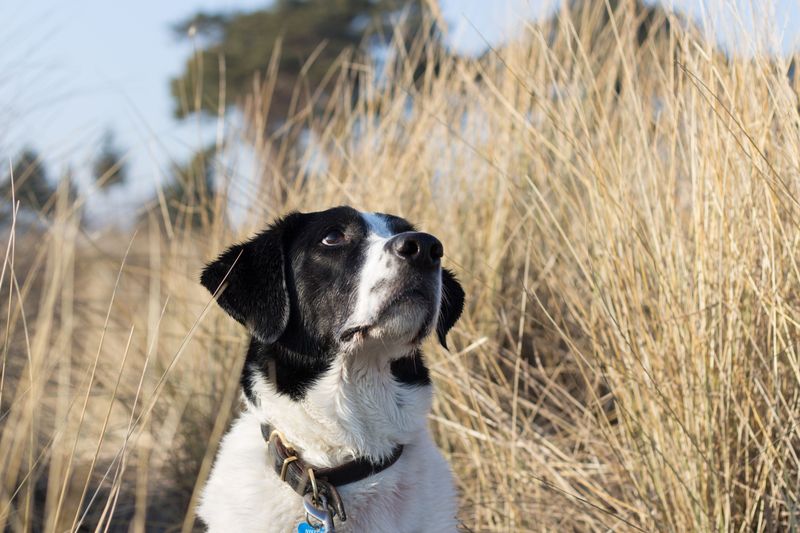
Sometimes a bur refuses to budge, pressed tight against skin or wedged between pads. Yanking makes it worse, since the spines grip harder under tension.
If a bur is firmly embedded in or against the skin, avoid forcing it out and contact your veterinarian for advice.
If a bur is tangled in a clump of fur and can be safely separated without approaching the skin, careful grooming may help. If it is firmly attached or close to the skin, let your veterinarian handle it.
12. Signs Of A Paw Problem
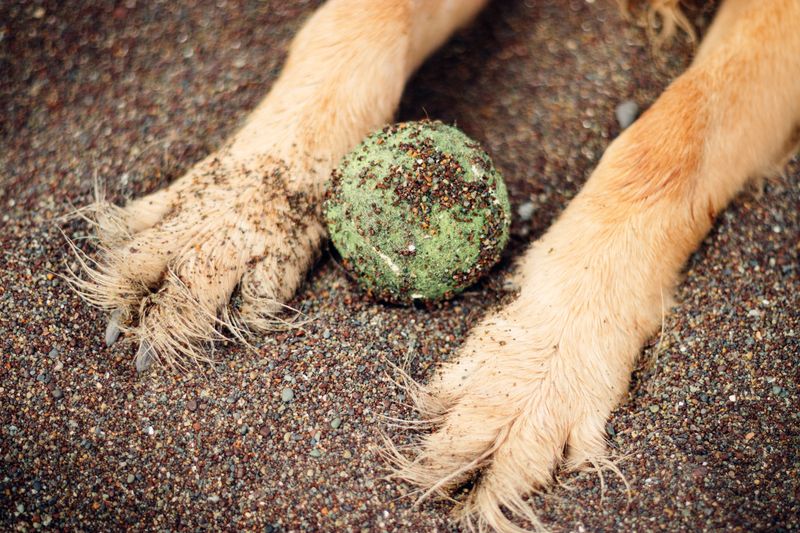
Limping is the obvious signal, though subtler hints come first. Look for a swollen toe, a pink patch between pads, or a dog who keeps lifting one foot.
Redness, small bumps, warmth, or damp fur can all point to an irritated spot.
A persistent or worsening lump, swelling, or painful area deserves veterinary attention. Your veterinarian can determine whether it is simple irritation or whether something is lodged beneath the surface.
13. Be Careful With Home Removal
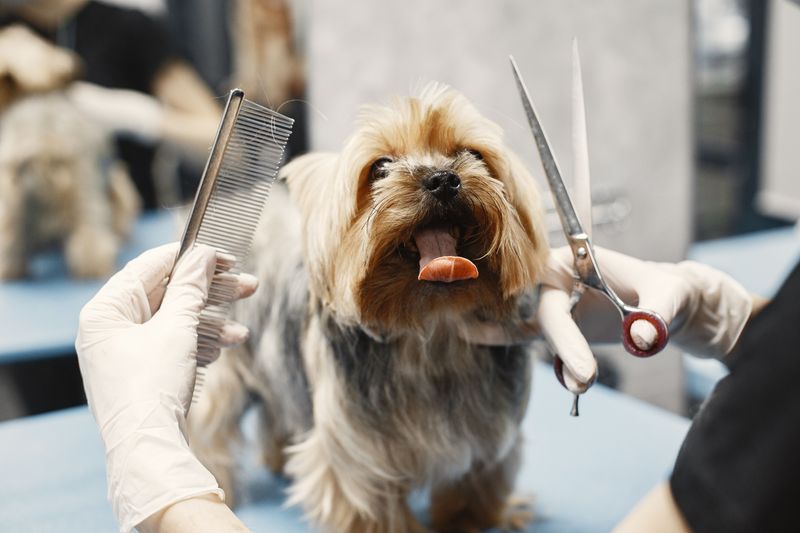
Confidence is good, but tweezers have limits. Removing a visible bur from fur is fine; digging after something under the skin is not.
Never poke into an ear, an eye area, or a nostril at home.
Keep the tools simple: comb, blunt scissors, tweezers for surface pieces, and mild saline to rinse a scratch. If your dog flinches, stop and let a professional finish.
Calm hands beat determined ones every time.
14. Choose Walk Areas With Fewer Seed Heads
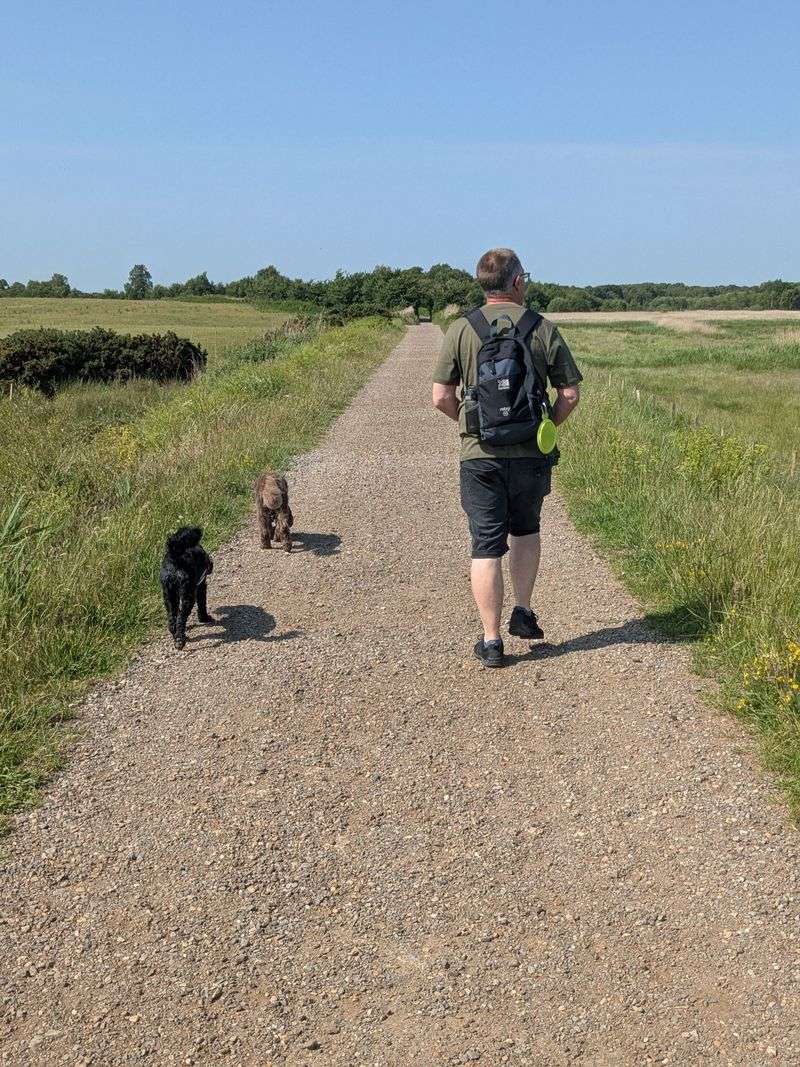
Route choice does more than any gadget. Mowed parks, sidewalks, gravel trails, and maintained sports fields carry far fewer seed heads than a weedy ditch.
Late summer is peak season, when dry seed heads break loose at the lightest touch.
Keeping your dog on the path through overgrown stretches helps, as does mowing your own yard edges. Some owners use lightweight boots or a snug body suit for field days.
15. Check Collars, Harnesses, And Bedding
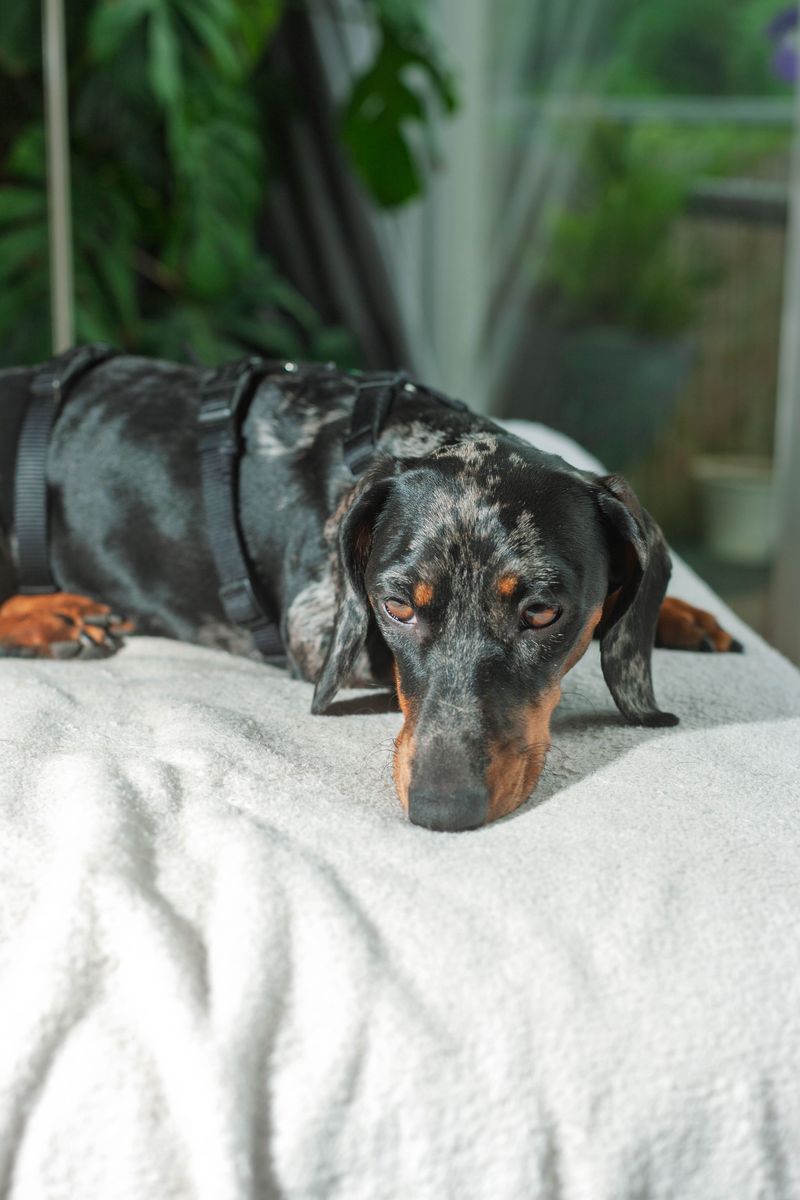
Gear collects seeds quietly. Burs tuck under collar webbing, inside harness straps, and along leash handles.
They press on skin during the next outing.
Slip the collar off now and then to check underneath.
Crate pads, car blankets, and dog beds also gather stray awns that ride home in fur. Shake bedding outside and wash it regularly.
Vacuuming the back of the vehicle after field trips takes a minute.
16. When To Call Your Veterinarian
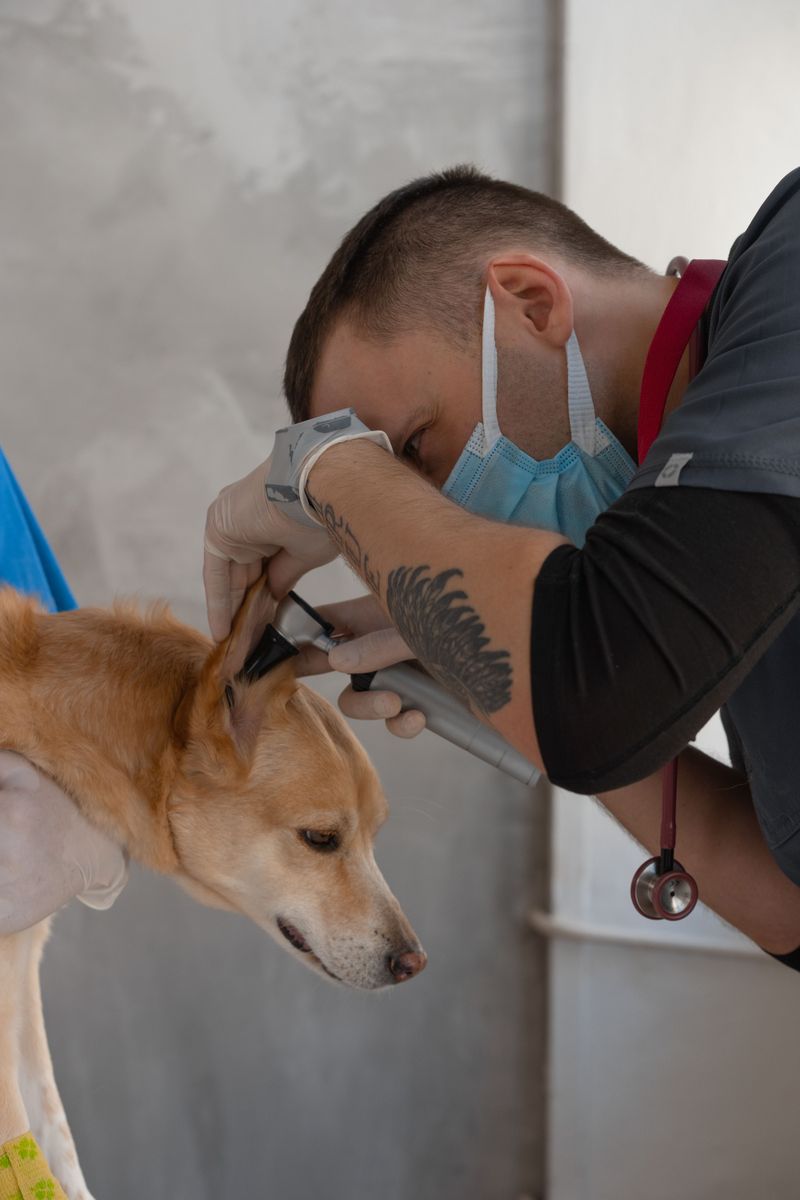
Trust your instincts when something seems off. Persistent head shaking, a growing swelling, or ongoing limping deserves a call.
Squinting, sneezing fits, and coughing after field time also count.
Wounds that keep draining need attention too. Bring along any piece you removed, if you kept it.
Describe where your dog has been walking, since that detail helps. Nebraska veterinarians know these plants well.
With quick checks and calm routines, most seasons pass uneventfully.