How Wildfire Smoke Changes Summer Exercise For Washington Dogs
Washington summers bring long evenings, open trails, and happy dogs. They also bring smoke, sometimes for days at a time.
When haze settles over the Cascades or the Columbia Basin, your dog’s normal walk routine needs a rethink. The good news is that adjusting is simpler than most owners expect.
Here is a calm, practical look at how smoky air changes summer exercise, what signs to watch for, and how to keep your dog comfortable until the sky clears.
1. Shorter Walks Replace Long Loops
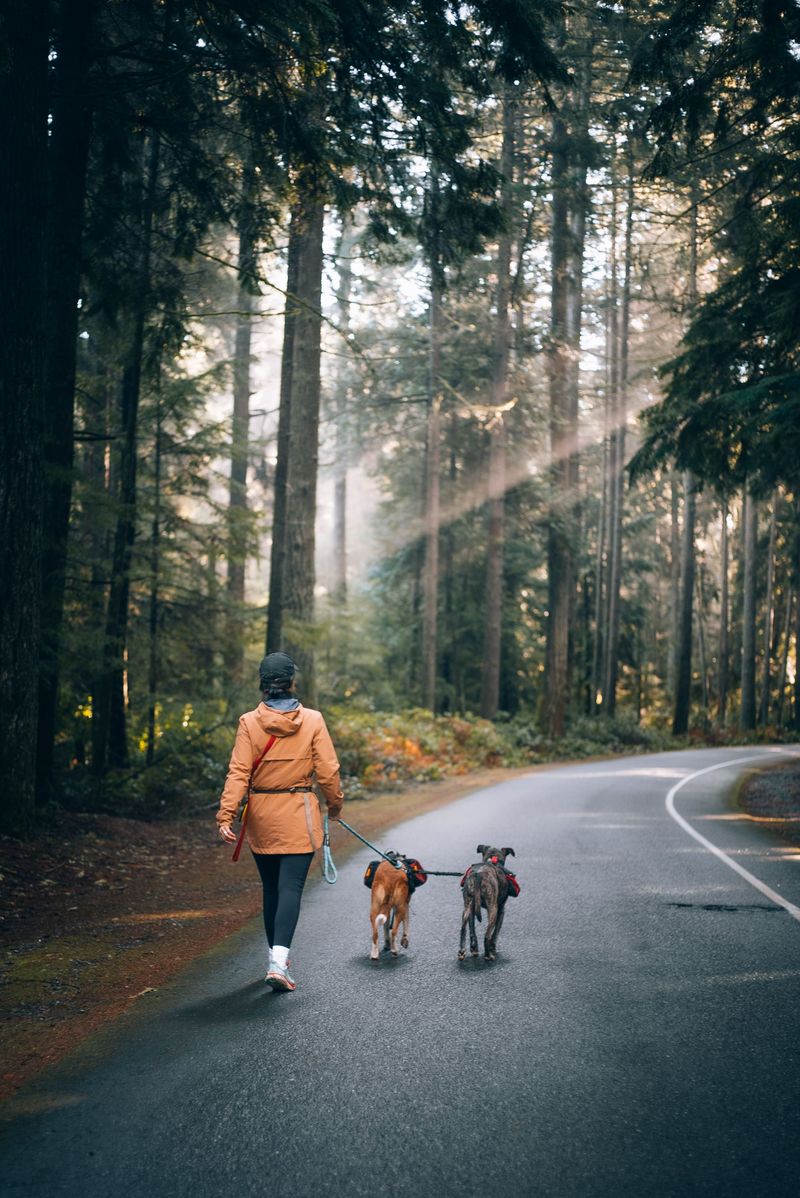
That three mile evening loop can shrink to three blocks during smoke events. Shorter outings limit how much fine particulate your dog breathes in.
Dogs breathe faster than we do, so they take in more particles per minute. Keeping trips brief reduces that load considerably.
Try two or three quick outings instead of one long one. Your dog still gets fresh scents and a bathroom break, without the extended exposure that smoky afternoons bring.
2. Checking Air Quality Becomes A Morning Habit
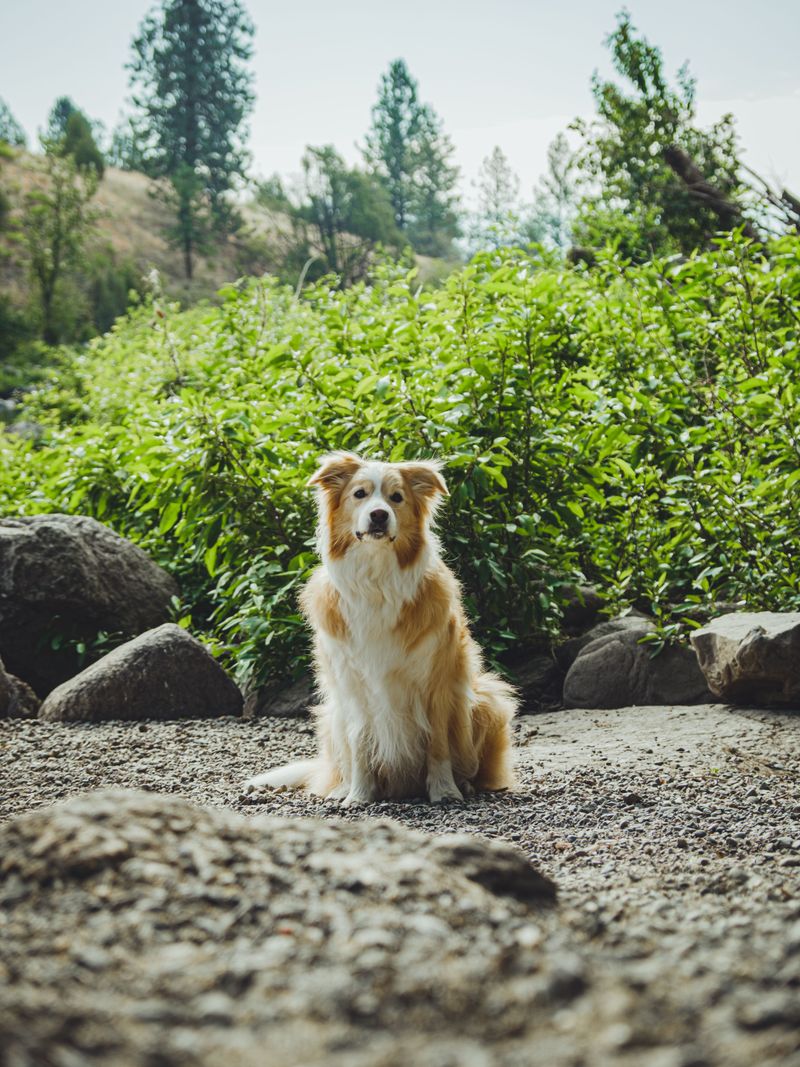
Right beside the coffee maker, a quick AQI check earns its place each summer morning. AirNow.gov and most weather apps show local numbers for free.
Readings from 101 to 150 already affect sensitive dogs, including puppies and seniors. Above 150, everyone should cut back outdoor activity.
Washington’s Department of Ecology also posts smoke forecasts. Two minutes of looking saves you from guessing what the haze actually means.
3. Hard Exercise Goes On Pause
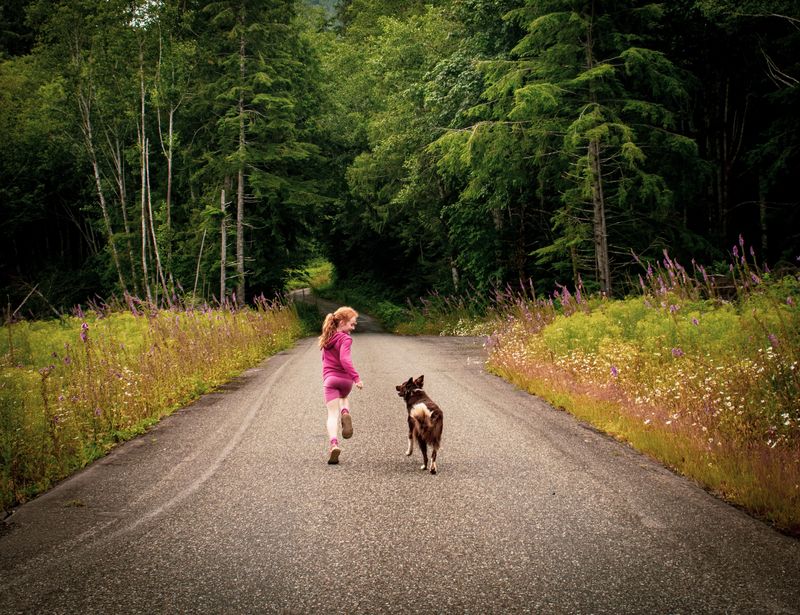
Fetch, trail runs, and bike jogs all push a dog into deep, rapid breathing. That is exactly what you want to avoid when smoke is thick.
Veterinary groups advise skipping strenuous activity while air quality alerts are active. Hard breathing pulls particles further into the lungs.
The ball will still be there next week. Swapping intensity for calm sniffing keeps your dog engaged without stressing their airways during a smoky stretch.
4. Early And Late Walks Are Not Automatically Safer

Cooler hours help with heat, but smoke follows its own schedule. Overnight inversions can actually trap particles close to the ground.
Some mornings the air clears beautifully. Other mornings the valley holds smoke until midday.
Rather than assuming, glance at the current reading before you clip the leash. Heat and smoke are two separate problems, and the safest window shifts from day to day across the state.
5. Flat-Faced And Senior Dogs Need Closer Watching
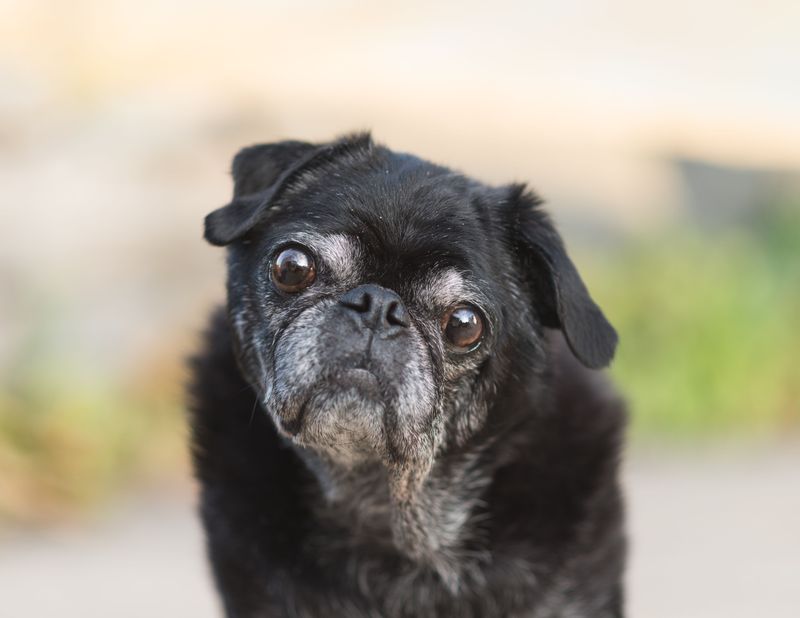
Pugs, bulldogs, and Boston terriers already work harder for every breath. Smoke narrows their margin further.
Puppies, senior dogs, pregnant dogs, and any pet with heart or lung conditions belong in the same careful category.
For these companions, brief on-leash potty breaks are the safest outdoor plan when readings climb. If your dog falls into one of these groups, ask your veterinarian ahead of time what thresholds should keep them inside.
6. Trailhead Plans Deserve A Backup
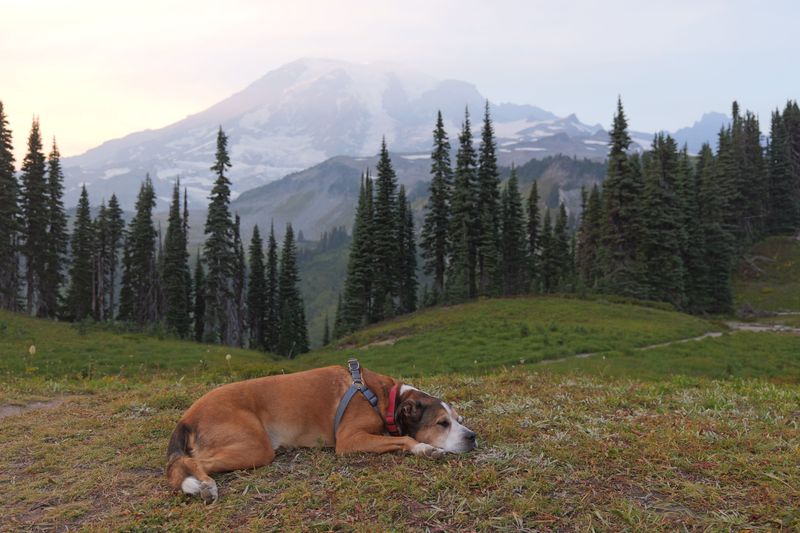
Driving two hours to a Cascade trailhead only to find gray air is a familiar summer letdown. Smoke moves faster than weekend plans.
Check air quality for the destination, not just your neighborhood, before loading the car.
Keep a plan B ready: a shorter lowland walk, a training session, or an indoor sniffing game at home. A backup means the day still feels good for both of you.
7. Lake Days Deserve A Second Look
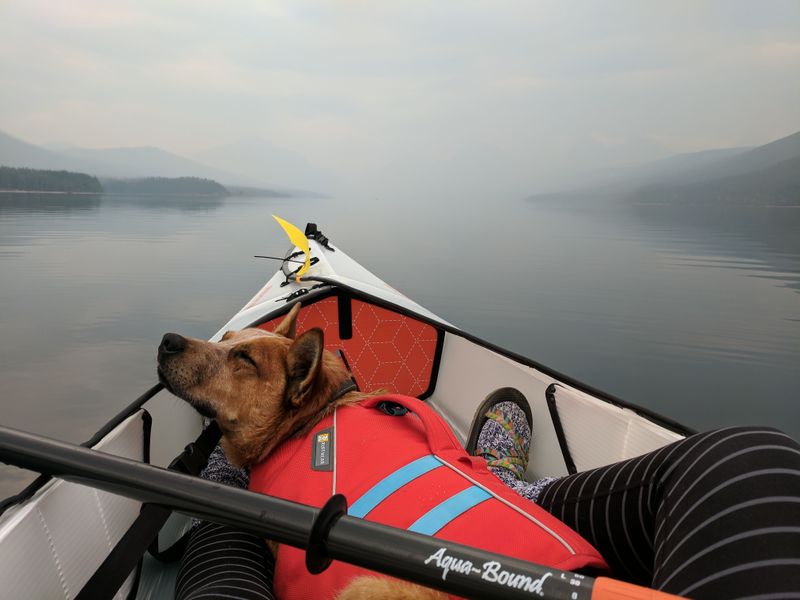
Water play feels like a safe alternative, but ash settles on lakes and puddles during fire season. Dogs drink while they swim.
Swimming also involves effort and heavy breathing in the same smoky air you were trying to avoid.
If the surface looks dusty or the shoreline sits under haze, save the trip. Bring clean water from home whenever your dog is near untreated outdoor water sources.
8. Indoor Games Carry More Weight Now

A tired brain beats a tired body on smoky days. Ten minutes of nose work can settle a dog as much as a long walk.
Puzzle feeders, stuffed rubber toys, scatter feeding, and hallway recall games all burn mental energy.
Teaching a brand new trick is another easy win. Many owners discover their dog is calmer after indoor enrichment weeks than after ordinary summers full of miles.
9. Your Dog Will Tell You When Smoke Bothers Them
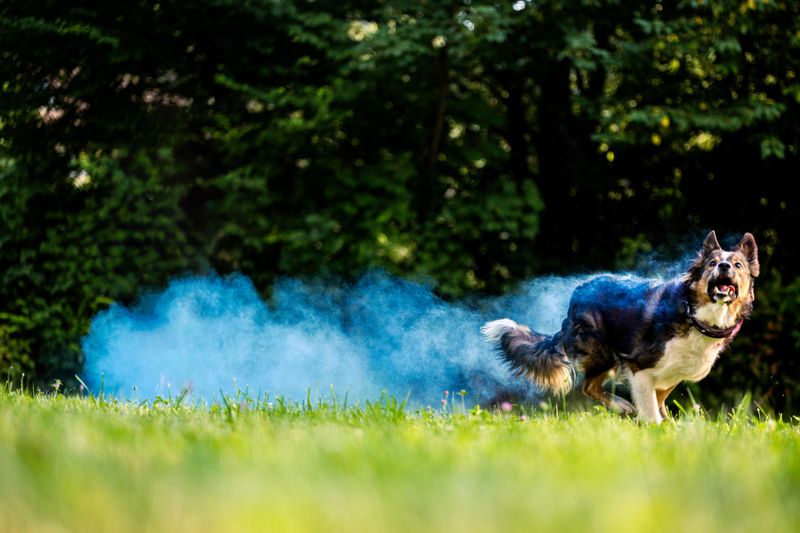
Coughing, gagging, or wheezing are the clearest signals. Watery eyes, nasal discharge, and a red-looking throat also count.
Other clues are quieter: unusual tiredness, skipping meals, faster breathing, or seeming disoriented.
Any of these deserve a call to your veterinarian, especially if breathing looks like hard work. Symptoms sometimes appear a day or two after exposure, so keep watching even once the sky looks better.
10. Potty Breaks, Not Workouts
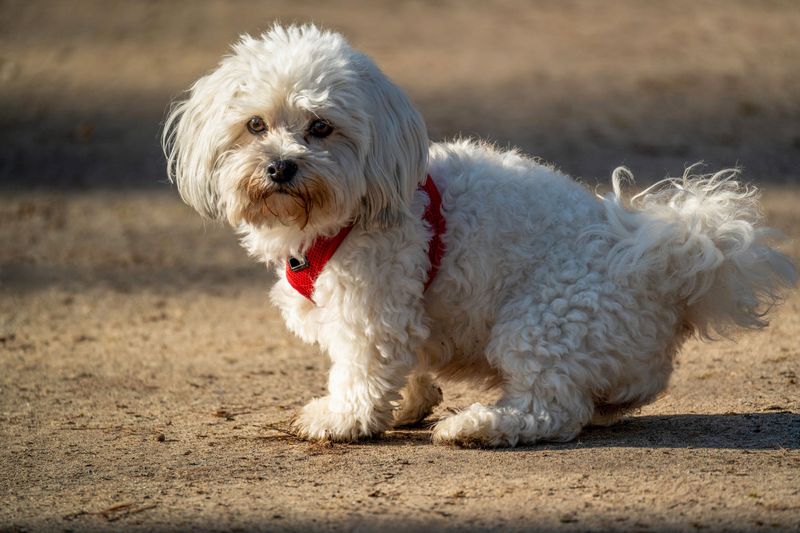
Veterinary guidance during air quality alerts is refreshingly simple: outside for business, then back inside. No lingering, no sniffing the whole block.
Some dogs resist a rushed routine at first. A treat waiting at the door speeds things up nicely.
Puppy pads or a covered patio spot can help small dogs and seniors on the worst days. Exercise needs get met indoors until the readings improve.
11. Wipe Down Before The Couch

Ash clings to fur and paw pads, and dogs groom themselves constantly. Those particles can end up swallowed.
A damp cloth over the paws and a gentle wipe or brush of the coat handles most of it.
Keep a towel by the door during fire season so the habit sticks. Longhaired breeds and dogs who roll in the grass benefit most from this quick post-walk routine.
12. Extra Naps Are Not Laziness
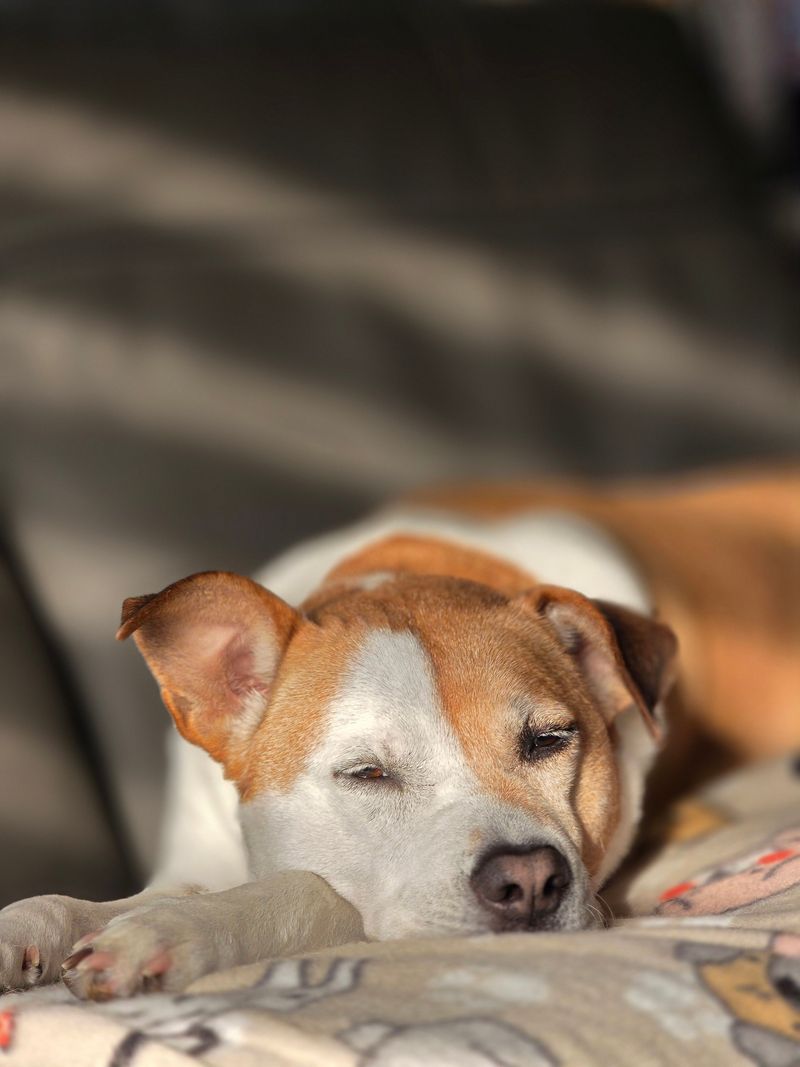
Owners often notice their dog sleeping more during smoke events. Tired lungs ask for downtime, and that is a reasonable request.
Fatigue and weakness are recognized responses to smoke exposure, so let your dog rest without nudging them into activity.
Fresh water should always be within reach, since smoky air dries out airways. If the sleepiness feels unusually deep or lasts, check in with your vet.
13. Trail Selection Shifts Along With The Wind
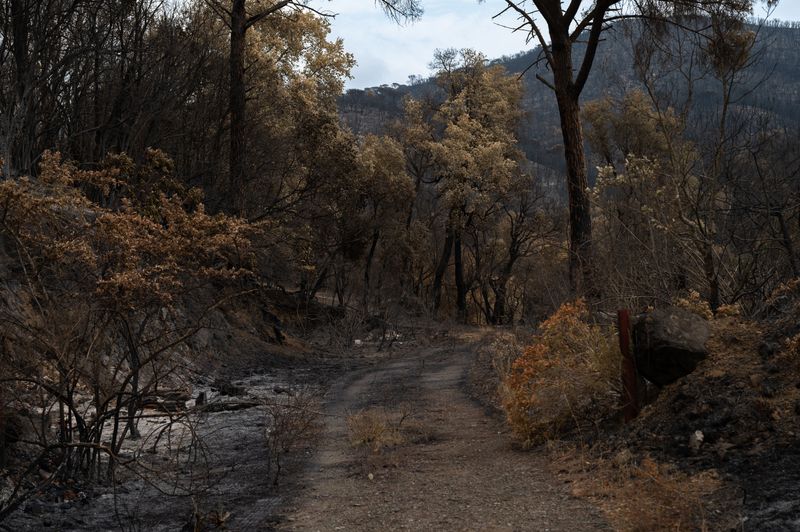
Eastern Washington and the west side rarely share the same air on any given August day. Smoke pools in valleys and drifts with the wind.
Some owners keep a short list of lower-elevation, closer-to-home routes for hazy weeks.
When numbers climb past unhealthy, though, the honest answer is no trail at all. Strenuous outings wait until conditions improve, no matter how appealing the forecast photos look.
14. The Air Inside Needs Attention Too
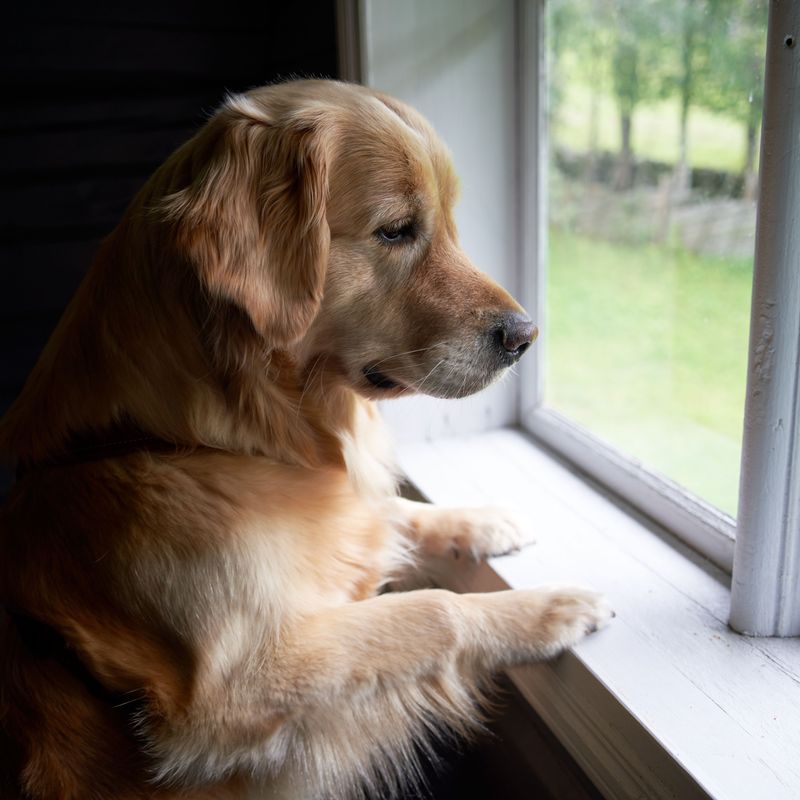
Homes are not sealed boxes, and smoke finds its way in. Keeping windows and doors closed makes a real difference.
Run air conditioning on recirculate with clean filters, and consider a portable HEPA purifier for the room your dog uses most.
Skip anything that adds indoor particles: frying, broiling, candles, fireplaces, and heavy vacuuming. A clean indoor space is where your dog does most of their recovering.
15. Trade Miles For Mental Work
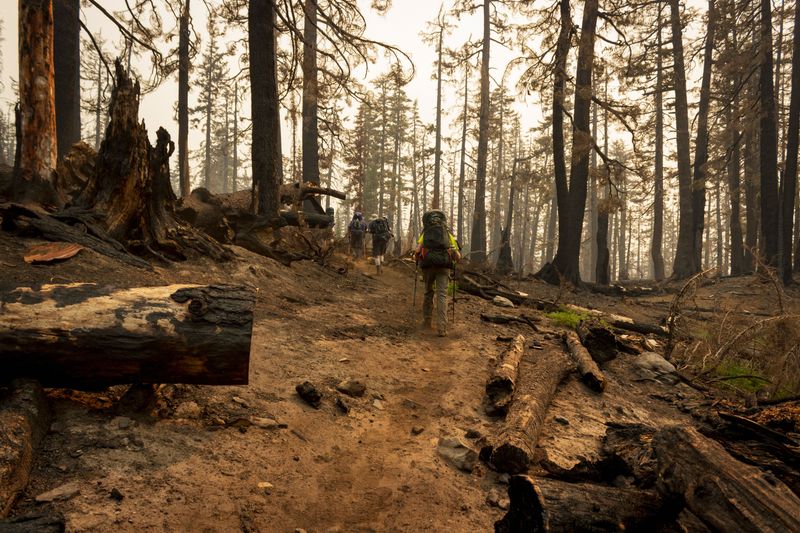
Distance loses its usefulness when the air is poor. Enrichment picks up the slack beautifully.
Hide treats around a room, teach a new cue, or feed dinner through a snuffle mat instead of a bowl.
Short training bursts of five minutes work better than one long session. Many dogs come out of smoky weeks with sharper manners, simply because their owners had to get creative indoors.
16. Smoke Shifts Hour By Hour

A morning that starts at moderate can slide into unhealthy by dinner. Wind direction changes everything.
Rather than checking once, glance at the AQI again before each outing. Conditions can also improve suddenly, opening a window for a proper walk.
Setting an air quality alert on your phone takes the guesswork out. Local health departments and Ecology both share updates during active fire weeks.
17. Never Push A Reluctant Dog Through Haze
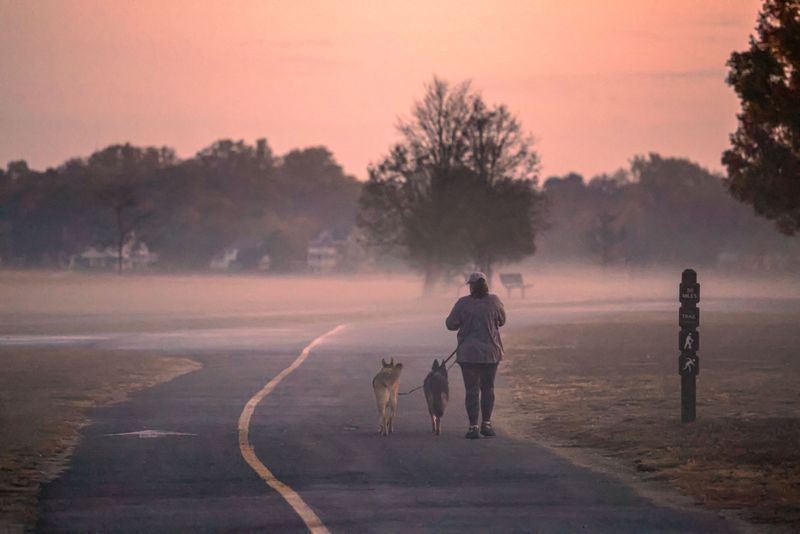
Here is the simplest rule going: if the air feels rough to you, it is rough for your dog too.
A dog who stops, turns toward home, or breathes heavily is communicating clearly. Honor that instead of finishing the route.
Skipped exercise for a few days does no lasting harm. Pressing on through thick smoke is the choice worth avoiding, especially for young, older, or flat-faced dogs.
18. Build Recovery Days Into The Season
Clear skies do not mean instant return to full mileage. Airways need time to settle after smoke exposure.
Ease back gradually with shorter, slower outings for a few days, watching for coughing or unusual tiredness.
Also worth knowing: a Washington law effective July 2025 asks local governments to plan for pets during wildfire evacuations. Check your county’s posted resources so you and your dog are ready.