What North Carolina Dog Owners Should Know About Wild Horses On Outer Banks Beaches
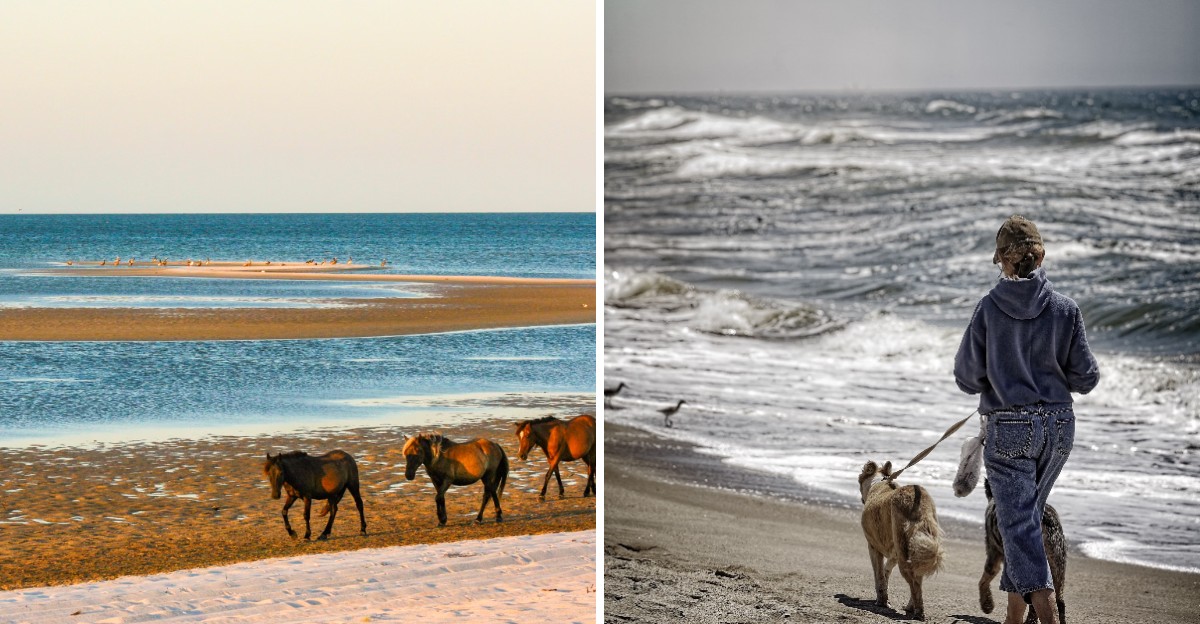
Sharing an Outer Banks beach with wild horses can be a special part of walking your dog. A little planning helps you enjoy that experience while respecting the horses and keeping your pet comfortable.
Rules differ between beach towns, protected areas, and horse habitats, so knowing your location matters. Before you head onto the sand, here is what to know about space, leashes, wildlife, and changing beach conditions.
1. Know Which Outer Banks Beaches Have Wild Horses
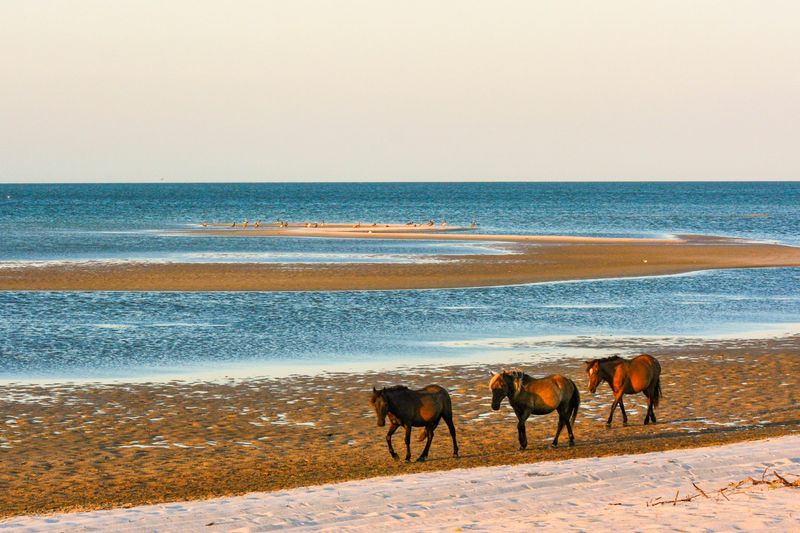
Not every stretch of Outer Banks sand has free roaming horses. The Corolla herd lives mainly north of Corolla, including the beaches around Carova.
Horses also live on Shackleford Banks, within Cape Lookout National Seashore.
Ocracoke’s pony herd occupies a managed enclosure, rather than roaming public beaches. Check your destination before planning a walk.
Knowing which herd lives nearby helps you find the right rules and avoid expecting horses where none normally roam during your visit.
2. Keep Your Dog Leashed Near Wild Horses
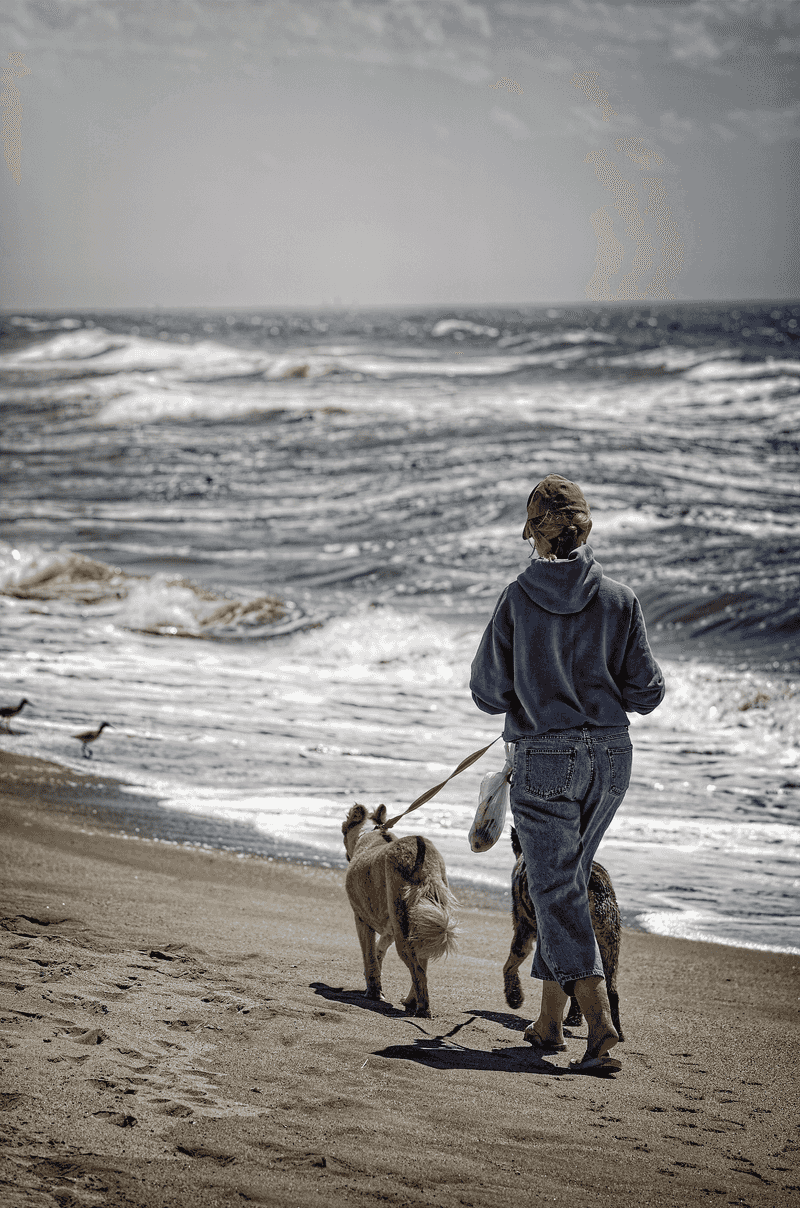
A leash gives you a reliable connection when your dog notices something exciting. Use a sturdy, fixed length leash near horse habitat, rather than allowing a retractable line to extend.
Keep your dog beside you, with enough slack for comfortable walking. Leash requirements vary across local beaches and federal lands, so confirm the applicable limit.
Even where other rules allow more freedom, keeping your dog leashed around horses remains the sensible safety choice for both animals.
3. Give Horses Plenty of Space
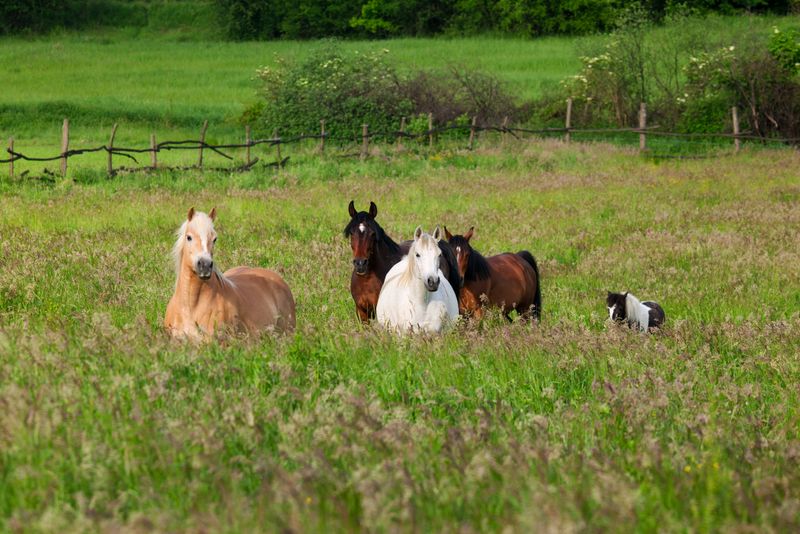
Distance is your best tool for a peaceful encounter. In Currituck County, people must stay at least 50 feet from wild horses.
Keep your dog well away, too, and allow extra room whenever possible.
At Cape Lookout, park guidance also calls for staying at least 50 feet away. Never use that minimum as a reason to approach.
If horses change direction toward you, move away calmly before the space becomes too narrow for comfortable passage nearby.
4. Recognize Signs That a Horse Feels Threatened
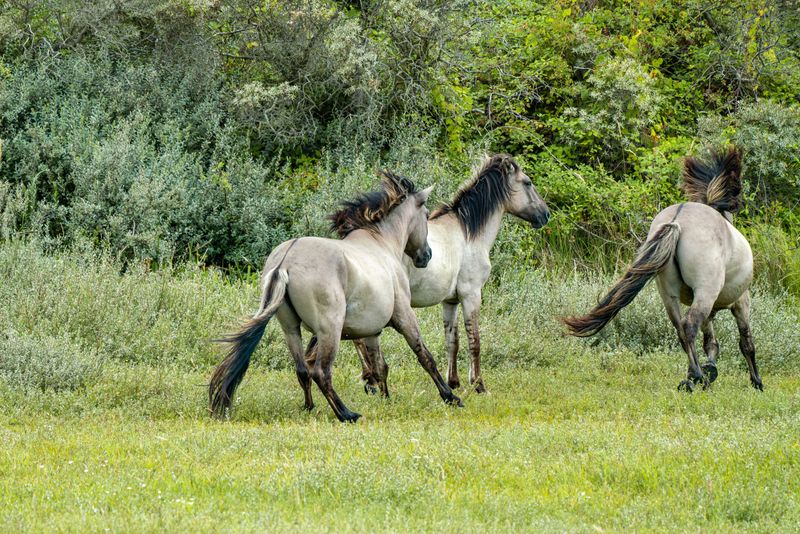
Pinned ears, a tense body, or a sudden turn toward your dog can signal discomfort. A horse may also stamp, toss its head, or move away.
No single sign tells the whole story.
Watch the horse’s overall behavior without waiting for a stronger warning. Quietly increase your distance if its attention fixes on your dog.
Avoid testing whether it seems friendly. Reading the situation early gives everyone more room and makes your next move much easier.
5. Never Let Your Dog Chase a Horse
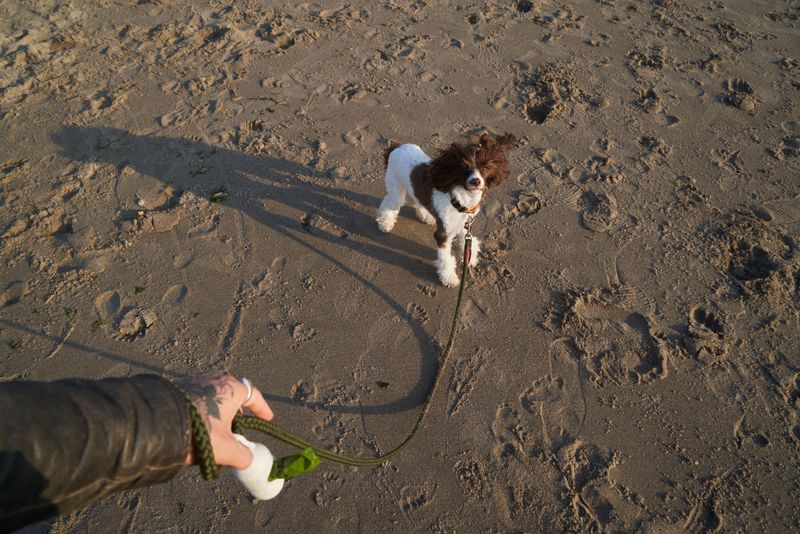
Even a playful dash can disturb a horse and start a difficult encounter. Dogs do not need to bite or bark to cause a reaction.
Running toward a herd is enough.
Practice recall and a simple turn away cue before your beach visit. Reward your dog for checking in with you instead of watching horses.
If excitement builds, leave the area. A shorter walk is better than asking an overwhelmed dog to manage too much stimulation.
6. Visit Corolla’s Northern Beaches With Caution
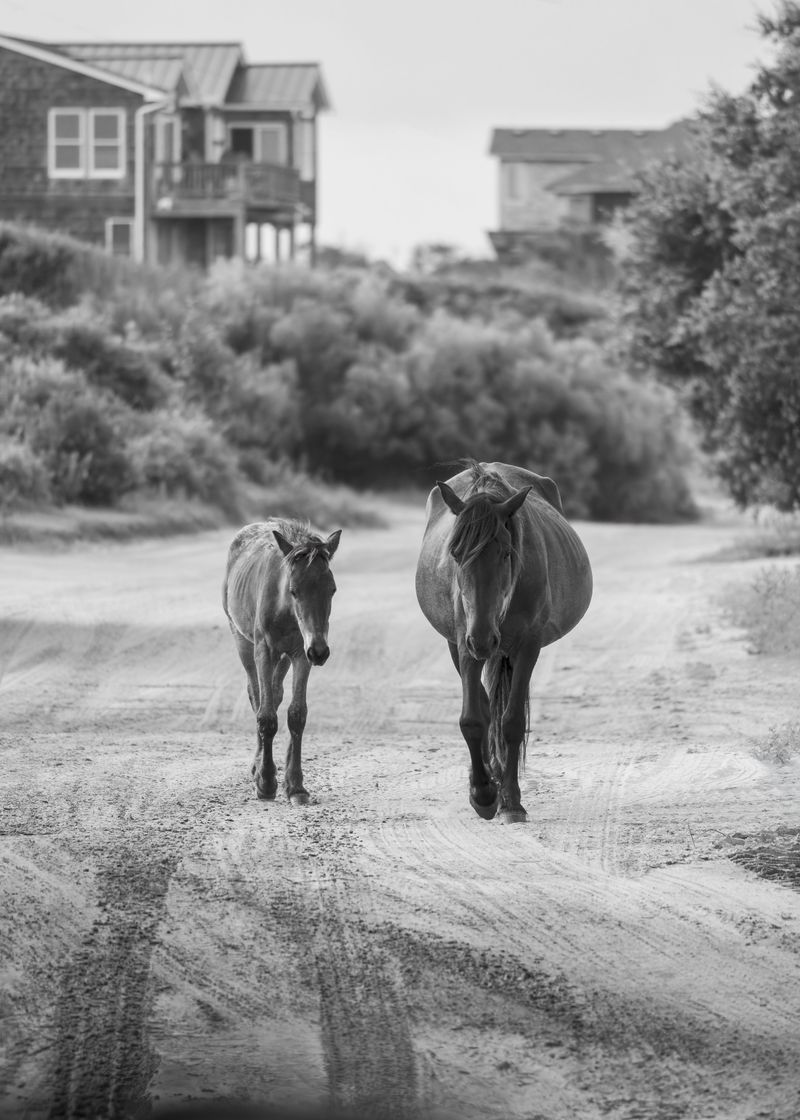
North of Corolla, the beach serves as both wildlife habitat and a travel route. Your walk may include moving vehicles, soft sand, and horses near houses or access paths.
Keep your dog close when crossing tire tracks, and watch in both directions. Avoid headphones that block approaching traffic.
Before entering a narrow route, check for horses ahead. Turn back if there is not enough space to pass safely without crowding animals or stepping into vehicle traffic.
7. Understand the Wild Horses’ Protected Status
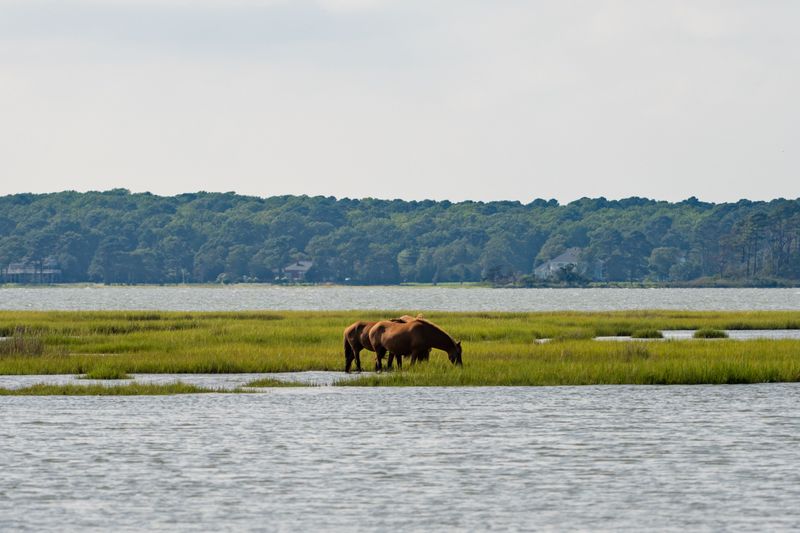
Wild horses are not beach pets, even when they stand quietly near visitors. Currituck County rules prohibit feeding, approaching within 50 feet, and other interference with its wild horses.
Shackleford horses also receive protection within a national seashore. Never offer snacks, leave food accessible, or encourage contact for a photograph.
Let horses choose their own movements without pressure from your dog. Respecting their protected status means observing quietly and following the rules for that specific herd.
8. Watch for Horses Before Letting Your Dog Explore
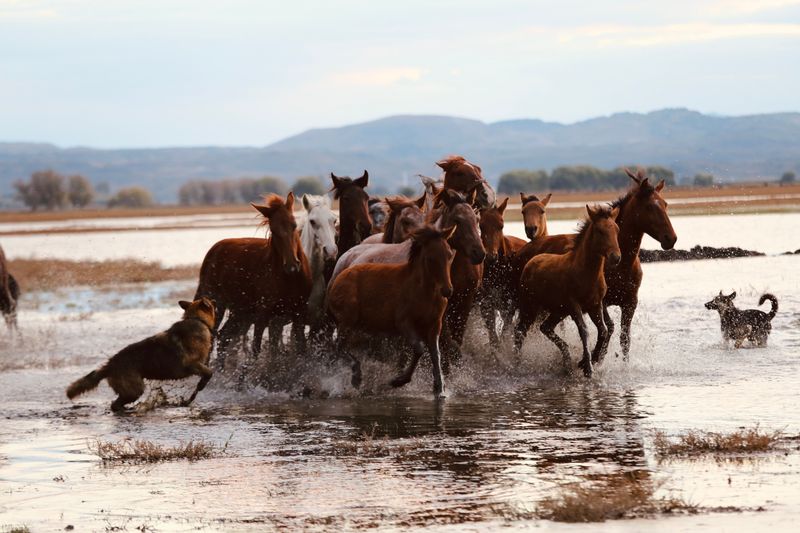
A quick look ahead can prevent an awkward surprise. Horses may stand near vegetation, behind a rise, or beside parked vehicles.
Scan the beach before giving your dog more leash.
Repeat that check as you move, especially near access paths and quiet corners. Keep your dog from disappearing behind dunes or buildings.
Finding hoofprints or manure is a useful reminder to stay alert, but neither tells you exactly where horses are at that particular moment nearby.
9. Avoid Walking Between Horses and Their Foals
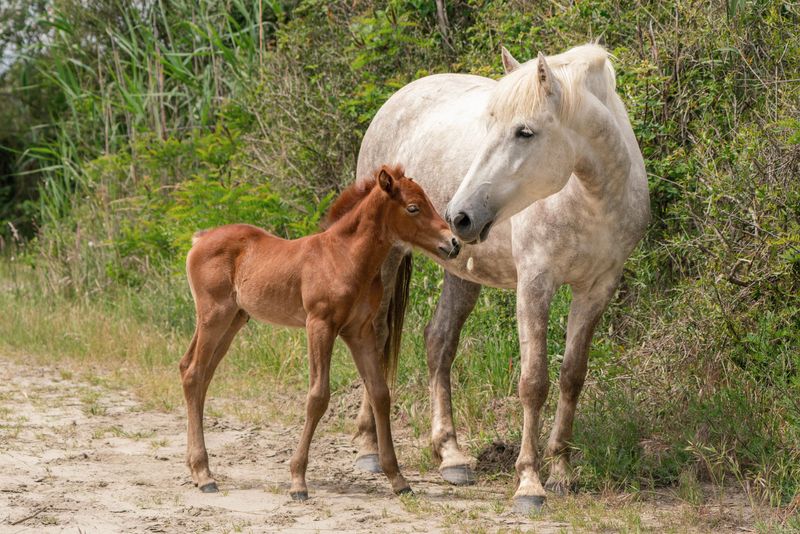
A foal can make a beach scene especially appealing, but families need uninterrupted space. Never step between a young horse and nearby adults, even if the opening looks convenient.
Keep your dog on the side farthest from the horses and choose another route. Adults may react when a dog approaches a youngster.
Avoid stopping beside the group for pictures. Watching from farther away lets you enjoy the moment without placing yourself inside the herd’s social space.
10. Know the Rules for Driving on Corolla’s Beaches
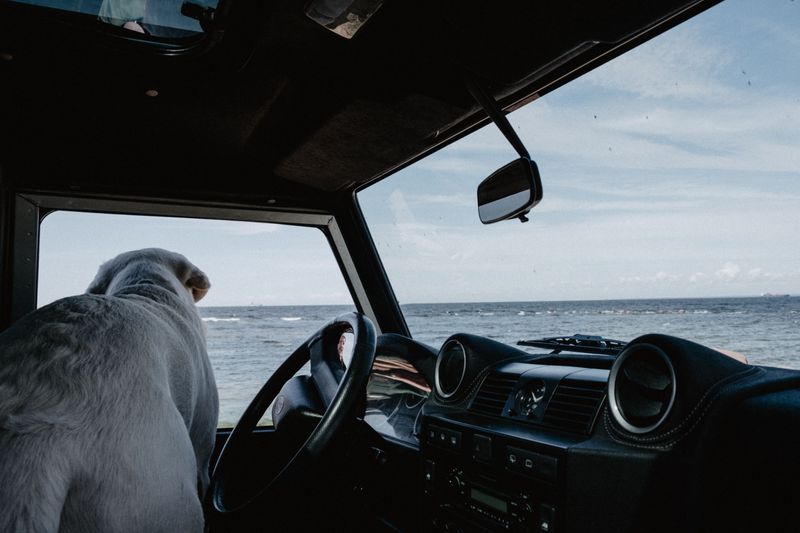
Beach driving requires more planning than following tire tracks. Currituck County sets driving, parking, and seasonal permit requirements for its northern beaches.
Check current county guidance before taking your vehicle onto the sand.
Use a suitable vehicle and follow posted speeds and travel lanes. Secure your dog inside while moving.
Before opening a door, check for horses and passing traffic. Attach the leash first so your dog cannot jump into an unexpected encounter beside your vehicle.
11. Choose Less Crowded Times Without Assuming the Beach Is Empty
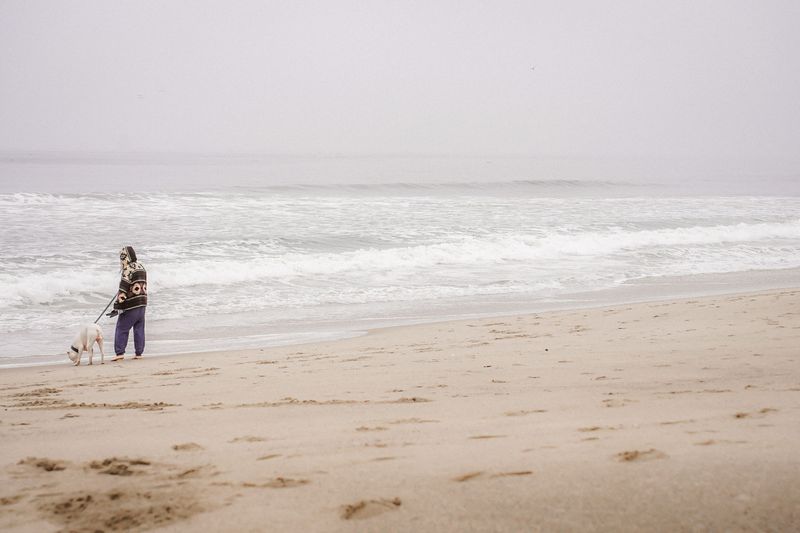
Morning walks can offer cooler sand and fewer distractions. Still, a quiet beach may hold horses, vehicles, anglers, or other dogs just beyond your view.
Choose daylight when you can see your surroundings clearly. Check the tide, weather, and available walking space before setting out.
If water pushes everyone into a narrow strip, consider another access point. Fewer people can make handling easier, but good visibility and enough room matter more than finding an empty shoreline.
12. Bring Water and Shade for Your Dog
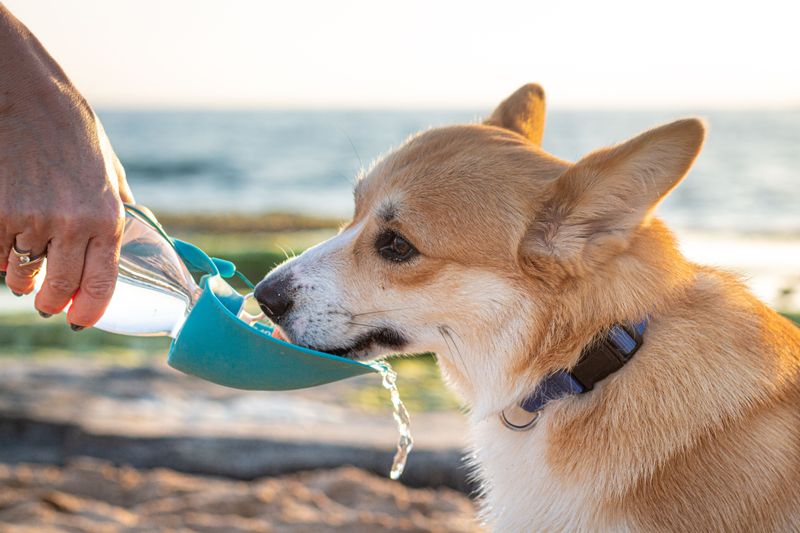
Ocean breezes can make a warm walk feel cooler than it really is. Pack fresh water, a bowl, and a plan for shade.
Do not rely on seawater for drinking.
Offer breaks before your dog seems tired, and shorten outings during hot weather. Heavy panting, weakness, or unusual behavior means you should stop and seek veterinary advice promptly.
Set up rest spots away from horse routes, leaving animals plenty of room to travel without approaching you.
13. Check Your Dog’s Paws After Walking on Sand
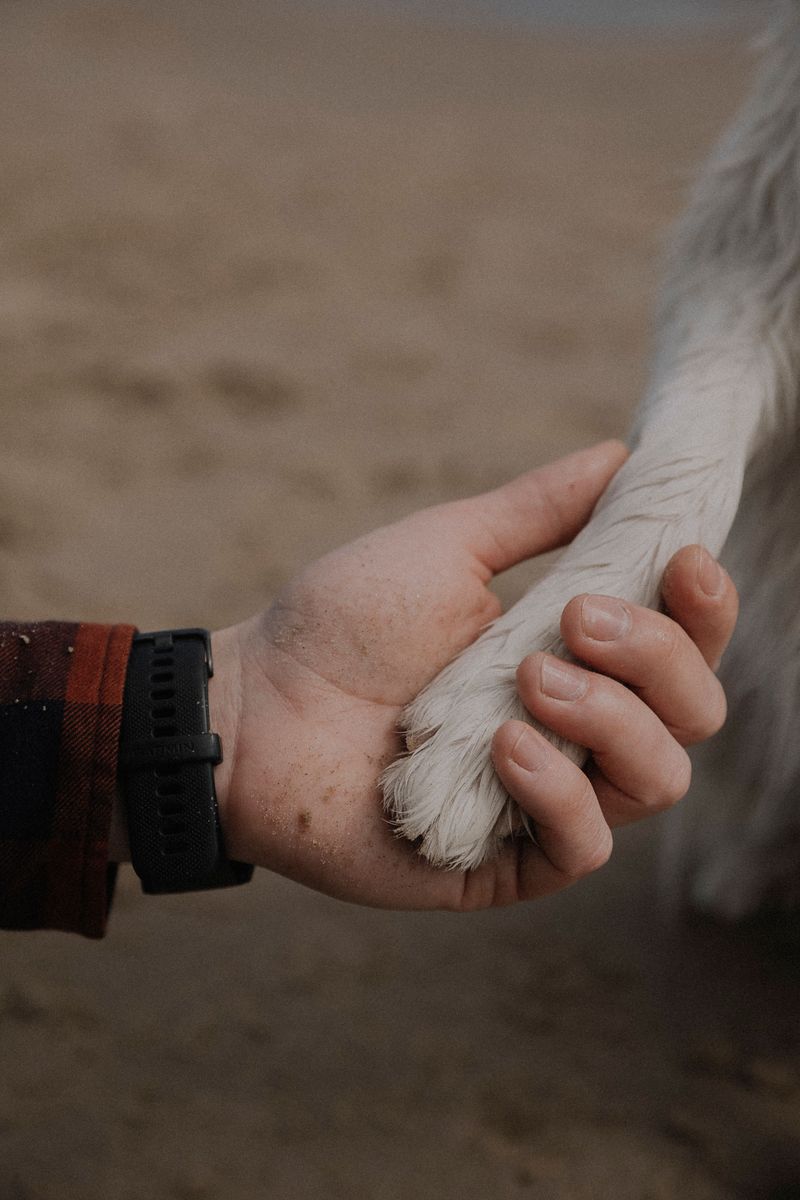
Sand hides small shells, sharp debris, and surfaces warmed by the sun. Choose cooler walking times, and avoid areas that feel uncomfortably hot.
Watch for limping or repeated paw licking.
Afterward, rinse your dog’s feet with fresh water and look between the toes. Check pads for irritation or anything lodged in the fur.
Contact your veterinarian about ongoing discomfort or a wound. Comfortable paws help your dog follow calmly when you need to move away from horses.
14. Know Where Dogs Are Allowed at Cape Hatteras National Seashore
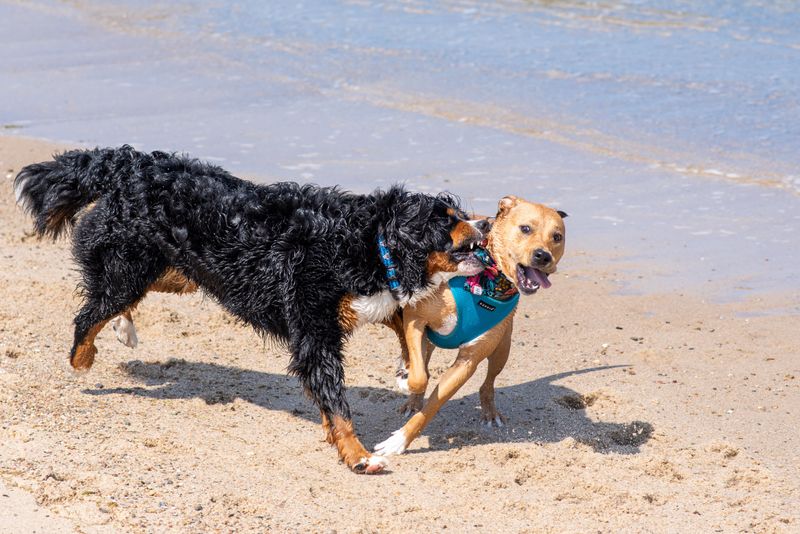
Cape Hatteras has different pet rules from nearby towns. Dogs must remain on leashes no longer than six feet.
Pets are prohibited on designated swimming beaches and inside park buildings.
Other restrictions include protected wildlife areas, so read signs at each access. Check current National Park Service guidance before visiting.
Remember that Ocracoke’s ponies occupy an enclosure, not an open beach herd. Do not assume horse viewing areas allow dogs simply because nearby shoreline permits leashed pets.
15. Keep Dogs Away From Dunes and Wildlife Nesting Areas
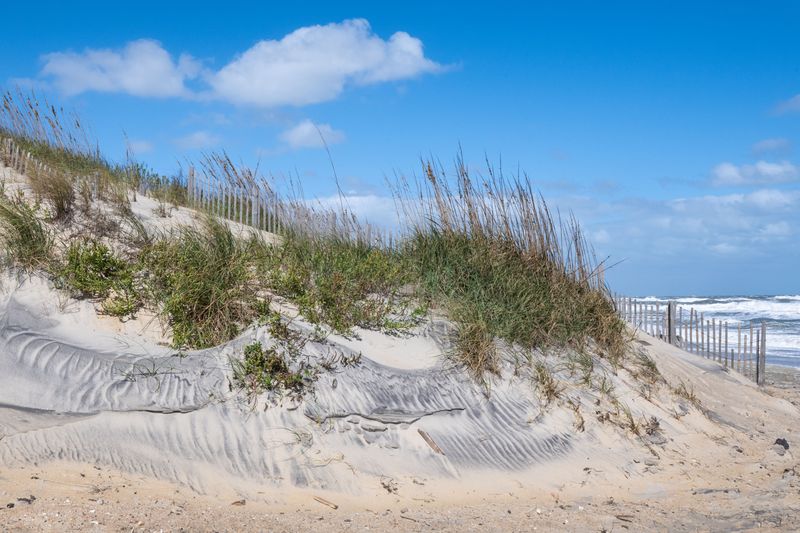
Roped sections protect more than a quiet patch of sand. Shorebirds and sea turtles use Outer Banks beaches, and closures can change as nesting activity shifts.
Stay outside posted boundaries, even when you cannot see an animal. Keep your dog from digging near nests or chasing birds.
Use designated dune crossings instead of climbing through beach grass. Horses may use nearby habitat too, so choose open routes that protect wildlife while giving your dog a predictable path.
16. Prepare for Sudden Encounters on Quiet Beach Stretches
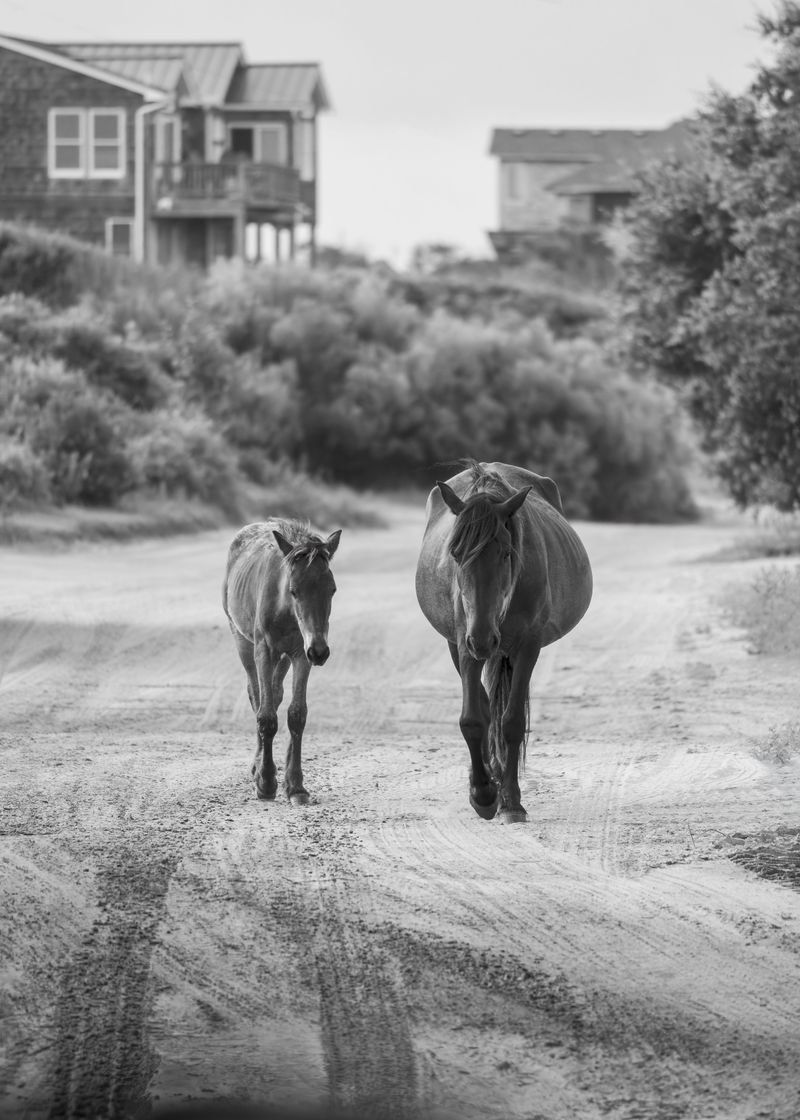
A bend in the path can hide a horse until you are closer than expected. Before walking, decide how you will turn around with your dog beside you.
Carry treats where you can reach them, and practice a calm change of direction. Avoid routes that leave no room to retreat.
If a horse appears, pause briefly to assess your exit, then move away steadily. Do not squeeze past simply because returning to your starting point feels inconvenient.
17. Know What to Do if a Horse Approaches Your Dog
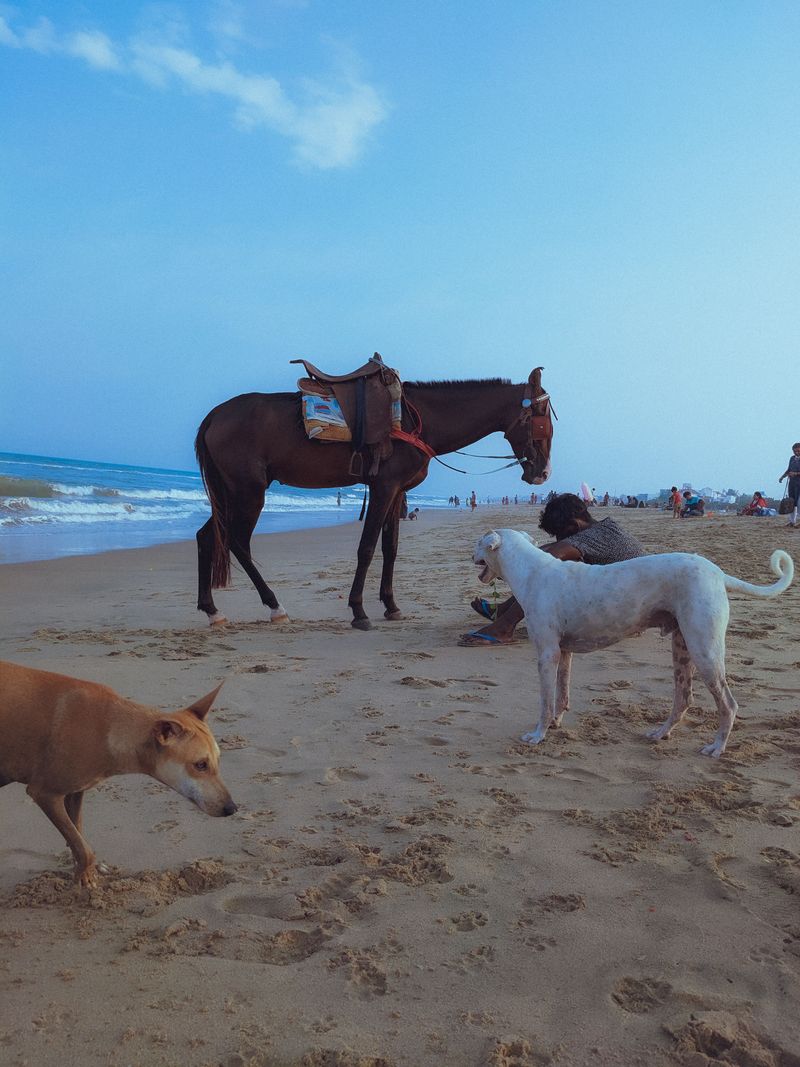
Sometimes the horse closes the gap, despite your careful planning. Gather your leash without yanking, keep your dog close, and move away calmly.
Give the horse an open route.
Do not offer food, reach toward its face, or encourage your dog to investigate. Avoid running or trying to push the horse away.
If safe movement becomes difficult, seek help from nearby staff or local authorities. Report concerning encounters to the appropriate horse management organization once safely away.
18. Check Local Beach Rules Before Every Visit
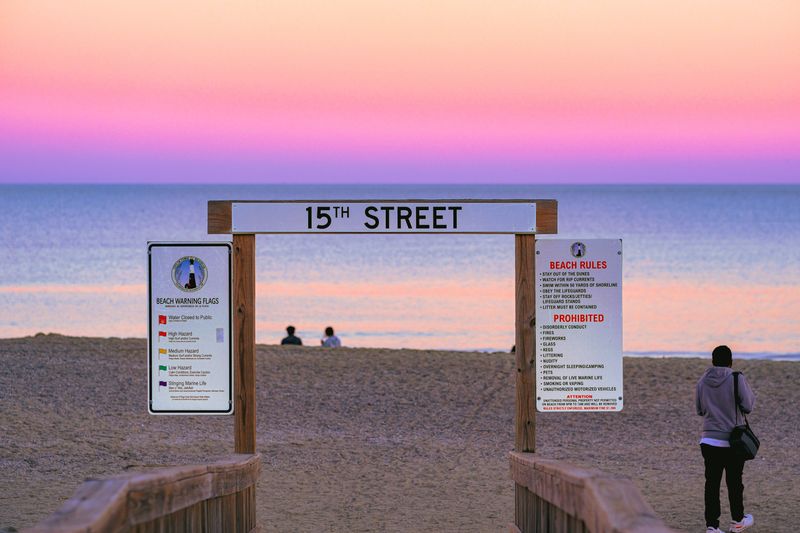
Yesterday’s beach plan may need a small update today. Town rules, seasonal dog hours, wildlife closures, and access conditions can differ along the same coastline.
Check official town, county, or National Park Service pages before leaving home. For Corolla horse questions, consult the Corolla Wild Horse Fund and county guidance.
Save relevant contact details on your phone. Pack the leash, leave generous space, and stay flexible.
A calm dog and a respectful distance make memorable beach companions.