What To Do If A Moose Approaches Your Dog In Alaska
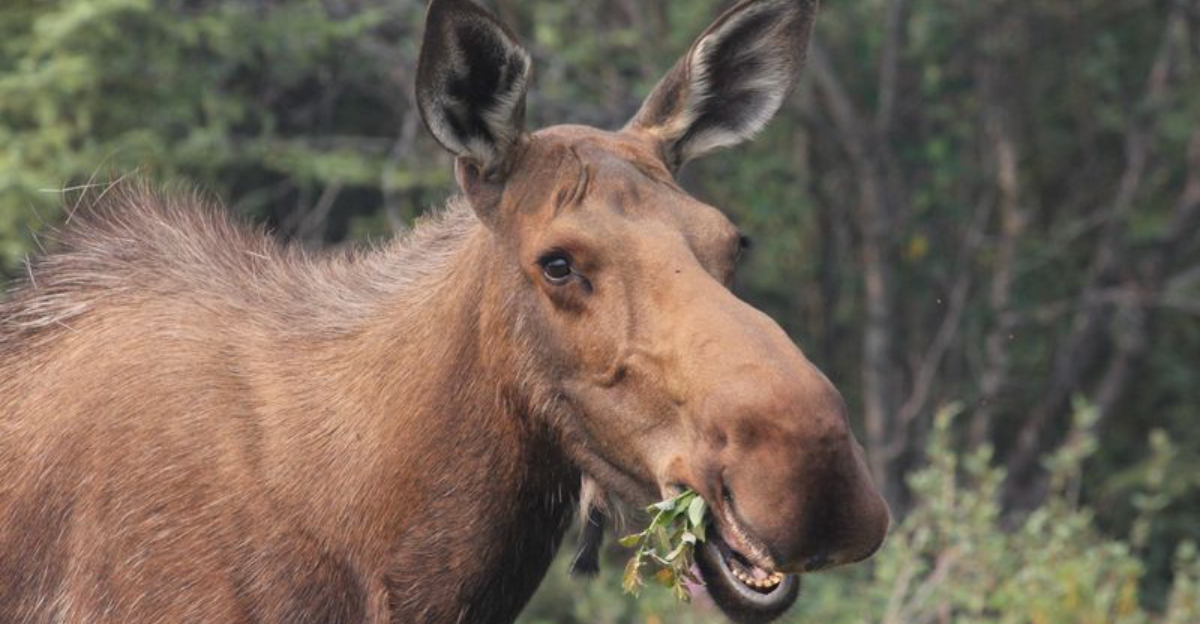
Walking a dog in Alaska means sharing the trail with moose, sometimes closer than you would like. Most encounters end quietly, especially when the person holding the leash knows what to do.
If you live here, or you are visiting with your dog, a little preparation goes a long way. Think of this as the friendly rundown a neighbor might give you before your first walk through the birches.
Calm, practical, and worth remembering.
Keep Your Dog Close and Calm
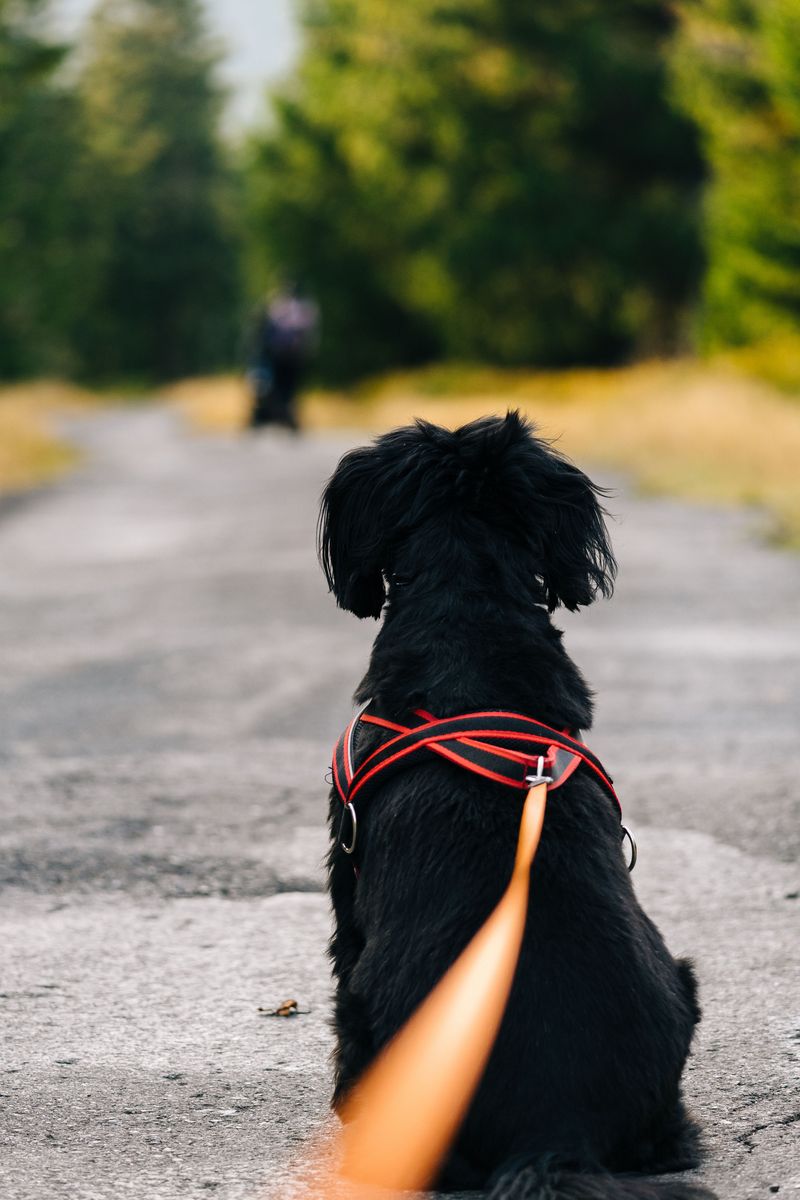
The first move is almost always the leash. Shorten it, gather the slack, and bring your dog right against your leg.
Dogs read our energy quickly, so steady breathing and a quiet voice help more than commands shouted in a rush.
A settled dog is far less likely to bark, lunge, or bolt forward. That single choice often keeps a tense moment from becoming a real problem on the trail.
Never Let Your Dog Chase a Moose
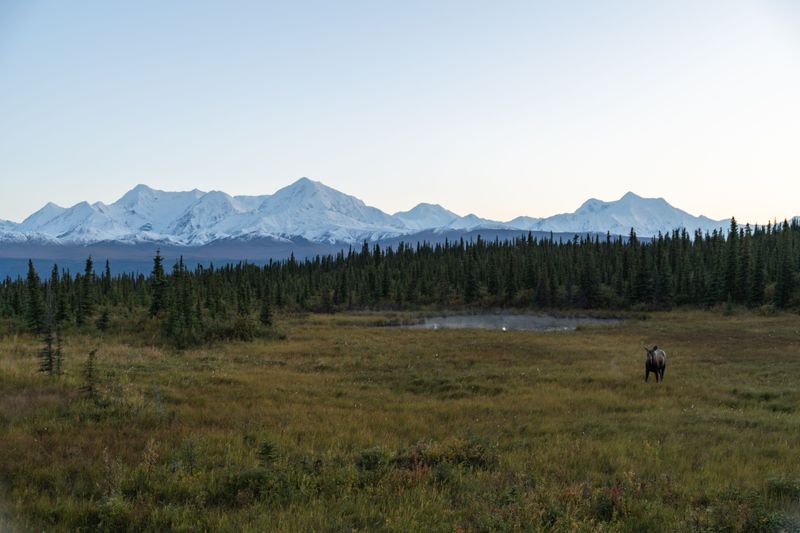
Chasing looks like play to a dog. To a moose, it reads as a predator closing in, and wolves are the reason why.
Even a friendly, wiggly retriever can spark a defensive reaction just by circling or yapping.
Hold the leash firmly and do not release your dog for any reason. No recall command works reliably once instinct takes over and the chase begins.
Give the Moose Plenty of Space
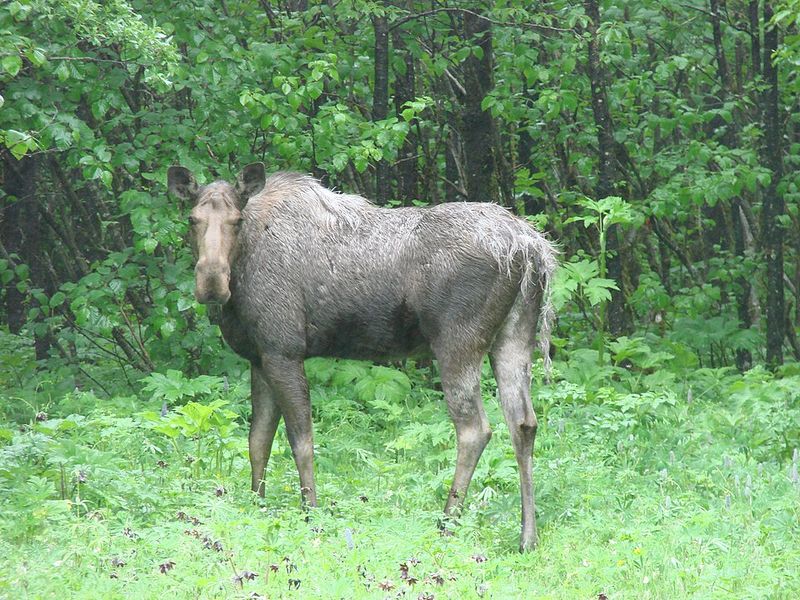
Distance solves most moose problems. Alaska wildlife officials recommend getting behind a large tree, vehicle, building, fence, or other solid obstruction when a moose becomes aggressive or charges.
Step backward slowly and quietly, keeping your dog tucked beside you as you go.
Avoid sudden movements, and never try to squeeze past for convenience. If the trail is narrow, turning around and taking a different route costs you nothing but time.
Your walk can wait a few minutes.
Watch the Moose’s Body Language
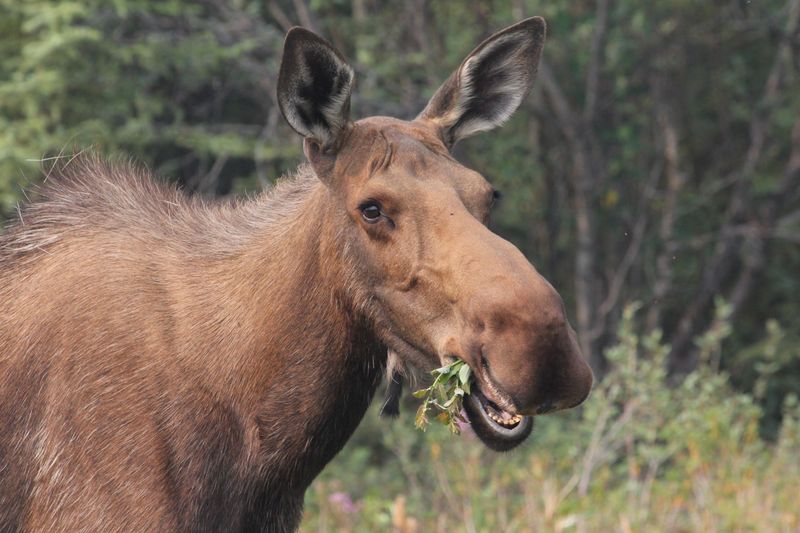
Moose telegraph their mood clearly once you know the signs. Ears flattened back, hair standing up along the shoulders, licking lips, or stomping a front hoof all say the same thing: back off.
A moose swaying its head or lowering it toward you wants more space immediately.
Watching for these signals gives you a head start. Respond early, and the situation usually resolves itself without drama.
Do Not Try to Touch or Feed It
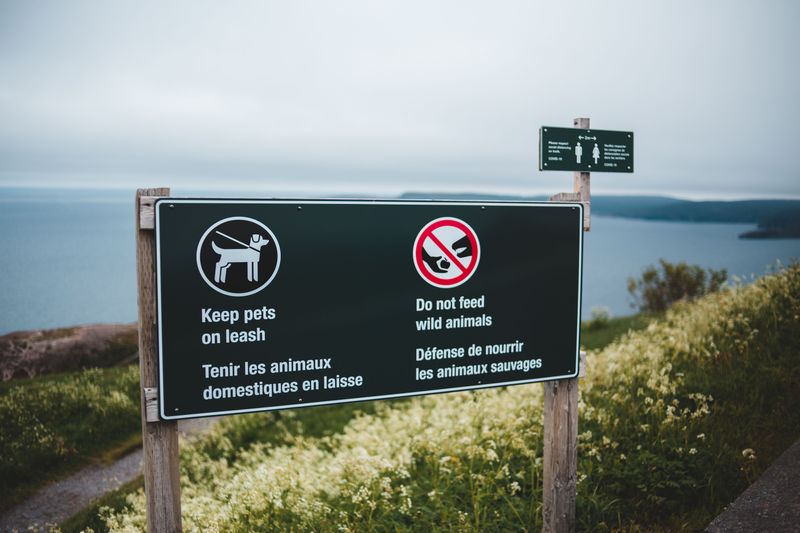
A grazing moose can seem oddly relaxed, almost tame. That calm appearance fools plenty of visitors every summer.
Feeding wildlife is discouraged across Alaska, and in many situations it is prohibited outright. Check local regulations if you are unsure.
Skip the close-up photo too. Use your camera’s zoom from a safe distance instead, keep your dog leashed, and let the animal go about its business undisturbed.
Put Your Dog Behind You
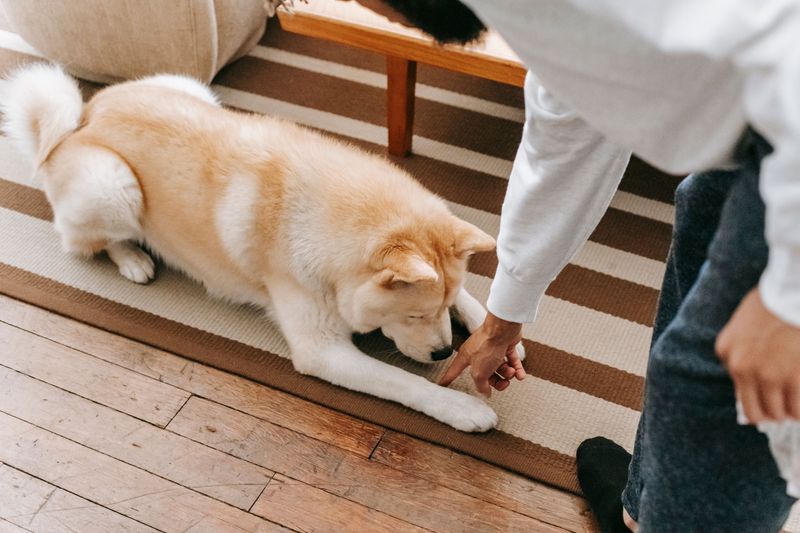
Positioning matters more than people expect. When practical, place your body between the moose and your dog while you retreat.
Moose often react to the dog specifically, so hiding it from view can lower the tension.
Keep the leash short and wrapped securely in your hand. Do not tie it around your wrist, since you may need to adjust quickly while moving toward safer ground.
Move Away Without Running
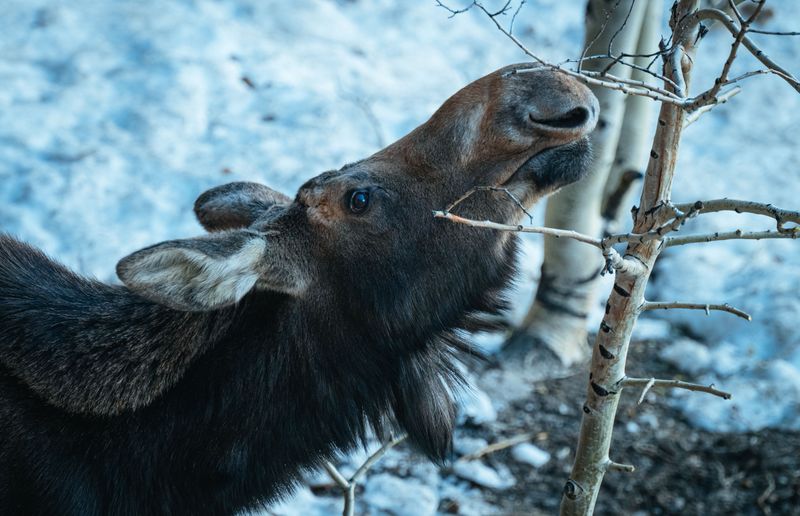
If the moose is not charging, back away and give it plenty of room rather than trying to push past it. If a moose charges, however, Alaska wildlife officials advise running and getting behind a solid object such as a tree or vehicle.
Walk at a normal, deliberate pace instead. Keep your eyes on the moose while scanning for an exit route.
Talking quietly to your dog helps both of you stay level. Steady footsteps, one after another, usually put comfortable distance between you before the moose loses interest entirely.
Use a Solid Barrier if One Is Nearby
Something solid between you and a moose is worth a lot. Parked vehicles, sheds, garages, thick tree trunks, and sturdy fences all work.
Wildlife experts in Alaska often mention getting behind a large tree, since a moose cannot pivot as tightly as a person can.
Guide your dog to the protected side with you. Wait there until the animal moves along and the path is clear.
Be Extra Careful Around Calves
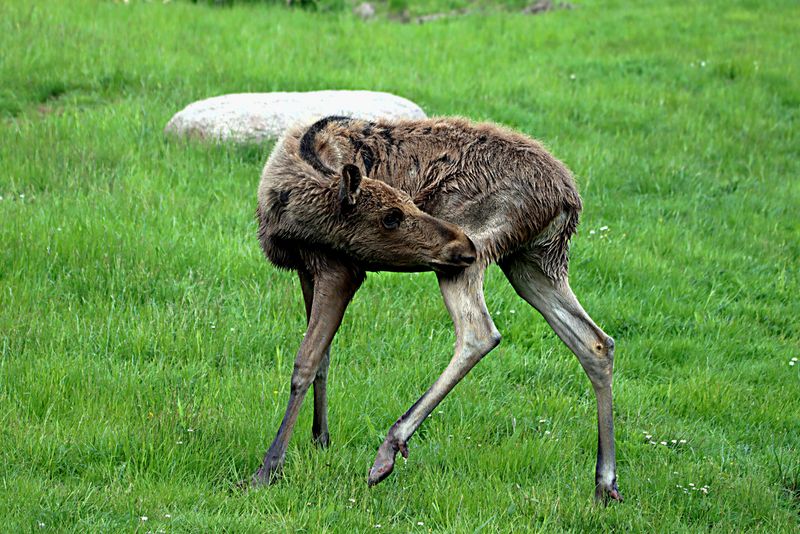
If you spot a calf without its mother in view, be especially cautious because the mother may be nearby or you may have moved between the two. Back away and leave the area in the direction you came.
Cow moose defend their young energetically, and dogs raise their alarm fast.
Turn around. Do not attempt to walk between them or continue on the same trail.
Choose another route, and consider avoiding that area for the rest of the week.
Avoid Getting Between a Moose and Its Escape Route
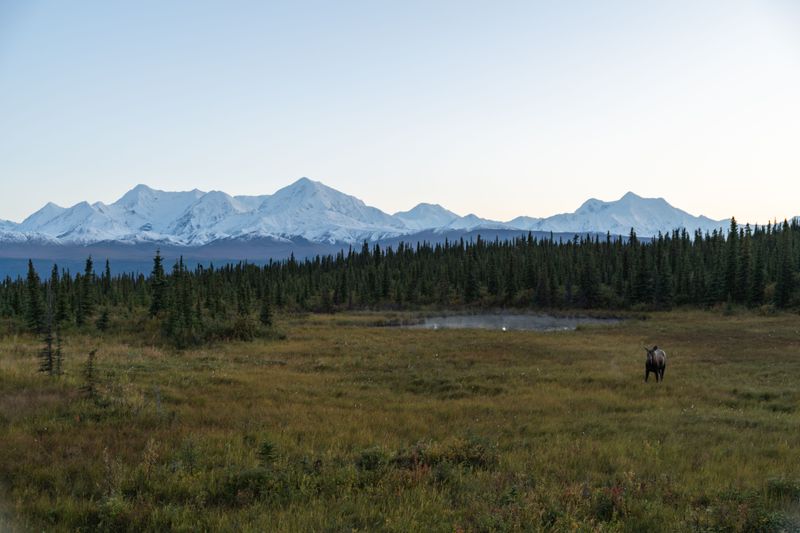
Cornered animals make worse decisions. A moose boxed in by fences, buildings, or people has fewer options and grows more defensive.
Notice where it would naturally go, then stay off that line.
In neighborhoods this often means backing out of a driveway or yard rather than pressing forward. Give the moose an open path, keep your dog beside you, and let it choose to leave.
Keep Dogs Leashed in Moose Country
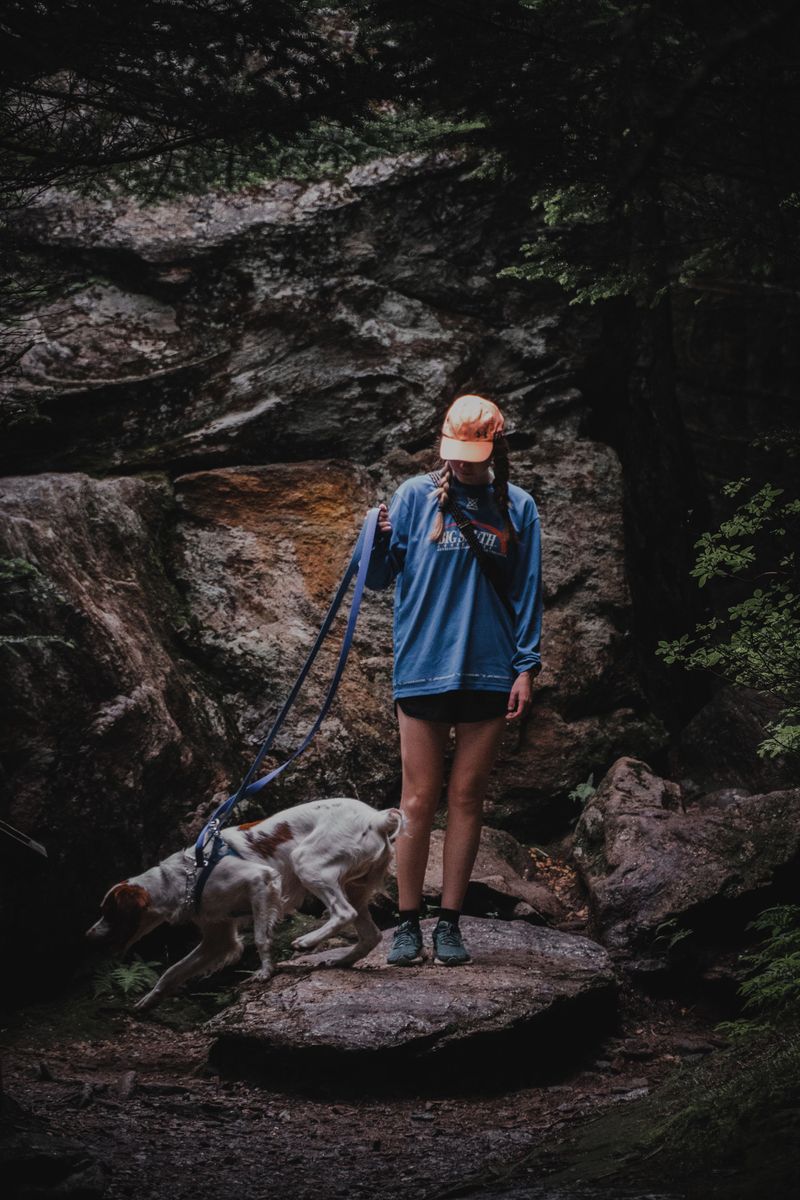
Leash laws vary by borough and municipality in Alaska, so check the rules where you walk. Many parks and trail systems require leashes outright.
Beyond the legal side, the practical case is strong. Wildlife appears without warning, and a leash keeps your dog from making the first move.
A standard six-foot leash beats a long retractable one here. Control matters more than freedom on these trails.
Stay Alert Near Trails and Brush
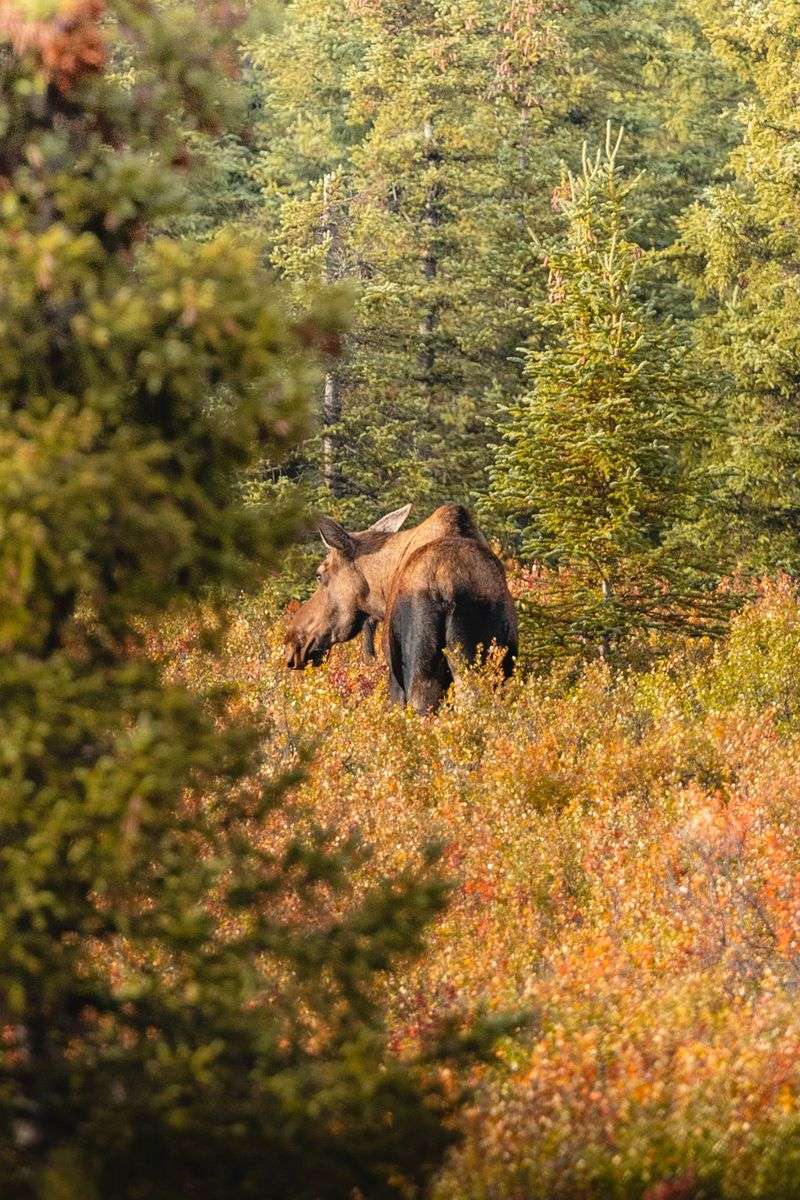
Thick willow and alder swallow a thousand-pound animal surprisingly well. Many close encounters happen simply because nobody saw the moose until it moved.
Slow down before blind corners and stream crossings, and glance ahead through gaps in the brush.
Leaving earbuds at home helps you hear branches snapping. Dawn and dusk demand extra attention, since moose are often active and light is poor.
Know When to Retreat Completely
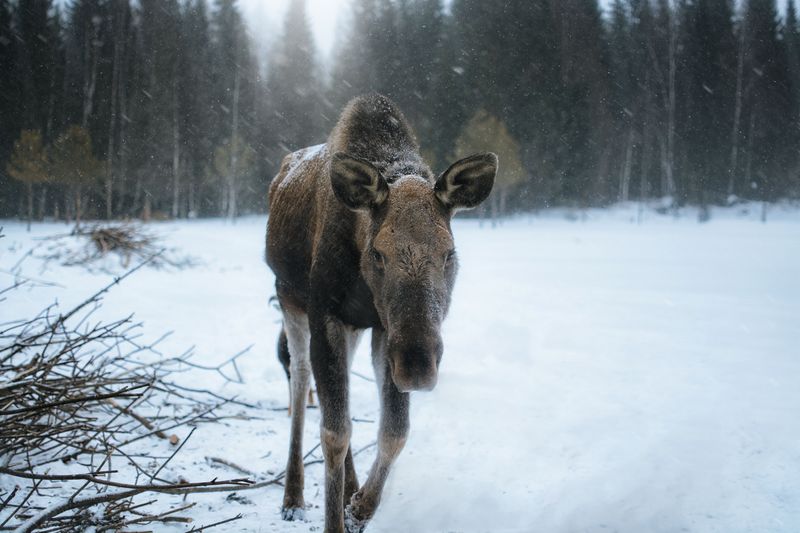
There comes a point where watching stops being smart. If the moose keeps closing in, stomps, or lowers its head, leaving becomes the whole plan.
Forget the photo and forget finishing the loop.
Head toward a road, building, or vehicle with your dog right beside you. Retreating early is not overreacting.
Experienced Alaskans do it regularly and think nothing of the interrupted walk.
Do Not Rely on Your Dog to Handle the Encounter
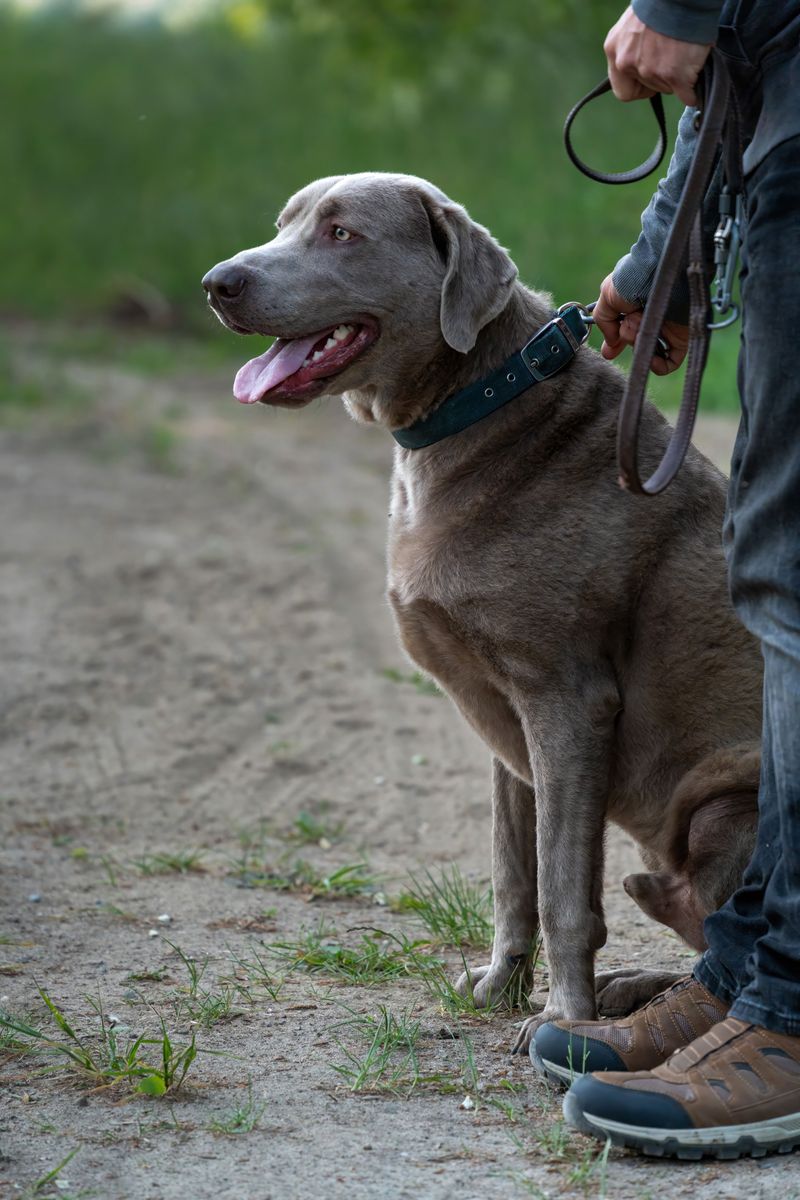
Dogs do not understand the math here. A confident barker may act like it has everything under control, which it does not.
Protective instincts are lovely at home and unhelpful in front of wildlife.
You are the one making decisions, so make them early. Shorten the leash, break your dog’s focus with a treat or a turn, and lead it away before curiosity becomes commitment.
Give the Moose Time to Leave
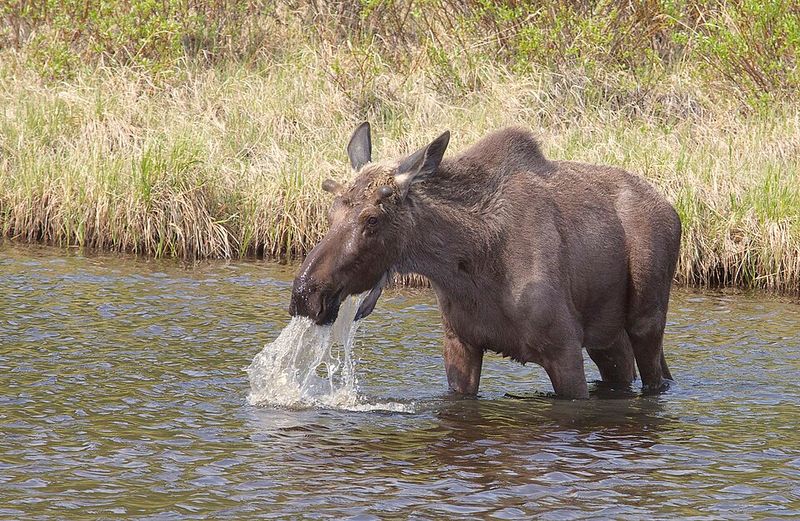
Patience is an underrated tool. Moose frequently wander off on their own once nothing pressures them.
Find a spot with distance or a barrier, settle your dog, and simply wait it out.
Resist the urge to shout, wave, or honk the animal along. Rushing a moose accomplishes little and can make things tense.
Alaskans in moose-heavy neighborhoods lose plenty of minutes this way, and nobody minds.
Be Particularly Cautious During Calving Season
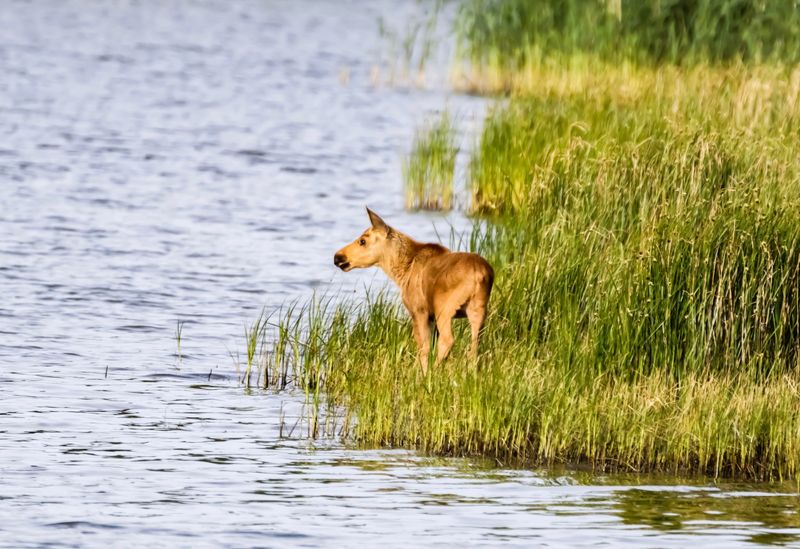
Late spring into early summer is calving time across much of Alaska, roughly May and June. Cows are noticeably more protective then.
Autumn rut brings its own edginess among bulls, so awareness matters year round.
During these stretches, keep walks short in brushy areas and stick to open routes with good sightlines. After you get clear, check your dog for scrapes and contact a veterinarian if anything worries you.