What Georgia Dog Owners Should Know About Snakes Near Water
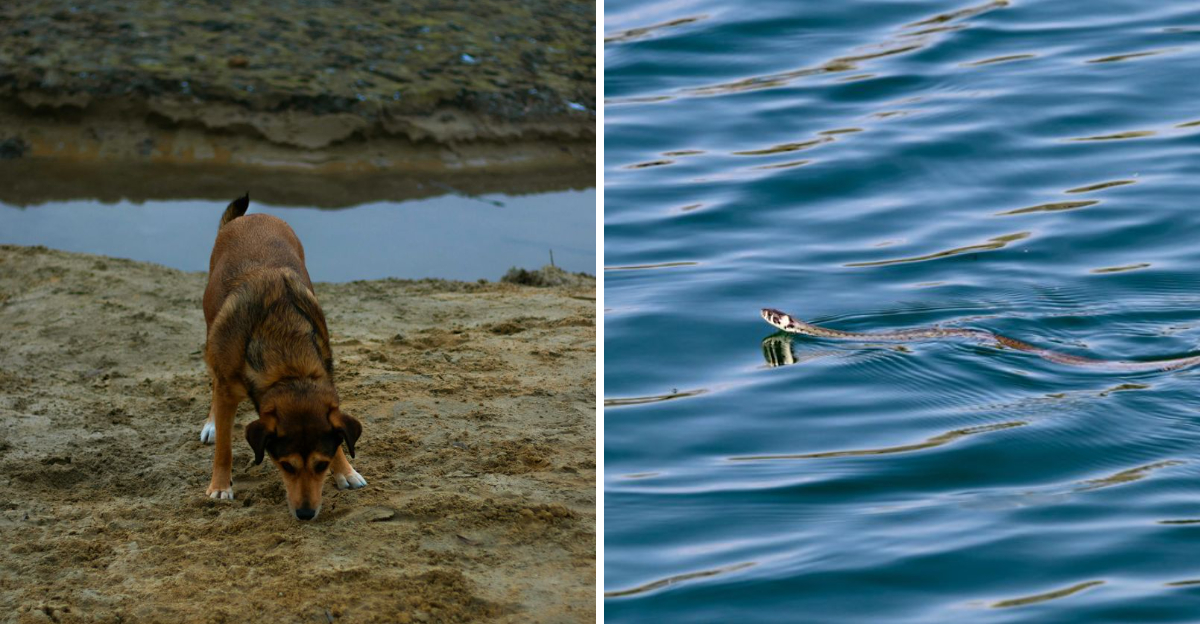
Georgia’s lakes, rivers, and wetlands are beautiful places to walk your dog. They also attract a wide variety of snakes, and that can make some pet owners nervous.
The good news is that most snakes your dog might encounter near water are harmless, and a little knowledge goes a long way.
Read on to learn what every Georgia dog owner should know before heading to the water’s edge.
Not Every Snake Near Water Is a Cottonmouth
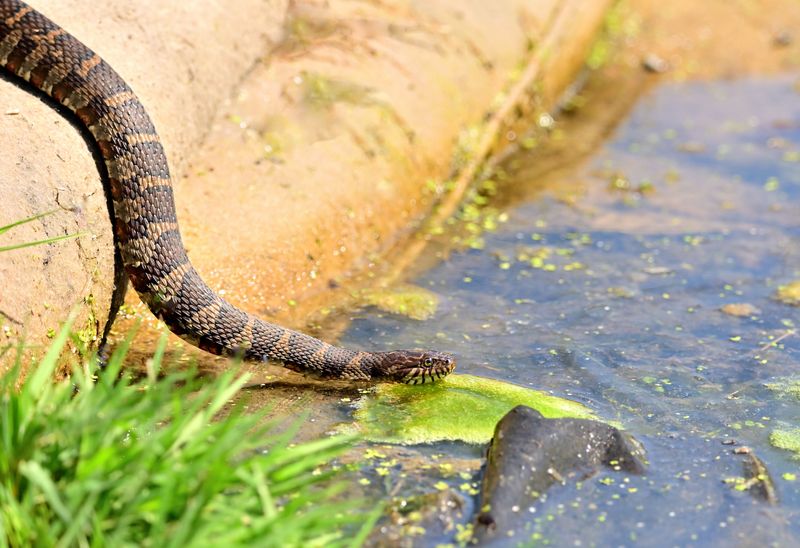
Georgia is home to five harmless watersnake species in the genus Nerodia, and at least one lives in every county across the state. Brown water snakes, banded water snakes, and their relatives are strong swimmers with thick bodies and dark patterns.
They look a lot like cottonmouths to the untrained eye.
Knowing that harmless snakes outnumber venomous ones near water can help you stay calm. Panic leads to poor decisions, and a steady head keeps both you and your dog safer on the trail.
Cottonmouths Really Do Live Near Water
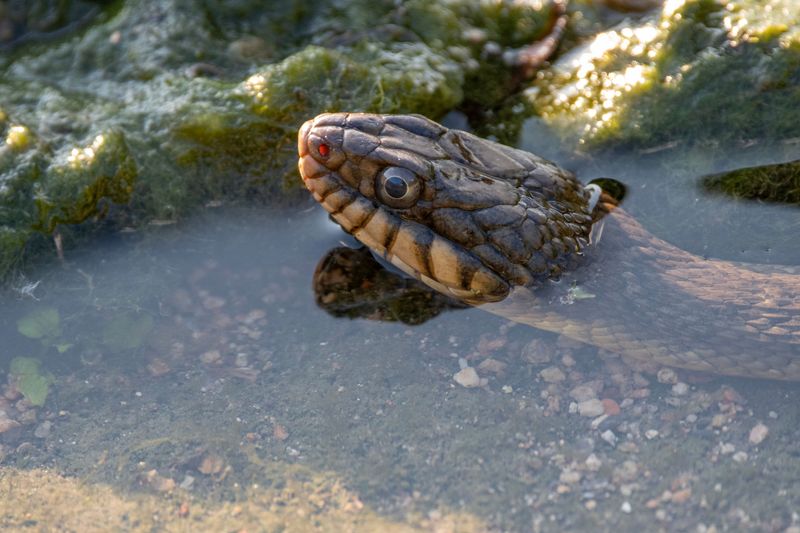
Cottonmouths, also called water moccasins, genuinely prefer aquatic habitats. You can find them in swamps, marshes, slow-moving streams, and the edges of ponds across much of Georgia.
They are heavy-bodied, often dark brown or nearly black, with a broad, flat head.
Cottonmouths are absent from about one-third of Georgia, including most of the upper Piedmont and the northeastern mountains. If you hike regularly, check a reliable range map for your specific county before assuming they are present.
Keep Your Dog Close Near Dense Shoreline Vegetation
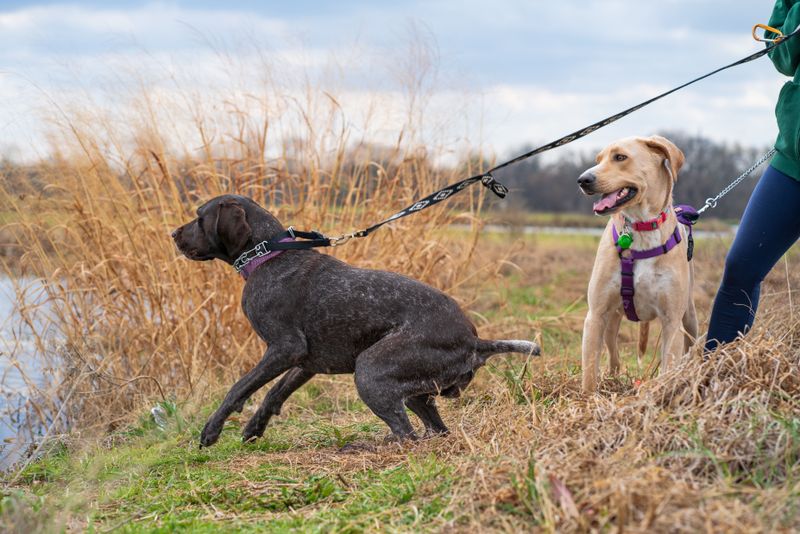
Thick grass, overhanging brush, and tangled roots along a shoreline are exactly where snakes rest and hunt. Your dog’s curious nose can push right into that cover before you even notice a snake is there.
Keeping your dog on a short leash near vegetation cuts that risk significantly.
A standard six-foot leash gives you enough control to redirect quickly. Retractable leashes near dense shoreline cover can leave your dog too far ahead to protect safely.
Never Let Your Dog Investigate a Snake
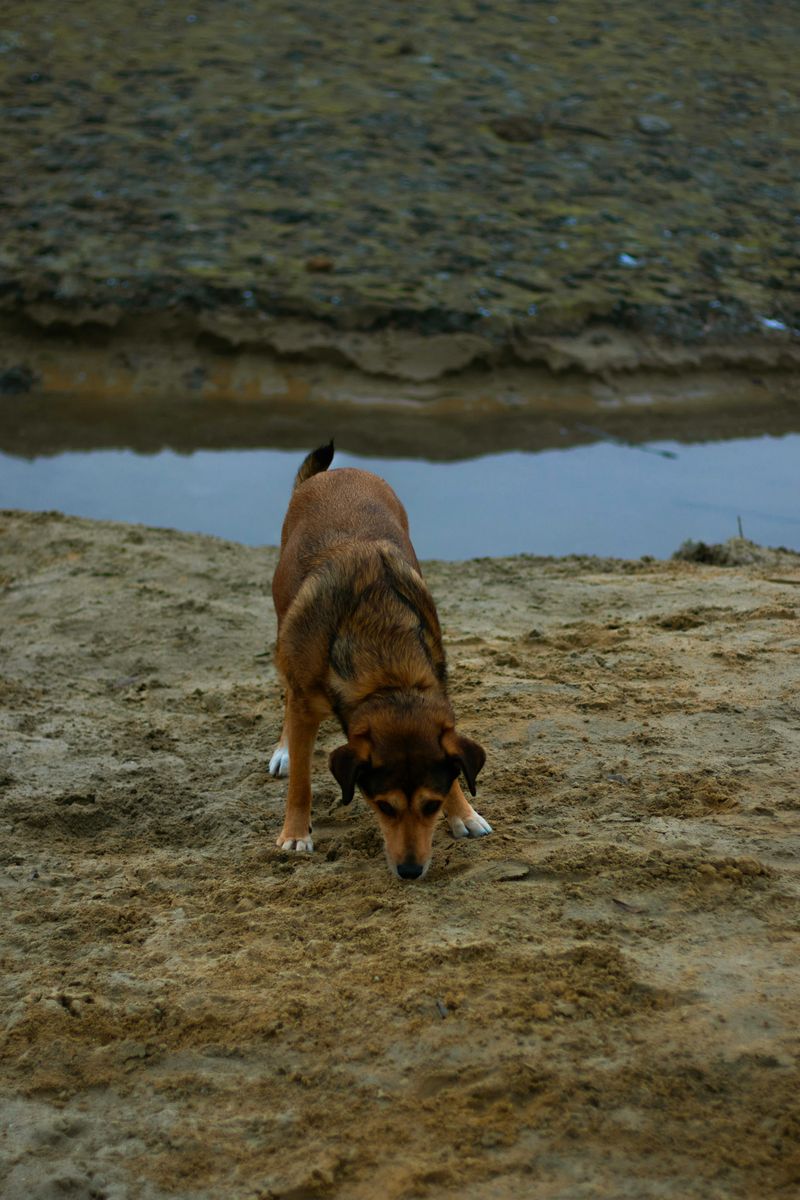
Dogs investigate the world nose-first, which puts their face dangerously close to any snake they find. A snake that feels cornered will defend itself, and a bite to the snout or face can cause serious swelling very quickly.
Most bites happen because a dog gets too close.
Redirect your dog calmly and move away without rushing. Sudden movement can startle a snake into striking.
A steady, quiet retreat is always the right call when you spot one nearby.
A Snake in the Water Does Not Automatically Mean Danger
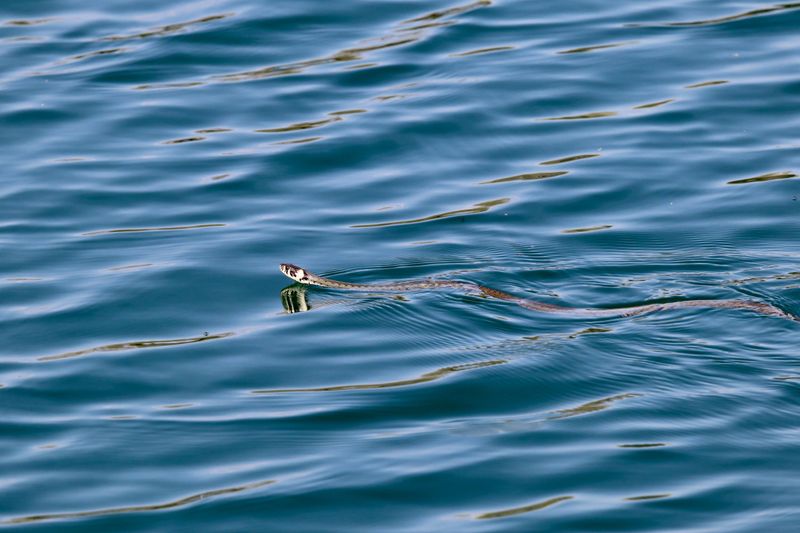
Seeing a snake glide across a pond or river is startling, but harmless watersnakes swim every single day. They hunt fish and frogs in the water, and they are excellent swimmers.
A snake crossing a lake is usually just going about its routine.
Your job is simply to keep your dog from chasing or intercepting it. Staying calm yourself helps your dog stay calm too.
Most water encounters end uneventfully when people give snakes the space they need.
Swimming Alone Does Not Identify a Cottonmouth
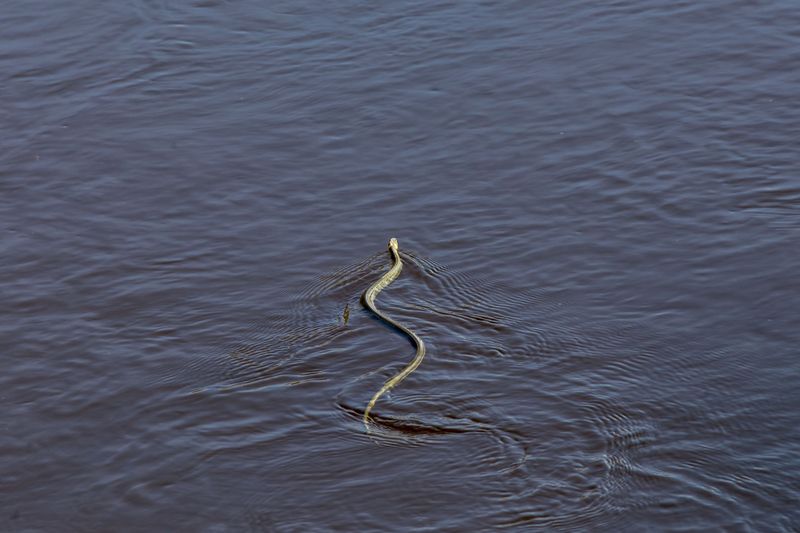
A common myth says cottonmouths swim with their entire body on the water’s surface, while harmless snakes swim lower. Researchers have found that all watersnakes in Georgia can swim either way depending on conditions.
You cannot reliably identify a species by its swimming posture.
Body shape, head shape, and overall coloring are better clues, but even experts sometimes struggle at a distance. The safest rule is to keep your dog away from any swimming snake, regardless of how it moves through the water.
Do Not Let Your Dog Chase a Swimming Snake
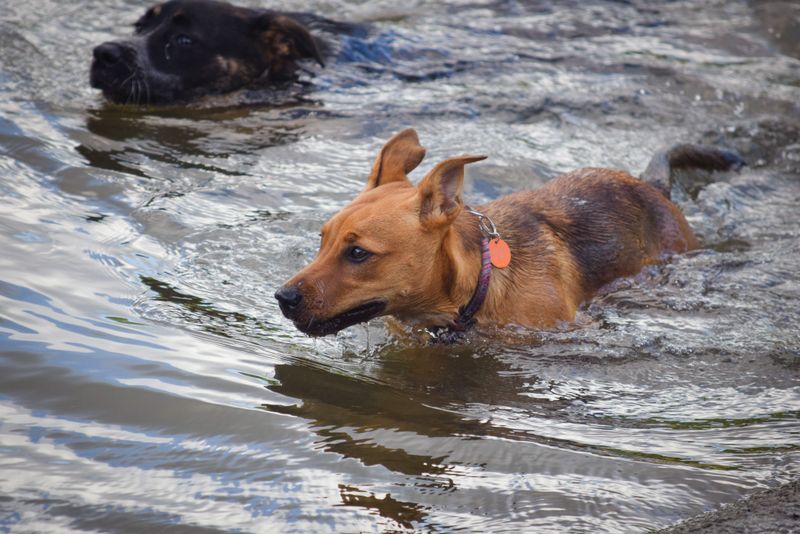
A dog splashing after a swimming snake can corner it against the bank or underwater vegetation. A cornered snake, venomous or not, will bite in self-defense.
Even a bite from a harmless watersnake can cause bleeding and infection that requires veterinary care.
Call your dog back firmly and move away from the water’s edge until the snake has passed. Chasing a snake into the water also puts your dog in an environment where you have very little control over what happens next.
Cottonmouths Are Venomous and Bites Are Serious
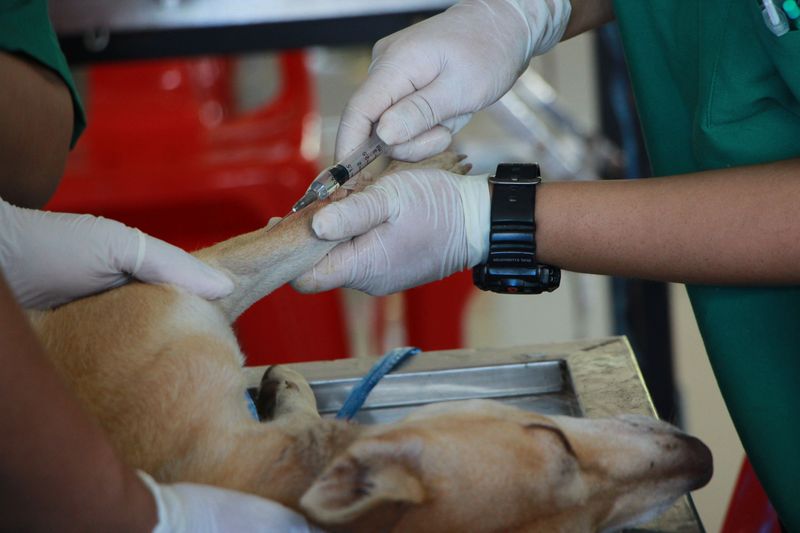
Cottonmouth venom is hemotoxic, meaning it breaks down tissue and affects blood clotting. A bite on a dog can cause rapid swelling, tissue damage, and serious illness.
Smaller dogs are at greater risk because the venom affects a larger proportion of their body weight.
Prompt veterinary care is critical after any suspected venomous bite. Antivenom may or may not be recommended depending on the severity of the bite and your dog’s size.
Your vet will make that call based on what they observe.
Snakes Are Generally Not Looking to Chase Dogs
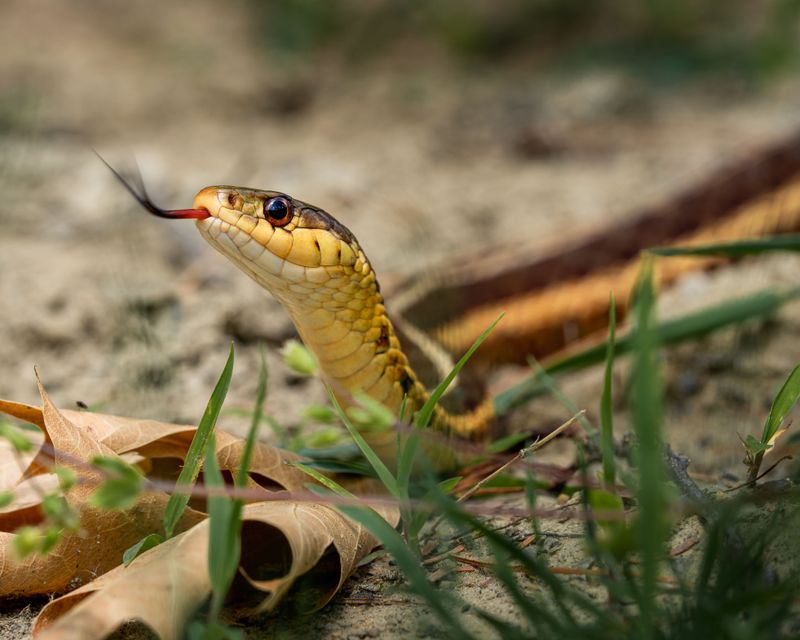
Snakes are not predators of dogs. They are small animals that rely on camouflage and escape to survive, and a large moving dog registers as a serious threat.
Most snakes will retreat or freeze long before a confrontation happens.
Bites almost always occur when a dog or person gets too close, steps on a snake, or corners one with nowhere to go. Giving snakes space respects their behavior and keeps your dog out of the range where a defensive strike becomes likely.
Do Not Try to Pick Up a Snake for a Better Look
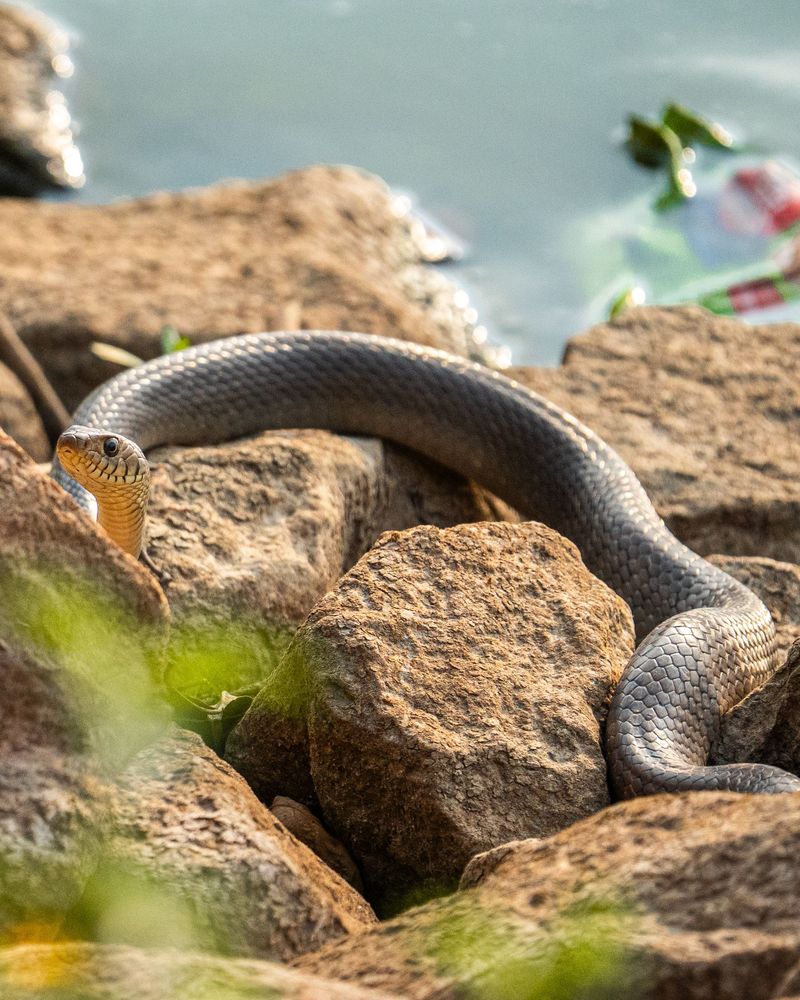
Picking up a snake, even one you believe is harmless, is how most human bites happen. Harmless watersnakes bite readily when handled, and their saliva contains a mild anticoagulant that can make wounds bleed more than expected.
A misidentified cottonmouth in hand is a much worse situation.
Observe any snake from a safe distance and leave it alone. Your curiosity is understandable, but no closer look is worth the risk of a bite to your hand or your dog’s face.
Teach a Strong Leave It Command Before You Need It
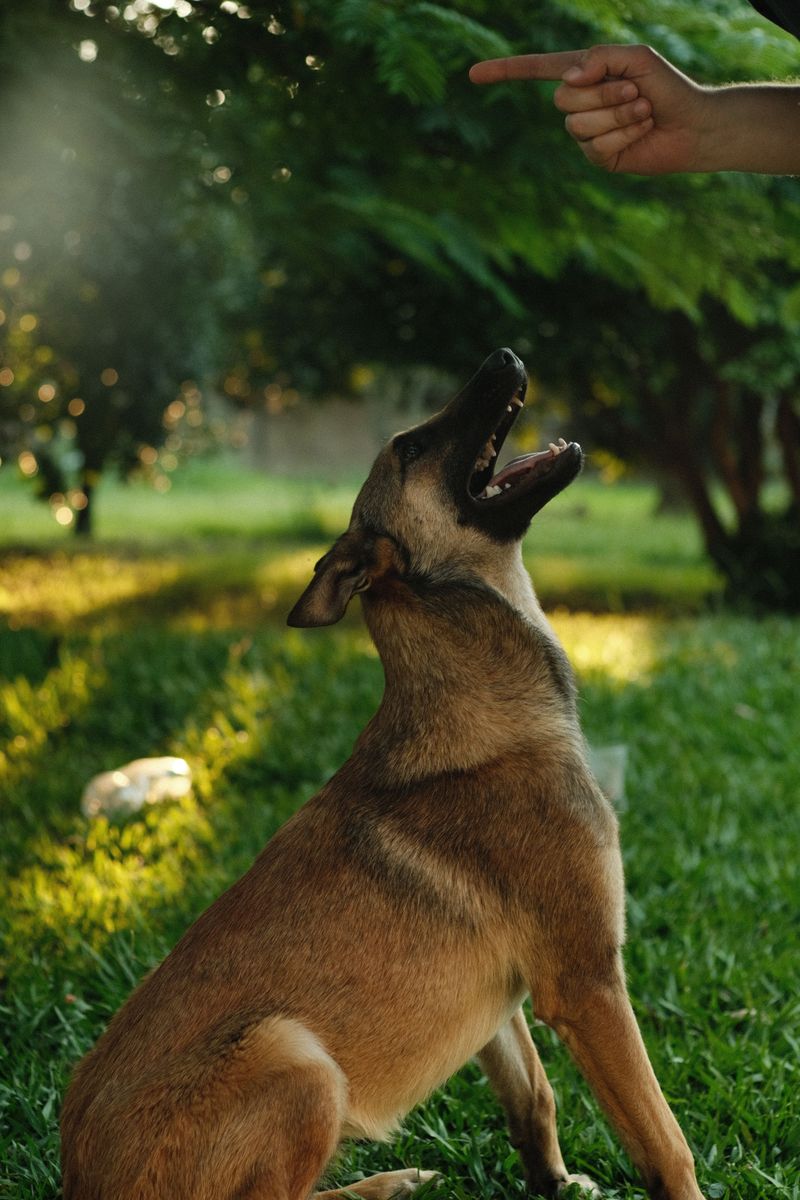
A reliable leave it command can stop your dog mid-sniff before a snake encounter turns into a bite. Practice it at home with low-stakes distractions first, then gradually increase difficulty.
The goal is a dog that turns away from anything on your cue, without hesitation.
Work with a trainer if your dog struggles with the command. Near water, where snakes can appear suddenly, a split-second response is what actually protects your dog.
Consistent practice is what builds that kind of fast, reliable response.
Pay Close Attention to Where Your Dog Puts Its Nose
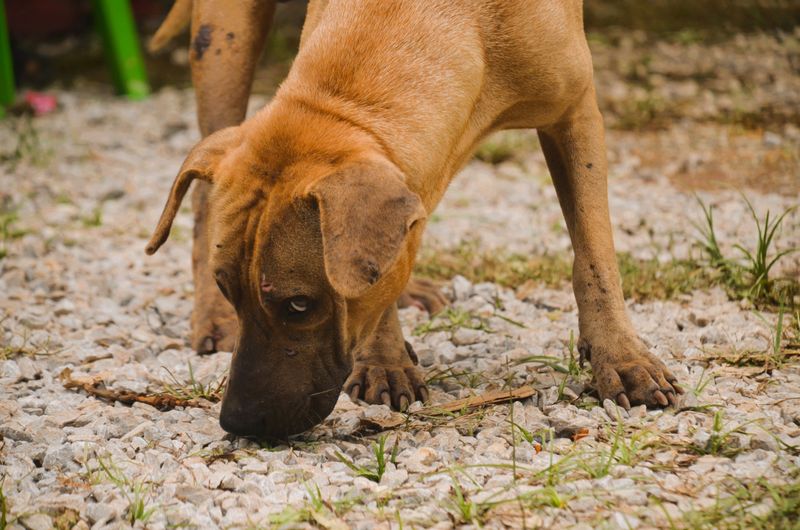
Dogs follow scent trails into places their eyes never check first. A pile of rocks, a hollow log, or a clump of shoreline grass is exactly where a snake might be resting.
Watching your dog’s nose gives you an early warning before a visual encounter happens.
If your dog suddenly freezes, stiffens, or sniffs intensely at a specific spot, take it seriously. Calmly call your dog back and look carefully at the area before moving closer.
That pause in your dog’s behavior is often the first real alert you will get.
A Snake Bite May Not Be Obvious Right Away
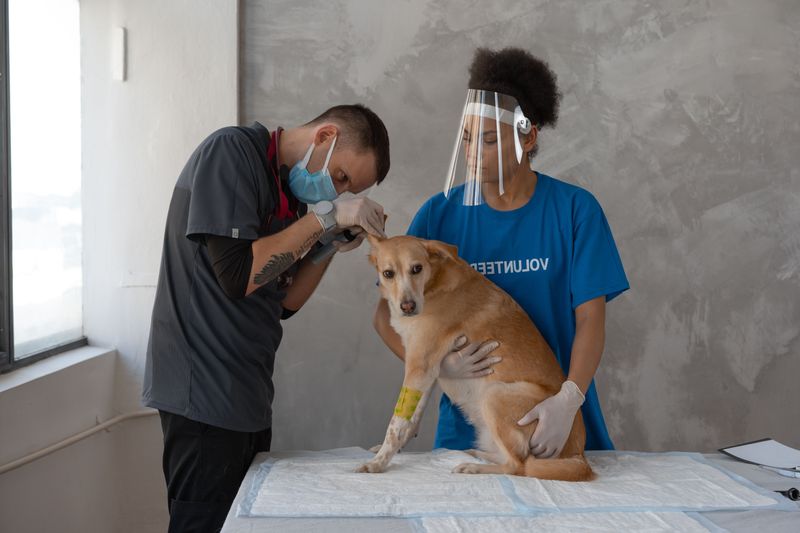
Snake bite wounds on a dog can be hard to spot, especially through thick fur. Two small puncture marks are the classic sign, but fur often hides them completely.
Sometimes the first thing you notice is your dog acting uncomfortable or favoring a limb.
Watch your dog closely for at least an hour after any suspected encounter near water. Behavioral changes, restlessness, or sudden lethargy are all reasons to call your veterinarian right away.
Early observation gives your vet the best chance to help effectively.
Swelling Is a Major Warning Sign After a Trail Walk
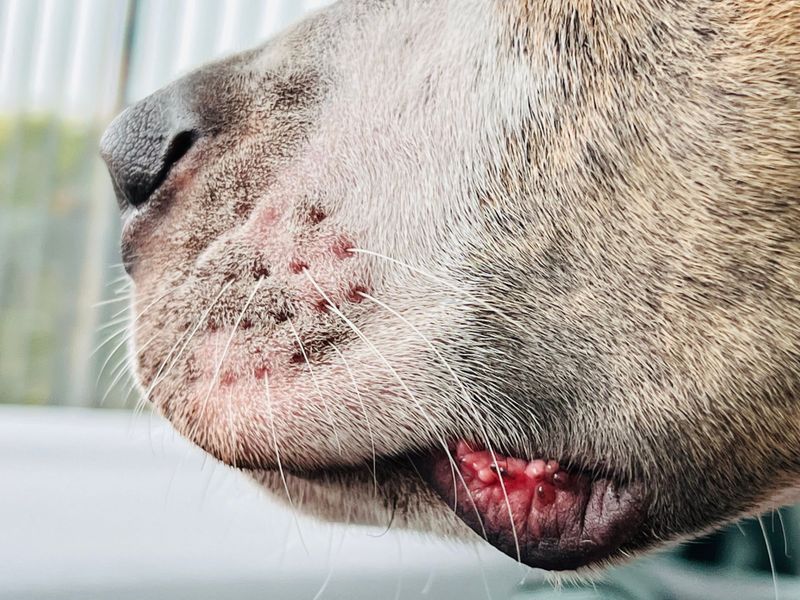
Rapid swelling around the face, snout, or a limb is one of the clearest signs of a venomous snake bite in dogs. Cottonmouth venom causes tissue damage that can progress quickly, so swelling that grows within minutes is a veterinary emergency.
Do not wait to see if it gets better on its own. Call your vet or an emergency animal clinic immediately and describe what you saw.
Getting there fast genuinely matters when venom is involved, because treatment is most effective early.
Do Not Attempt Home Remedies After a Snake Bite
Cutting the wound, sucking out venom, applying ice, or using a tourniquet are all approaches that can make a snake bite worse, not better. These methods are not recommended by veterinary professionals and can cause additional tissue damage or delay proper treatment.
The only right response after a suspected venomous bite is to get your dog to a veterinarian as quickly as possible. Keep your dog calm and still during transport, because movement can speed up how quickly venom spreads through the body.
Move Away From the Snake Before Helping Your Dog
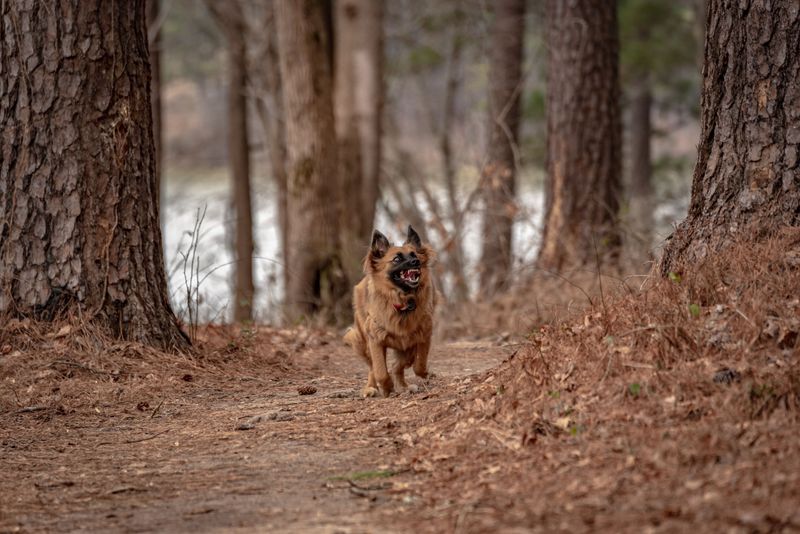
Your first instinct after a bite might be to stop and check your dog immediately. Before you do anything else, put distance between yourself, your dog, and the snake.
A snake that just struck is still defensive and may strike again if you stay close.
Back away calmly without turning your back on the snake. Once you are a safe distance away, you can check your dog and call for help.
Protecting yourself is not selfish; it means you are still able to help your dog.
A Photo From a Safe Distance Can Help With Identification
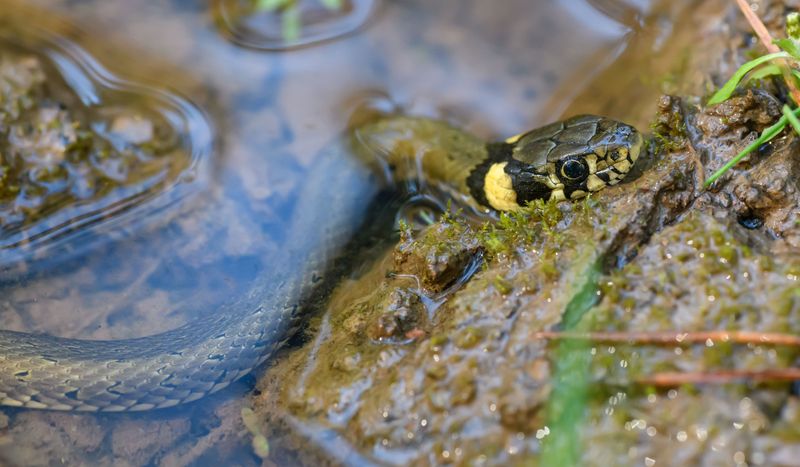
If you can safely photograph a snake without moving closer, that image can be genuinely useful. A vet or wildlife officer can use it to confirm whether the snake was venomous, which helps guide treatment decisions.
Even a blurry photo is better than no photo at all.
Use your phone’s zoom feature rather than stepping closer. Never approach a snake just to get a clearer shot.
The photo is a helpful bonus, not something worth any additional risk to you or your dog.
Know Which Venomous Snakes Are Found in Georgia
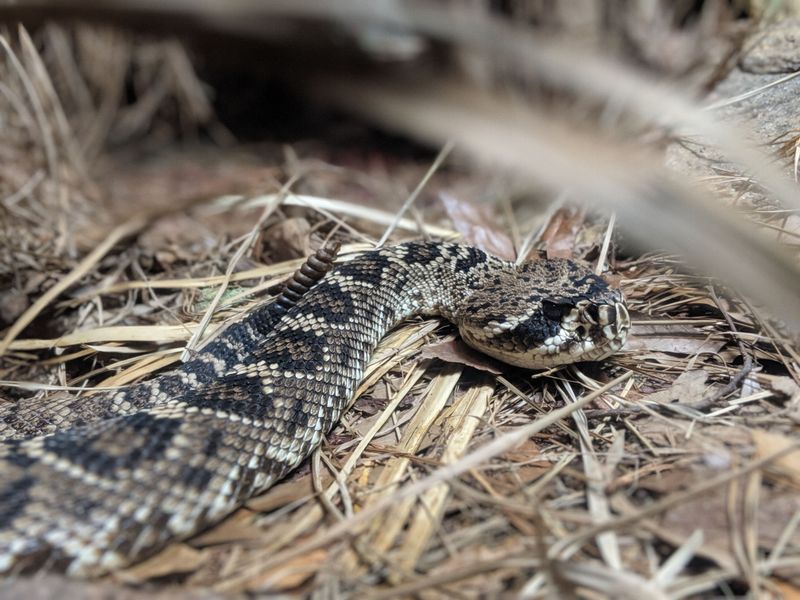
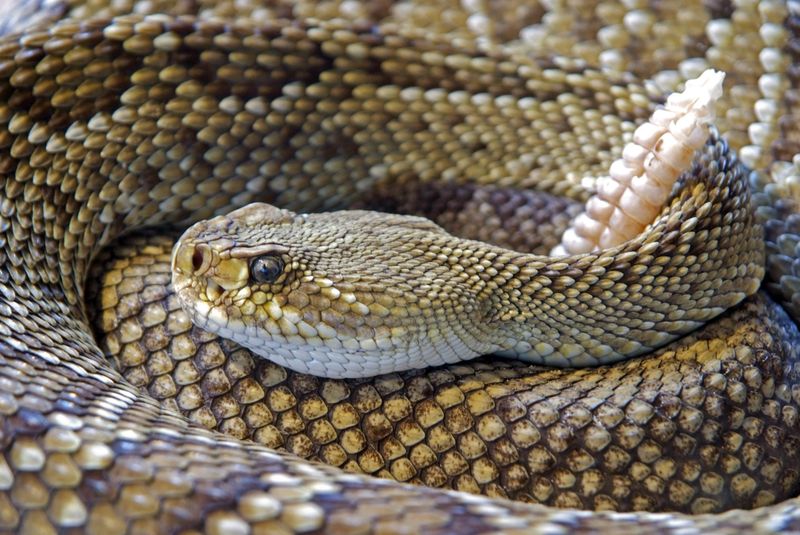
Georgia has six venomous snake species: the eastern diamondback rattlesnake, timber rattlesnake, pigmy rattlesnake, copperhead, cottonmouth, and eastern coral snake. Each has a distinct appearance and range within the state.
Knowing which ones live in your area helps you assess risk more accurately.
The Georgia Department of Natural Resources offers reliable range information online. Spending a few minutes reviewing your county’s species list before a hike gives you a clear, factual picture of what you might actually encounter near the water.