Why South Dakota Badlands National Park Requires Extra Planning When You Travel With A Dog
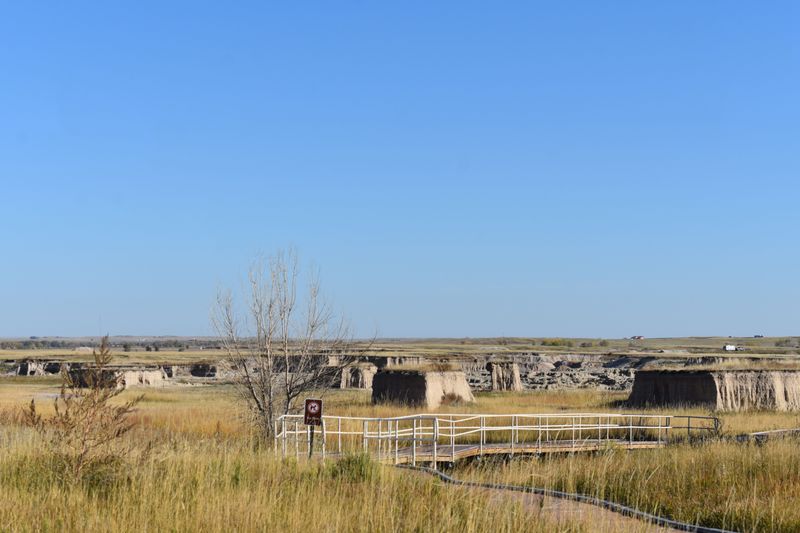
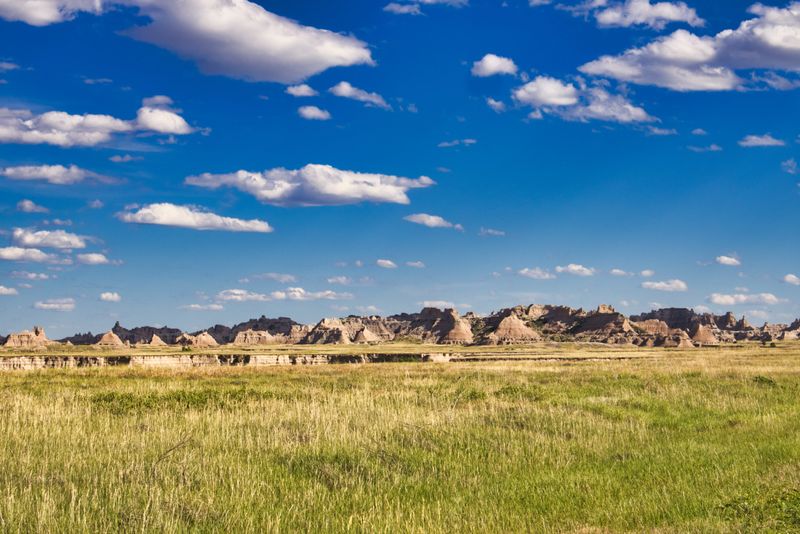
Badlands National Park is one of those places that stops you mid-sentence. Striped buttes, wide prairie, and sky in every direction.
Bringing your dog along is absolutely possible, but the park has firm rules and a climate that keeps you on your toes. Think of the next few sections as a friendly heads-up from someone who has learned the local ropes.
With a bit of planning, you and your dog can enjoy this landscape safely and comfortably.
1. Places Your Dog Is Genuinely Welcome
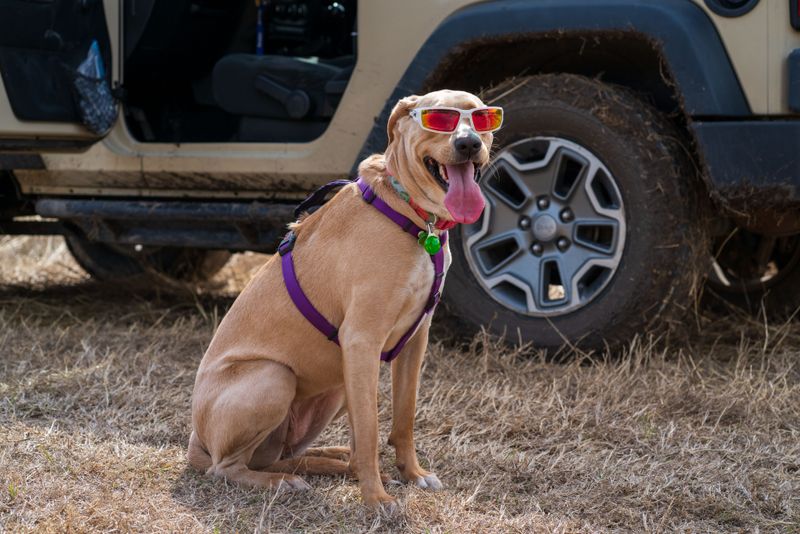
Plenty of the park is open to pets, which surprises many first-time visitors. Campgrounds like Cedar Pass and Sage Creek allow dogs, as do picnic areas such as Bigfoot Pass and Conata.
Parking areas count too, along with every paved and gravel road in the park.
The Badlands Loop Road alone delivers dozens of pull-offs. Your dog can stretch, sniff, and share the view with you at each stop.
2. Hiking Trails Stay Off the Itinerary
Here is the rule that reshapes most trip plans: dogs are not allowed on the park’s hiking trails. Carrying your dog does not create a loophole either.
The restriction protects fragile soils, fossil beds, and animals that use those corridors daily.
Some accessible boardwalk areas have allowed pets in the past, so confirm current signage at the visitor center. Rules can be updated, and rangers give the most reliable answer.
3. Backcountry and Sage Creek Wilderness Are Closed to Pets
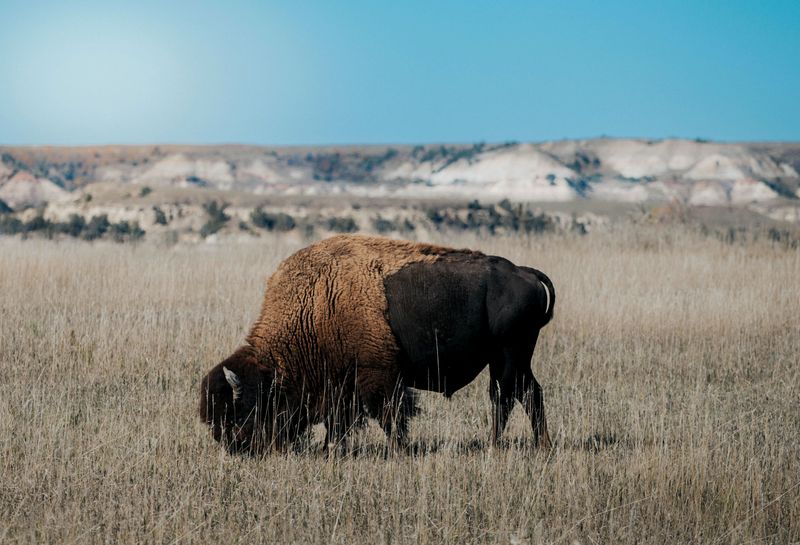
Wilderness areas hold a different legal status than the rest of the park. Dogs cannot enter any backcountry zone, and that includes Sage Creek Wilderness.
These grasslands support bison herds, bighorn sheep, and nesting birds that need undisturbed space.
Map your route ahead of time so you never wander past a boundary marker by accident. Roadside viewing along Sage Creek Rim Road still offers wonderful sightings from a respectful distance.
4. Six Feet of Leash, No Exceptions
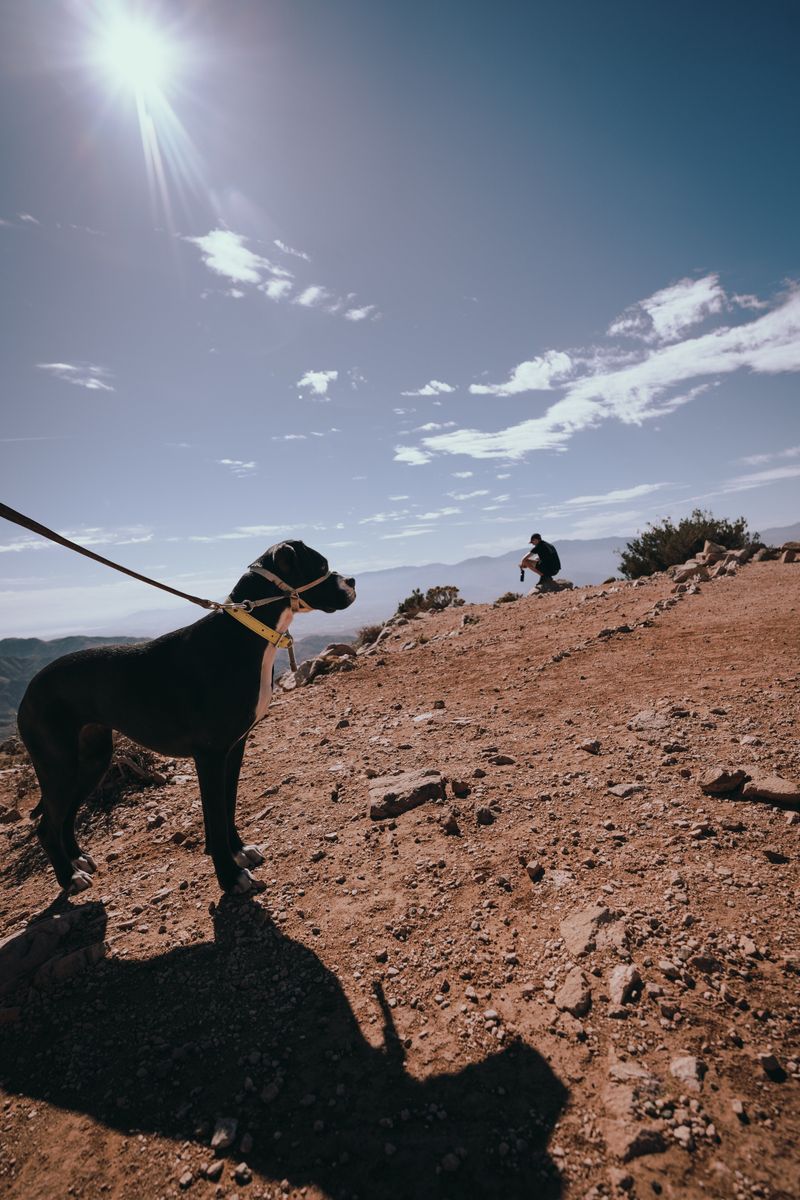
Every dog in the park has to be on a leash six feet long or shorter. That applies everywhere pets are welcome, including campgrounds, roadsides, and parking lots.
Retractable leads are a poor fit here, since they let a dog drift toward wildlife or traffic. A fixed-length leash with a sturdy clip gives you real control.
Short leashes also keep paws away from cactus and crumbling edges near overlooks.
5. Prairie Dog Towns Deserve a Wide Berth
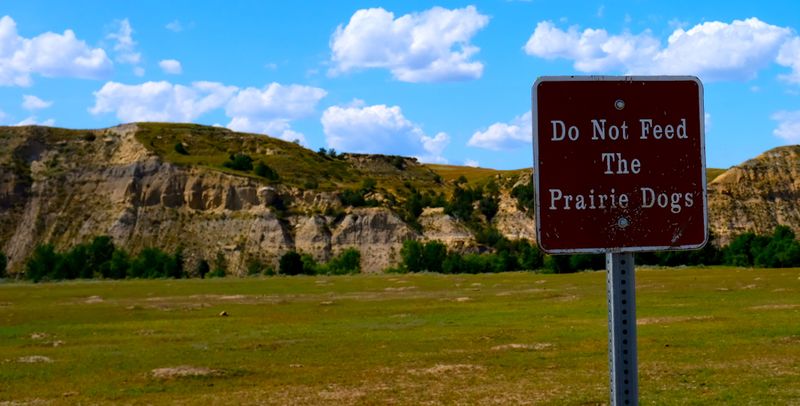
Those chirping little residents are fun to watch from the car, and that is exactly where the watching should stay. Fleas living in prairie dog colonies can carry infectious diseases that affect pets.
Keep your dog well away from burrows, mounds, and the surrounding grass.
Year-round flea prevention from your veterinarian is a smart baseline before any prairie trip. Ask your vet what suits your dog’s age and size.
6. Visitor Centers and Buildings Are People-Only
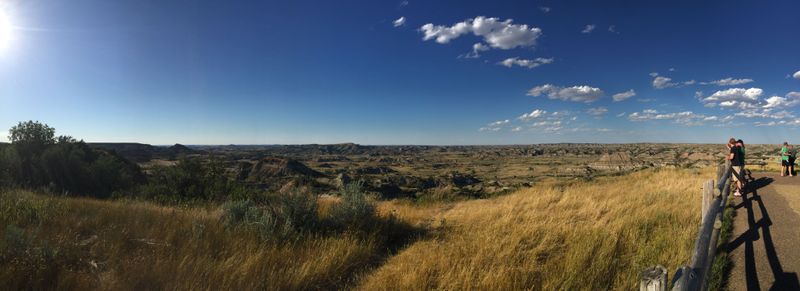
Air conditioning sounds tempting on a hot afternoon, but pets cannot come indoors. Visitor centers, including Ben Reifel, and facilities such as Cedar Pass Lodge are closed to dogs.
Certified service animals are the exception under federal rules.
Traveling with a partner makes this easy: one browses exhibits while the other waits with your dog in shade. Solo visitors can plan a quick stop early, before temperatures climb.
7. Never Leave Your Dog Alone or Tied Up
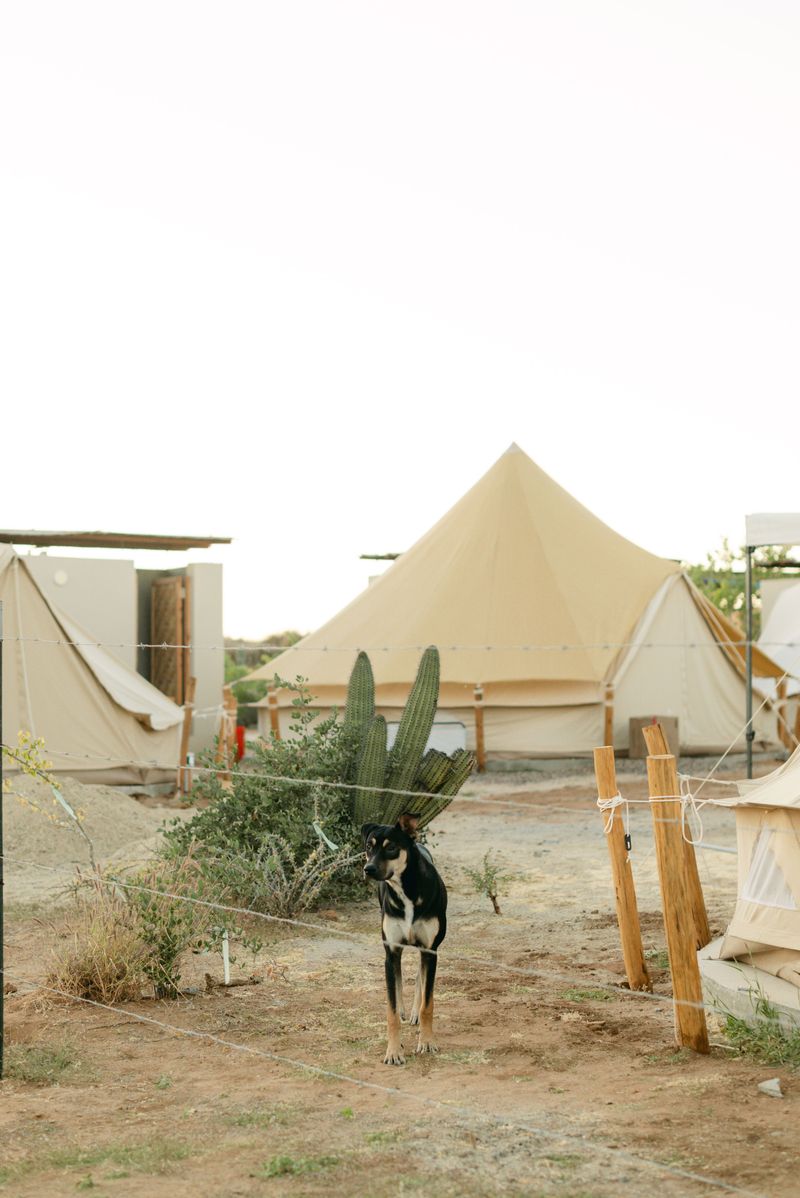
Park regulations prohibit leaving a dog unattended, whether in a vehicle or tethered to a post, tree, or table. Enforcement exists because conditions here change fast.
Heat builds quickly, storms roll in, and wildlife moves through campgrounds.
Build your day around staying together. If part of your plan requires leaving your dog behind, arrange care outside the park instead.
Boarding options exist in nearby towns like Wall and Rapid City.
8. Popular Overlooks Call for a Tag-Team Approach
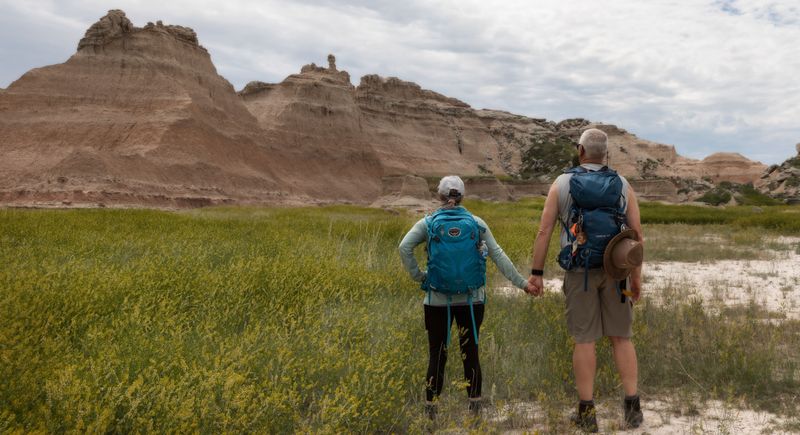
Trip planning gets easier once you accept a simple truth: you will not see everything with your dog at your side. Couples and groups often trade off, one exploring while the other stays with the pup.
Solo travelers can lean on roadside viewpoints, which are plentiful and genuinely spectacular.
Booking day care outside the park is another practical route. Reserve early during summer, since local spots fill quickly.
9. Buffalo Gap National Grassland Opens More Doors
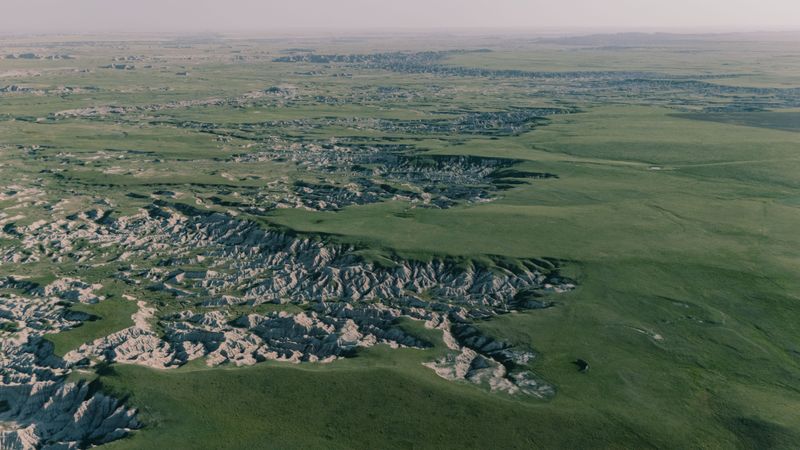
Just outside park boundaries sits a place that feels made for dog walkers. Buffalo Gap National Grassland borders much of the Badlands and welcomes leashed pets, including off-trail wandering.
The Hay Butte and Conata Basin areas offer big skies without the trail restrictions.
Rules differ between the National Park Service and the Forest Service, which is why the freedom changes at the fence line. Check current Forest Service guidance before heading out.
10. Triple-Digit Summer Heat Is Routine
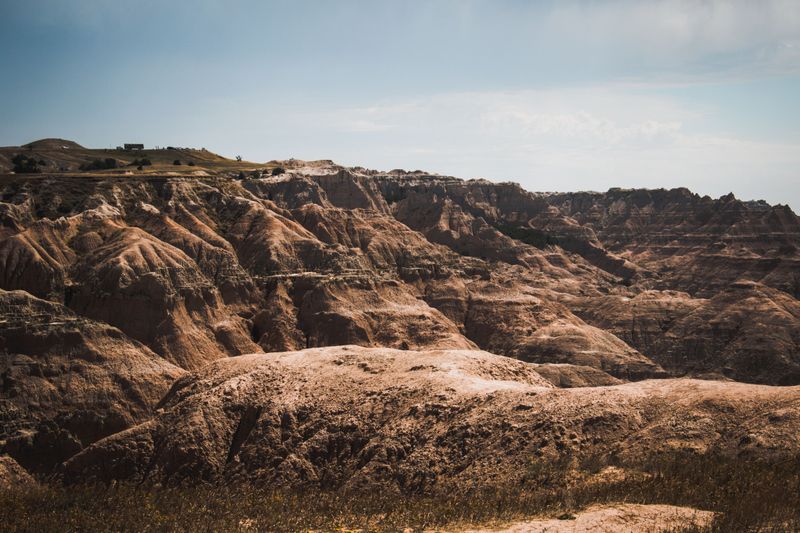
July and August regularly push past 100°F out on the prairie. The all-time park high sits around 116°F, which tells you how intense this place gets.
Dogs cool themselves mainly by panting, so they struggle sooner than people do.
Aim for early morning outings, ideally before nine. Late evening works too.
Midday is better spent driving with the air conditioning running and windows up.
11. Parked Cars Turn Into Ovens Quickly
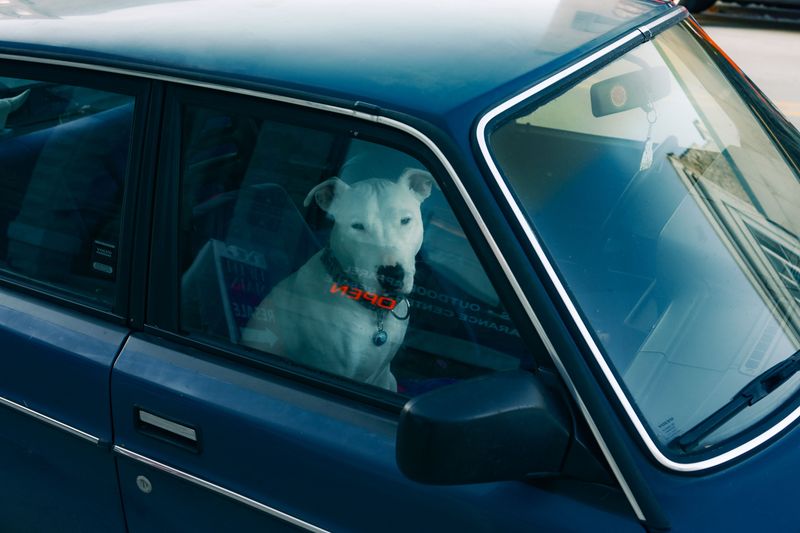
On an 85°F day, the inside of a car can top 100°F within about ten minutes. Cracked windows barely slow it down.
Roughly eighty percent of that temperature rise happens in the first half hour.
Dark paint and direct sun speed things further. Treat your vehicle as transportation only, never as a waiting room.
If a stop requires leaving your dog behind, skip the stop or trade off with a companion.
12. Shade Is Scarce, So Water Comes With You
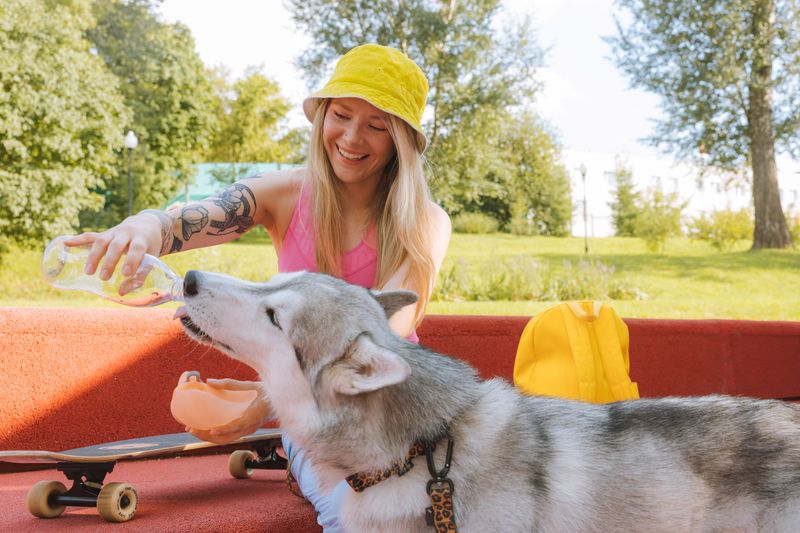
Look around the Badlands and you will notice something missing: trees. Pale sediment reflects sunlight back upward, so heat hits from both directions.
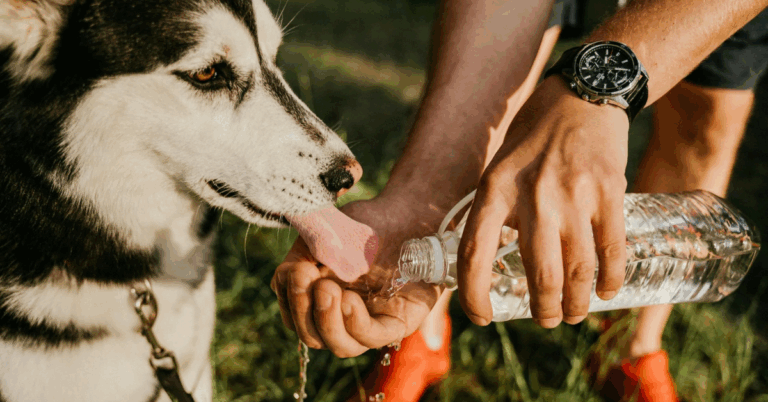
Carry more water than seems necessary, plus a collapsible bowl and a cooling mat or damp towel.
Offer drinks every fifteen or twenty minutes during warm-weather stops. Watch for heavy panting or slowing down, and return to the vehicle’s air conditioning at the first sign.
13. Weather Flips Without Much Warning
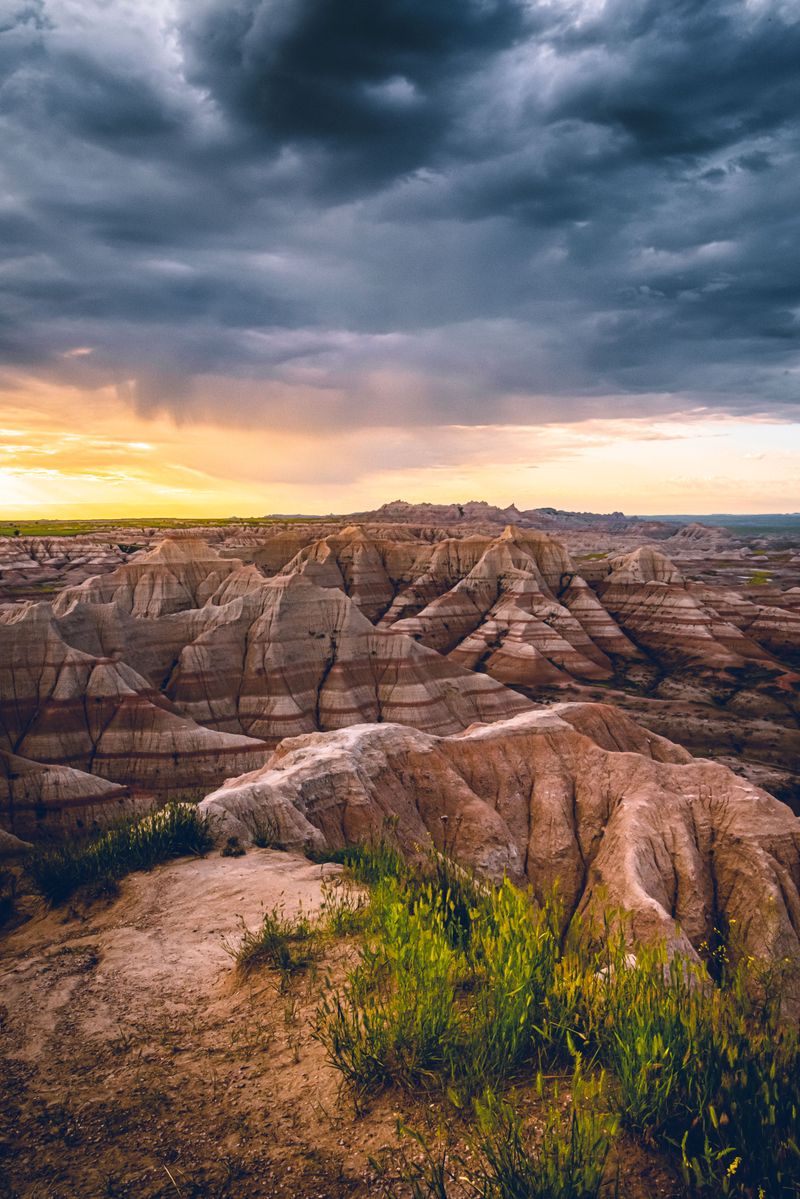
Prairie storms build fast. Warm months bring thunderstorms, hail, powerful gusts, and the occasional tornado warning across western South Dakota.
A calm morning can turn blustery by afternoon, so check the forecast twice and keep an eye on the western horizon.
Pack a lightweight blanket and know where the nearest solid shelter or your vehicle sits. Anxious dogs may appreciate a snug wrap during rumbling weather.
14. Lightning Arrives Early, Washes Fill Fast
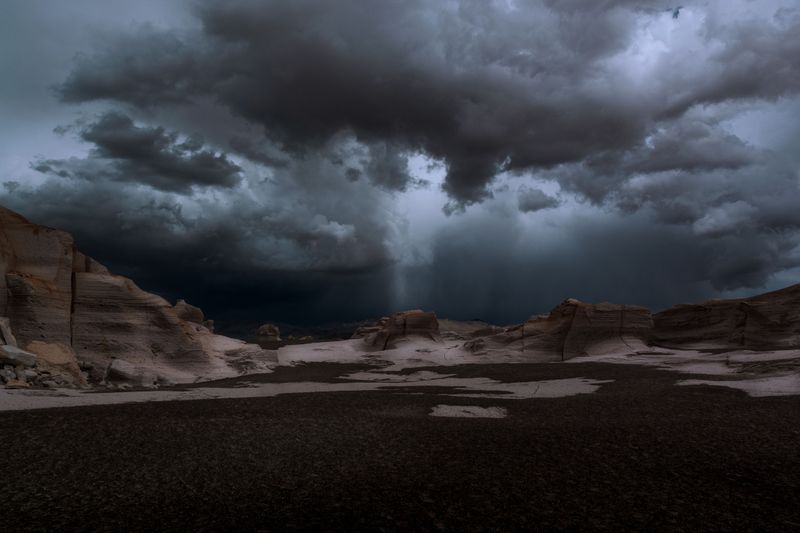
Lightning can reach the ground before the first raindrop falls. If thunder is audible, head for the vehicle with your dog.
Rainfall also collects rapidly in the park’s dry washes and gullies, sending water through low ground within minutes.
Avoid parking or walking in drainage bottoms when storms are forecast. Higher pull-offs along the Loop Road are steadier choices during unsettled afternoons.
15. Wet Clay Becomes Slick as Soap
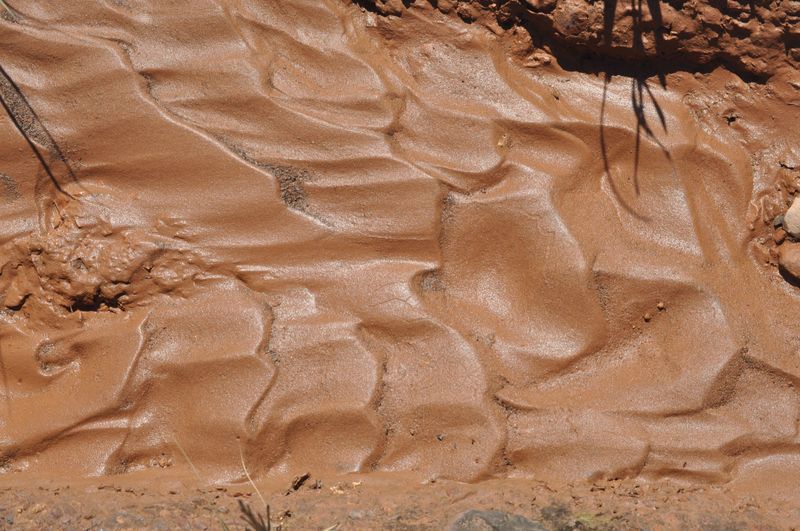
Badlands rock is largely clay and shale, and rain changes its personality completely. Surfaces turn greasy, sticky, and unpredictable underfoot.
Dogs lose traction just as people do, and mud clumps between toe pads cause discomfort.
Give formations at least a day to dry after significant rain. Keep to paved surfaces meanwhile, and stash old towels in the car for cleanup.
Clay stains stick around otherwise.
16. Bison and Wildlife Need One Hundred Feet
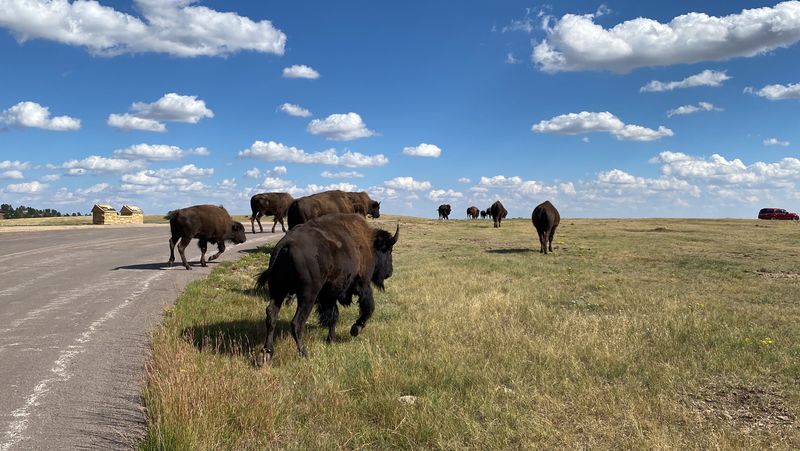
Park rules require visitors to stay at least 100 feet from bison and other animals. That is roughly the length of two school buses.
Bison look unhurried, yet they move quickly and can change direction without warning.
Dogs may bark or lunge instinctively, which draws unwanted attention. If wildlife approaches your pull-off, load up and drive on.
Photos taken from inside the car turn out beautifully anyway.
17. Rattlesnakes Rest in Shaded Nooks
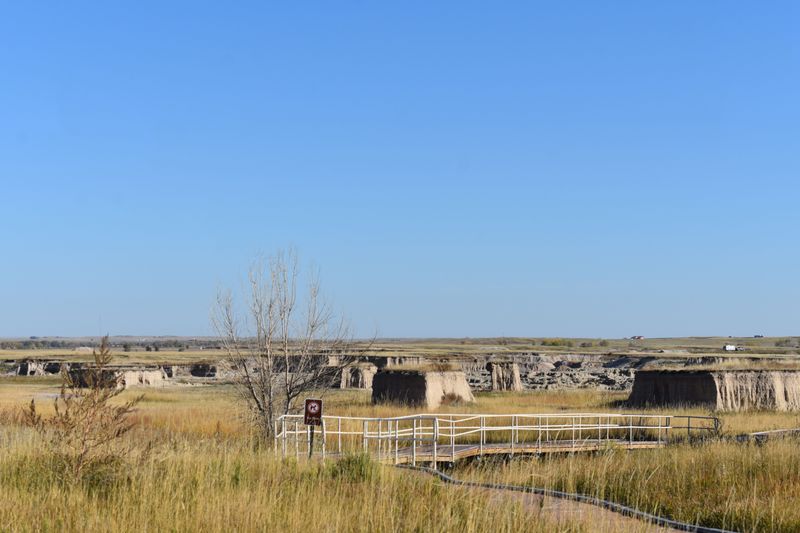
Prairie rattlesnakes live throughout the park and often tuck beneath boardwalks, stairs, and thick grass during hot hours. After dark, warm pavement attracts them.
Scan ahead, keep your dog close, and steer clear of tall vegetation and rock gaps.
Ask your veterinarian whether rattlesnake avoidance training or vaccination suits your dog before the trip. Knowing the location of the nearest emergency clinic is worth five minutes of research.
18. Rough Ground Is Hard on Paw Pads
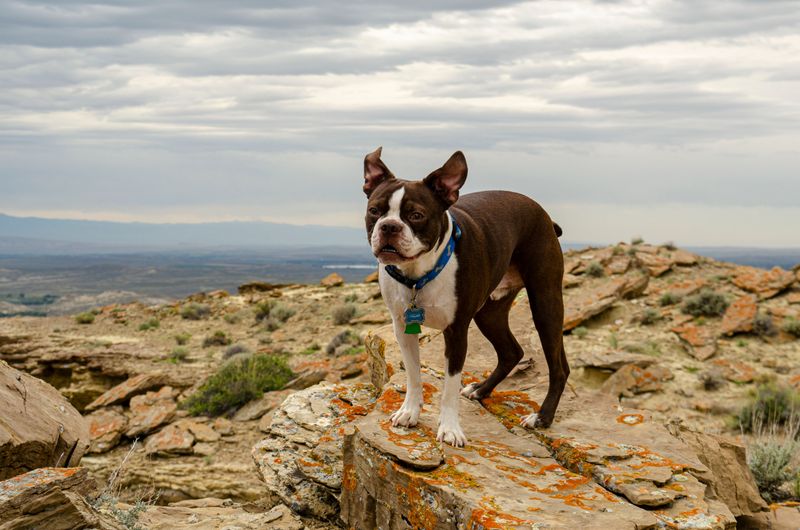
Prickly pear cactus grows across the prairie, and the spines find paws easily. Add crumbly soil, hidden cracks, and small holes, and roadside walking gets tricky.
Booties help if your dog tolerates them, and paw balm keeps pads from drying out.
Sun-heated pavement is another concern. Press your palm to the surface for seven seconds.
If it feels uncomfortable, it is too hot for paws.
19. Download Maps Before Signal Disappears
Cell coverage across much of the park ranges from spotty to nonexistent, and GPS directions sometimes lead travelers astray. Plan for silence from your phone.
Download offline maps and the official NPS app while you still have service, ideally in Wall or Rapid City.
Write down emergency numbers and your dog’s medical details on paper. A printed park map in the glovebox never runs out of battery.
20. Pack for Both Extremes of the Calendar
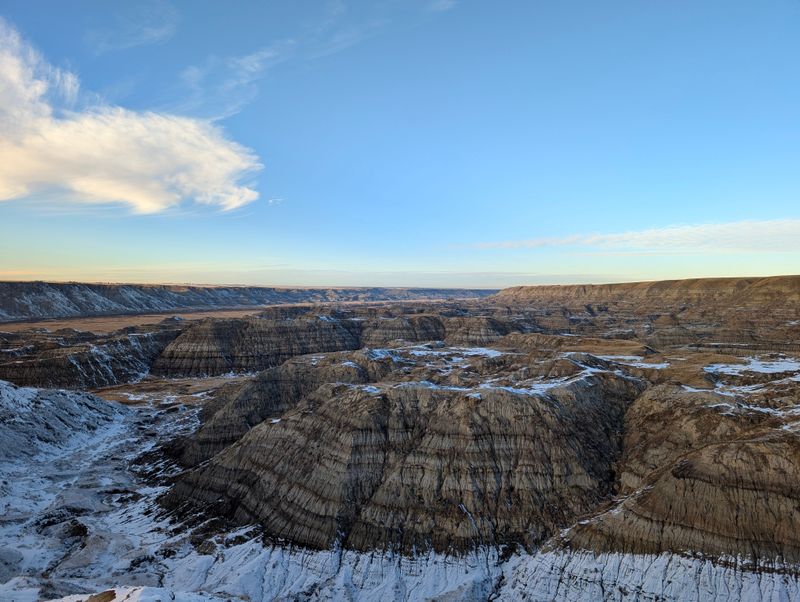
Few parks swing so widely. Summer highs sail above 100°F, while winter lows have reached roughly minus 40°F with fierce wind chill.
Spring and fall bring the most comfortable conditions for dogs, though nights still turn sharp.
Bring a coat for cold visits, cooling gear for hot ones, and extra water always. Preparation is what turns this rugged place into a trip you will happily repeat.