What Oregon Dog Owners Should Know About Hiking Around Wildlife In The Cascades And Coast Range
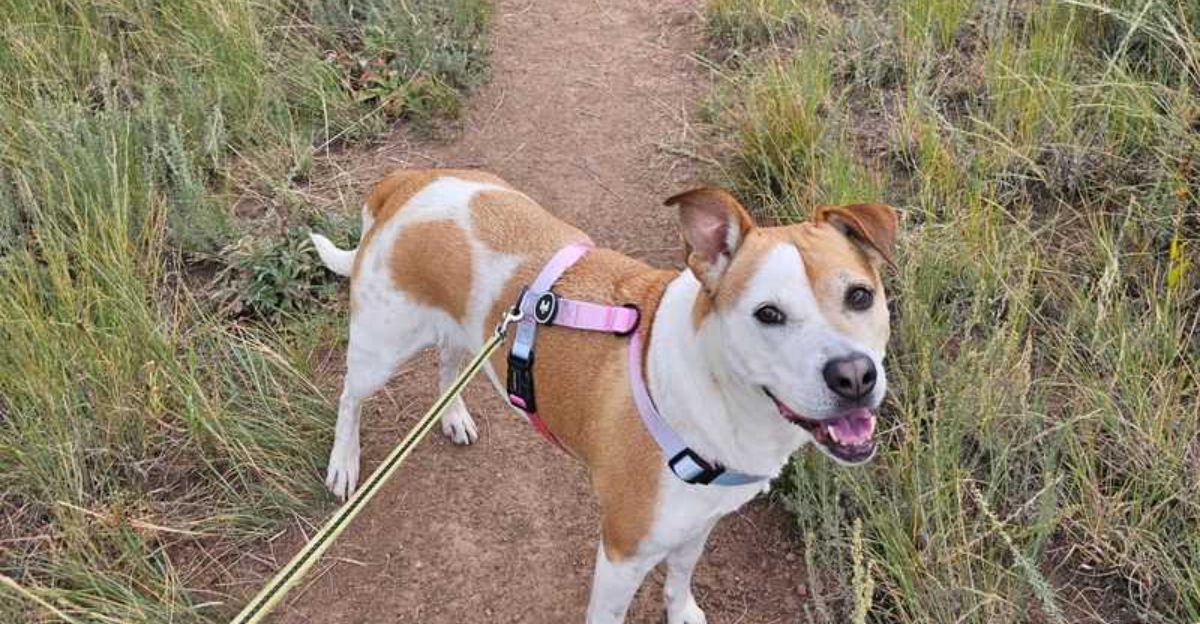
Hiking with your dog in Oregon can be a joy, especially in the Cascades and Coast Range. Those trails also belong to wildlife, so a little planning makes every outing smoother and safer.
When you know what animals live nearby and how dogs can change an encounter, you make better choices without feeling nervous. Think of this as the trail advice a well-prepared local friend would want you to have.
Know Which Wildlife You May Encounter
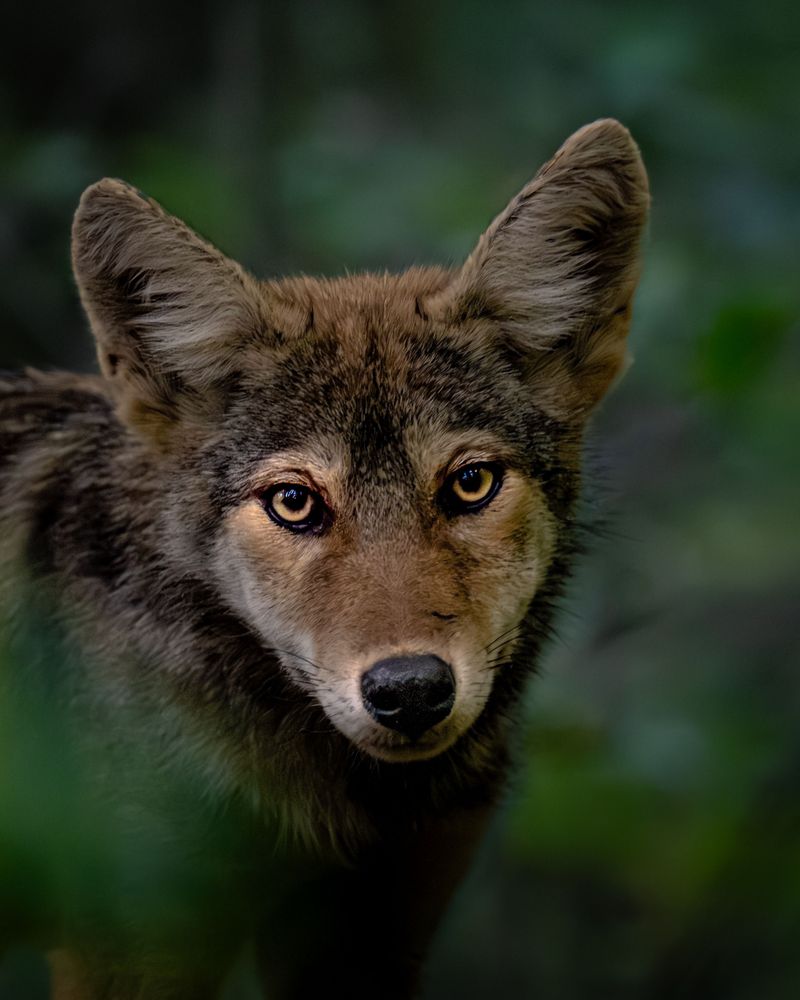
Oregon trails can feel peaceful, yet many animals share that same space. In the Cascades and Coast Range, dog owners may cross paths with black bears, cougars, elk, deer, coyotes, and smaller creatures.
Knowing who lives there helps you react calmly. You are less likely to panic, rush forward, or let your dog investigate something risky.
A quick check of local wildlife notices before leaving home is a smart habit.
Keep Your Dog Close And Practice Recall
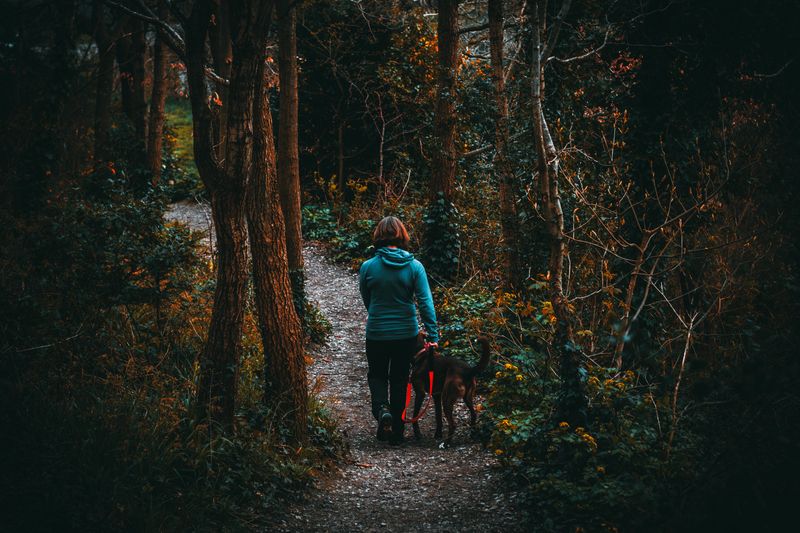
A short leash changes everything when wildlife appears fast. Dogs that stay close are easier to guide around blind corners, thick brush, and sudden animal movement on narrow Oregon trails.
Recall matters too, even if your dog usually hikes leashed. Practice a strong come-back cue at parks and quiet fields before using it outdoors.
Reliable response can help if a leash slips or your dog locks onto a scent.
Give Black Bears Plenty Of Space
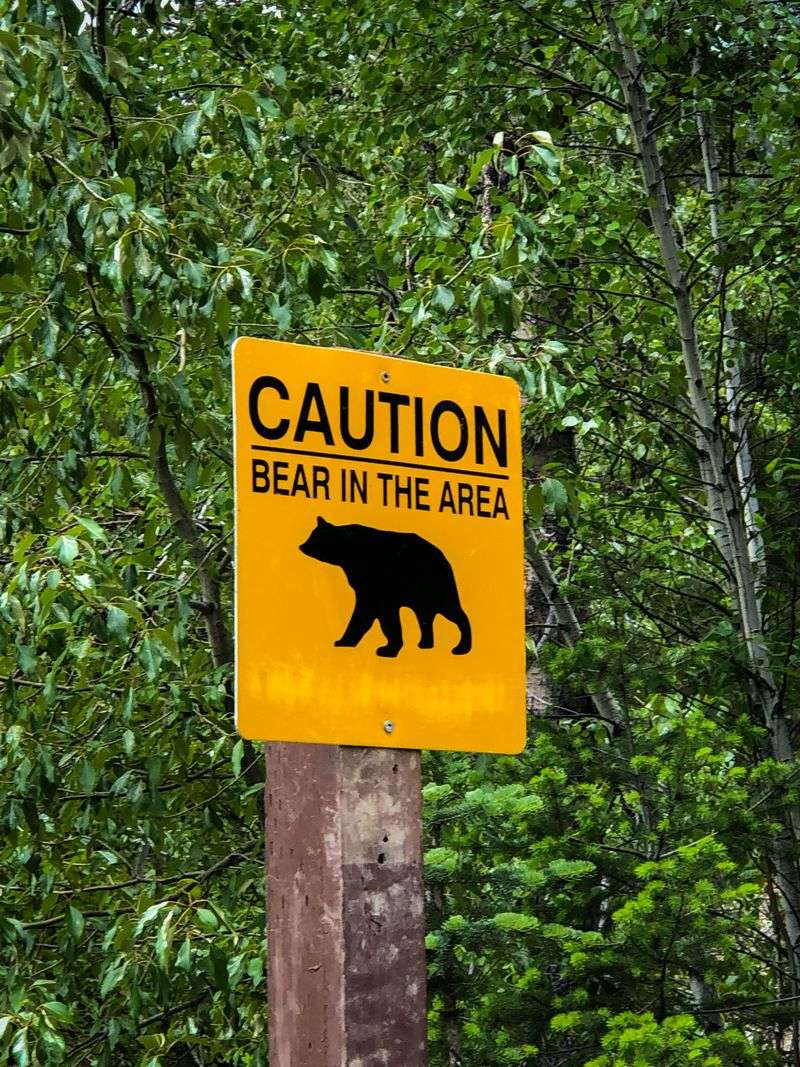
Seeing a black bear can be startling, but most avoid people when given room. Trouble can grow when a dog barks, lunges, or runs toward a bear, then circles back.
If you spot one, keep your dog beside you and stay calm. Do not approach for a closer view.
Back away slowly, speak in a steady voice, and leave the area without blocking the bear’s path.
Be Especially Careful Around Cougars
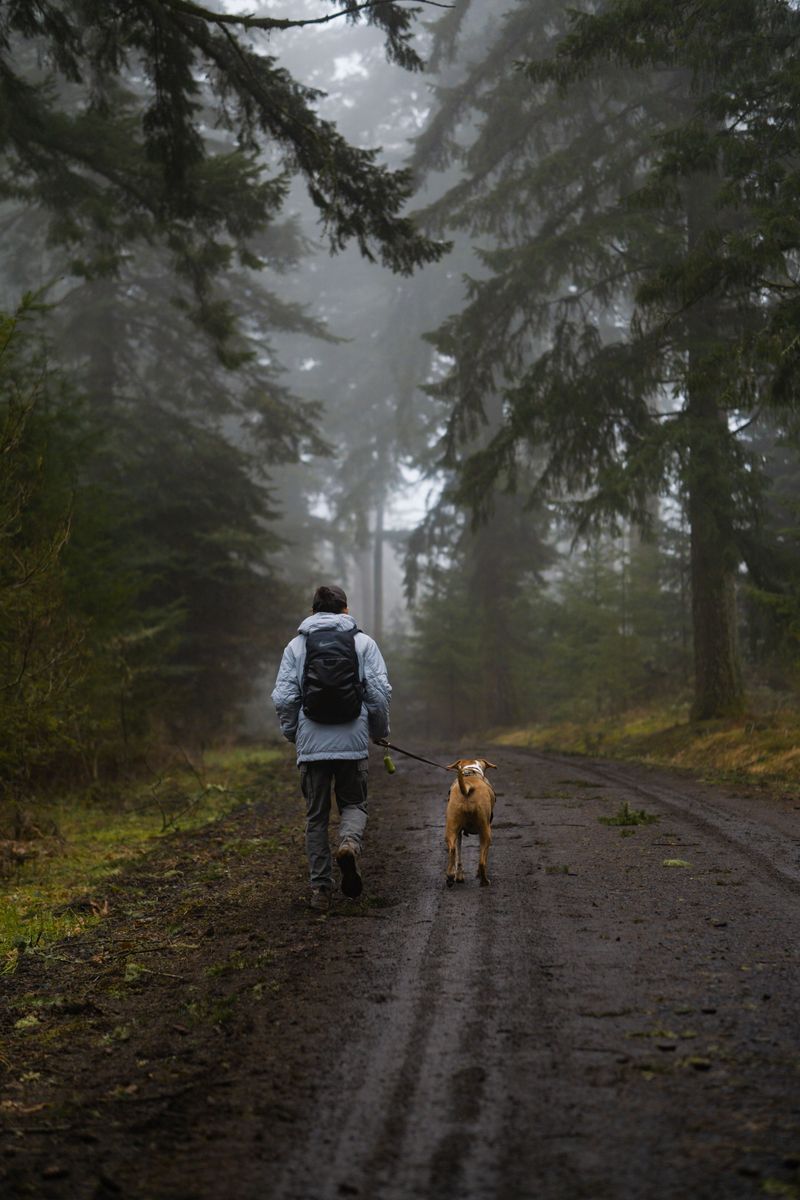
Cougars are hard to spot, which is why calm habits matter so much. They live across Oregon’s forested and mountainous country, including parts of the Cascades and Coast Range.
If one appears, bring your dog tight to your side right away. Never let your dog chase it.
Stay upright, make yourself look larger, and slowly back away while facing the cougar.
Do not run or turn your back on it
Watch For Elk And Deer
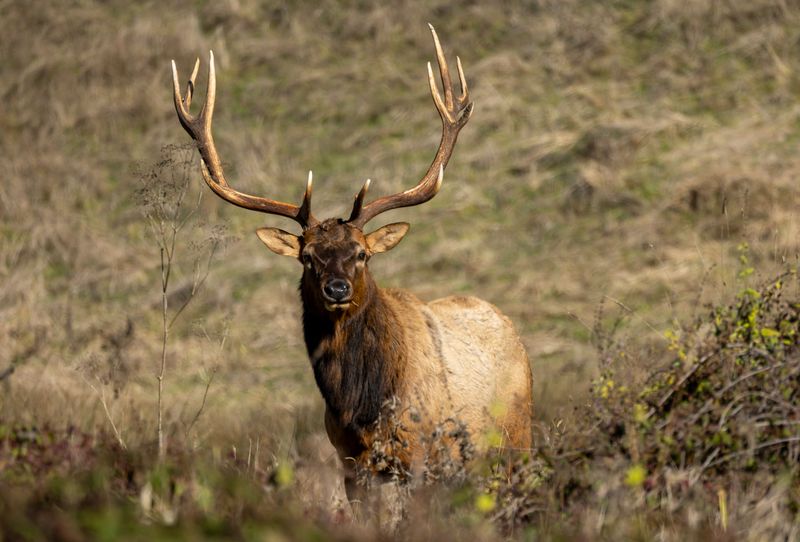
Elk and deer often look calm, so people underestimate how much room they need. During spring and early summer, adults may act more defensively when young animals are nearby.
Give both species a wide berth and pause before moving closer. Never let your dog rush toward them, even playfully.
If ears pin back, feet stomp, or the animals stare hard, create more distance and reroute.
Coyotes Can Be Curious About Dogs
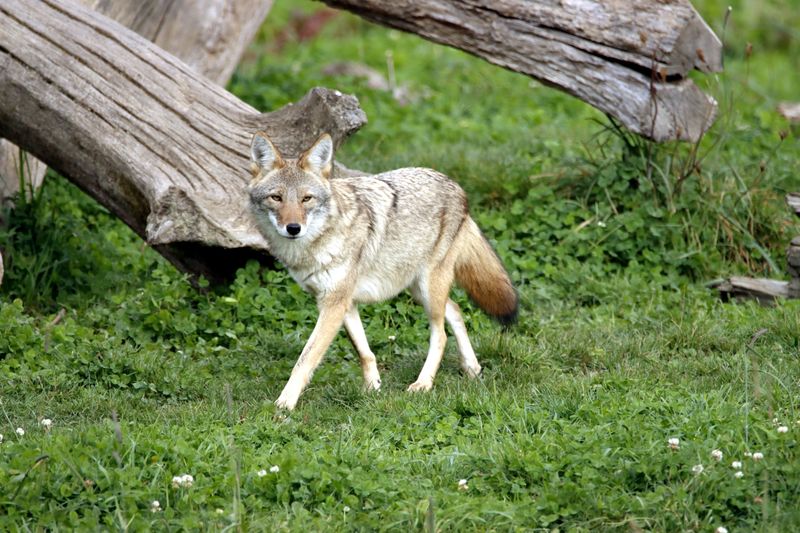
Coyotes sometimes appear where woods meet open ground, especially on quieter trails. Their curiosity can draw them closer to dogs, particularly smaller ones or dogs moving freely ahead.
Keep your dog near you and move along without creating a standoff. Do not let your dog chase, corner, or bark repeatedly at a coyote.
Calm distance is usually the safest choice for everyone on the trail.
Do Not Let Your Dog Chase Wildlife
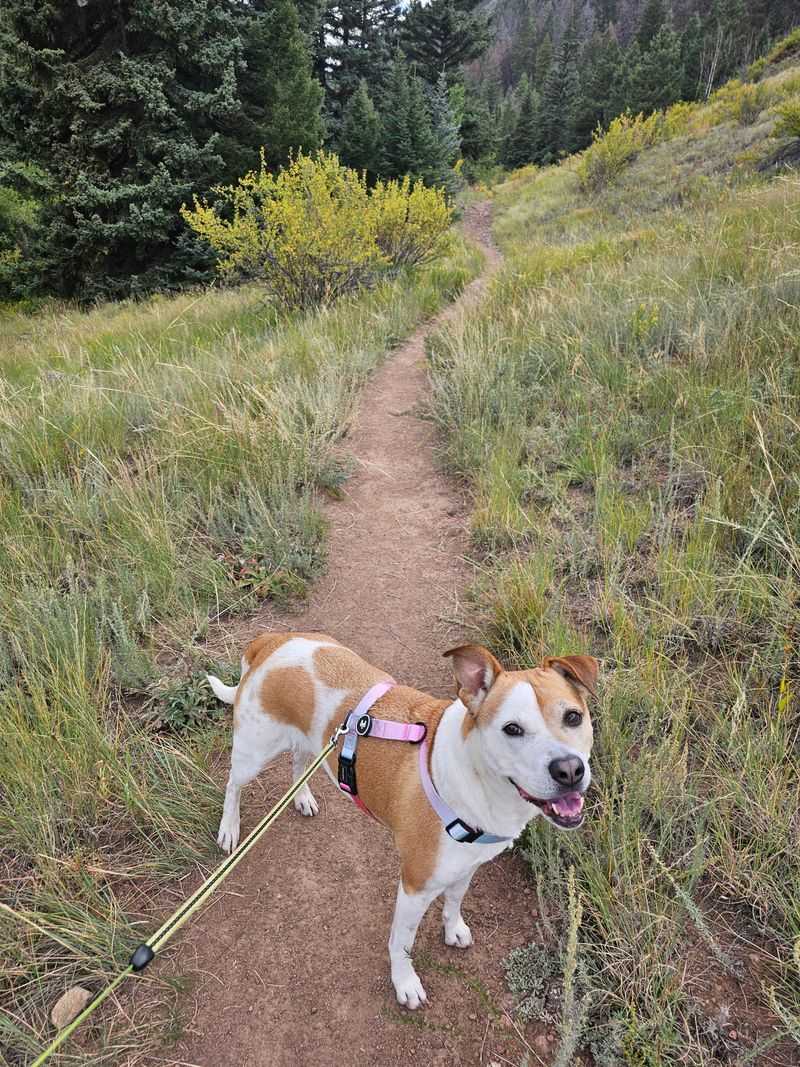
Even a friendly dog can spark trouble by chasing wildlife for a few seconds. A short pursuit may lead your dog into rough ground, thick brush, or the path of larger animals.
Chasing also stresses wildlife and can separate you from your dog quickly. Use a leash, watch body language, and interrupt fixated staring early.
The best trail habit is preventing the chase before it starts at all.
Pay Attention To What Your Dog Is Sniffing
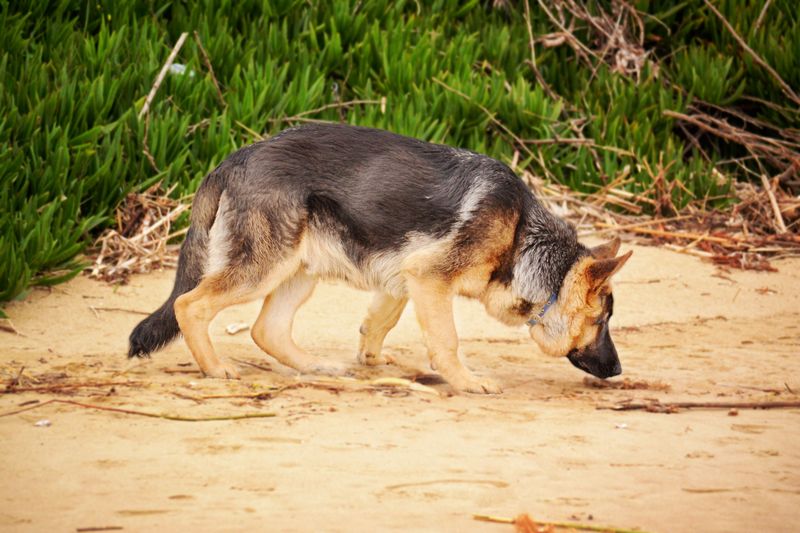
Dogs often notice wildlife long before people do, and their nose gives early clues. A sudden stop, hard stare, intense sniffing, raised posture, or sharp pulling deserves your full attention.
Instead of tugging forward, pause and scan the area carefully. Listen for movement in brush, creek edges, or trees nearby.
Your dog may be telling you to slow down, shorten the leash, and choose caution first.
Be Careful Around Dense Brush
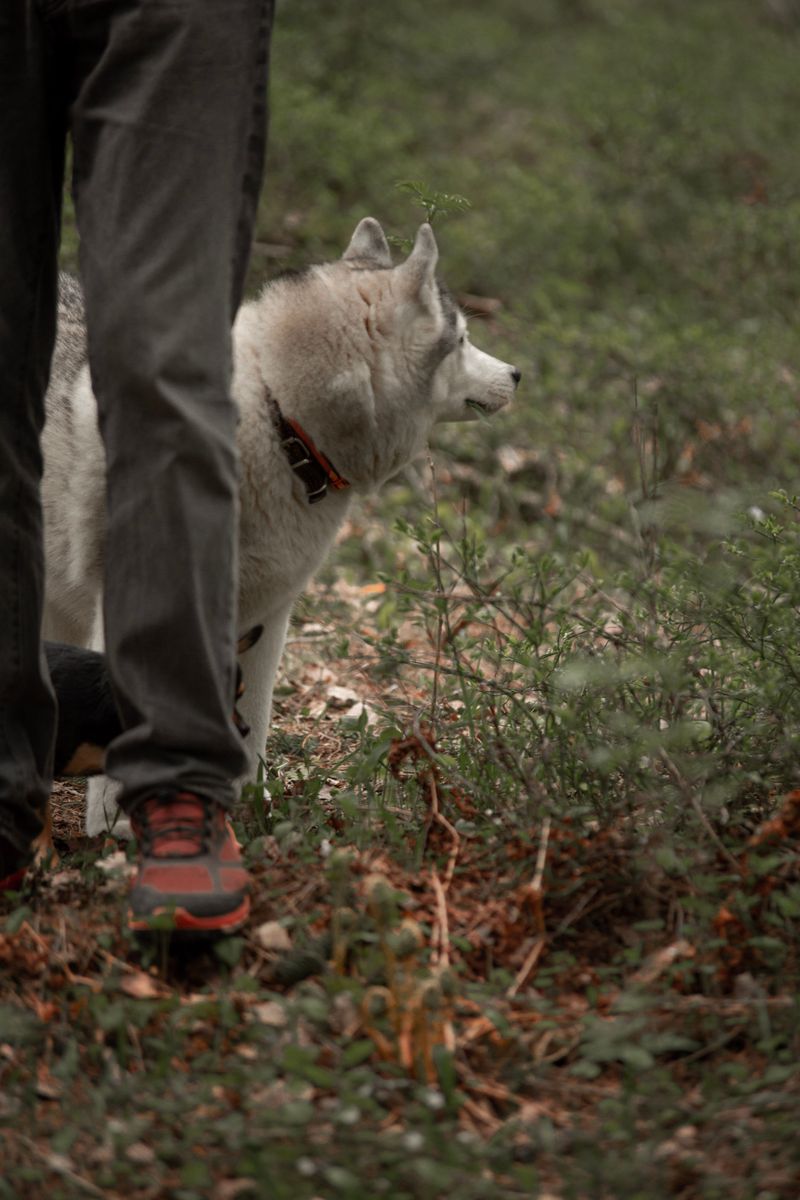
Thick brush can hide animals until you are much closer than expected. That matters on Oregon trails with berry patches, creek crossings, switchbacks, and heavily wooded sections where sightlines shrink fast.
Slow your pace in these spots and keep your dog short-leashed. Give yourself time to see movement before stepping into it.
Careful walking around bends and brushy openings lowers the chance of a surprise encounter.
Make Your Presence Known Around Blind Corners
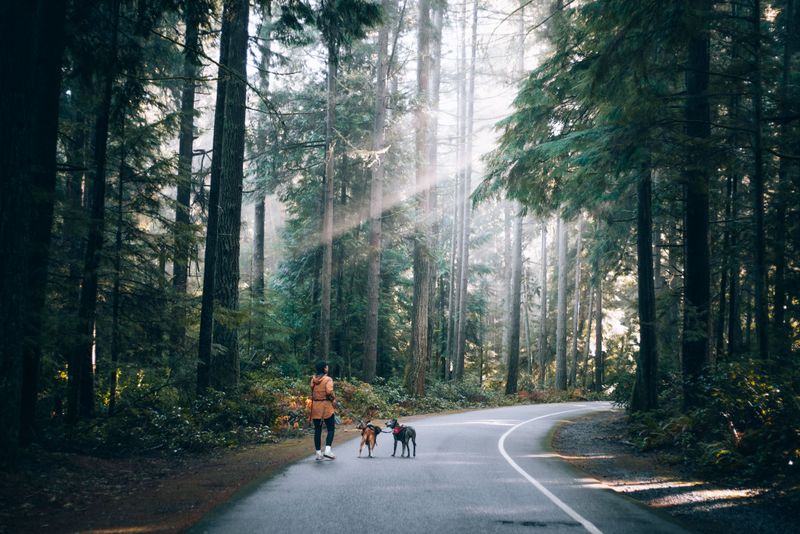
Quiet footsteps can bring you face to face with wildlife before anyone notices. Around blind corners, a normal speaking voice often works better than sudden noise after an animal is already close.
Chat with your hiking partner, call lightly to your dog, or clear your throat as you approach bends. Keep your leash short and your eyes up.
Small signals give wildlife time to move away first.
Leave Young Wildlife Alone
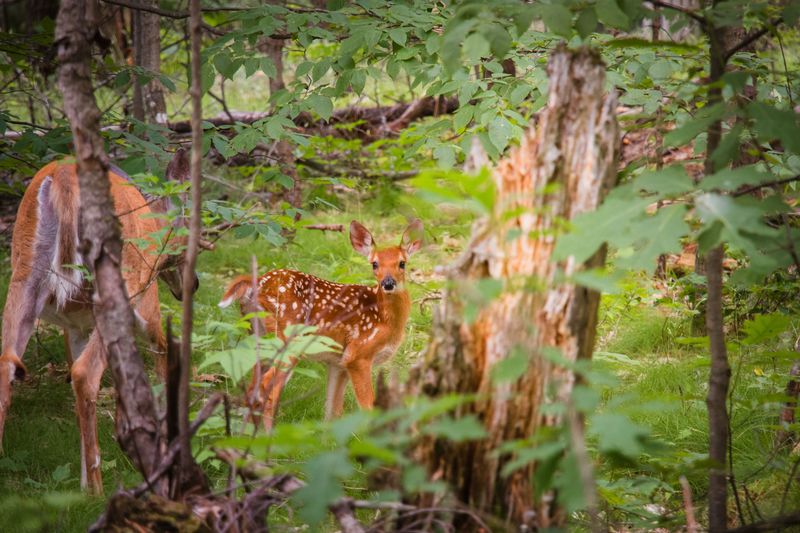
A lone fawn or young animal can tug at your heart, especially if it stays still. Still, parents are often nearby, and the youngster may not need help at all.
Keep your dog away and continue on without lingering. Sniffing, nudging, or circling can stress young wildlife and draw defensive adults closer.
If something truly looks wrong, note the location and contact local wildlife authorities later.
Keep Your Dog Away From Carcasses
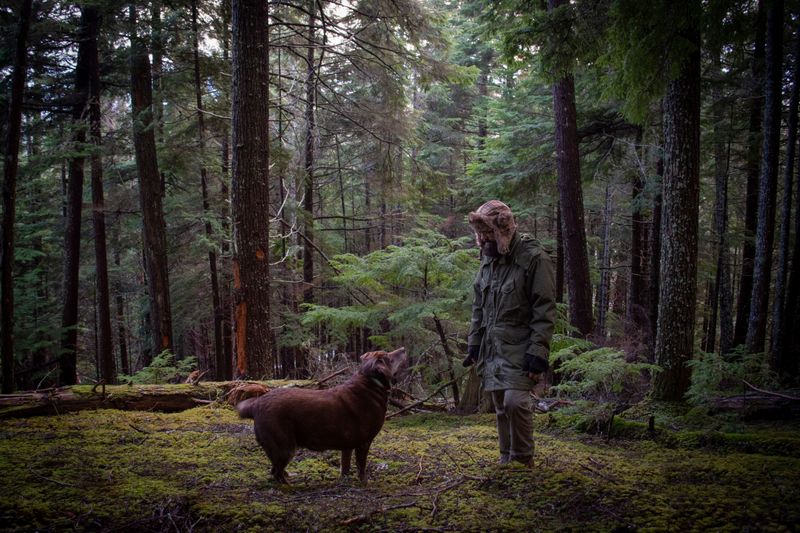
Nothing ruins a calm hike faster than a dog rushing toward something foul-smelling in the woods. Carcasses can attract predators and may expose dogs to parasites, disease, or sharp bone fragments.
If you notice one, create space right away and guide your dog past without investigating. Do not stop for photos or allow extra sniffing.
A wide detour is wise, especially if the remains look fresh.
Check For Ticks After Forest Hikes
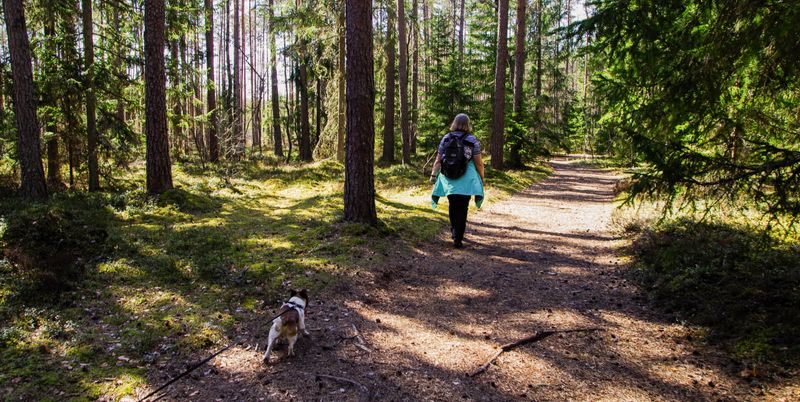
Ticks are a small problem that can become a bigger one if missed. Forest edges, brushy trails, and tall grass in Oregon can all expose dogs during a regular hike.
Once you return, check the coat carefully, especially ears, legs, toes, armpits, and collar area. Ask your veterinarian which tick prevention fits your dog and region best.
Fast checks after every outing are simple and worthwhile.
Carry Water For Both Of You
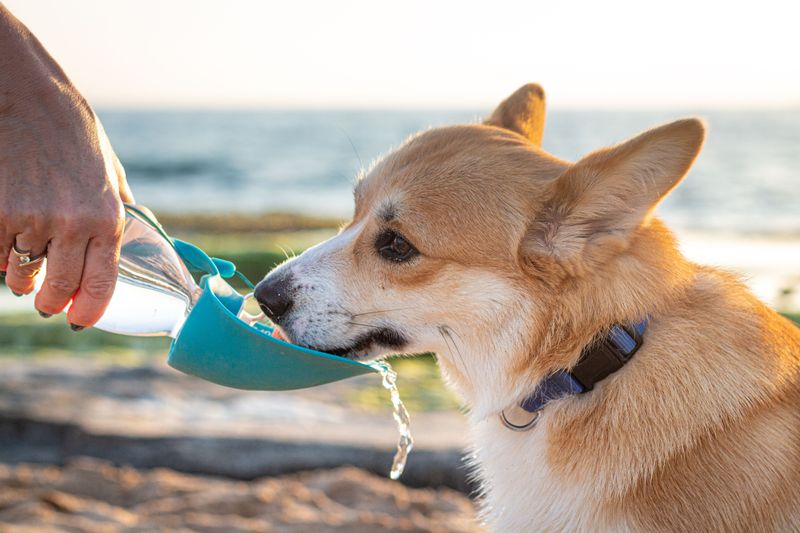
Dogs tire out quietly sometimes, especially on warm days or steep climbs. Streams may look tempting, but they are not a dependable plan for hydration on every Oregon hike.
Bring enough water for both of you, plus a simple bowl your dog can use easily. Offer small drinks during breaks before heavy panting starts.
Good hydration supports better judgment, steadier energy, and a more comfortable return.
Know When To Turn Around
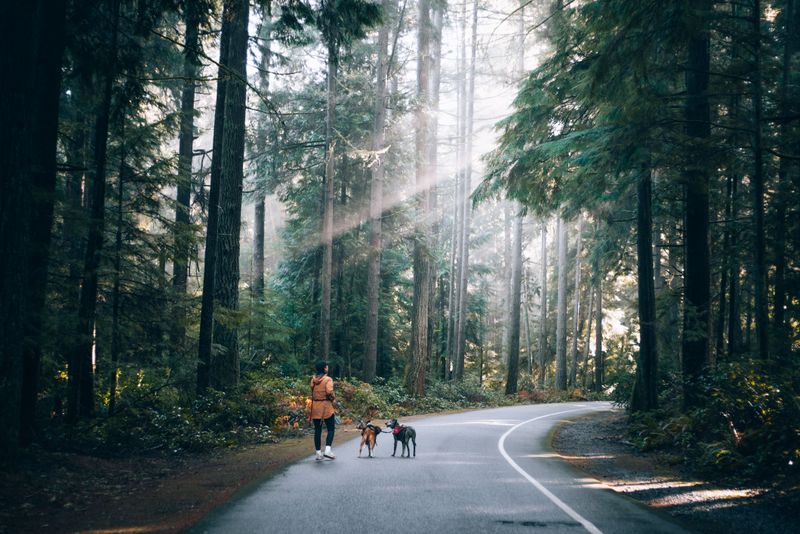
Sometimes the smartest trail skill is knowing when enough is enough. Fresh tracks, repeated wildlife sightings, odd animal behavior, or a dog that stays agitated can all signal changing conditions.
Turning back is not overreacting, it is good judgment. A shorter hike beats pressing on when things feel off.
Trust what you are seeing, trust what your dog is telling you, and save the route for another day.
Follow Leash And Wildlife Rules
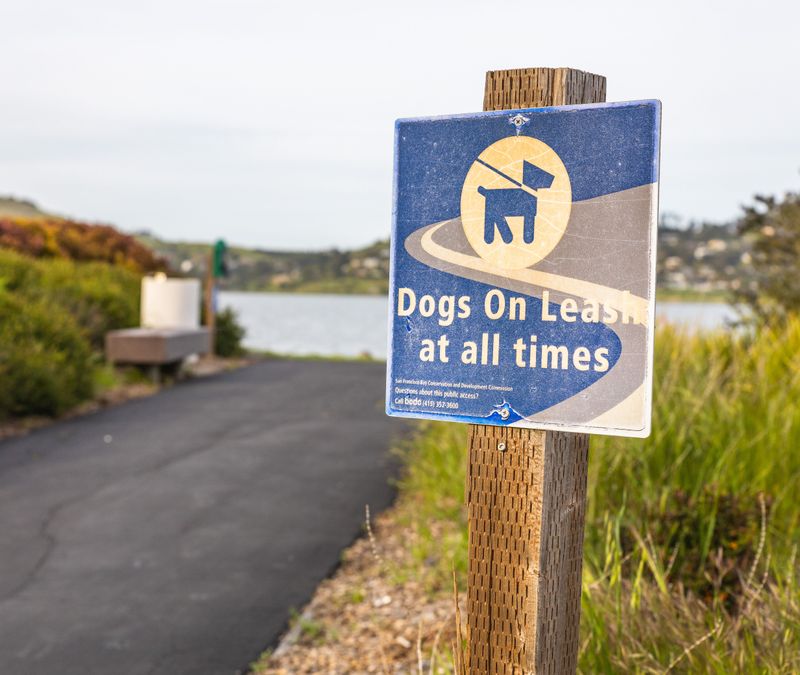
Rules change from one trail system to another, and that surprises many dog owners. State parks, national forests, wildlife areas, and local lands may each post different leash or seasonal access requirements.
Check the exact route before you go, then follow posted signs at the trailhead. Some areas tighten rules to protect nesting birds, elk habitat, or restoration work.
Good planning keeps your outing legal, smoother, and more respectful.
Store Food And Treats Securely
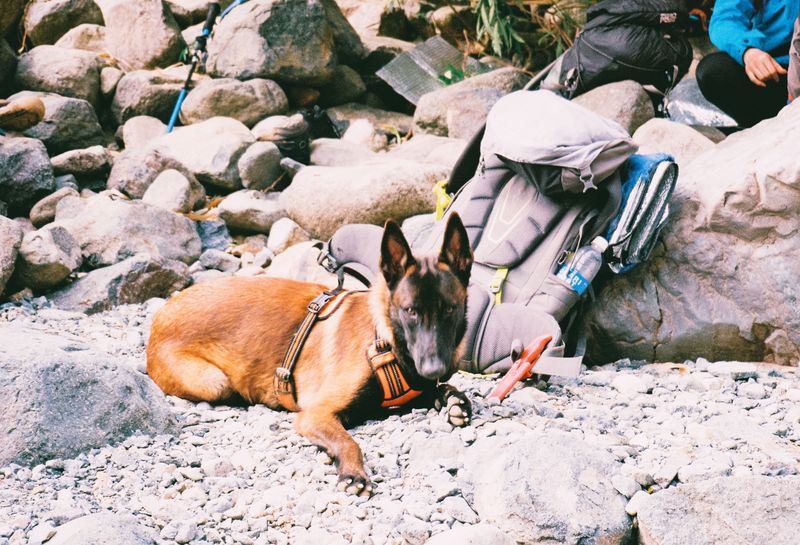
Even small snacks can create big smells on the trail. Dog treats, jerky, lunch scraps, and food wrappers may attract wildlife if they are easy to reach or carelessly packed.
Use sealed bags or containers, and keep everything secured inside your pack when not in use. Never leave treats, crumbs, or waste behind at rest spots.
Clean habits reduce scent, discourage animal visits, and protect the trail experience.
Give Wildlife A Clear Escape Route
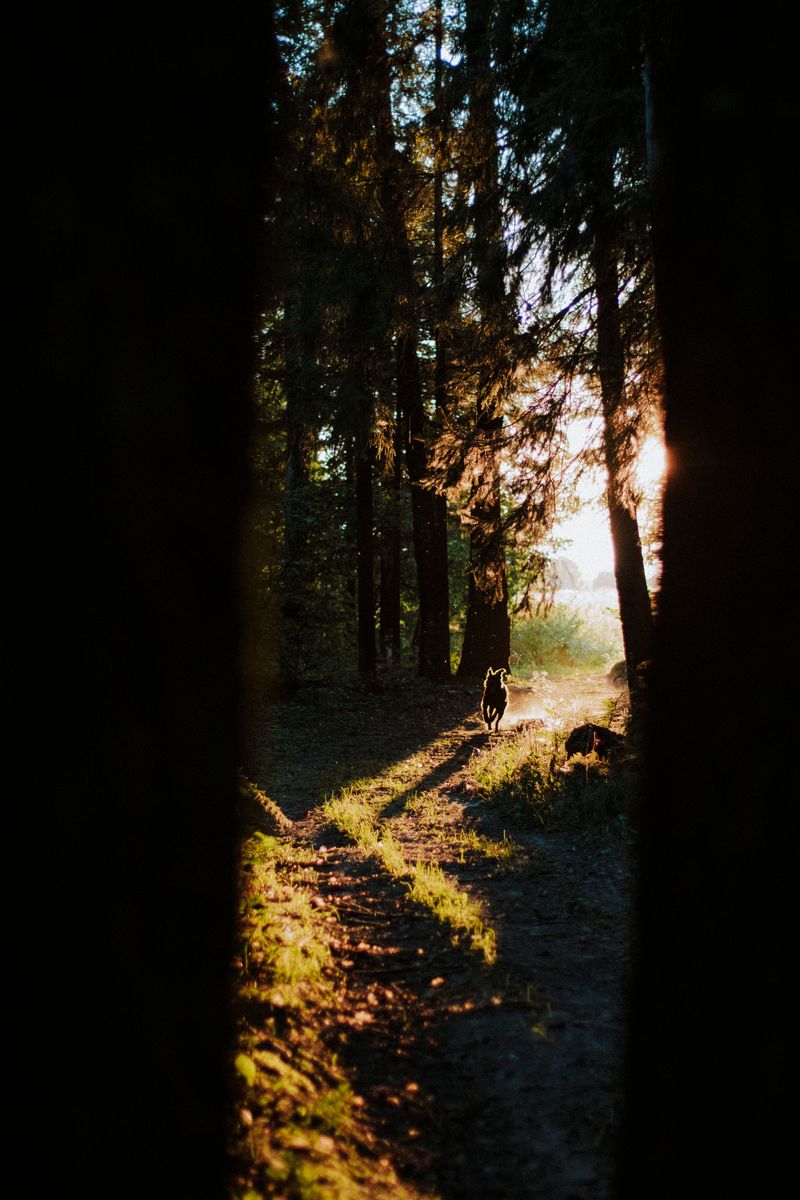
Wildlife usually wants a simple way out, not a close encounter with hikers. Problems grow when an animal feels boxed in by a trail, steep bank, creek, or curious people.
Step back, shorten your leash, and give the animal room to leave on its own. Do not crowd forward for a better look.
Space lowers tension quickly, and that calm pause often ends the encounter without further trouble.