17 Storm-Debris Hazards South Carolina Dog Owners Should Clear From Yards
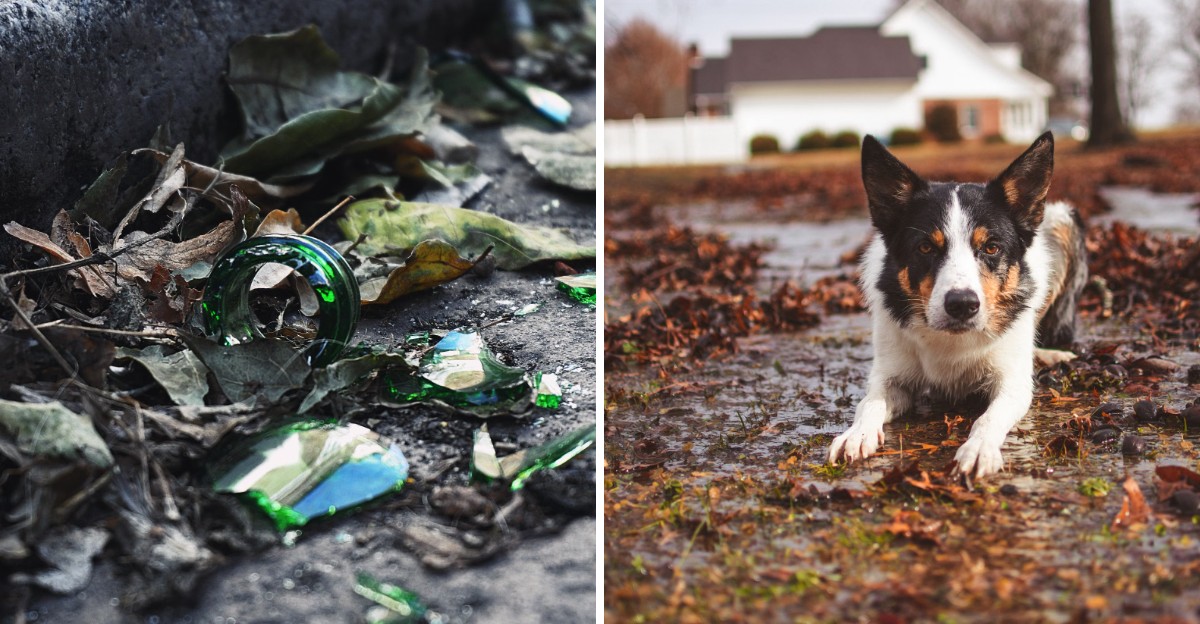
After a South Carolina storm, your dog may be ready for yard time before the yard is ready for paws. Small scraps can hide beneath wet grass, while larger damage may need professional help.
Before opening the back door, take a careful look around from a safe spot. A few thoughtful checks can help you spot trouble, plan cleanup, and give your dog a safer place to explore.
1. Broken Tree Limbs Hidden in Grass
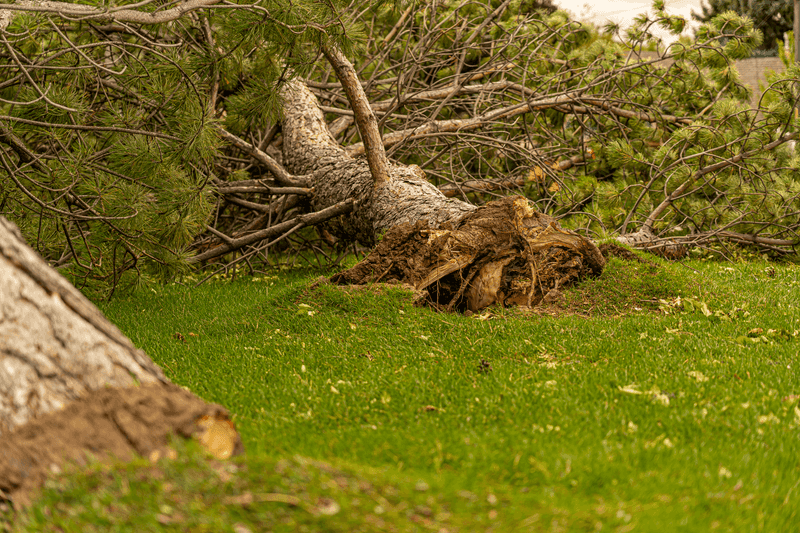
A familiar patch of grass can hide pointed sticks after strong winds. Small limbs may poke paws or break into sharp pieces when chewed.
Keep your dog indoors while you inspect the lawn in daylight.
Wear sturdy shoes and gloves, then collect branches before mowing. Check beneath shrubs, along fences, and around favorite sniffing spots.
Bag smaller scraps according to local collection rules. Finish with another slow walk, watching for twig ends beneath flattened grass.
2. Large Branches That Could Shift or Roll
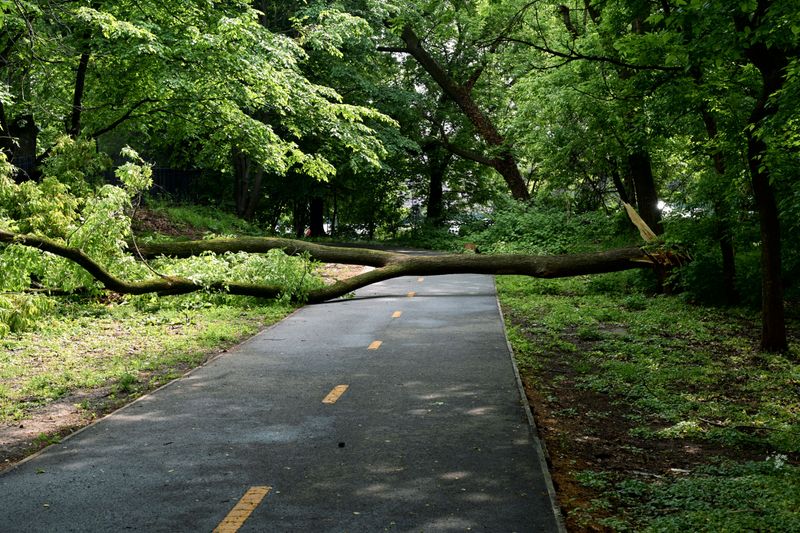
Heavy wood does not always stay where the storm dropped it. A rounded branch can roll on sloped ground or shift when another piece moves.
Dogs investigating underneath may become trapped or hurt.
Block access without approaching unstable piles. Never let your dog climb fallen wood, even for a quick photo.
Hire a qualified tree service for branches beyond your lifting ability. Keep everyone away until the pieces are safely removed and surrounding ground checked.
3. Splintered Fence Boards and Wooden Panels
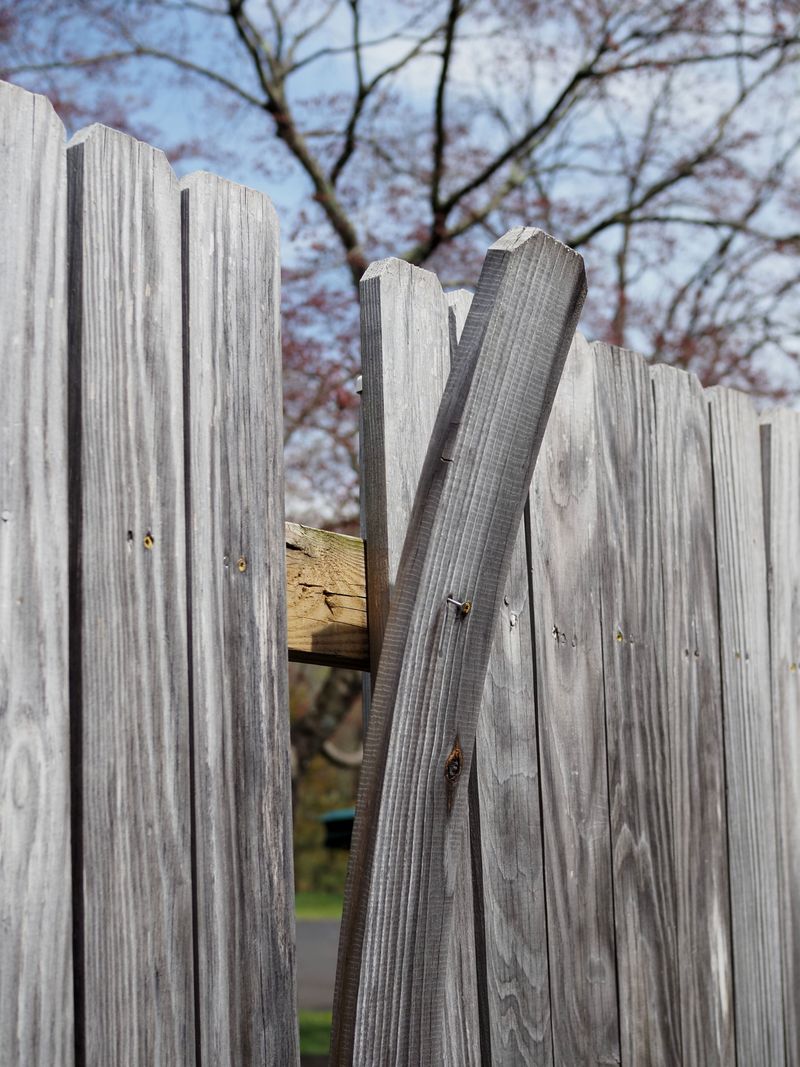
Your fence has two jobs after a storm: avoiding injuries and keeping your dog contained. Cracked boards can leave rough edges, while loose panels may create escape gaps.
Inspect the entire boundary before allowing outdoor play.
Keep pets away from leaning sections and exposed splinters. Remove only loose pieces you can handle safely, wearing gloves.
Arrange repairs for unstable posts or panels. Use supervised leash breaks elsewhere until the fence is secure along its full length.
4. Exposed Nails and Screws From Storm-Damaged Structures
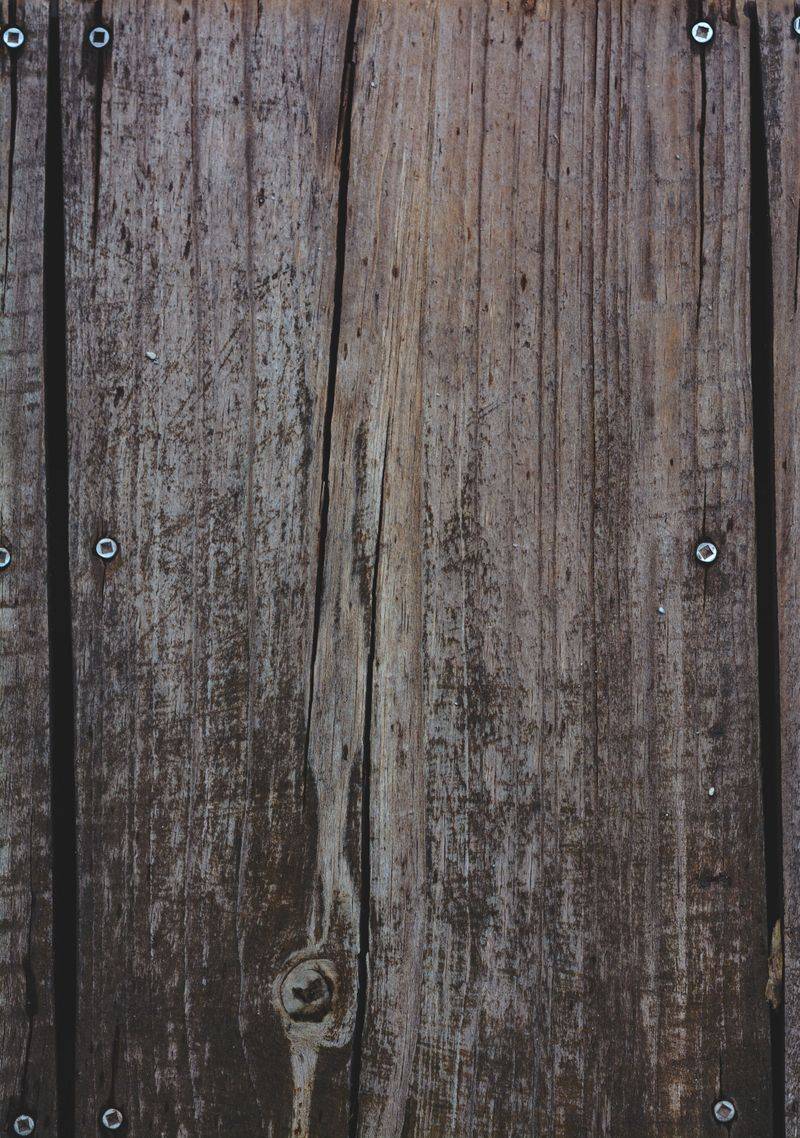
Tiny metal fasteners can cause problems long after larger debris disappears. Nails and screws often fall from damaged sheds, decks, and fences.
Look closely around repair areas and wherever broken boards landed.
Use gloves and a suitable tool rather than grabbing sharp metal directly. A magnetic sweeper can help locate steel fasteners, but it will not find everything.
Repeat your visual check afterward. Contact your veterinarian promptly if your dog steps on or swallows anything sharp.
5. Shattered Glass From Windows and Outdoor Decorations
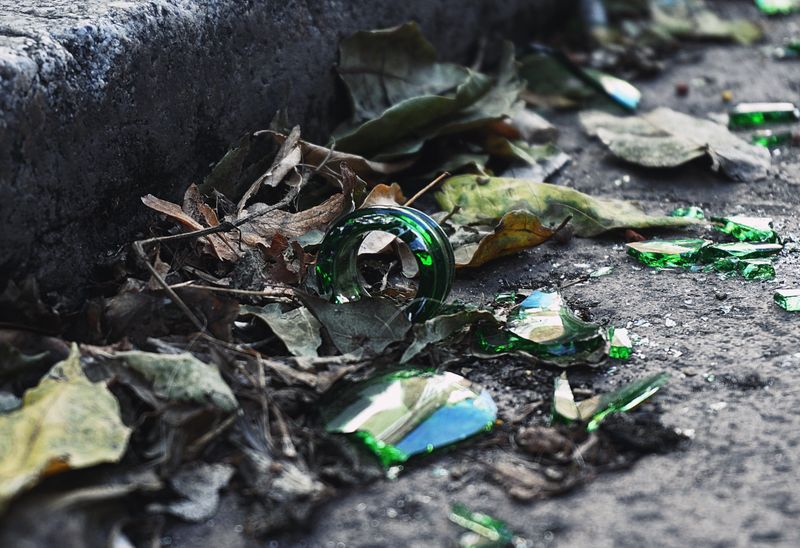
Sunlight may reveal glass that was almost invisible in cloudy weather. Broken lanterns, windows, and garden decorations can scatter fragments beyond the obvious pile.
Keep dogs out of the whole area during cleanup.
Wear sturdy gloves and closed shoes, using tools to collect larger pieces. Place fragments in a rigid container that protects waste handlers.
Inspect nearby grass from several angles. If glass remains difficult to locate, keep that section blocked until cleanup is reliably complete.
6. Torn Roofing Shingles and Roofing Nails
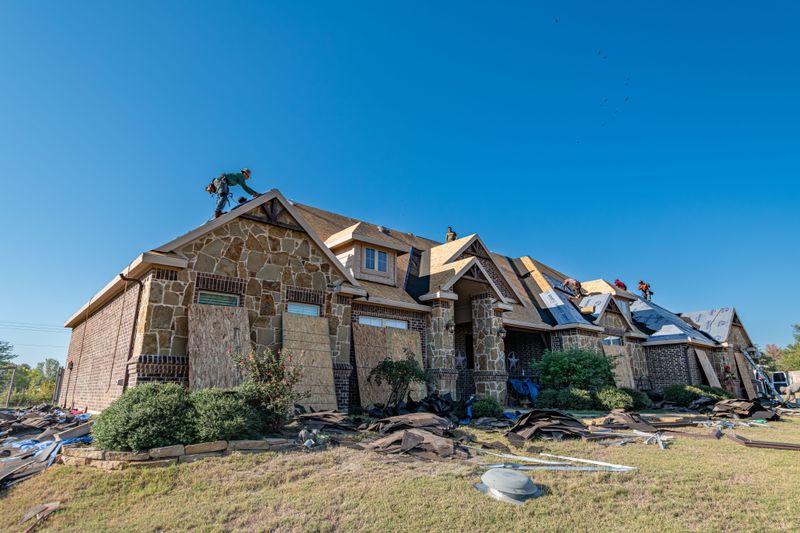
Roof scraps often travel farther than owners expect during strong winds. Torn shingles may conceal attached nails, especially when their rough surfaces face upward.
Search lawns, driveways, and the spaces behind outdoor furniture.
Gather manageable pieces with gloves and place them in sturdy containers. Leave roof inspections and repairs to qualified professionals.
Ask contractors how they will collect loose fasteners afterward. Before reopening the yard, check again for scraps blown from neighboring properties or overlooked beds.
7. Fallen Power Lines and Damaged Electrical Cables

Some hazards belong entirely to utility crews, not your cleanup list. Treat every fallen wire as energized, including wires caught in trees or fences.
Water, branches, and metal objects can also become energized if they contact a fallen power line.
Stay well away and keep your dog indoors or somewhere safely distant. Never touch, move, or drive over a downed line.
Report it to your utility immediately. Call 911 for immediate danger, and wait for utility confirmation before entering the affected area again.
8. Floodwater Debris and Mud-Covered Objects
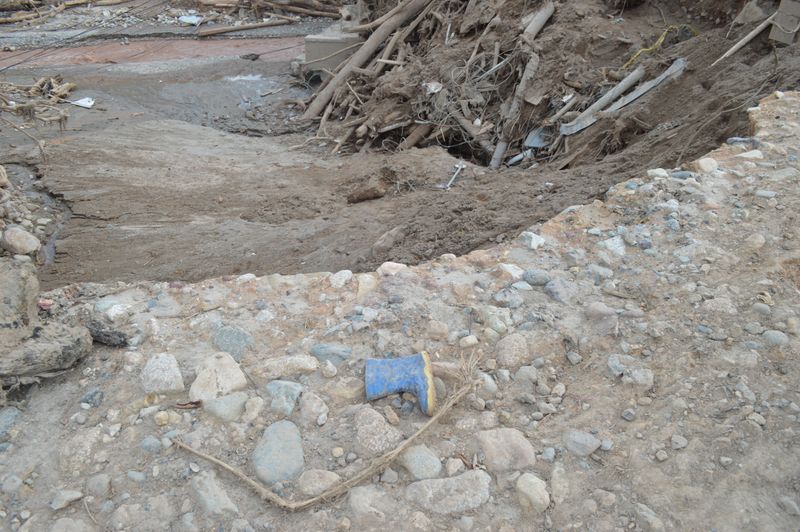
Muddy leftovers deserve extra caution because floodwater can carry sewage, chemicals, and hidden sharp objects. Avoid letting your dog drink standing water or investigate unfamiliar items.
Wait until conditions allow a safe inspection.
Wear protective gloves and boots for suitable cleanup tasks. Do not handle unknown containers or suspected hazardous waste yourself.
Ask local officials about disposal guidance and flood cleanup services. If your dog contacts contaminated water, prevent licking and call your veterinarian for advice.
9. Damaged Tree Roots and Unstable Stumps
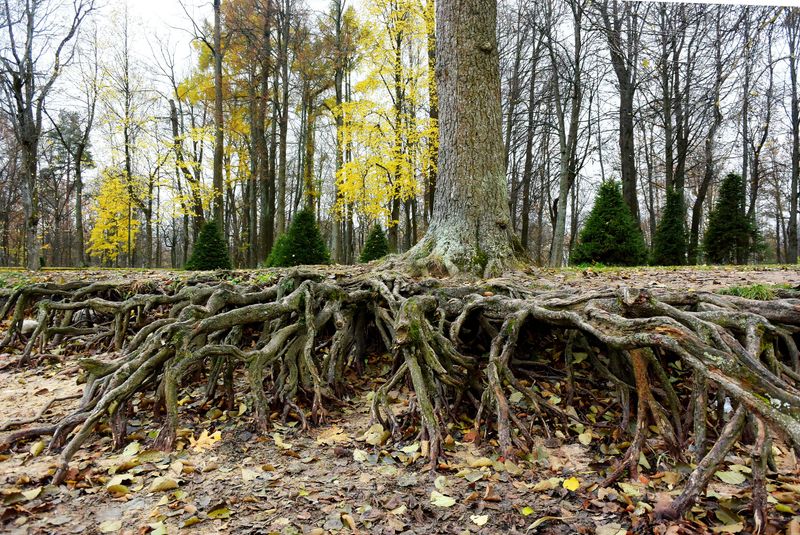
Raised soil around a tree can signal movement below the surface. Exposed roots and partly uprooted stumps may shift, especially after soaking rain.
Nearby holes also create awkward footing for people and dogs.
Keep the surrounding area off limits until a qualified tree professional assesses stability. Avoid digging, cutting roots, or pulling attached wood yourself.
Those actions can change the balance unexpectedly. After removal, fill depressions properly and check that the ground supports normal foot traffic.
10. Fallen Limbs With Hanging or Tensioned Branches
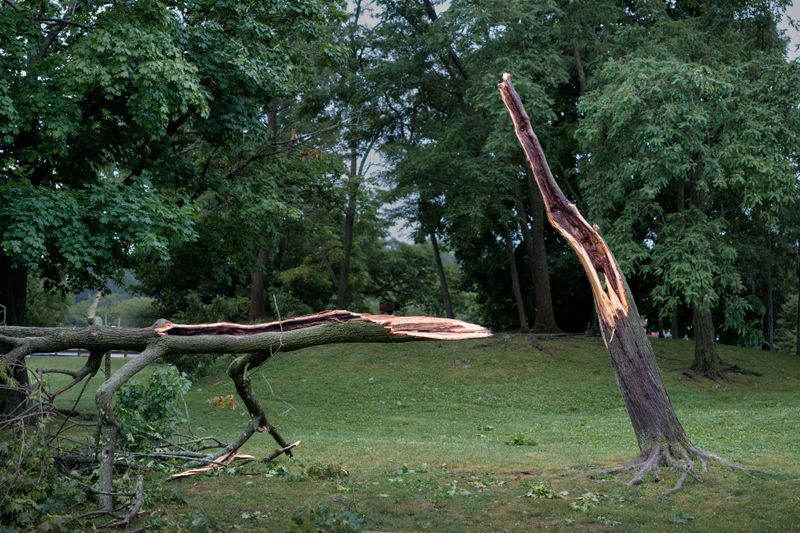
A branch bent beneath another limb can spring back when released. Hanging branches overhead may also fall without much warning.
Neither situation is a safe project for casual cutting or pulling.
Keep your dog away from the entire tree area, not just the visible debris. Avoid standing beneath damaged limbs while checking the yard.
Ask a qualified tree service to handle suspended or tensioned wood. Resume cleanup only after overhead hazards and stored tension are addressed.
11. Torn Plastic Tarps and Outdoor Covers
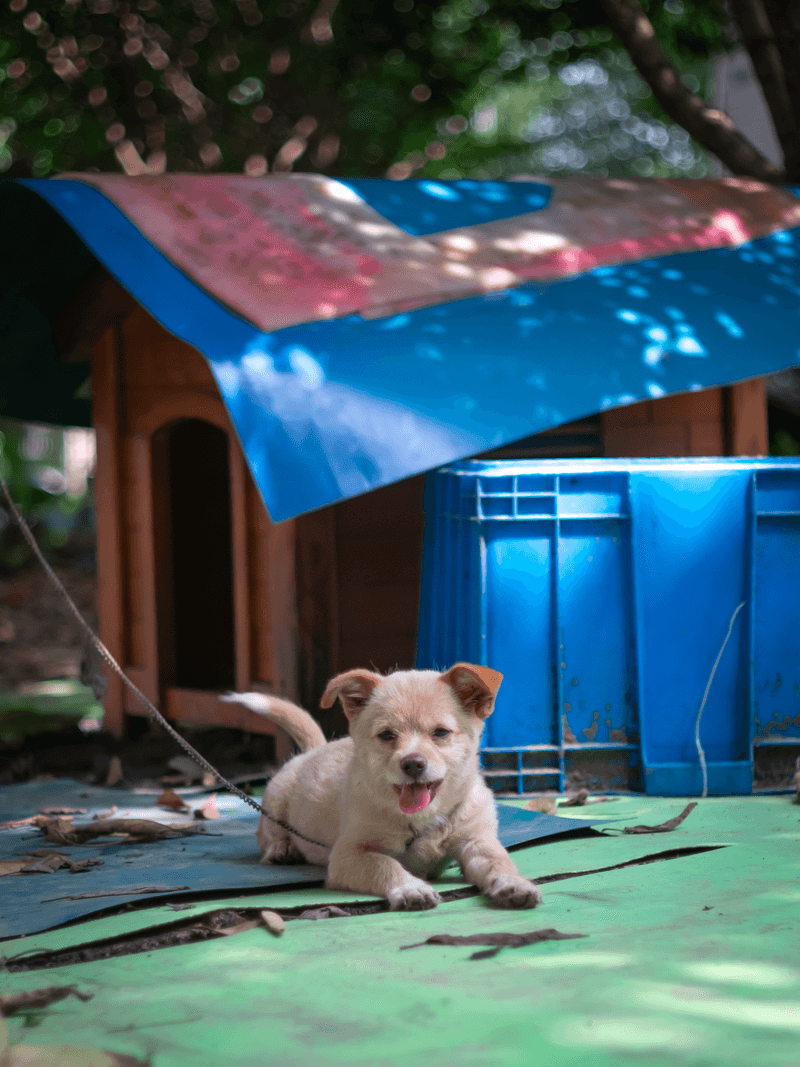
Flapping plastic can look like an exciting toy to a curious dog. Torn covers may trail cords or strips that wrap around legs.
Swallowed pieces can also cause digestive blockages requiring veterinary care.
Collect loose plastic promptly and check beneath furniture for hidden scraps. Roll damaged covers inward to contain strings and fragments.
Store usable tarps securely before winds return. If you suspect swallowing, contact your veterinarian rather than waiting for symptoms or trying home treatments.
12. Broken Patio Furniture and Metal Frames
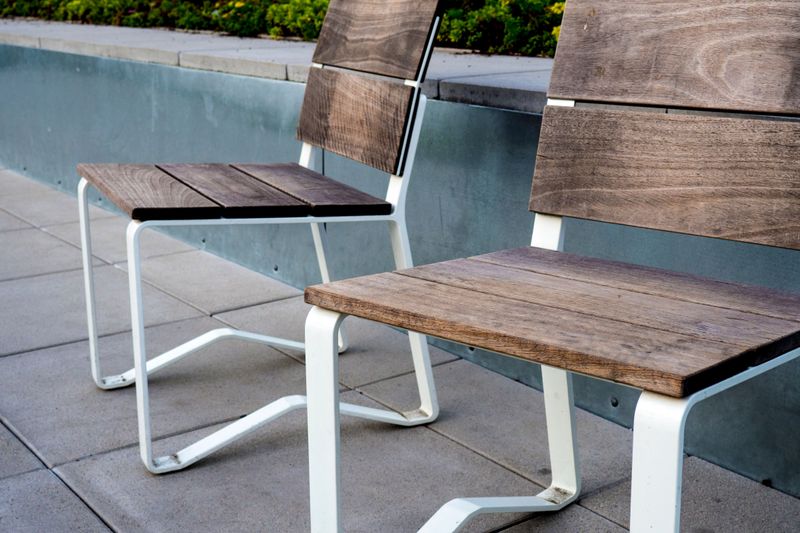
Yesterday’s favorite patio chair may have sharp edges after tumbling across the yard. Bent frames, cracked seats, and loose hardware deserve a close inspection.
Furniture that looks upright may still collapse under pressure.
Move dogs elsewhere before shifting damaged pieces. Wear gloves and get help with bulky items instead of dragging them blindly.
Check the grass afterward for screws, caps, and fragments. Repair sound pieces properly, and arrange disposal for furniture that cannot be made stable.
13. Damaged Gutters and Downspout Pieces
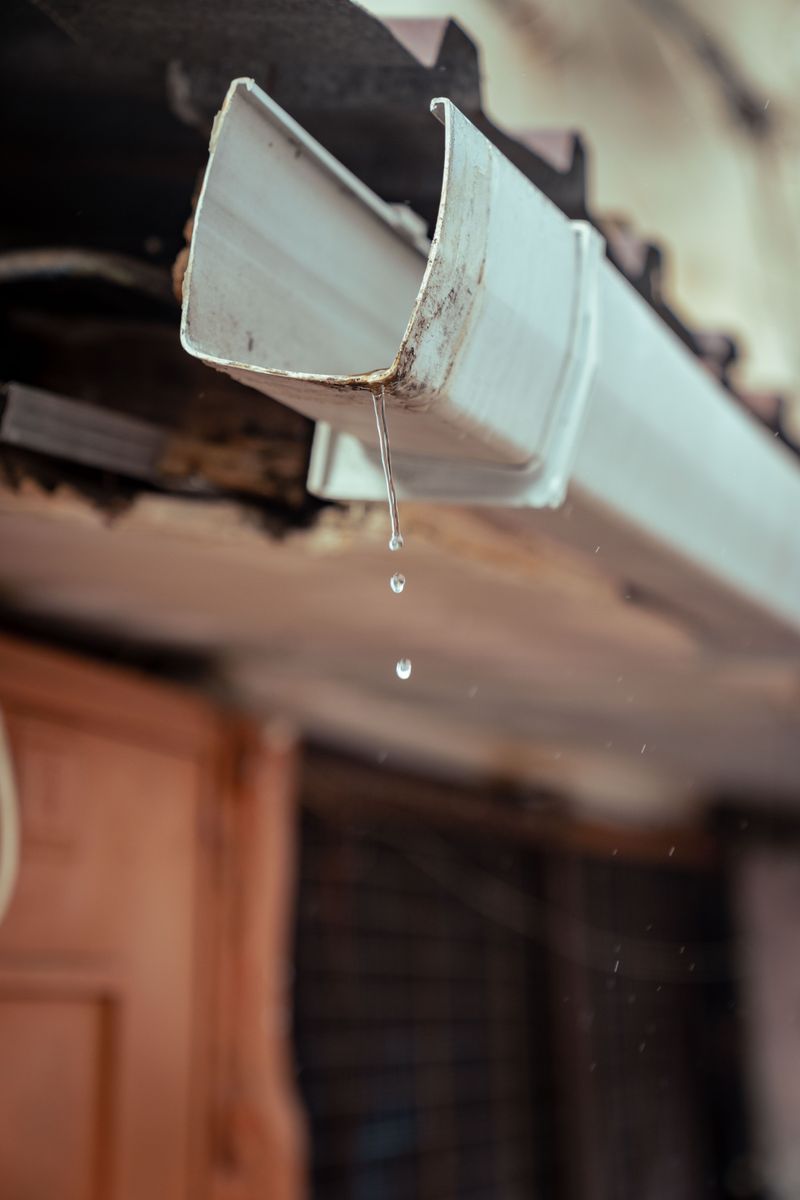
Thin aluminum can leave surprisingly sharp edges when gutters bend or tear. Detached sections may also hide brackets and screws in the grass.
Look along the house perimeter before your dog follows familiar routes.
Stay clear of pieces still dangling from the roof. A professional should handle anything requiring roof access or work beneath unstable materials.
Gather detached scraps only when the area is safe. Check drainage afterward, since displaced downspouts can leave puddles near play areas.
14. Fallen Limbs Near Outdoor Water Bowls
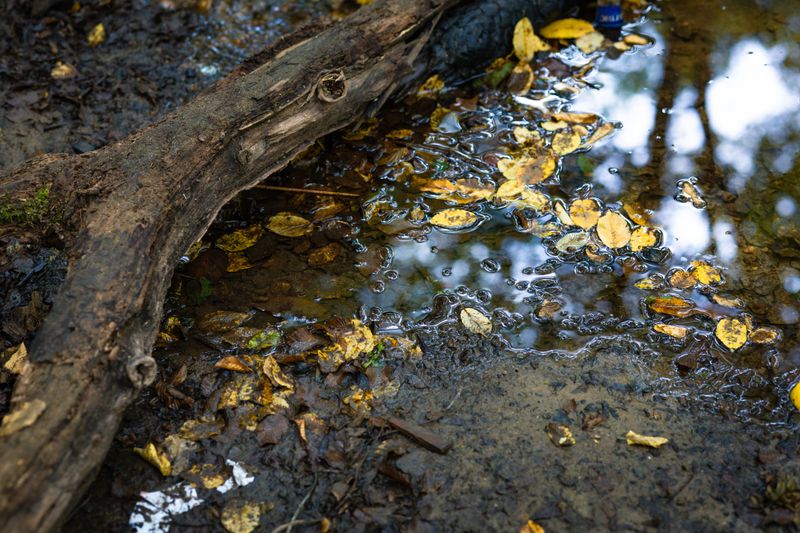
Water stations are easy to overlook during a busy yard cleanup. A fallen limb can crack a bowl or drop dirt into drinking water.
Storm runoff may add contamination you cannot see.
Move the bowl to a clean, sheltered spot away from damaged trees. Empty it, wash it thoroughly, and refill with fresh drinking water.
Replace containers with cracks or sharp edges. Clear nearby debris so your dog has a clean approach without stepping over branches.
15. Rotting Leaves and Wet Organic Debris
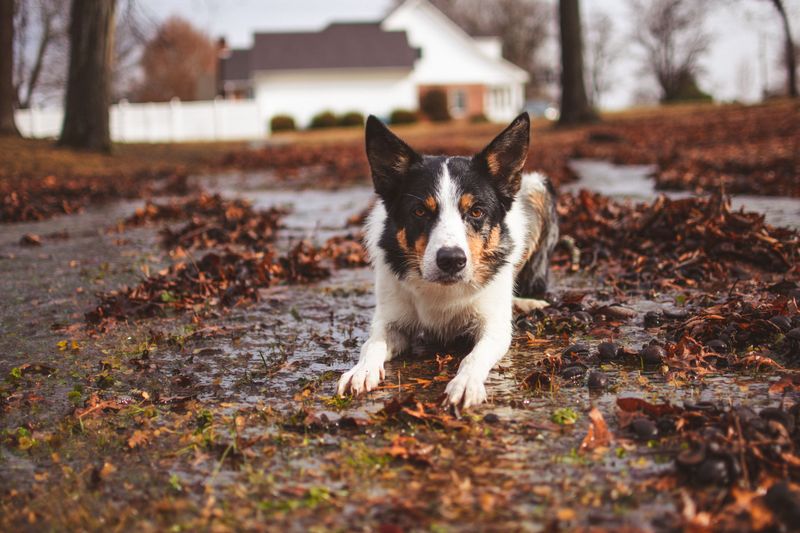
South Carolina’s warm, damp weather can keep storm piles wet for days. Decaying leaves and grass may develop mold, and some molds contain toxins.
Dogs should not eat or nose through these piles.
Rake manageable material while wearing gloves, keeping your pet elsewhere. Follow local rules for yard waste collection rather than leaving accessible heaps.
Check beneath piles for hidden debris before reopening the space. Contact your veterinarian promptly after suspected ingestion, especially if unusual symptoms develop.
16. Displaced Garden Stakes and Broken Plant Supports
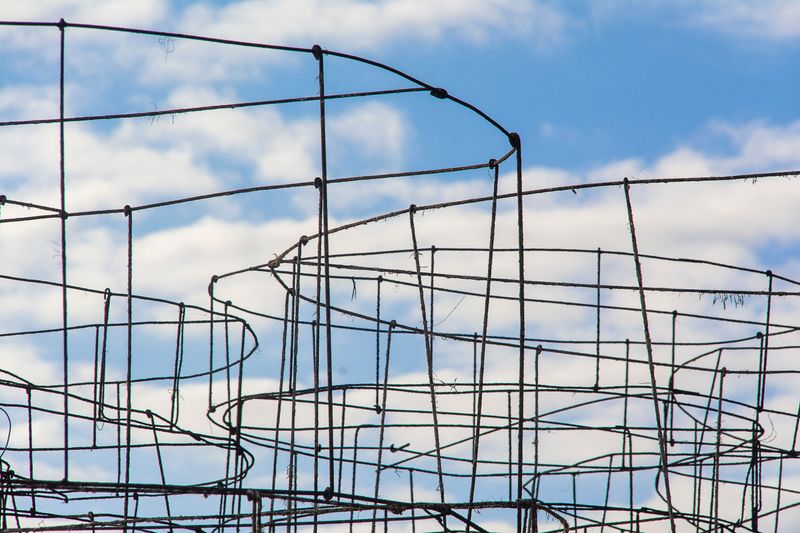
Garden beds can send pointed supports into places your dog normally runs. Bamboo stakes may splinter, while bent tomato cages leave exposed wire ends.
Inspect paths between beds as carefully as planted areas.
Gather loose supports before letting your dog explore the garden. Replace broken pieces instead of pushing damaged stakes back into soil.
Store spare rods horizontally in a secure location. Straighten or replace stable supports only after checking their attachments and the ground around them.
17. Damaged Outdoor Chemical and Fuel Containers
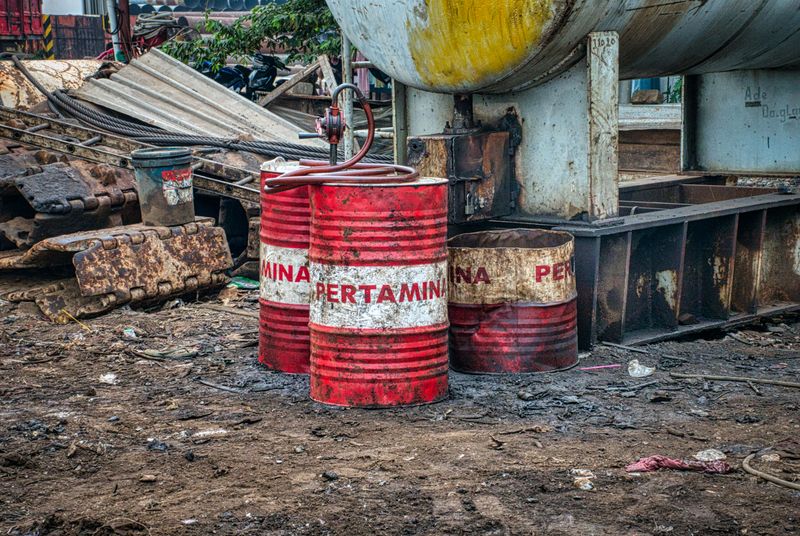
Leaks near a shed need a different plan than ordinary yard waste. Damaged fuel, pesticide, or cleaner containers can contaminate soil and paws.
Keep dogs away, and never combine unknown liquids or rinse spills into drains.
Contact local waste officials for disposal guidance. Call emergency services for strong fumes, active fuel leaks, or immediate danger.
Seek veterinary advice after possible exposure. A careful final walk helps you reopen the yard with confidence, one cleared space at a time.