20 Michigan Senior-Dog Cottage Adjustments For Docks, Steps, And Slippery Floors
Cottage weekends in Michigan are special, and your older dog deserves to enjoy every one of them. As dogs age, their joints stiffen, their eyesight fades, and their balance gets a little shaky.
Wet docks, steep steps, and shiny floors can quietly become tricky spots. The good news is that small, simple changes can help your loyal friend move around with comfort and confidence all year long.
1. Give Dock Boards Some Grip
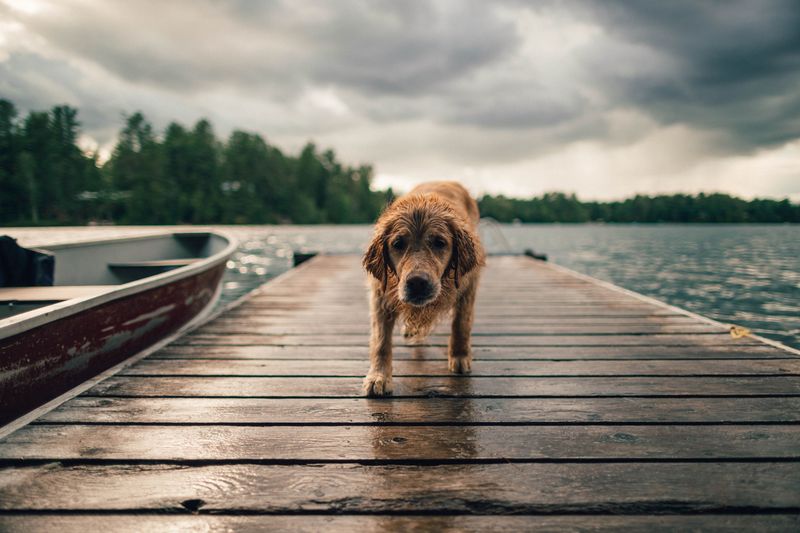
Picture your gray-muzzled pal stepping onto a dock still damp with morning dew. Smooth wood can feel like ice under older paws.
Anti-slip traction tape is an easy fix for an existing dock. Press strips across boards, ramp surfaces, and steps.
If you are rebuilding, look at decking with built-in tread patterns, such as textured vinyl, aluminum, or grated panels.
Check the tape each spring, since sun and water wear it down over time.
2. Scrub Away the Green Slick
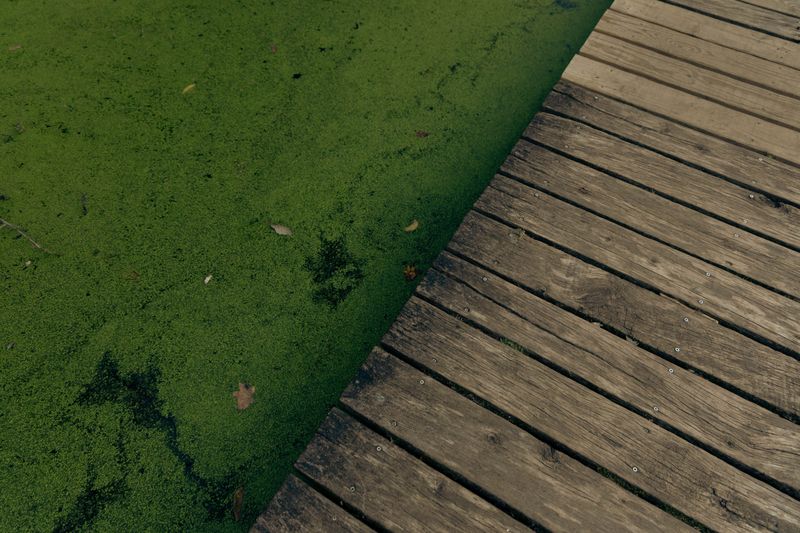
Algae loves Michigan summers almost as much as we do. That thin green film turns a dock into a slide, especially near the waterline.
Plan a regular scrub with a stiff brush and an eco-friendly cleaner. Many gentle products use hydrogen peroxide as their active ingredient.
Always read the label for pet and lake safety.
Rinse well and keep your dog off the dock until it dries. Some local services also clear heavy muck and plant growth.
3. Fix Wobbly or Warped Boards
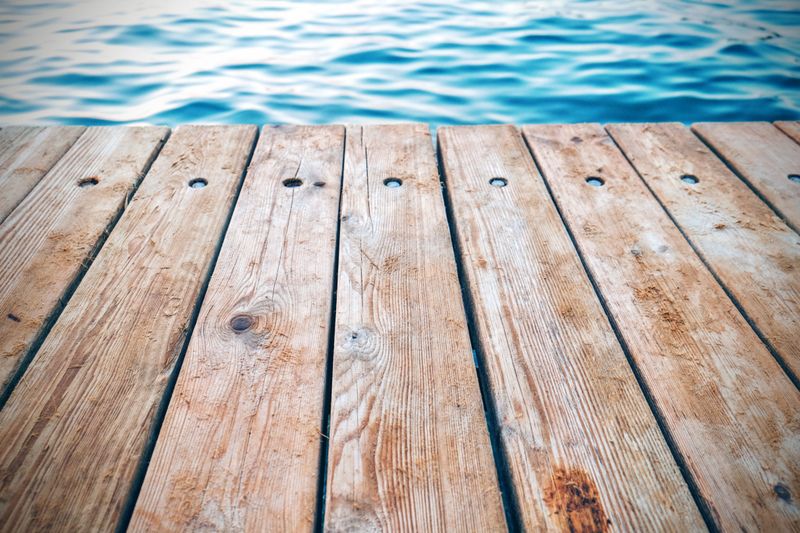
A board that rocks slightly might not bother you. For a dog with arthritis, that small wobble can throw off a careful step.
Walk your dock slowly at the start of each season. Look for cracks, warping, popped nails, and boards that bend underfoot.
Replace damaged pieces and drive down raised fasteners. A level, steady surface helps older dogs trust their footing again.
Your own ankles will thank you too.
4. Mind the Gaps Underfoot
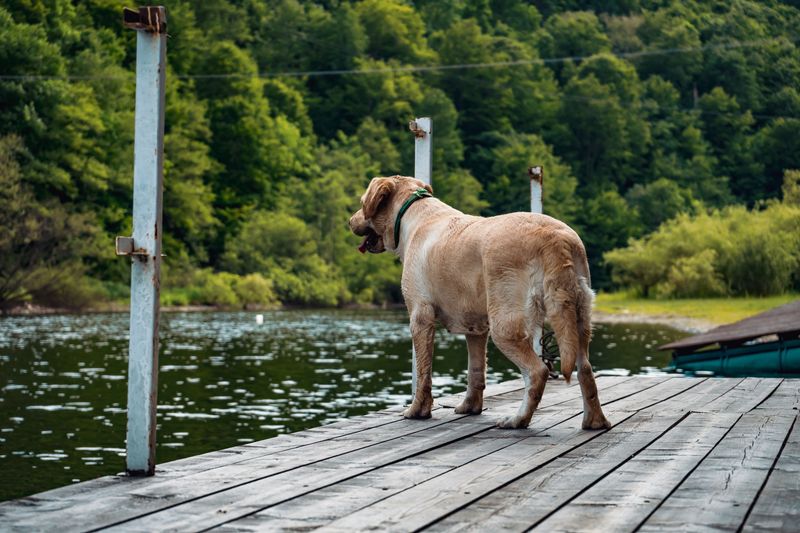
Ever notice how your dog hesitates at the spot where two dock sections meet? There may be a reason.
Wide gaps can catch a paw, which may lead to a sprain or a torn nail. Look for transition plates or corner covers made for dock joints.
These products smooth the space between sections and platforms.
For gaps between individual boards, ask a dock builder about safe spacing. Water still needs room to drain.
5. Swap the Big Step for a Gentle Slope
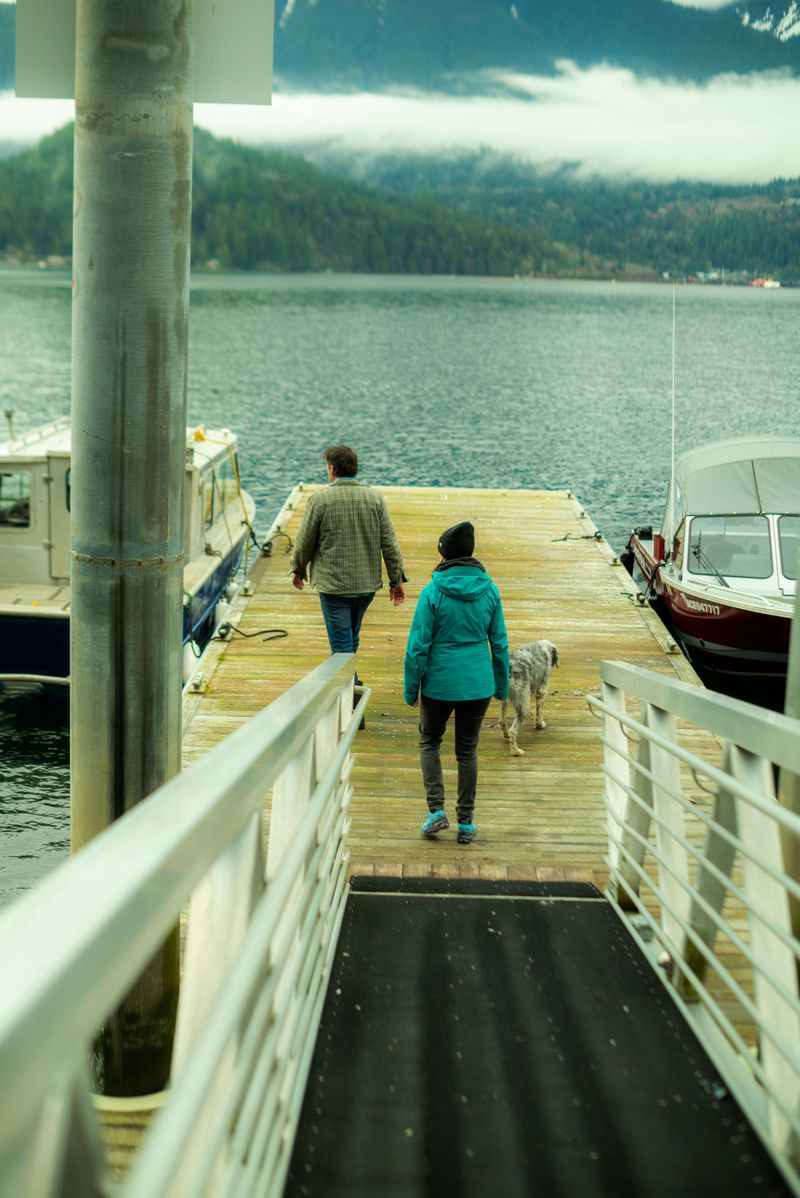
That tall step from the beach to the dock once took a happy leap. Now it may take a deep breath and some courage.
A gently sloped ramp removes the jump completely. For human ramps, the Michigan Residential Code limits slope to 1 inch of rise per 12 inches of length.
That guide works nicely for dogs too.
Add flat landings at the top and bottom. Longer ramps feel easier on tired hips.
6. Rails That Catch a Misstep
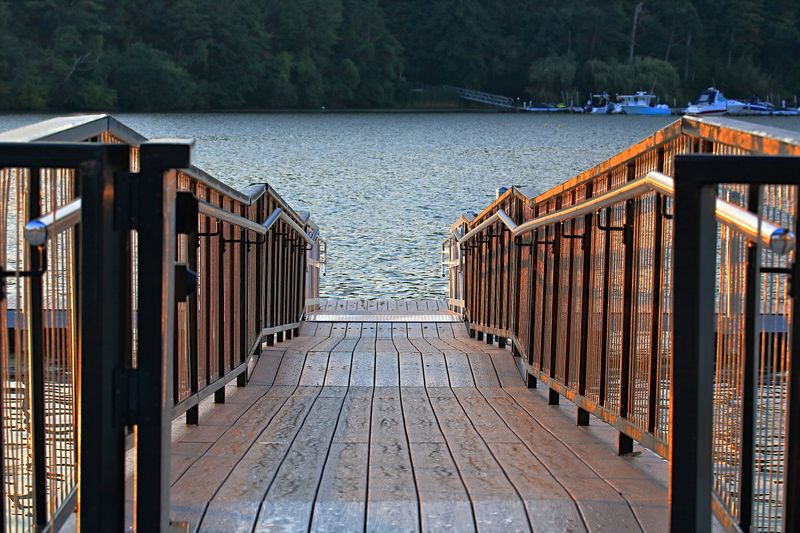
Older dogs sometimes misjudge an edge, especially on a narrow ramp. Side barriers turn a nervous walk into a relaxed stroll.
The Michigan Residential Code calls for guards on ramps rising more than 6 inches. Whether or not yours is covered, low solid side boards help dogs feel enclosed and steady.
Rules can vary, so confirm details with your local building department before building anything permanent.
7. Guard the Open Edges
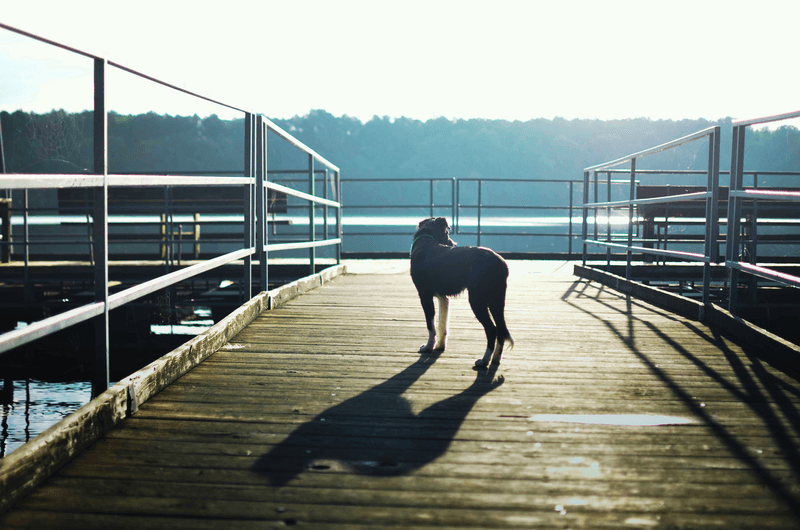
Here is a quick fact: Michigan’s residential code requires guards on open walking surfaces more than 30 inches above the ground below. Those guards usually stand 36 inches tall, with openings too small for a 4-inch sphere.
Many docks sit lower than that, so railings are optional. Still, adding barriers along the busiest stretch can prevent surprise splashes.
Bumpers across open dock ends offer another simple layer of protection.
8. Calm a Bouncy Floating Dock

A passing boat wake can make a floating dock bob and sway. For an older dog, that motion feels unsettling and hard to balance on.
Better anchoring helps a lot. Several staggered anchors reduce side-to-side drift from wind and waves.
Even float placement and cross bracing cut down on twisting.
Stabilizer kits with augers and brackets are widely sold. A dock installer can suggest the right setup for your lake bottom.
9. Light the Way After Sunset

Evening walks to the water are a cottage tradition. Yet fading eyesight makes dusk tricky for many senior dogs.
Solar dock lights are affordable and need no wiring. Place them along dock edges, ramp sides, and the path from the cottage.
Soft, steady light shows where boards end and steps begin.
Cloudy days count too. A brighter path helps your dog move with less hesitation and more spring.
10. An Easy Way Out of the Water
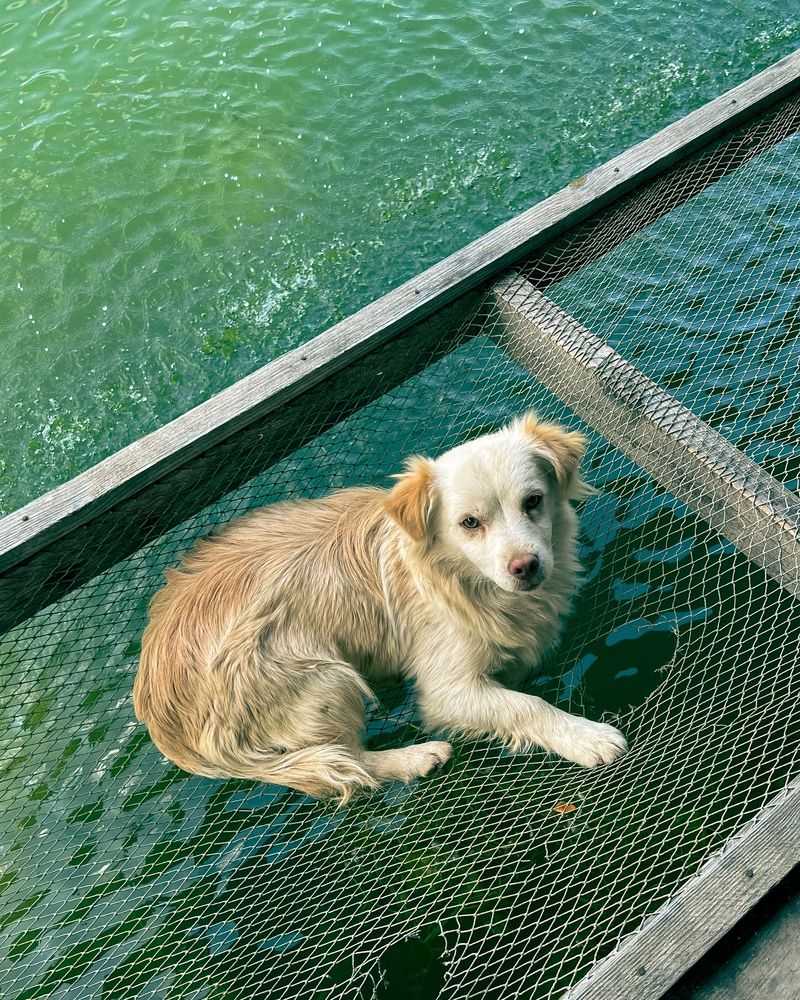
Some dogs never lose their love of swimming. Climbing back onto a dock, though, often takes more strength than an older dog has.
A dog water ramp attaches to the dock and slopes into the water. Many have textured surfaces and submerged steps, so dogs can paddle right up and walk out.
Fun detail: several popular dog ramps are made right here in Michigan. Always supervise swims, and consider a canine life jacket.
11. Treads for Every Outdoor Stair
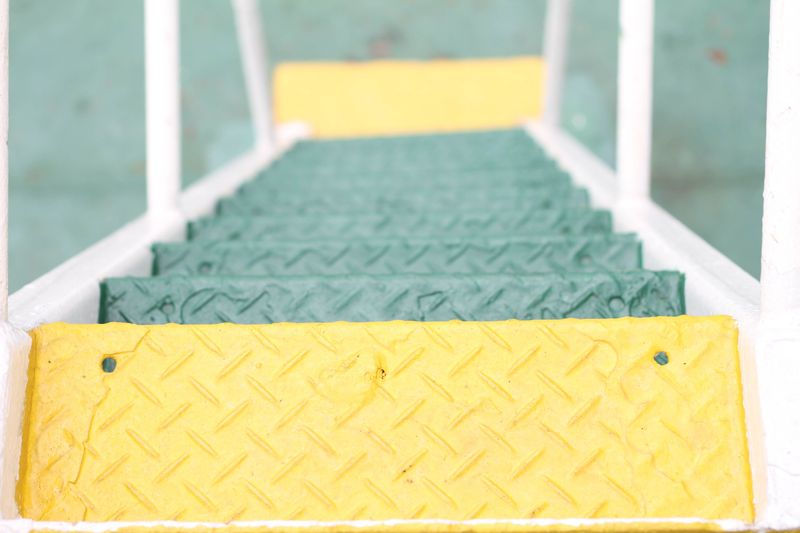
Rain, dew, and pine needles make cottage steps slicker than they look. A quick upgrade can change that.
Nonslip stair treads stick or screw onto wood, composite, and concrete. Gritty traction tape works too, and it costs very little.
Cover the full width of each step, not just the middle.
Choose treads in a contrasting color if possible. That small detail helps dogs with cloudy vision spot each edge.
12. Trade Steep Stairs for a Ramp
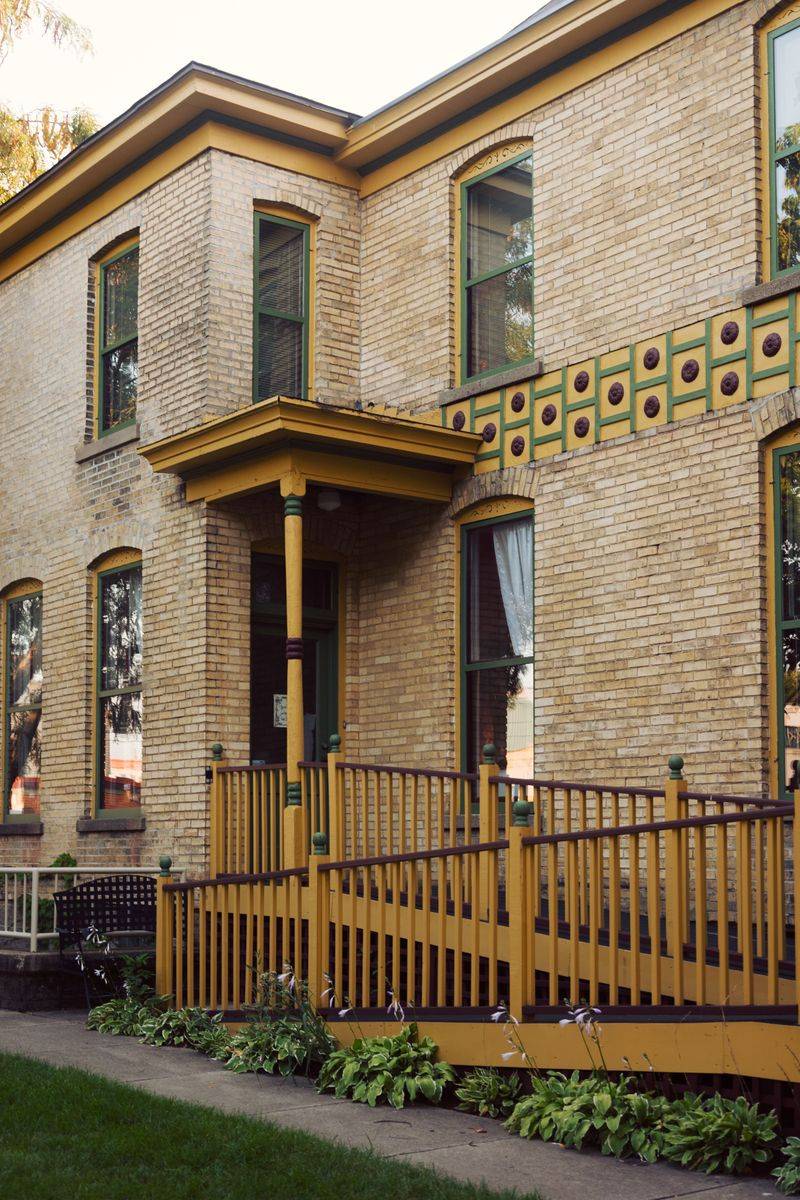
Steep stairs ask a lot from stiff joints and weaker muscles. If your yard has room, a ramp can be a gift.
Aim for that same gentle 1 in 12 slope used in Michigan’s residential code. Permanent ramps may need a permit, so check with your township or county first.
Short on space? Sturdy portable aluminum pet ramps handle porches and car doors, with many rated for larger dogs.
13. Steady Rails for Two and Four Legs
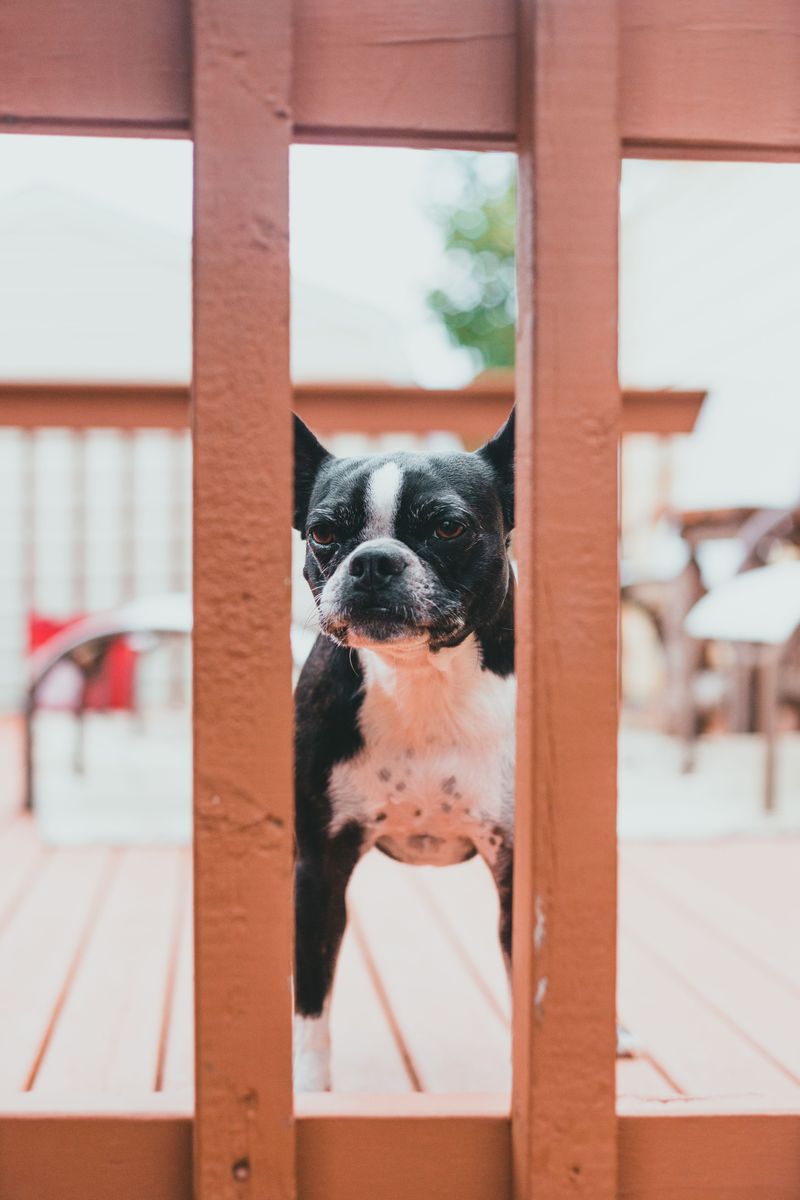
Good railings protect everyone, from grandparents to your gray-faced hound. They matter most on elevated decks and walkways.
Michigan’s residential code generally sets stair handrails at 34 to 38 inches high. Balusters must block a 4-inch sphere, which also helps keep small dogs from squeezing through.
For tiny breeds, add mesh panels to the lower section. Confirm current requirements locally before starting any big project.
14. Level Steps and Solid Landings
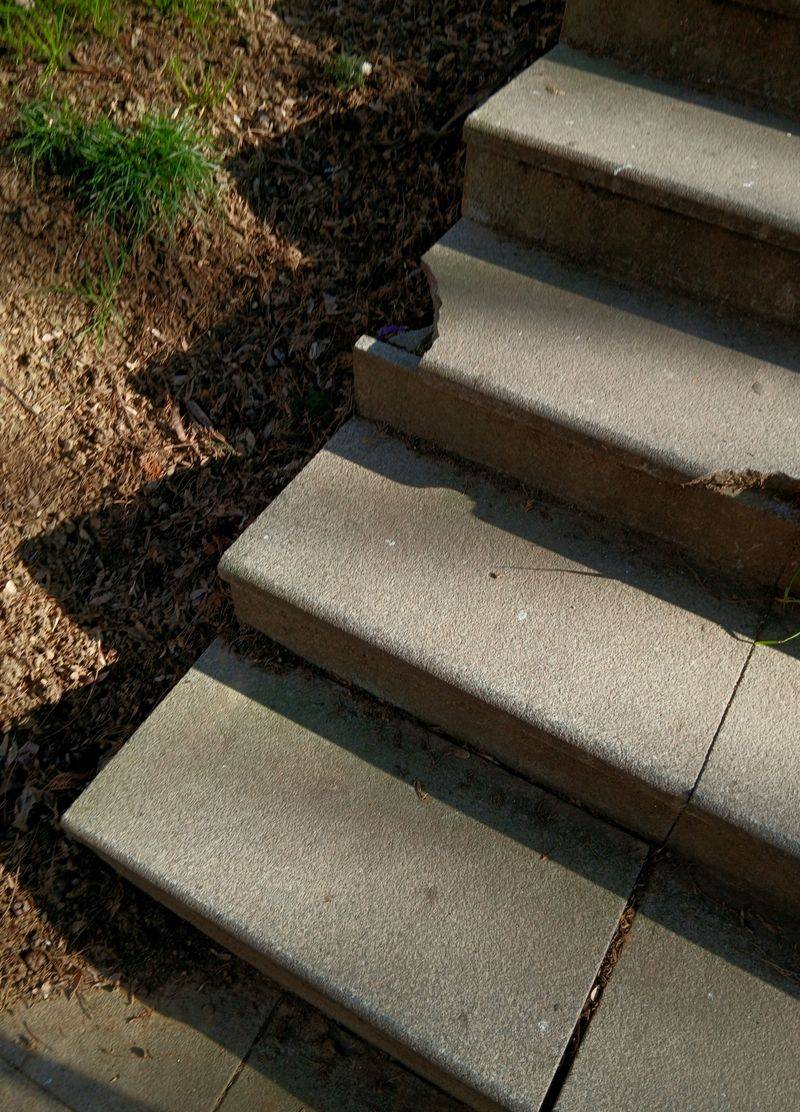
Frost heave is a classic Michigan headache. After a few winters, steps tilt and stones shift out of place.
Walk your outdoor steps each spring. Fix cracks, reset loose pavers, and replace rotting wood.
Each step should be even in height, since dogs learn a rhythm when climbing.
Flat landings give older dogs a place to pause and rest. A short break often prevents a tired stumble.
15. Runners on Shiny Floors
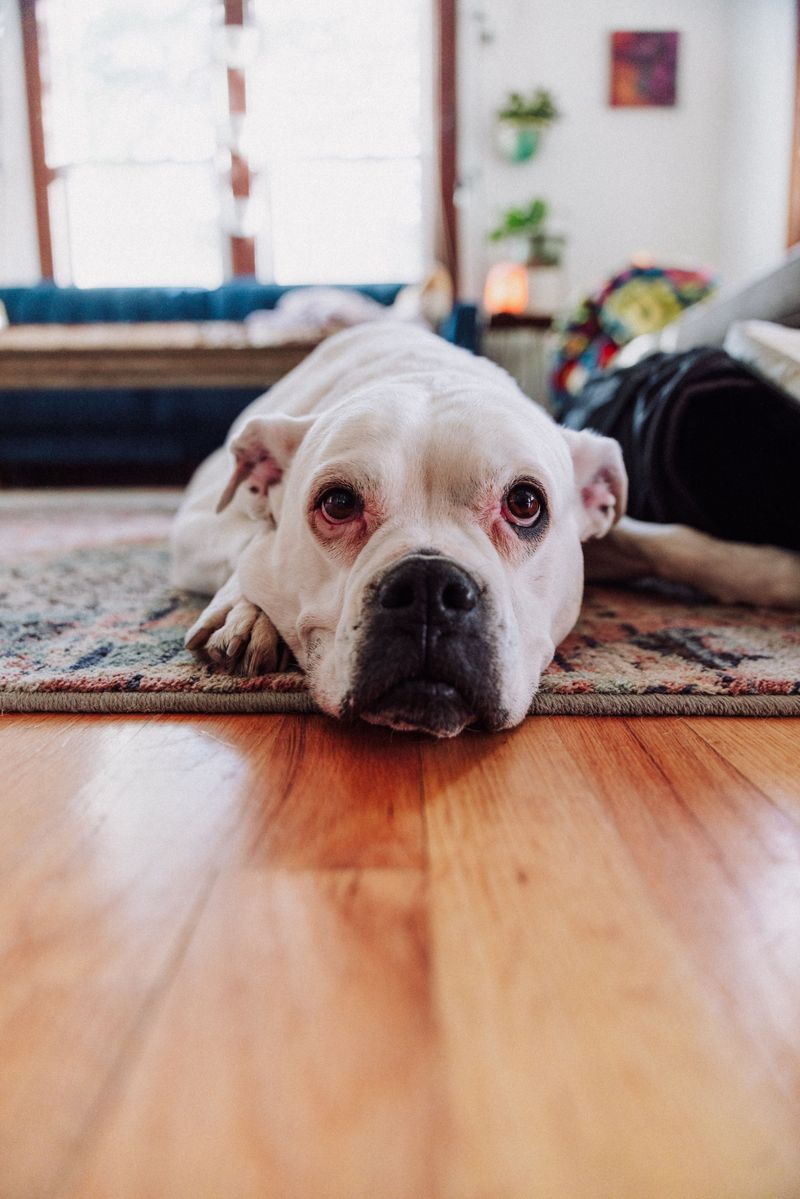
Watch an older dog on hardwood, and you may see splayed legs and careful shuffles. Smooth floors offer almost no grip.
Lay nonslip rugs or runners along favorite routes. Focus on paths to the food bowl, the bed, and the door.
Rubber-backed rugs with a waffle pattern hold firm when dogs push off.
Washable options make cottage life easier, since sand and lake water travel everywhere.
16. Pads That Keep Rugs in Place
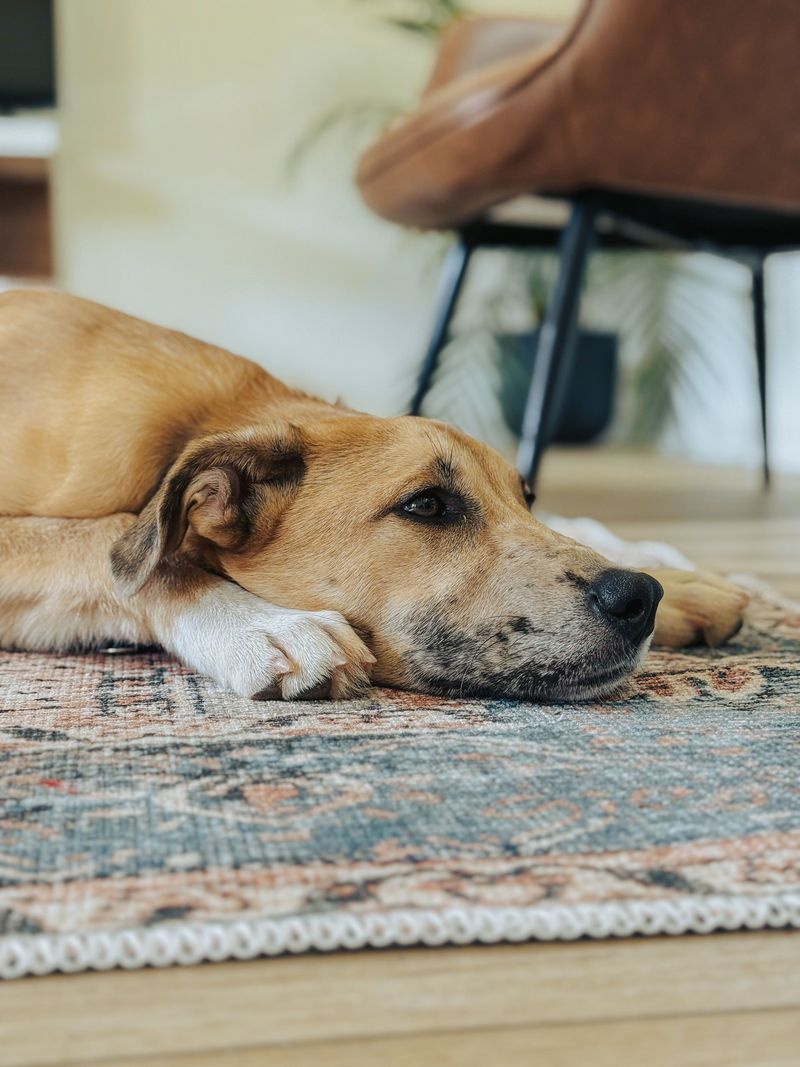
A rug that slides can cause more trouble than bare floor. Bunched corners and shifting edges are easy to trip on.
Place a quality nonslip pad under every area rug. Pet-friendly pads come in rubber and latex-free styles.
Some even add a moisture barrier that protects floors from spills.
Trim pads slightly smaller than the rug. Then smooth everything flat, and check corners once a week.
17. Catch Wet Paws at the Door
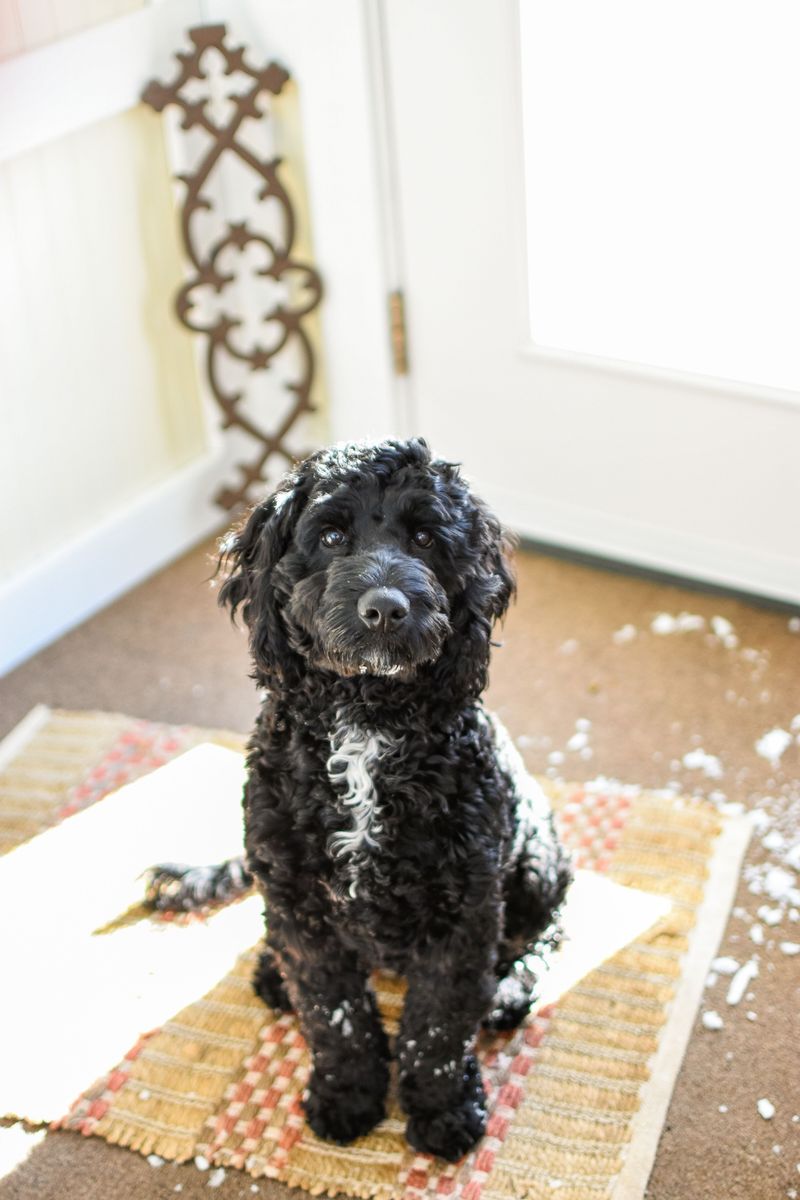
Every lake day ends the same way: dripping paws marching straight into the kitchen. Entryways get wet fast.
Put absorbent traction mats inside and outside each door. Look for rubber backs and thick fibers that trap water and sand.
Washable carpet squares also work well and are easy to swap.
Keep an old towel on a hook nearby. A quick paw wipe makes a real difference.
18. Smooth Out Tricky Transitions

Many older cottages have quirky floors. A tall threshold or sudden change from tile to wood can catch tired feet.
Arthritis often shortens a dog’s stride, so small lips become stumbling spots. Low-profile threshold ramps bridge raised doorways nicely.
Reducer strips also soften height changes between flooring types.
Pick transitions with a matte finish rather than glossy. Your dog will glide through doorways instead of hopping.
19. Make Dry Floors a Habit
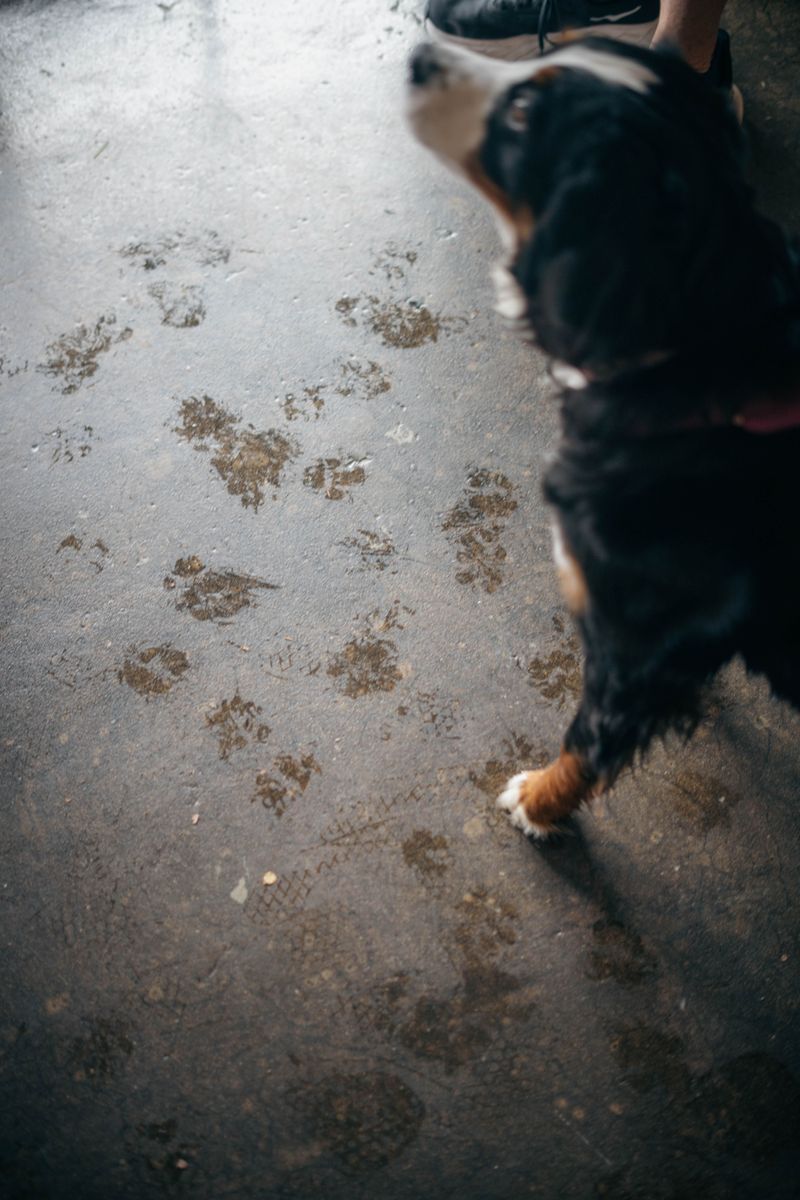
Even the best rugs cannot fix a puddle. Wet tile and wood are slippery for any dog.
Make a simple house rule. Whoever comes in from the dock, boat, or beach wipes up drips right away.
Keep a microfiber mop near the main door.
Watch for water by bowls and coolers too. Staying on top of spills keeps your other traction changes working their best.
20. Winter Paths Your Dog Can Trust
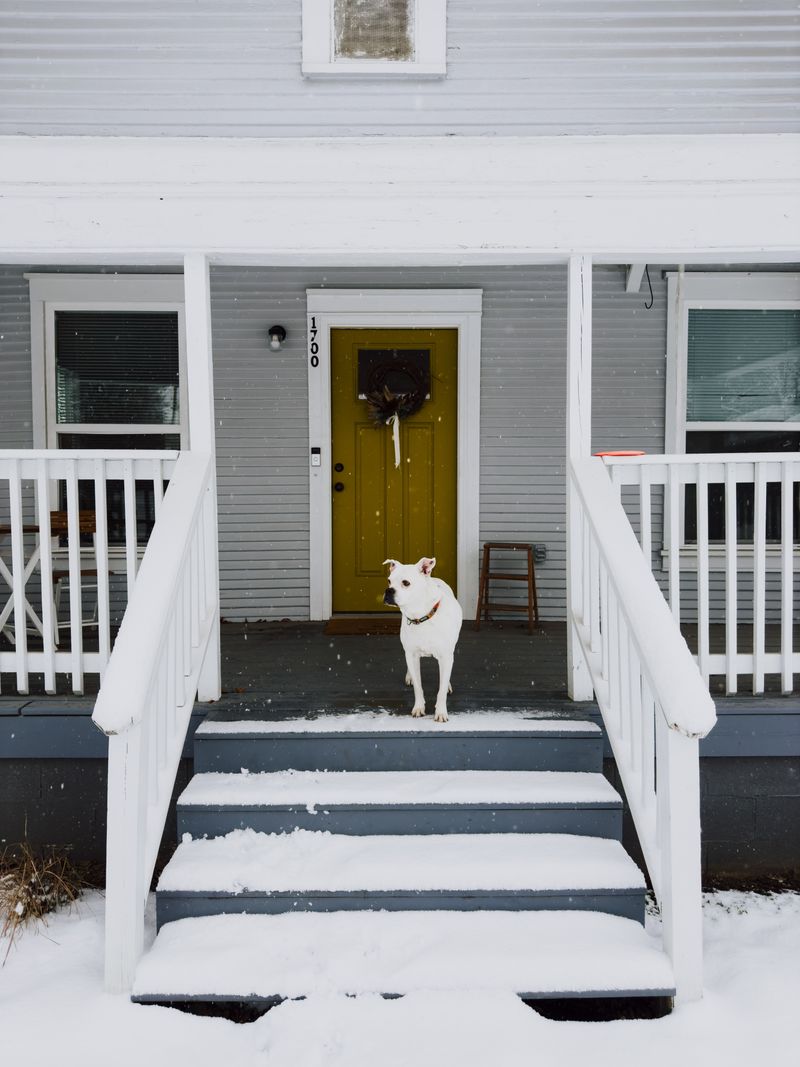
Year-round cottage folks know Michigan winters bring plenty of snow and ice. Clear steps, ramps, and walkways early and often.
Choose ice melts labeled pet-safer, and still wipe paws after walks. Some products use magnesium chloride, while others are salt and chloride free.
For grip without melting, coarse traction sand helps. Kitty litter grips briefly but turns slushy.
Ask your veterinarian if you have product questions.