Why Oklahoma Lake Advisories Matter Before Your Dog Goes Swimming
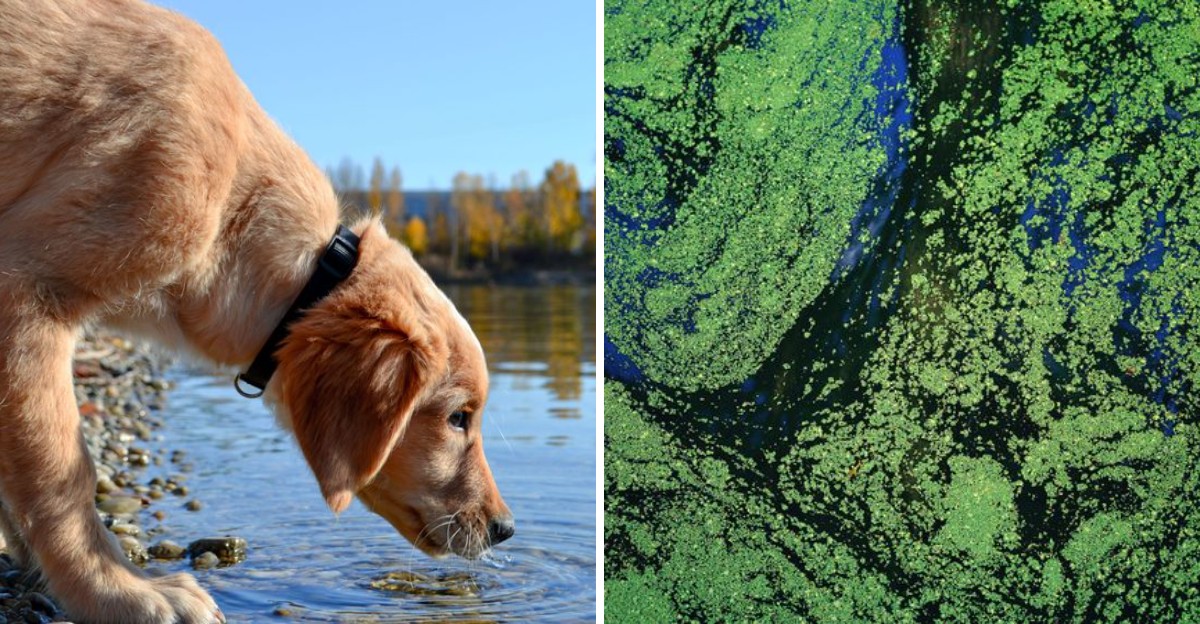
If your dog lights up at the sight of open water, you are in good company here in Oklahoma. Lake days are part of life across the state, from Grand Lake to smaller neighborhood reservoirs.
One quick habit, checking the current lake advisory, makes those outings safer and a lot simpler. Here is what local owners should know before that first happy splash, explained plainly and without the guesswork.
1. Check the Advisory Before You Leave Home

Ten minutes of reading can save an entire afternoon of worry.
Oklahoma provides lake-condition and harmful-algal-bloom information through several agencies, including the Oklahoma Department of Environmental Quality, Oklahoma State Department of Health, Oklahoma Tourism, and the Grand River Dam Authority. Check the current condition of your specific lake before heading out, because advisories and water conditions can change.
Check these before loading the car. Conditions change between visits, so yesterday’s report is not today’s.
A quick look gives you a confident plan for the day.
2. Understand What a Lake Advisory Means
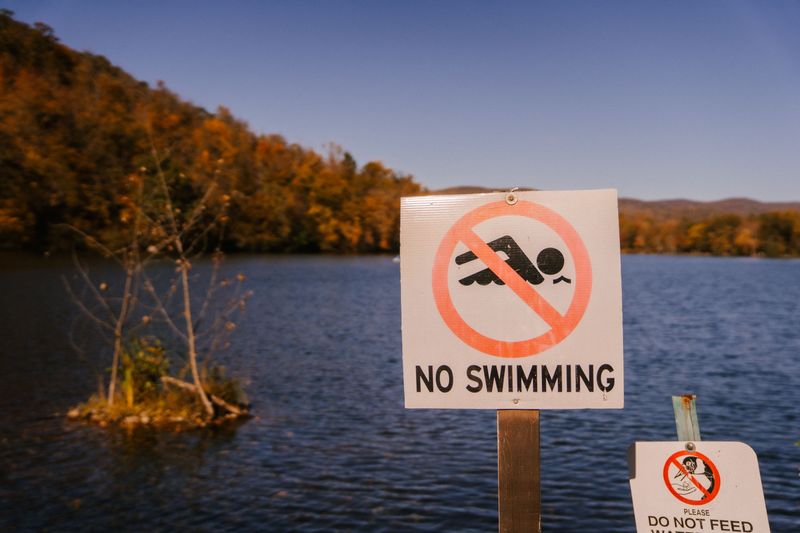
Advisories sound official, but the meaning is simple.
They tell you that conditions in the water could affect people or animals. Some involve bacteria or viruses.
Others involve algal toxins.
A fish consumption warning about mercury matters less for a swim. A blue-green algae advisory matters a lot.
Advisory wording can differ by lake and managing agency. When one is posted, keep your dog out of that water.
3. Watch for Harmful Algal Blooms

Blooms build quietly, often over just a few warm days.
Harmful algal blooms come from cyanobacteria, tiny organisms that multiply fast. Warm, still water, strong sunlight, and extra nutrients from runoff all encourage growth.
Wind pushes blooms around. One cove can look fine while another does not.
Blooms also rise and fade, so check often.
Oklahoma’s late summer heat is a common trigger, especially when lake levels drop.
4. Know Why Blue-Green Algae Can Be Dangerous
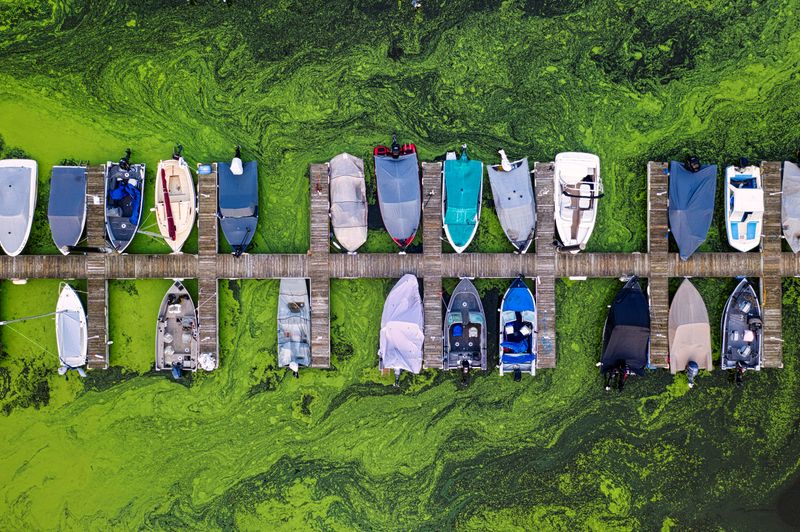
The concern with blue-green algae is not the color, it is the toxins.
Cyanobacteria can produce compounds that affect the nervous system, liver, or skin in most animals. Dogs face extra risk because they swallow water while playing.
Grooming afterward adds more exposure, since toxins cling to wet fur.
Veterinarians have no known antidote for these toxins, so care is supportive and time matters. Prevention beats treatment every time.
5. Do Not Rely on Clear-Looking Water

Clear water feels safe, and that is exactly the trap.
Some cyanobacteria stay suspended below the surface where you cannot see them. Toxins can also linger after a visible bloom fades.
Water quality can shift within a single day.
No one can judge safety by sight, not even trained staff. Laboratory testing is the only reliable answer.
Treat unfamiliar water with polite caution and let the official advisory guide you.
6. Keep Dogs Away From Shoreline Scum
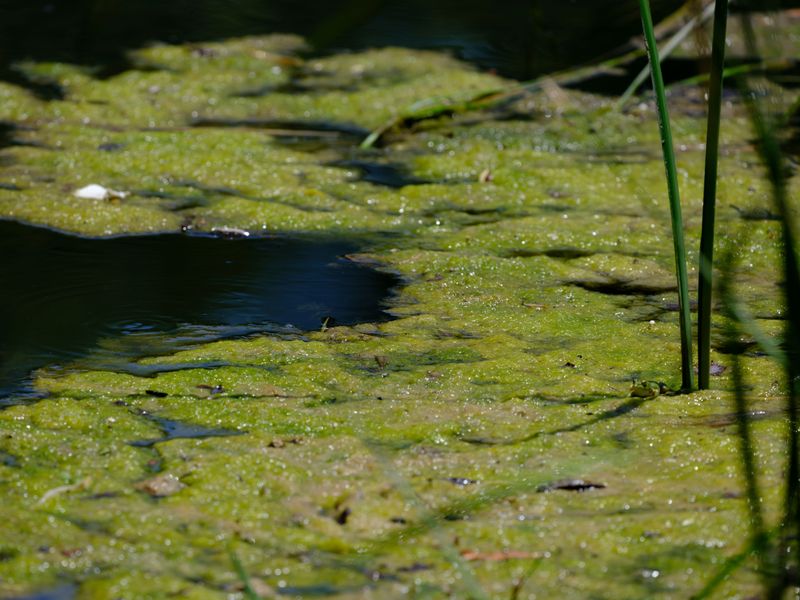
Shorelines collect whatever floats, and dogs investigate everything.
Blooms often rise to the surface and pile up as green scum or mats near the bank. Those mats hold the highest concentration of cyanobacteria and their toxins.
Skip stagnant pockets, foamy edges, and areas with floating debris. Even a quick taste from the scum line is worth avoiding.
Keep your dog leashed while you walk down and take a good look first.
7. Be Careful With Drinking Lake Water
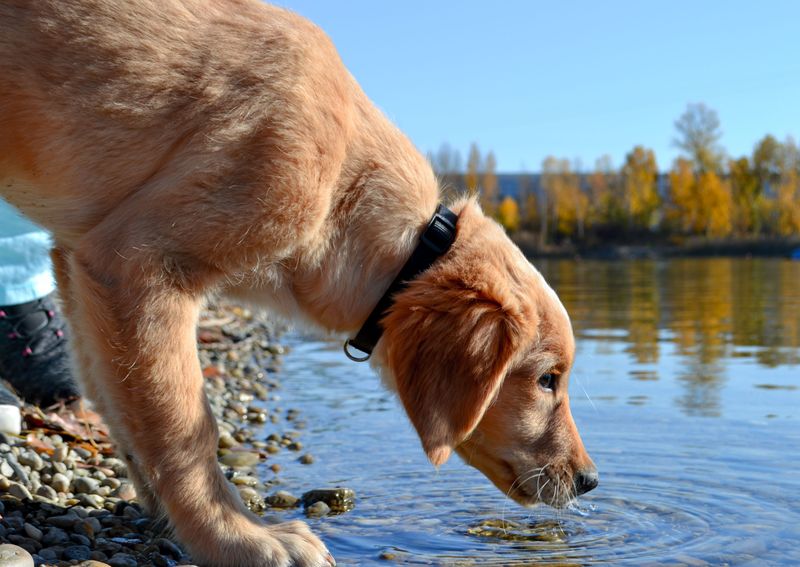
Most dogs drink while they swim, whether we like it or not.
Untreated lake water can carry bacteria, parasites, and algal toxins. Exposure may lead to stomach upset or ear, eye, and skin infections.
Boiling or filtering does not remove algal toxins, so treating lake water at home is not a fix.
Pack plenty of fresh water and offer it often. Bring a collapsible bowl for easy sips.
8. Learn the Signs of Water-Related Illness

Knowing what to watch for turns worry into readiness.
Signs of algal toxin exposure can begin within fifteen minutes or several hours later. Watch for vomiting, diarrhea, heavy drooling, weakness, pale gums, or stumbling.
Muscle tremors, breathing trouble, dark urine, or a yellow tint to the gums also call for urgent attention.
Contact a veterinarian right away if any of these appear after water play. Save the clinic number beforehand.
9. Recheck in Hot Weather and Look at the Water Itself

Summer heat does more than tire out a retriever.
Warm temperatures, calm surfaces, and low lake levels give blooms a head start. Conditions can change between Saturday and Sunday, so recheck advisories each trip.
Recent rain and runoff can shift things quickly too.
Weather alone is not a safety report. State monitoring looks at chemical and biological factors no forecast shows.
Check the water source directly, then trust the advisory.
10. Pay Attention to Posted Warning Signs
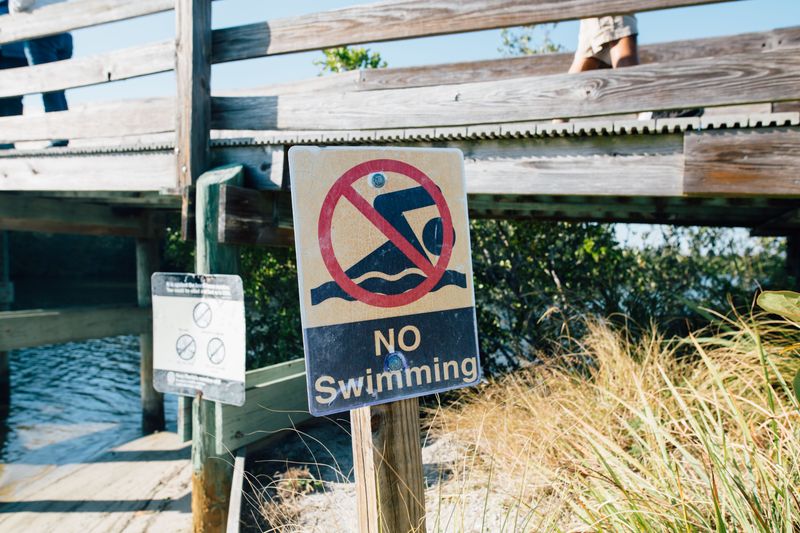
Those laminated signs at the boat ramp are not decoration.
Park staff and local agencies post warnings when an advisory is active. Notices usually explain the hazard and where contact should be avoided.
Posting practices vary by city, county, and managing agency, so signage looks different from lake to lake. Photograph the notice so you have the details later.
If a sign confuses you, ask park staff before your dog gets wet.
11. Know That Dogs May Be More Vulnerable
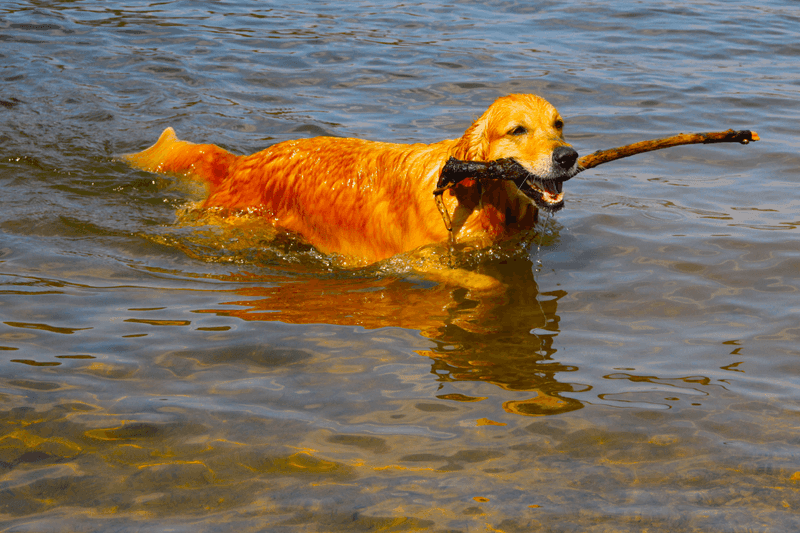
Dogs meet lake water differently than we do.
They swim with open mouths, chase tennis balls, and lick wet fur afterward. Smaller bodies also mean a smaller amount goes further.
Their enthusiasm is wonderful, and it is also a risk factor.
Puppies, seniors, and dogs with health conditions deserve extra care around unfamiliar water.
None of this means the lake is off limits. It simply means the human makes the call.
12. Avoid Lakes With Unusual Odors or Appearance
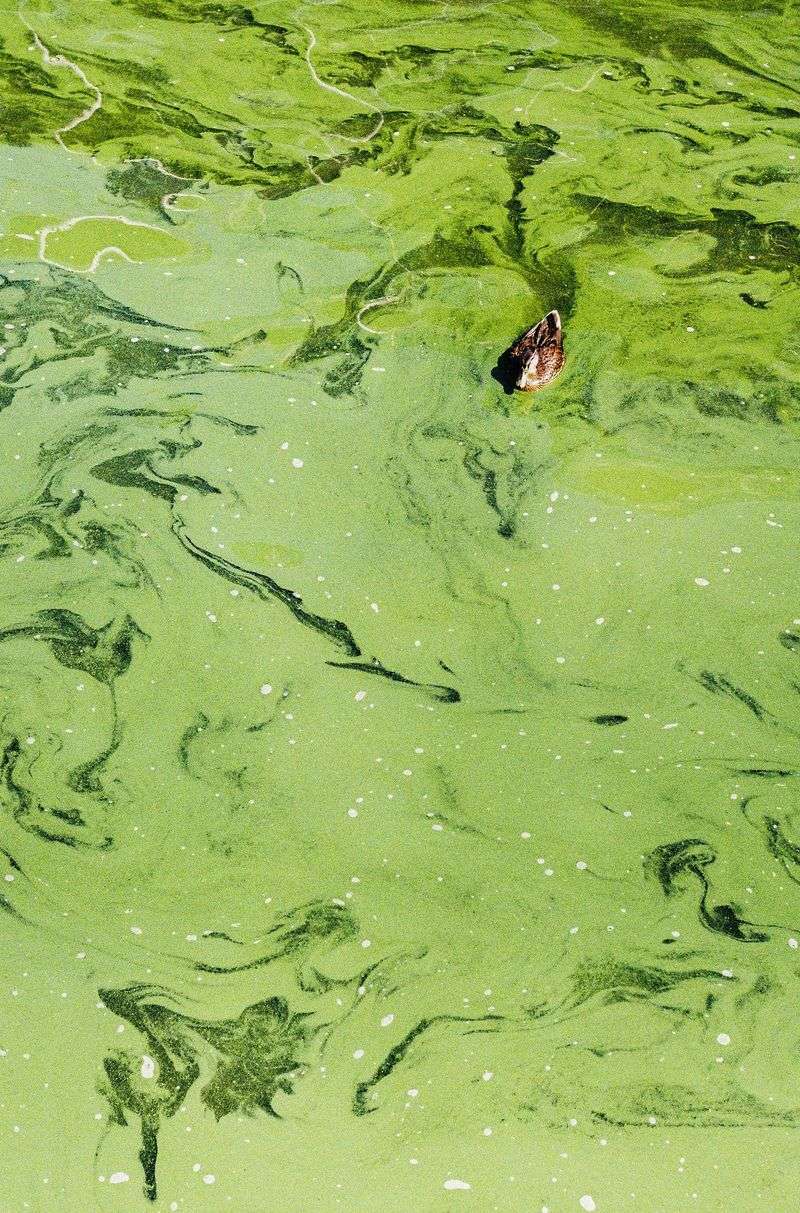
Trust your eyes and nose at the water’s edge.
Officials advise avoiding water that looks bright green, blue, brown, or reddish. Thick paint-like films, floating mats, foam, and shoreline scum are all reasons to stay back.
A strong swampy or rotten smell is another useful clue. Clear water can still be risky, but odd water is a clear no.
When something seems off, load the dog up and find another spot.
13. Rinse Your Dog After Swimming
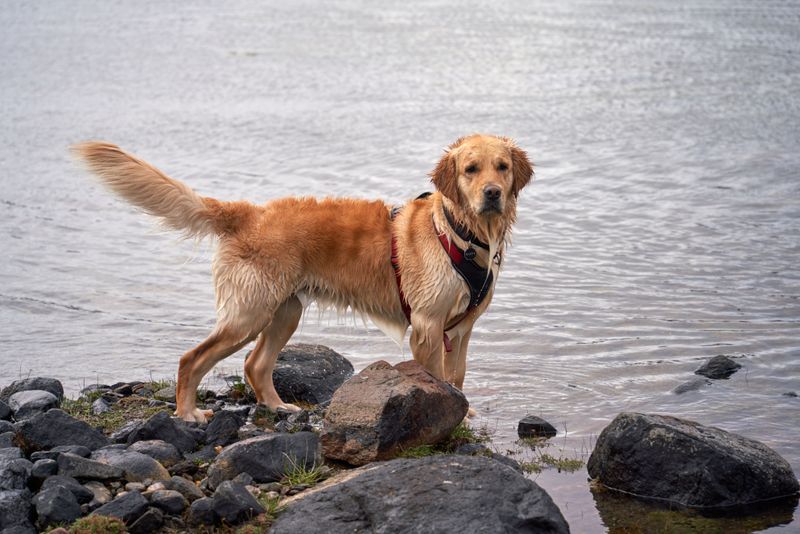
A rinse at the tailgate is one of the easiest habits to build.
Fresh, clean water helps remove bacteria, sediment, and any algae clinging to the coat. Pay attention to the belly, legs, and around the ears.
Towel dry afterward, then check ears for trapped moisture. Do it before the drive home.
Rinsing helps even when the lake looked perfectly fine. Keep a jug and old towel handy.
14. Do Not Let Your Dog Lick Algae From Its Fur
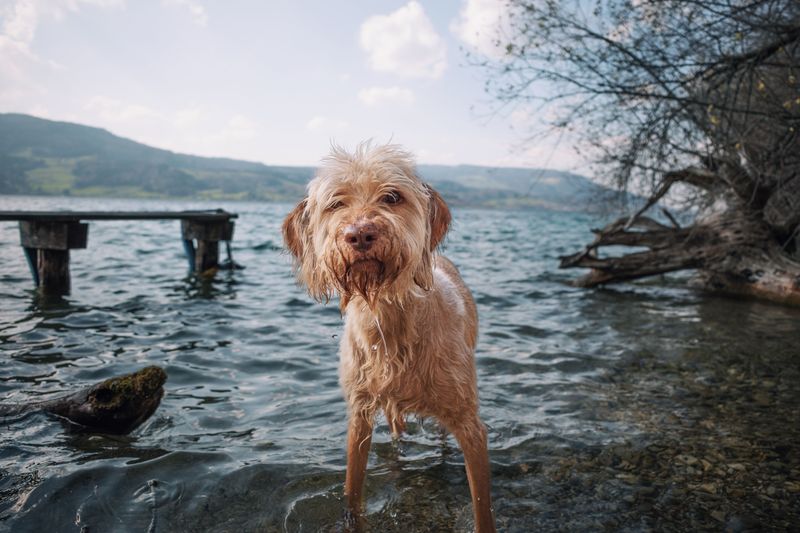
Grooming is instinct, and it can undo a careful day.
Toxins and algae stick to wet fur, so licking becomes swallowing. Even a small amount on the tongue is worth preventing.
Interrupt the habit right away with a rinse, a towel, and a distraction. A treat, a chew, or a short leashed walk usually works.
If you cannot rinse immediately, cover the coat and head for clean water quickly.
15. Know When to Skip the Swim

Some days the right answer is a walk instead of a swim.
An active advisory, visible bloom, odd smell, or stagnant cove all point the same direction. Skipping the water costs you nothing lasting.
Shady trails, a sprinkler, a kiddie pool, or a dog friendly splash area keep the fun going.
You can always return when the advisory lifts. Most dogs care about being with you.
16. Keep Fresh Water and Basic Supplies Nearby

A small kit in the trunk changes how a lake day feels.
Bring more drinking water than you think you need, plus a collapsible bowl. Add towels, a spare leash, a rinse jug, and shade like an umbrella.
Frozen water bottles keep drinks cool all afternoon.
Store your veterinarian’s number and the nearest emergency clinic address in your phone.
Preparation is quiet work, and it keeps outings uneventful.
17. Have a Plan if Your Dog Gets Sick

Having steps ready means you never have to improvise.
Leave the water immediately, stop any licking, and rinse the coat with clean water. Call your veterinarian or an emergency clinic without waiting.
Describe the lake, the water’s appearance, and what you observed. Early care improves outcomes.
Report the bloom to state officials if you can.
Check the advisory, watch the water, enjoy the lake. Informed owners raise confident swimmers.