How Fast-Moving Mountain Streams Can Catch Water-Loving Dogs Off Guard In West Virginia
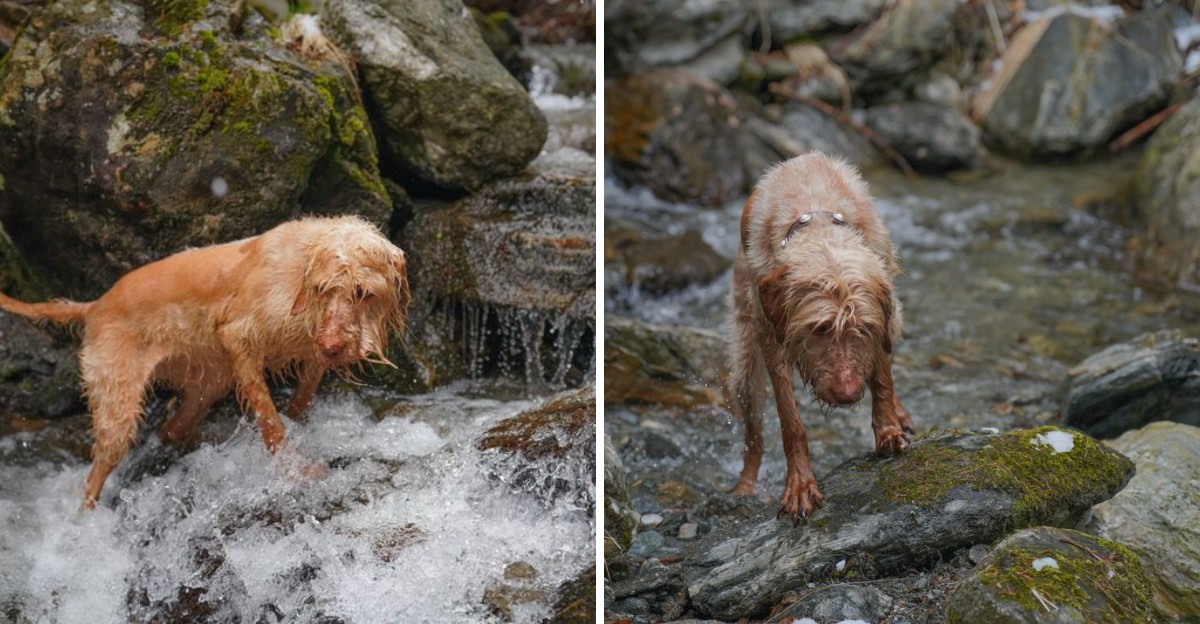
If your dog lights up at the sound of running water, West Virginia feels like a paradise built just for him. Our hollows and highlands are stitched together by creeks, and most days they are wonderful places to splash.
Mountain water, though, behaves differently than a backyard pond, and it can shift quickly. Here is what longtime local owners have learned about reading these streams, so your trail days stay happy, easy, and worry-free.
1. Mountain Streams Can Change Faster Than They Look
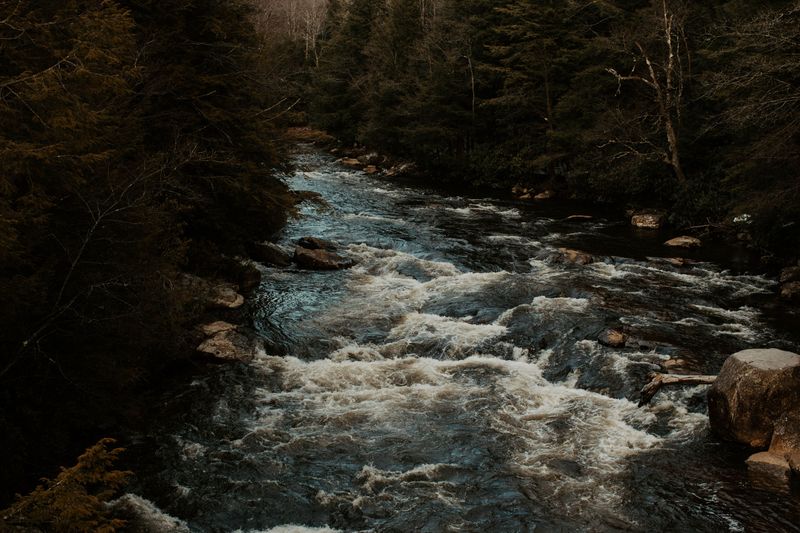
Snowmelt and summer storms feed West Virginia’s high country creeks in bursts. A creek that runs ankle deep in the morning may run knee high by dinner.
Water levels shift with rain miles upstream, even under blue sky at your trailhead. Locals near the Monongahela National Forest see this pattern often.
Check recent rainfall and stream gauge reports before you plan a water stop. A quick look online gives you a realistic picture.
2. Rocky Streambeds Can Make Every Step Unsteady
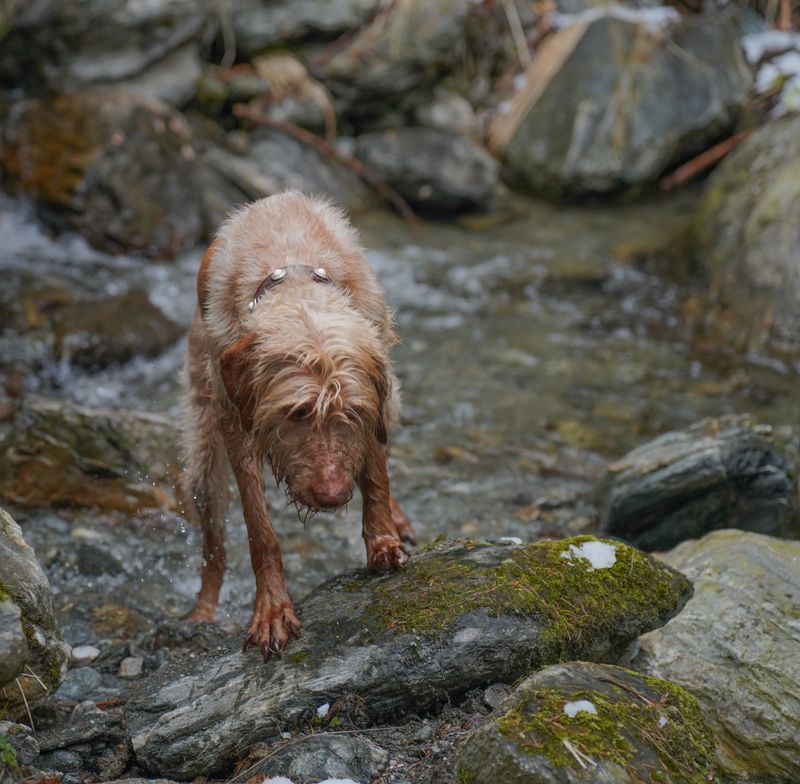
Round river cobbles wear smooth over decades, and algae coats many of them. Paws slide on that surface, especially when a dog is excited.
Slips near moving water can turn a fun wade into a stumble. Older dogs and short-legged breeds feel it most.
Walk your dog in on a leash and let him test footing slowly. Gravel bars and sandy pockets give better grip than slick ledge rock.
3. A Shallow Crossing Can Still Have Strong Current
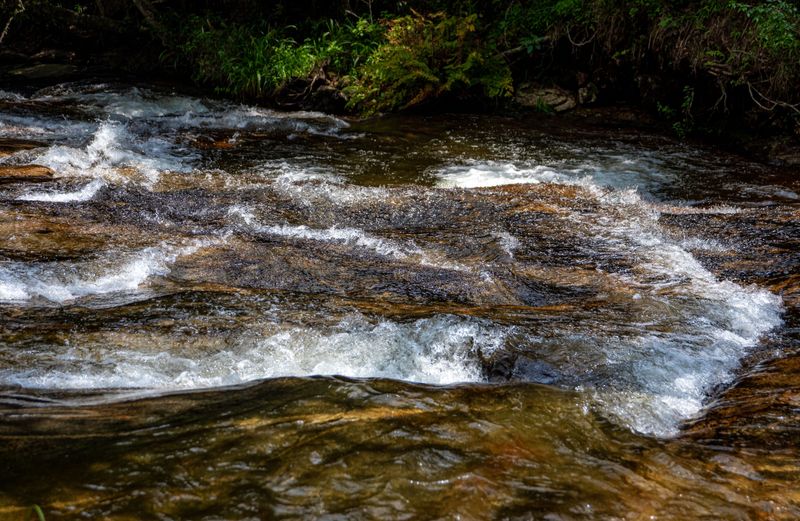
Depth tells you very little about force. Shin-deep water moving quickly can shove a sixty pound dog sideways.
Force builds with speed, so narrow, fast chutes push harder than wide, slow pools. Many trail crossings in the Cranberry backcountry look tame and still pull.
Speed matters more than inches.
Toss a stick in and watch how fast it travels before letting your dog wade. If it zips away, choose a different spot.
4. Water-Loving Dogs May Overestimate Their Abilities
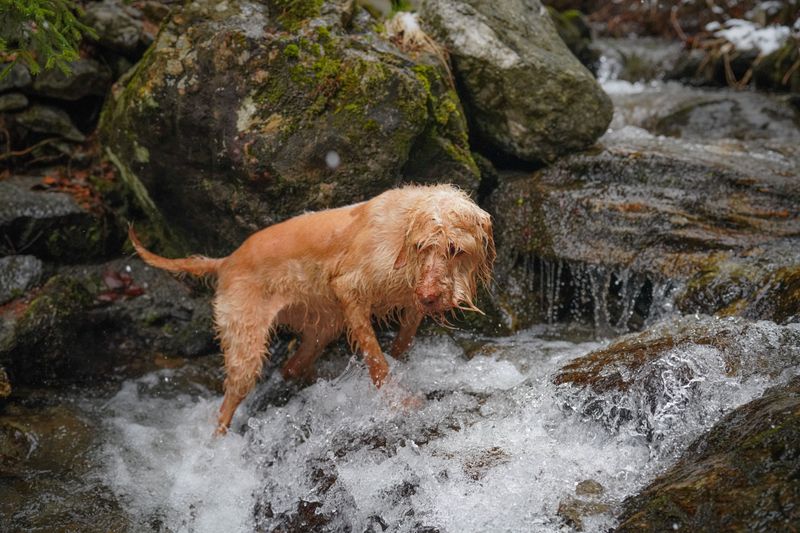
Retrievers, Labs, and spaniels rarely hesitate at the water’s edge. Enthusiasm, sadly, is not the same as current-reading skill.
A strong swimmer in a farm pond can still be outmatched by flowing streams. Pool swimming builds confidence, not river judgment.
Streams add current, cold, and rocks to the mix.
Treat every new stream as unfamiliar, no matter your dog’s track record. Let excitement be your cue to add supervision, not to relax it.
5. Pool-and-Riffle Sections Can Hide Sudden Changes
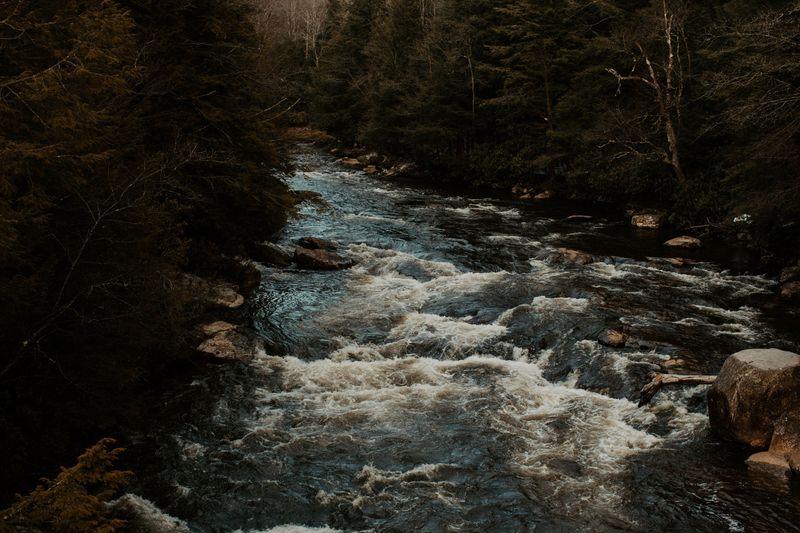
Appalachian streams often alternate between calm pools and shallow, bubbling riffles. That rhythm creates sharp drop-offs where a pool begins.
A dog trotting through a riffle may reach a pool and suddenly be swimming. The change happens in one stride.
Sudden depth surprises even seasoned trail dogs.
Scan for color shifts in the water, since darker patches usually mean deeper water. Keep your dog upstream of unknown pools when possible.
6. Rain Can Turn a Familiar Stream Into a Different Place
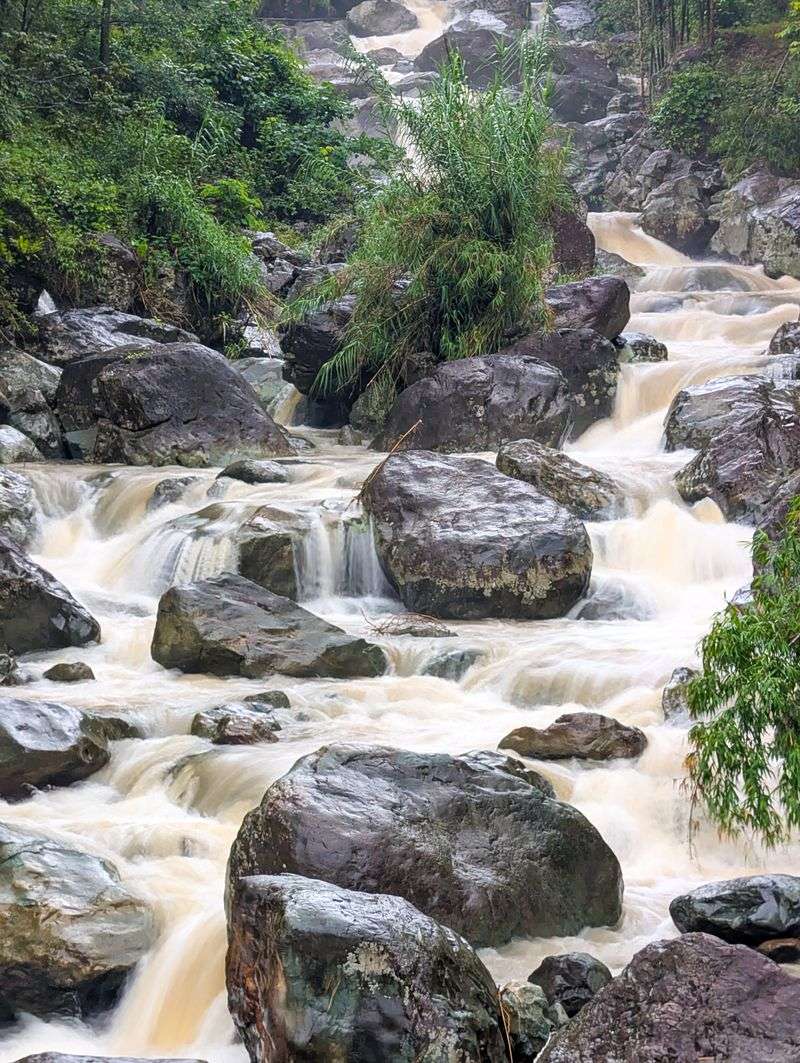
Steep West Virginia hollows shed rain quickly, so creeks rise soon after a storm. Your favorite Sunday swimming hole may look nothing like itself Monday.
Muddy water hides rocks, branches, and depth changes you memorized last visit. Current speed also climbs sharply.
Give streams a day or two to settle after heavy rain. Skip stream play when gauges show rising levels.
Dry-land games work fine until the water clears and slows.
7. Cold Water Can Tire Dogs Quickly
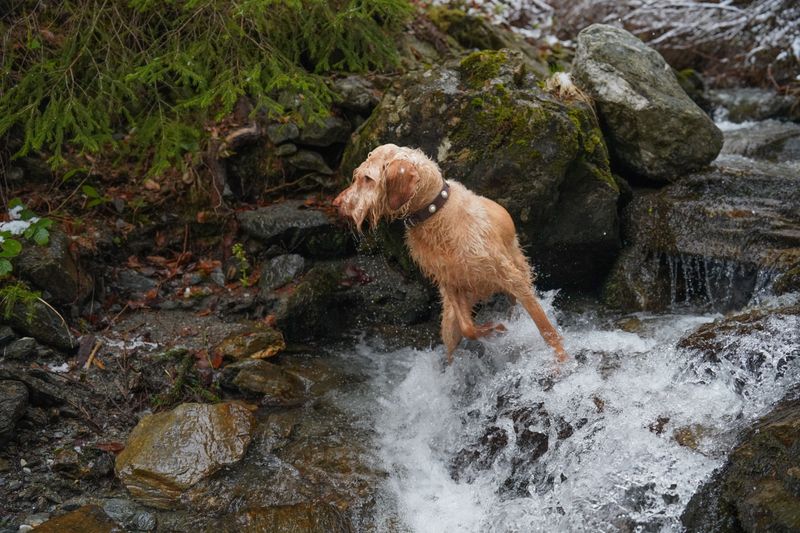
Mountain streams stay chilly well into summer, fed by shaded springs and higher elevations. Cold water pulls warmth from a dog faster than cold air.
Tired muscles mean weaker swimming and slower reactions. Small dogs, puppies, and seniors cool down soonest.
Keep first swims short, then dry your dog with a towel afterward. Warm blankets in the car help on the ride home.
Shivering, stiffness, or slow movement means playtime ends for the day.
8. Narrow Channels Can Increase the Push of the Current
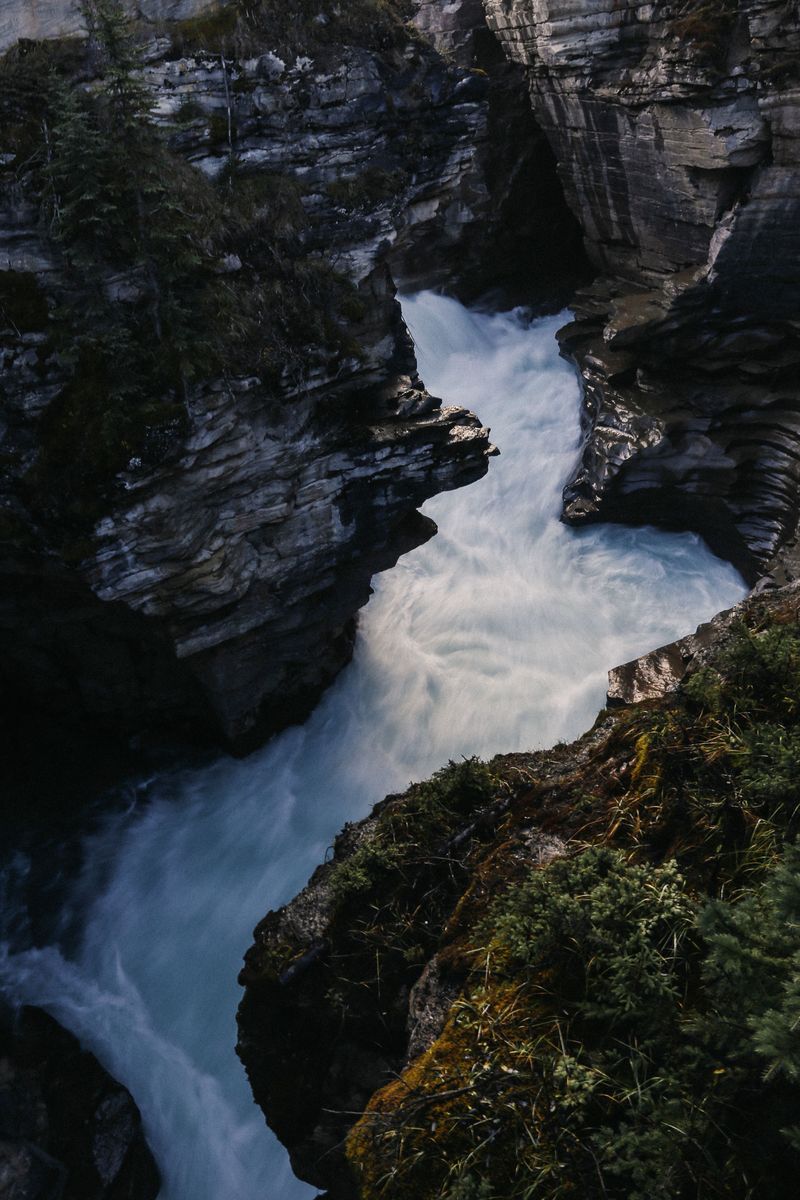
Water squeezed between boulders speeds up, the same way a garden hose sprays harder when pinched. Those gaps look like easy shortcuts to a curious dog.
Strong flow through a narrow slot is hard to swim against. Even confident dogs can lose ground.
Listen for that low roar, a clue of squeezed water.
Steer wide of chutes, culverts, and rock gaps on your walks. Wider, shallower stretches offer far friendlier places to splash.
9. Fallen Trees Can Create Dangerous Obstacles
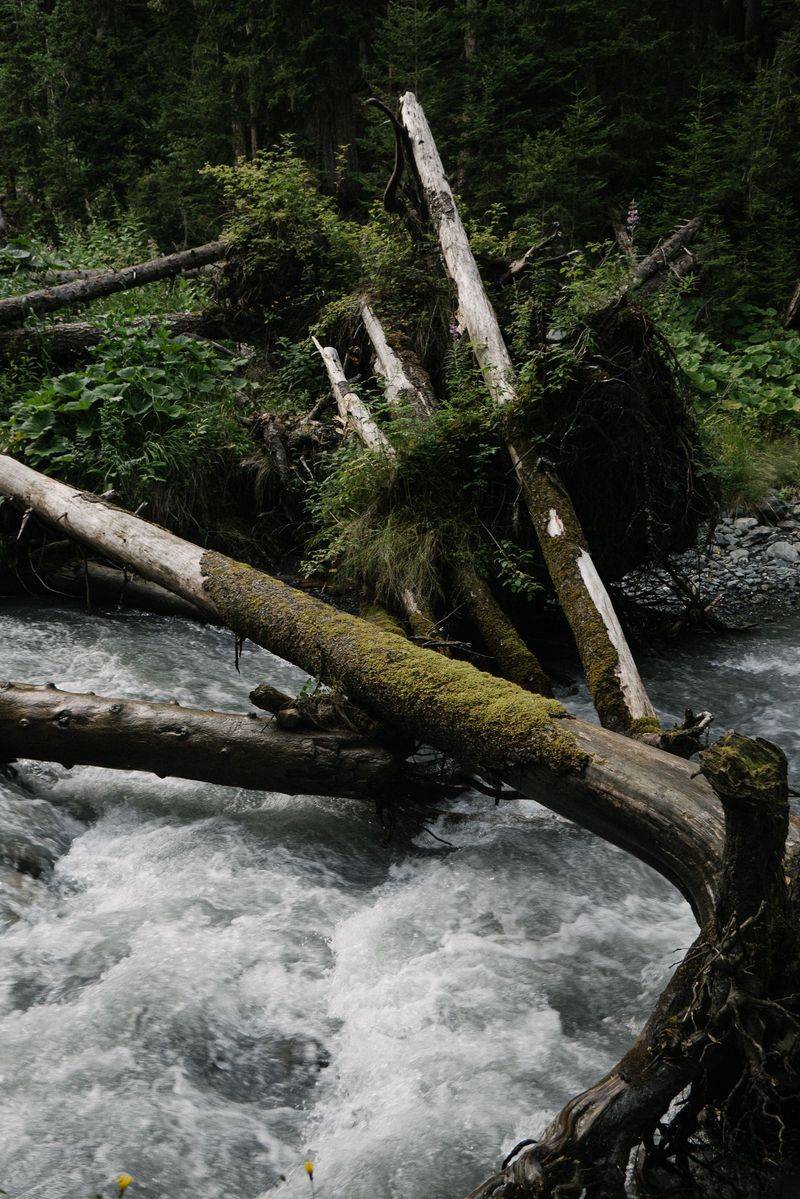
Floods and storms drop hemlocks and sycamores across creeks all over the state. Branches underwater catch collars, harnesses, and legs.
Water moving through a strainer keeps pushing, which makes backing out hard for a dog. Anglers call these spots woody debris jams.
Look for logs, root wads, and tangled brush before any water break. Move upstream or downstream to a clear, open channel.
Breakaway collars reduce snag risk for some dogs.
10. Steep Banks Can Make Getting Out Difficult
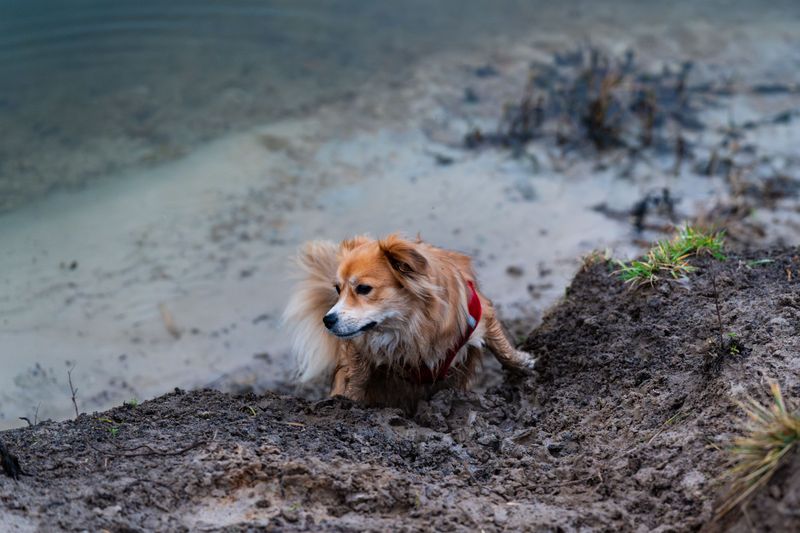
Getting in is usually the easy part. Undercut mud walls and slick ledges give a wet dog nothing to climb.
Dogs sometimes swim along a bank searching for an exit, which burns energy fast. Rhododendron thickets add another barrier along many gorges.
Before your dog wades, spot at least one low, gradual bank nearby. Gravel slopes and sandy shoals make the best ramps.
A harness handle also helps you lift a soggy dog.
11. Keep Your Dog Close Near Moving Water
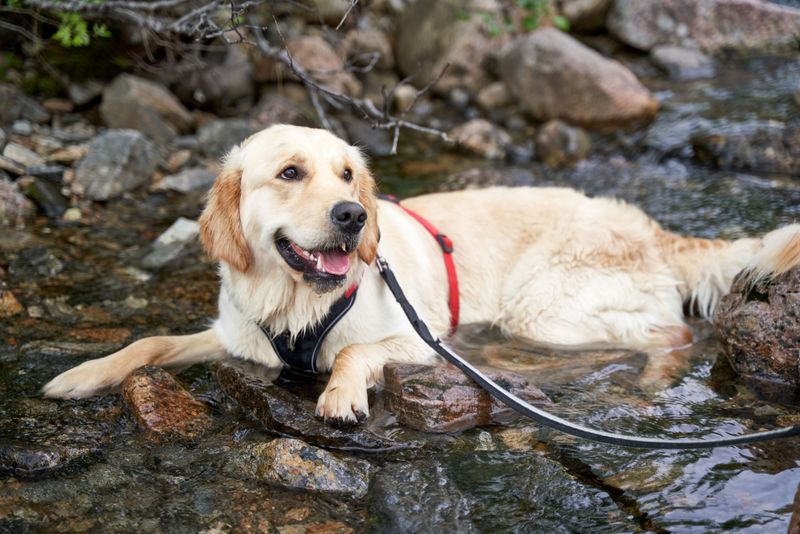
A six foot leash solves most stream problems before they start. Distance is what turns a small slip into a scramble.
Hands-free waist leashes work well on trails near the New River Gorge. Long lines let dogs explore with a safety margin.
Note that many West Virginia state parks and forests require leashes. Rules vary by county and property, so check ahead.
Confirm current rules with the park office before your trip.
12. Choose Calm Edges for Water Play
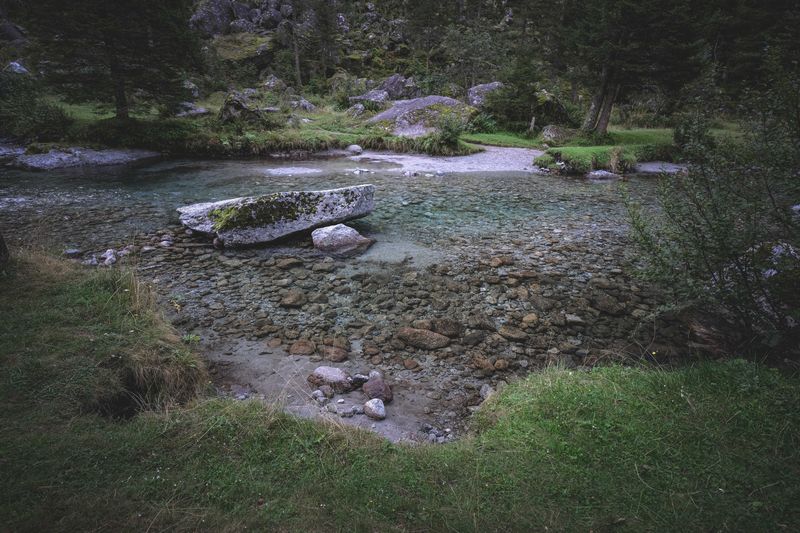
Not every stream spot deserves a no. Eddies, backwaters, and wide shallows behind gravel bars offer gentle fun.
Look for water that barely moves, with a clear view of the bottom. Slow edges let your dog cool off and drink without fighting flow.
Shade and shallow banks make those spots even better.
Ask around locally about swimming holes with easy access. Longtime residents usually know which bends stay friendly all summer.
13. Watch the Water Instead of Assuming It Is Safe
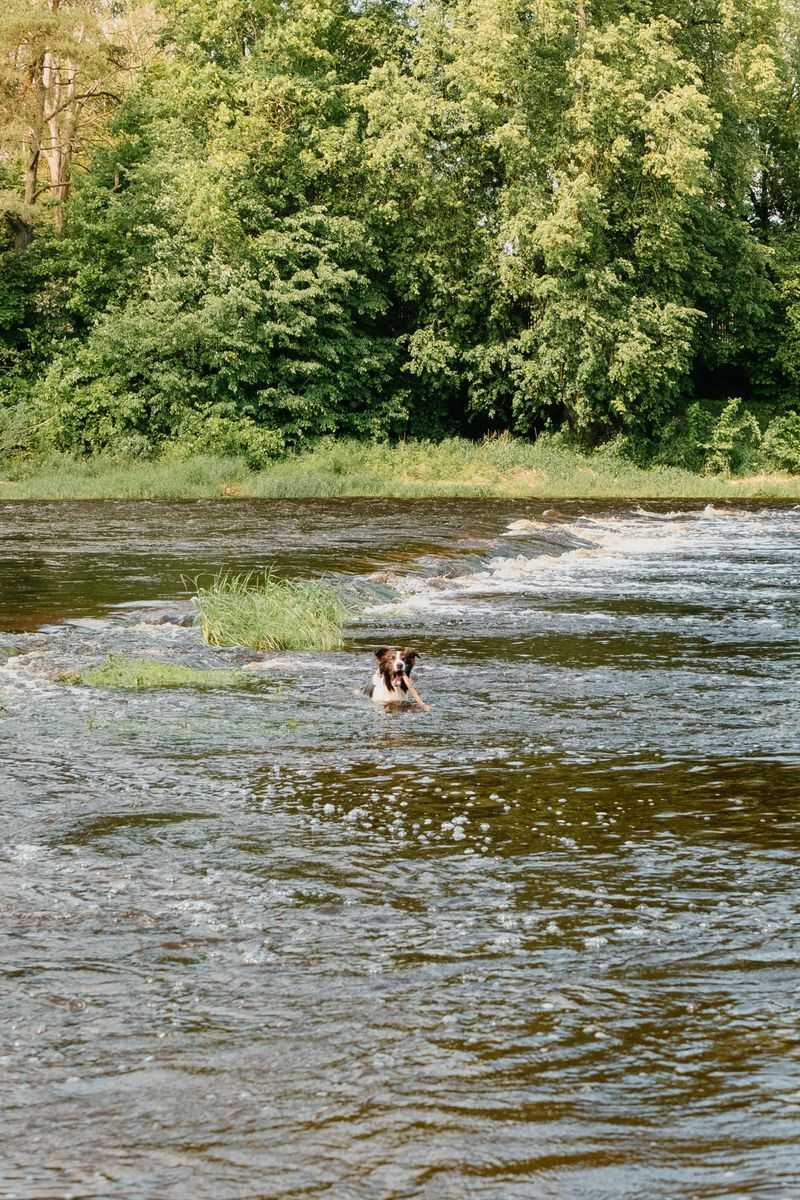
Two minutes of observation beats a whole season of guessing. Watch floating leaves, listen for loud rushing sounds, and check the far bank for debris lines.
Loud water usually means fast water. Fresh mud on rocks suggests levels dropped recently.
Note wind, weather, and how the water sounds compared to last visit.
Build the habit of reading each site on arrival. Your dog trusts your judgment, and this simple pause sharpens it.
14. Practice a Reliable Recall Before Trail Days
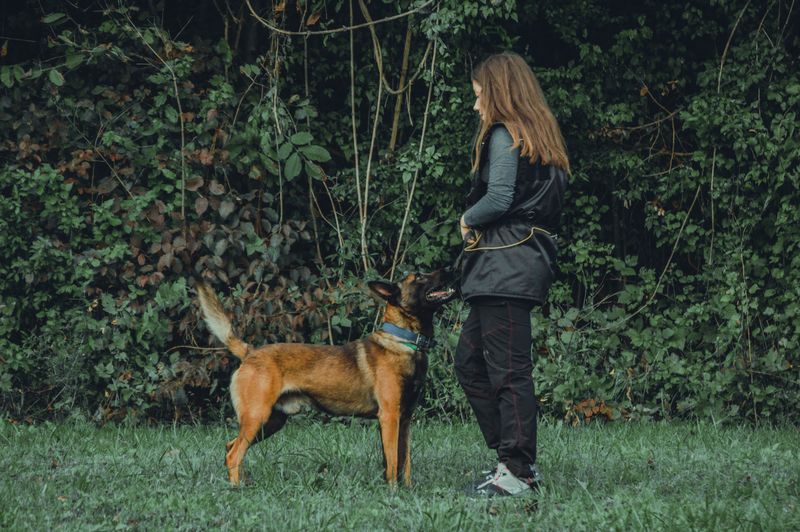
Recall training done in the backyard pays off at the creek. A dog who turns on the first call never reaches the risky spot.
Practice with distractions, using high-value treats and a cheerful tone. Add a stop cue, since freezing in place is sometimes better than running back.
Rehearse near ponds first, then quiet streams. Short daily sessions work better than long weekend drills.
Skills built calmly hold up when excitement rises.
15. Bring a Canine Life Jacket for Higher-Risk Outings
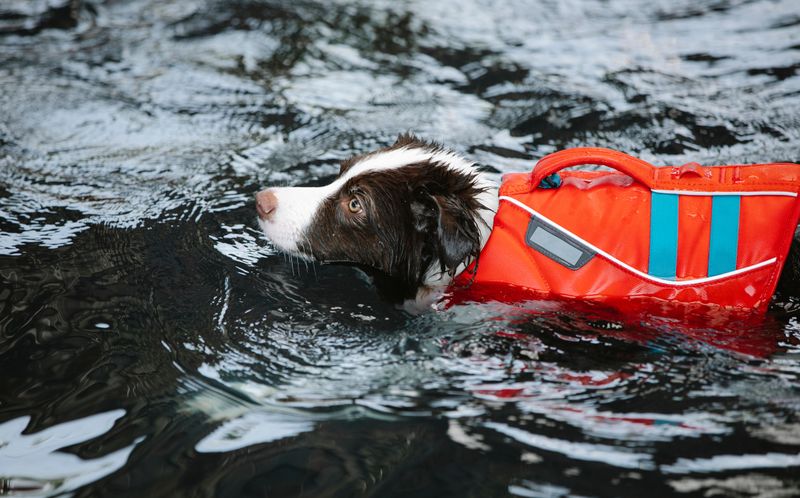
Paddling trips, fishing days, and float outings call for flotation. A well-fitted canine life jacket adds buoyancy and a sturdy handle for lifting.
Measure your dog’s chest and check the weight range before buying. Let him wear it at home first, then in calm water.
Bright colors also help you spot your dog quickly.
Flotation supports safety habits, it does not replace them. Keep supervision and leash rules in place anyway.
16. Have an Exit Plan Before Your Dog Enters
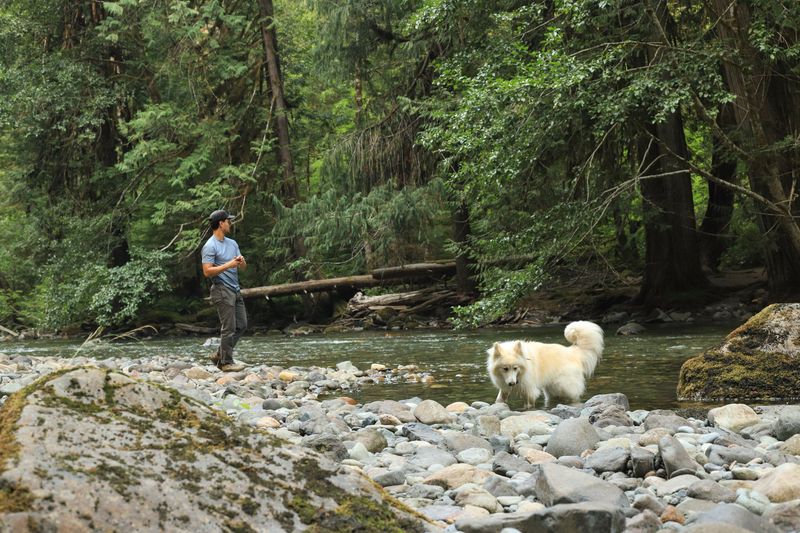
Confident owners think one step ahead. Decide where you would call your dog out and which bank you would use.
Plan how you would reach him safely from shore.
Never enter fast water yourself, since that helps nobody. Use a leash, long line, or treats to guide from dry ground.
Save your veterinarian’s number and the nearest emergency clinic in your phone. Preparation keeps mountain streams the joy they should be.