The Snakes Texas Dog Owners Should Watch for This Summer
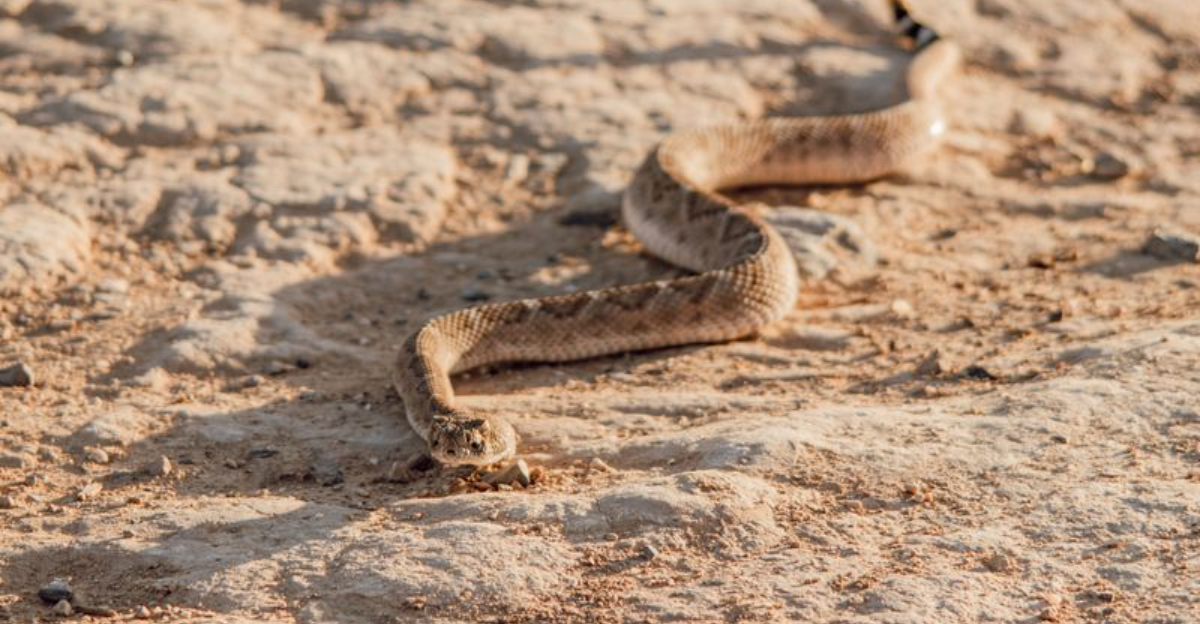
Texas summers are beautiful, but they bring one challenge that every dog owner should know about: snakes.
With over 100 snake species in the state, about 15 of them are venomous and active when you and your dog are most likely to be outdoors.
The good news is that most snakes prefer to avoid contact entirely. Knowing which species live in your area, where they hide, and what to do if your dog gets too close can make a real difference this season.
This guide covers all 15 venomous snakes found in Texas, written to help you feel informed and ready, not worried. A little knowledge goes a long way toward keeping your four-legged friend safe all summer long.
Southern Copperhead
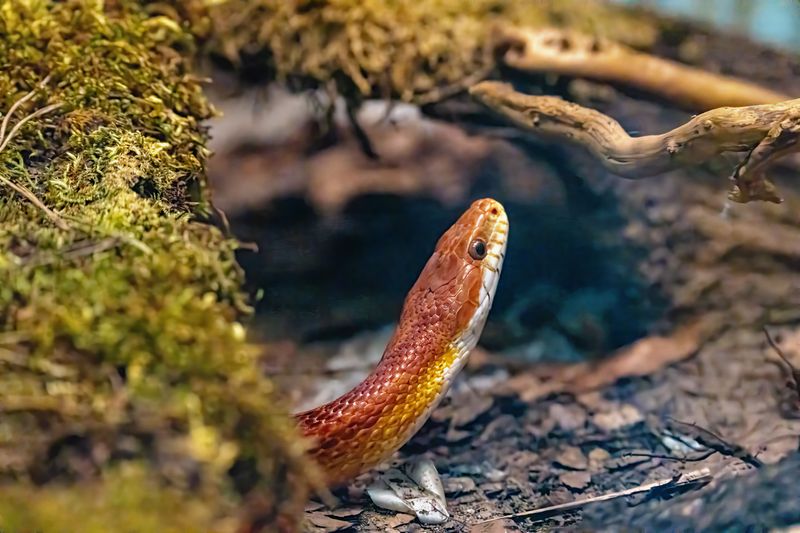
Hiding under fallen leaves in the eastern third of Texas, the Southern Copperhead is one of the most commonly encountered venomous snakes in the region.
Its reddish-tan hourglass markings blend almost perfectly with dry leaf cover, making it very easy to miss on a trail walk.
Dogs often get bitten on the nose or paws after sniffing too close. The venom is hemotoxic, causing swelling and tissue damage.
Head to your vet immediately if you suspect a bite.
Broad-Banded Copperhead
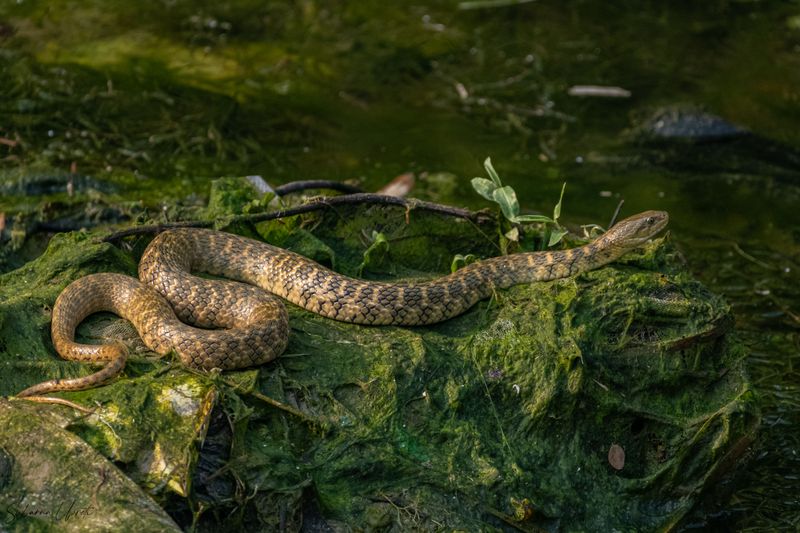
Spread across central and western Texas, the Broad-Banded Copperhead is recognized by the noticeably wider crossbands on its body compared to its eastern cousin. It reaches about two feet in length and favors areas with thick ground cover, brush piles, and rocky hiding spots.
Like all copperheads, it becomes more active at night as summer temperatures climb. Its hemotoxic venom causes painful swelling.
Keep your dog leashed and away from dense brush to lower the risk of a surprise encounter.
Trans-Pecos Copperhead
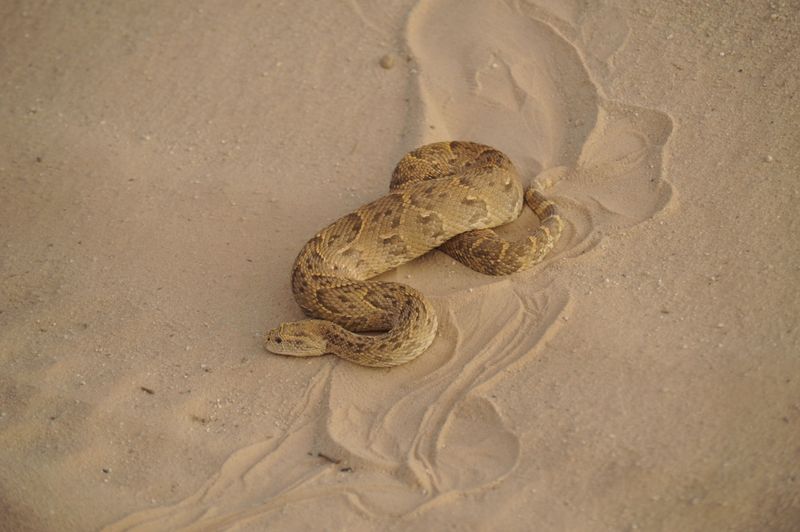
Far West Texas is home to the Trans-Pecos Copperhead, the rarest of the three copperhead subspecies found in the state. Measuring 20 to 30 inches, it sticks close to springs and rocky terrain in the southern Trans-Pecos region, areas some dog owners explore during cooler months.
Its venom is hemotoxic and produces painful, localized swelling. If you hike near springs or canyon edges with your dog in this region, stay alert and keep your pet close.
Prompt vet care after any bite matters greatly.
Western Cottonmouth
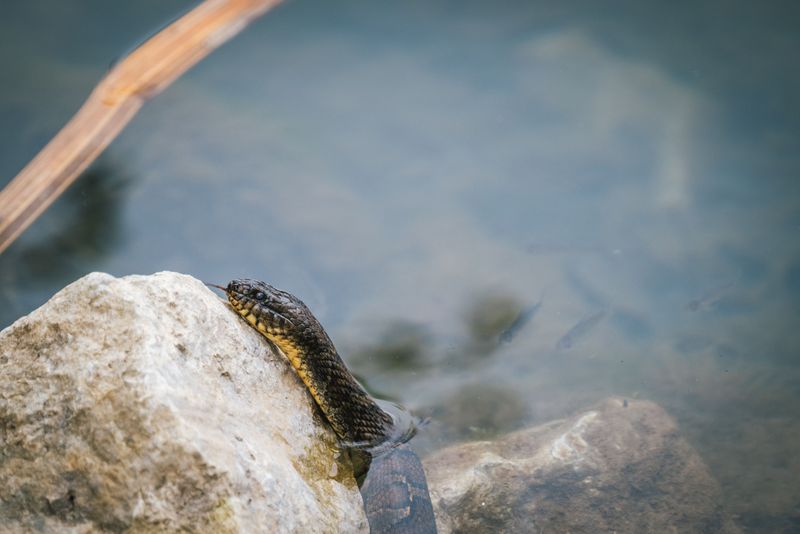
Also called the water moccasin, the Western Cottonmouth lives near creeks, rivers, lakes, and swamps across Texas. Its thick, dark body and wide triangular head make it recognizable, but dogs near water may stumble upon one before you even notice it is there.
Cottonmouths are known to hold their ground rather than retreat. Their hemotoxic venom can cause severe tissue damage.
Summer evening walks near water carry a higher risk, since cottonmouths become nocturnal when temperatures spike.
Always scan the banks before letting your dog drink or wade.
Western Diamondback Rattlesnake
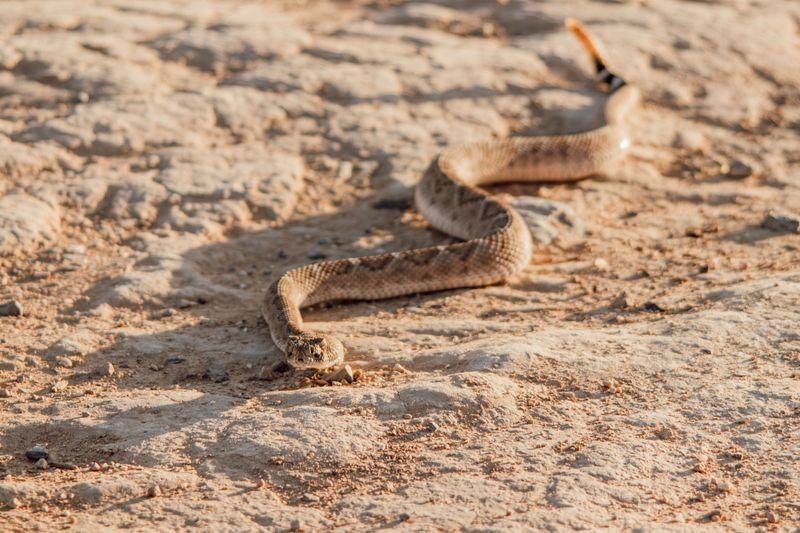
The Western Diamondback is the most widespread venomous snake in Texas and accounts for the majority of serious bite cases in the state. Reaching up to four and a half feet, with some individuals even longer, it is a snake that commands real respect on the trail.
Its venom is primarily hemotoxic, but some individuals carry neurotoxic components too, making every bite a potential emergency. This species may not always rattle before striking.
Keep dogs leashed in rocky, scrubby terrain, and ask your vet about the rattlesnake vaccine this season.
Timber Rattlesnake
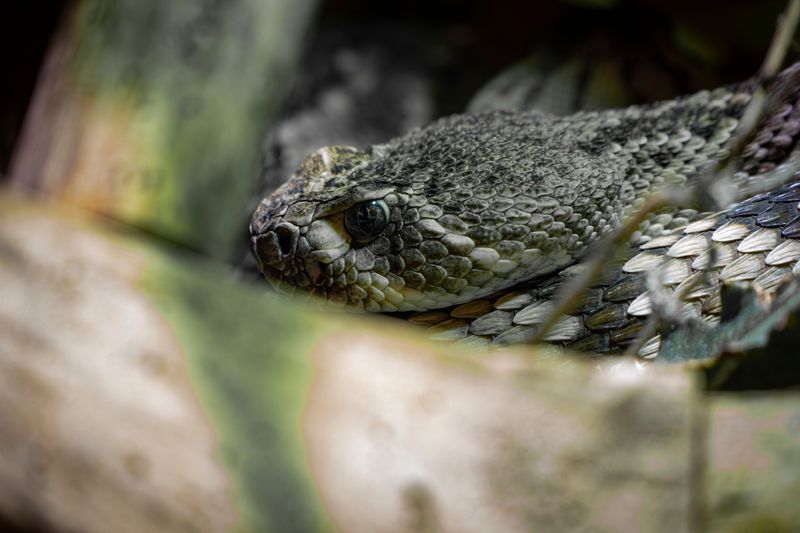
Dense forests and wet bottomlands in eastern Texas are the home range of the Timber Rattlesnake, a large, heavy-bodied species averaging about four and a half feet. Its dark crossbands and black tail help it disappear against the forest floor, making it genuinely hard to spot.
Interestingly, Timber Rattlesnakes are often slow to defend themselves and may rely on camouflage rather than rattling. Still, their venom is highly potent.
Any suspected bite calls for immediate veterinary attention, no matter how calm the snake appeared during the encounter.
Prairie Rattlesnake
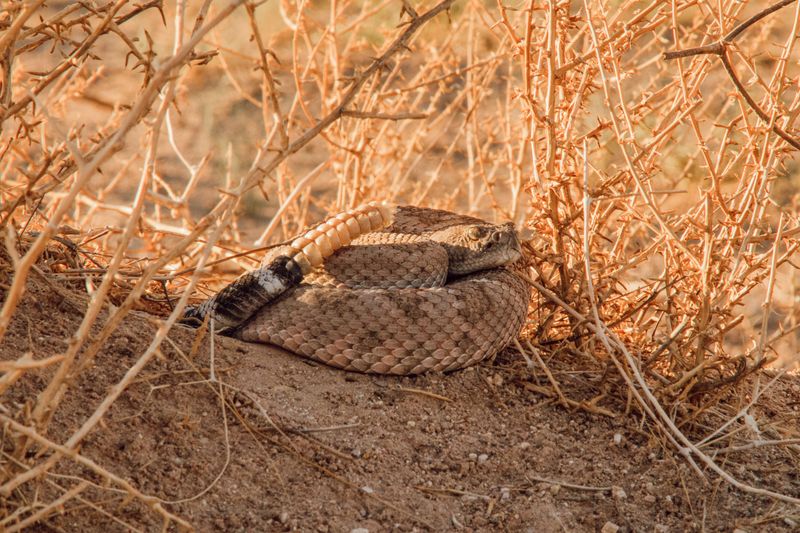
Out on the grassy plains of western Texas, the Prairie Rattlesnake is a slender, three-foot species that often basks in open areas during cooler mornings. Its greenish or grayish body with rounded blotches blends well with dry grassland, making it easy to overlook.
Dogs that roam freely or chase small animals face the greatest risk of a chance encounter. The venom is hemotoxic and requires fast veterinary care.
Teaching your dog a reliable “leave it” command before outdoor adventures in open country is one of the smartest things you can do.
Mojave Rattlesnake
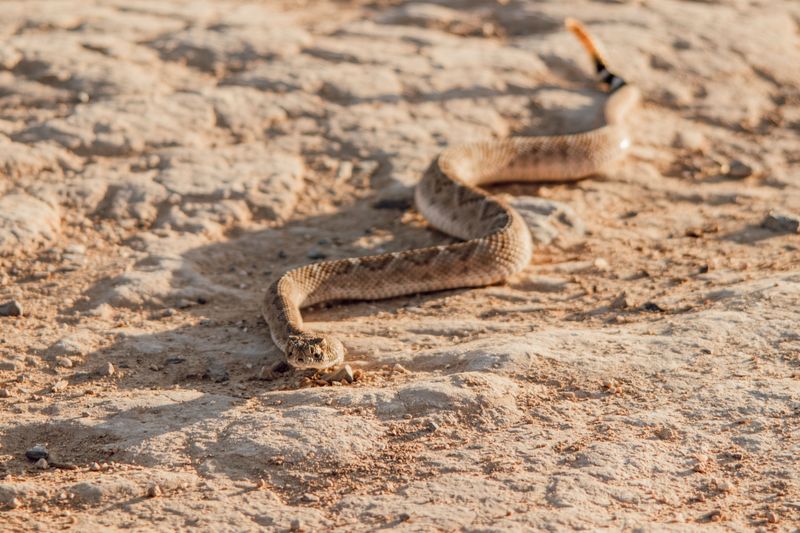
Found only in extreme West Texas, the Mojave Rattlesnake holds a serious reputation among herpetologists. Smaller and more slender than the Western Diamondback, it can look deceptively less threatening, but its venom is considered among the most potent of any rattlesnake in North America.
What makes it especially dangerous is the combination of neurotoxins and hemotoxins in its venom.
Neurotoxins can cause paralysis and breathing problems in dogs. A bite is a full medical emergency.
Hiking with dogs in Chihuahuan Desert terrain means extra caution is not optional.
Black-Tailed Rattlesnake
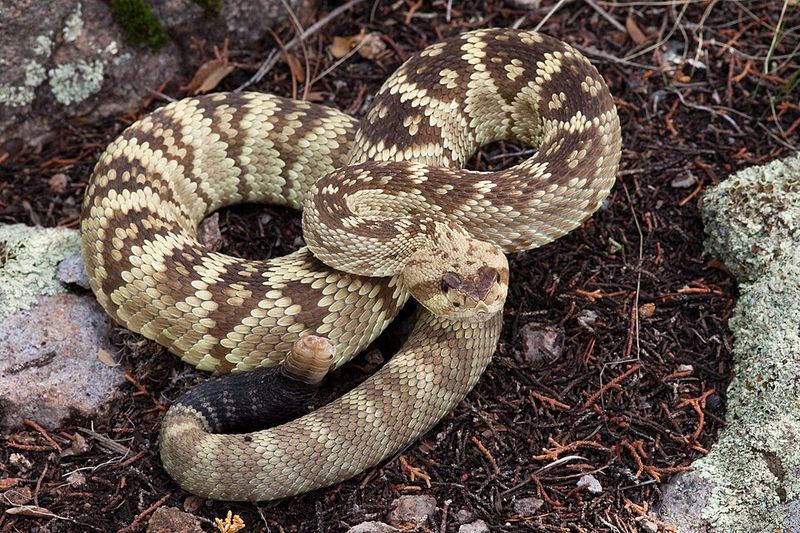
Central and West Texas canyon country is where you are most likely to cross paths with the Black-Tailed Rattlesnake. Its solid black tail is the clearest field mark, setting it apart from other rattlesnakes in the region.
Adults average about three and a half feet in length.
Generally shy, this species prefers to retreat rather than confront. Even so, a cornered or startled snake will rattle and strike.
Its hemotoxic venom causes significant swelling and tissue damage.
Dogs exploring rocky ledges or canyon brush are at the highest risk of a surprise encounter.
Mottled Rock Rattlesnake
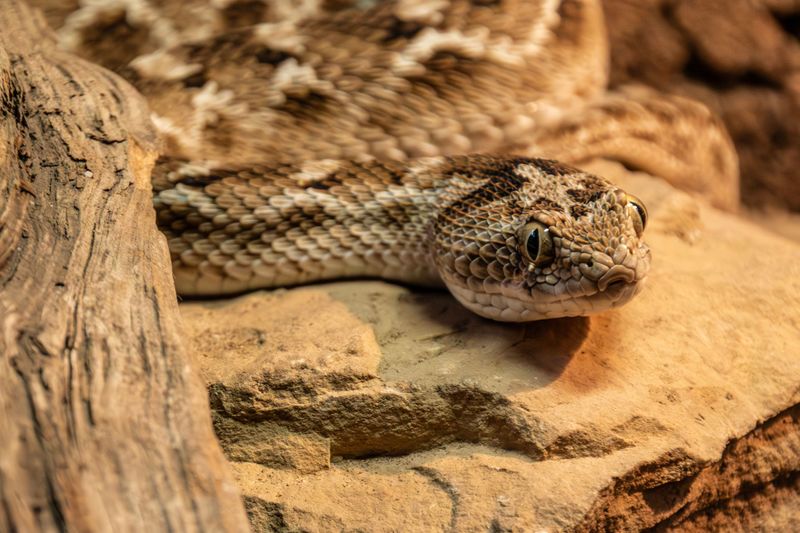
Small and beautifully camouflaged, the Mottled Rock Rattlesnake rarely exceeds two feet in length. Its pale tan or pinkish body with dark crossbands matches limestone outcrops so precisely that even experienced hikers can walk within inches without realizing one is there.
Young snakes have bright orange or yellow tail tips, used to lure prey. Though small, their venom is medically significant and should never be dismissed.
Mountain hikes with dogs in West Texas deserve extra care near rocky crevices, where this species likes to wait quietly for its next meal.
Banded Rock Rattlesnake
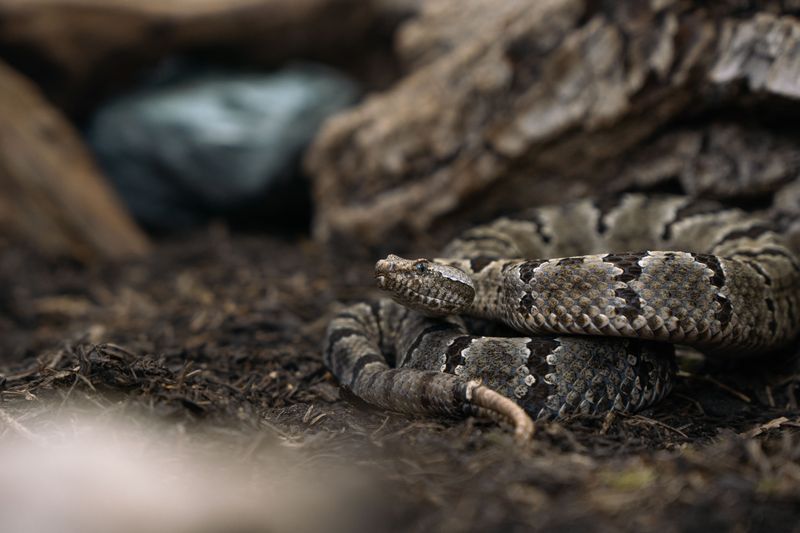
Tucked into the two westernmost counties of Texas and occasionally spotted in Val Verde County, the Banded Rock Rattlesnake is one of the rarest venomous snakes in the state.
Its greenish-gray body with bold black crossbands gives it a striking look that differs clearly from its close relative, the Mottled Rock Rattlesnake.
Shy and well-camouflaged, it rarely bites unless directly provoked. Still, its venom is medically significant.
Treat any suspected bite as an emergency and head to a vet right away, without stopping to confirm the species.
Western Massasauga
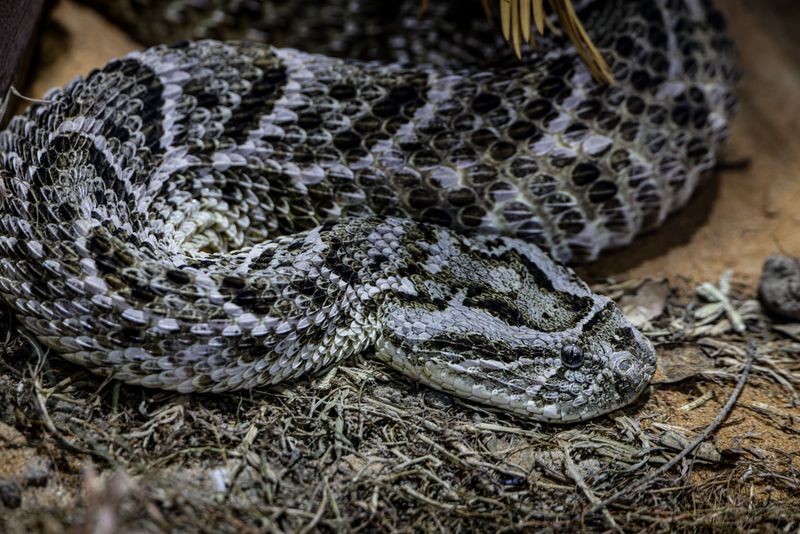
Central Texas prairies and moist grasslands are home to the Western Massasauga, a secretive rattlesnake that rarely exceeds 25 inches. It tends to stay still and rely on its patterned coloring to avoid detection rather than rattling loudly the way larger rattlesnakes often do.
Its shy nature means encounters are less common, but a bite, especially to the head or neck, can cause swelling that interferes with breathing. Hemotoxic venom causes local pain and swelling.
Dogs that sniff through wet grass near drainage areas face the most risk from this quiet, patient ambush predator.
Desert Massasauga
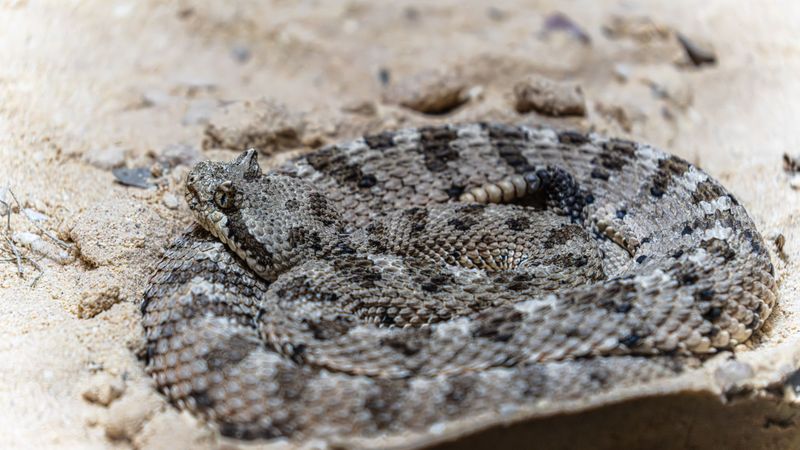
Drier and more open than the habitat of its close cousin, the Desert Massasauga favors arid shortgrass prairies and sandy soils across West Texas and into the Trans-Pecos. It is a small, secretive snake that uses its tail as a lure to attract lizard prey.
Dog owners exploring open desert grasslands may never see one, but that does not mean the risk is zero. Venomous bites require immediate veterinary care, regardless of the snake’s size.
Keeping your dog on a leash and out of sandy scrub is the simplest way to reduce exposure in this habitat.
Western Pygmy Rattlesnake
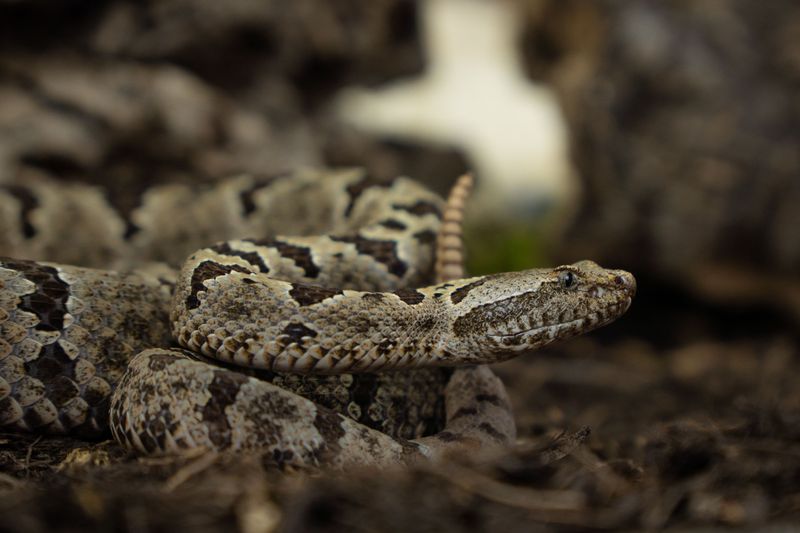
Small enough that some people mistake it for a juvenile snake of another species, the Western Pygmy Rattlesnake is a venomous species found in wooded and moist areas of Texas. Its tiny rattle produces more of a buzzing sound than a classic rattle, which can make it harder to hear from a distance.
Size does not cancel out danger. Bites are venomous and require a vet visit.
Curious dogs that nose around leaf piles, logs, or low brush in humid woodland areas are the most likely to come into contact with this easily overlooked little snake.
Texas Coral Snake
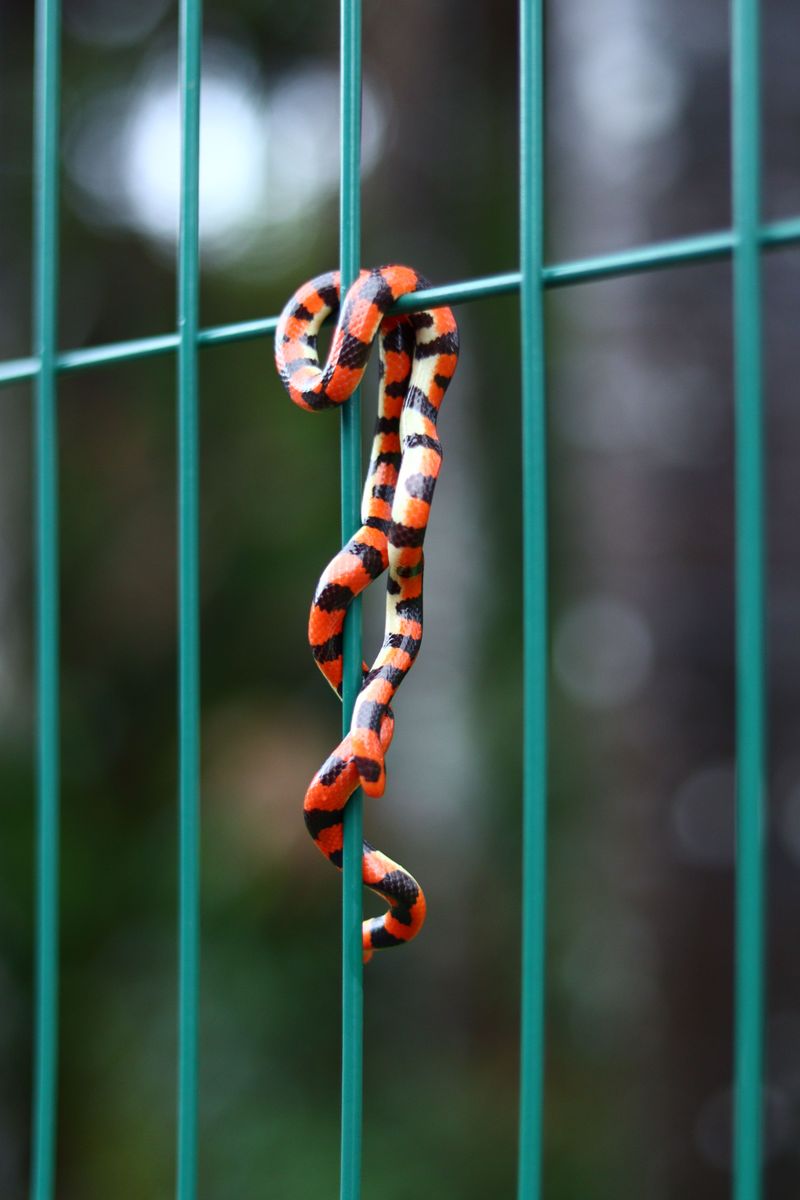
Bright red, yellow, and black rings make the Texas Coral Snake one of the most visually striking snakes in the state. Found in the southeastern half of Texas, it spends most of its time underground or beneath logs, which is why sightings are far less frequent than its reputation might suggest.
Unlike pit vipers, coral snake venom is neurotoxic. Symptoms in dogs can take hours to appear, but they include weakness, paralysis, and breathing difficulty.
Any suspected bite demands immediate veterinary care. The traditional ‘red on yellow’ rhyme is sometimes used as an identification reminder, though it is not foolproof.