What to Do If a Snake Turns Up in Your Georgia Yard
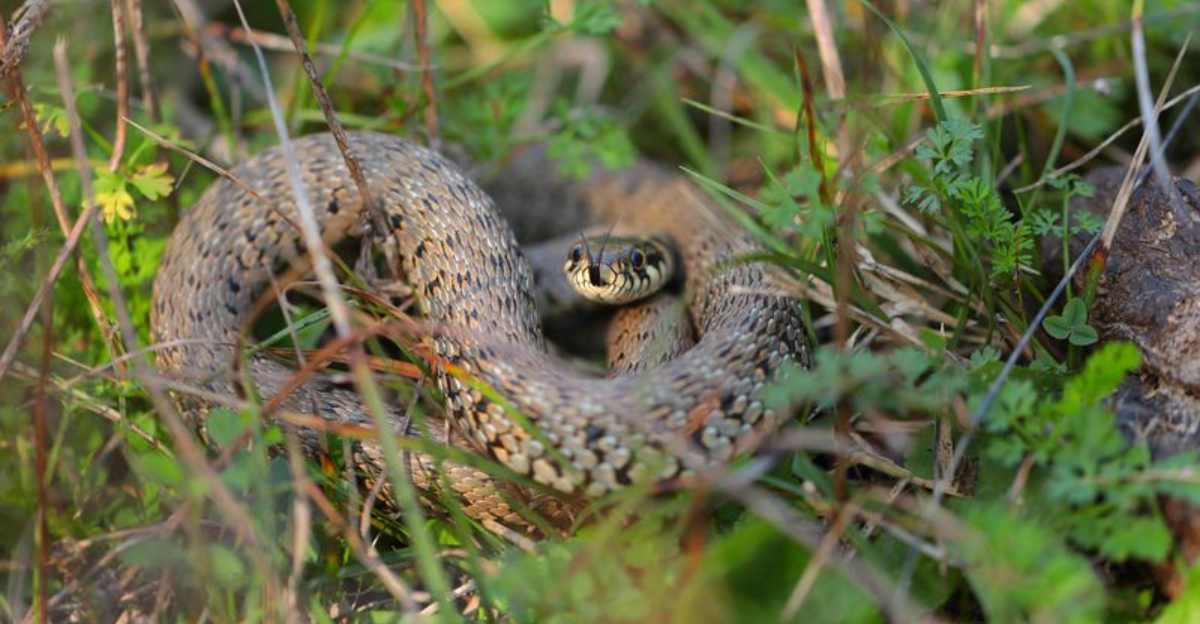
If you own a dog in Georgia, chances are good that you will meet a snake at some point. Maybe it is stretched across the warm driveway on a spring morning.
Maybe it slips under the deck while your dog sniffs around the fence line. Either way, that first sighting can make your heart jump a little.
Here is the reassuring part: most snake encounters end quietly, with the snake going one way and you going the other. Georgia is home to dozens of snake species, and the large majority are harmless.
Many actually help by keeping rodents in check around your property. Knowing what to do in those first few minutes makes all the difference for you, your kids, and your dog.
Think of this as the friendly rundown a neighbor might give you over the fence. We will walk through how to react in the moment, how to keep pets clear, how to tell what you are looking at from a safe spot, and how to make your yard less appealing long term.
No panic required, just a plan.
Stay Calm and Give the Snake Space
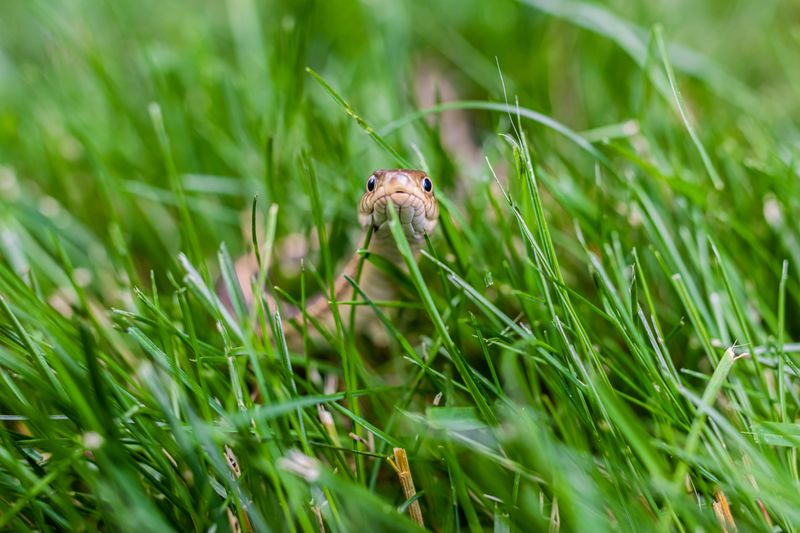
That jolt of surprise is normal, and it passes quickly once you realize the snake is not interested in you. Snakes want to avoid people.
Backing up a few steps usually ends the encounter right there.
Take a breath before you do anything else. Move children and pets away from the area first, then decide on your next step calmly.
Rushed reactions cause more trouble than the snake ever will.
Keep Your Distance
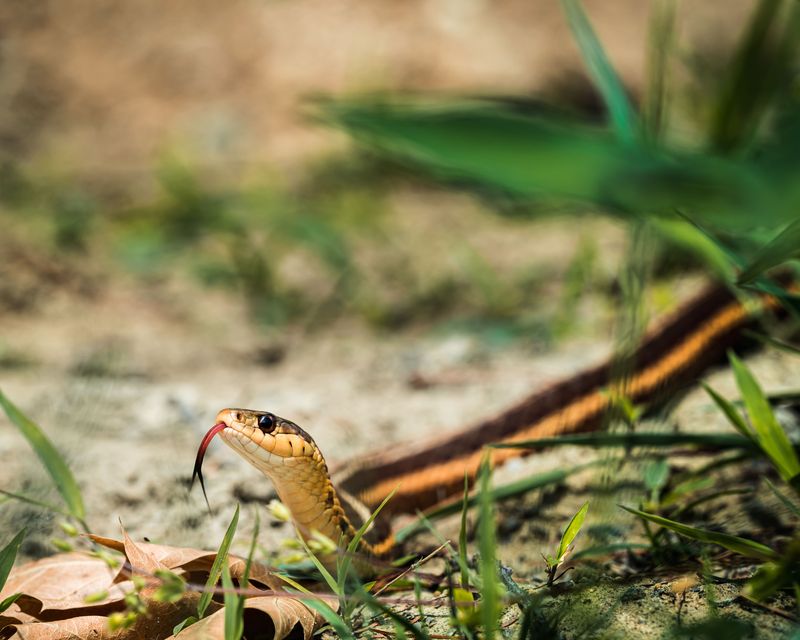
Distance is the single best safety tool you have. Several feet of open ground removes almost all risk for everyone involved.
Resist the urge to poke, nudge, or corner the animal. Snakes react defensively when they feel trapped, not when they feel free to leave.
Give it room and it will almost always take the exit.
Watching from a porch or window works perfectly well.
Watch Where the Snake Goes
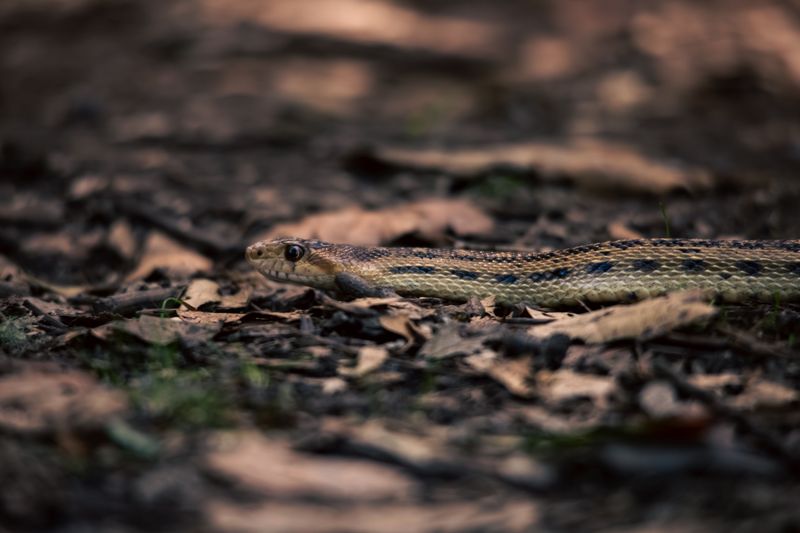
Losing track of a snake is what makes people uneasy later. Keep your eyes on it from a comfortable distance as it travels.
Note whether it slides under the deck, into a shrub bed, or out through the fence line. That detail helps you avoid reaching blindly into the same spot next week.
Mention the location to family members so nobody stumbles onto it unexpectedly.
Bring Pets Indoors

Dogs investigate with their noses, and that curiosity is exactly the problem here. A wagging pup pressing its face toward a snake creates a confrontation nobody wanted.
Call your dog inside calmly rather than shouting or chasing. Excitement makes most dogs run toward the commotion instead of away from it.
Cats deserve the same treatment. Keep everyone inside until you are confident the visitor has moved on.
Keep Children Away From the Area

Kids often assume a snake is a toy or a fun discovery. They rarely tell harmless species from the ones worth respecting.
Give a simple instruction: stay back and come get an adult. Clear words beat lengthy explanations in the moment.
Later on, teach the rule during a quiet moment, not a tense one. Children who practice the routine tend to remember it when it counts.
Avoid Trying to Catch It
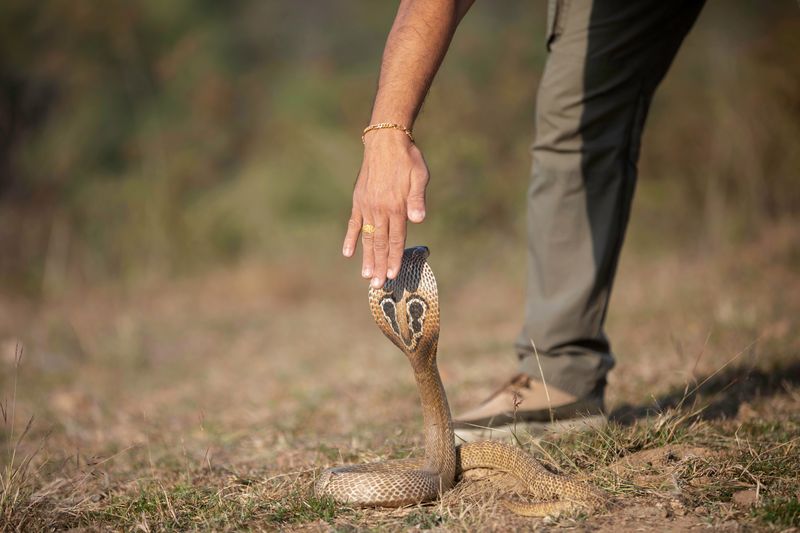
Grabbing tools and a bucket feels productive, but it puts your hands exactly where they should not be. Most negative encounters happen when someone tries to handle or relocate a snake.
Handling also stresses the animal, which makes it far more defensive than it would otherwise be.
Let it leave under its own power. Patience costs nothing and keeps everybody comfortable.
Identify the Snake From a Safe Distance
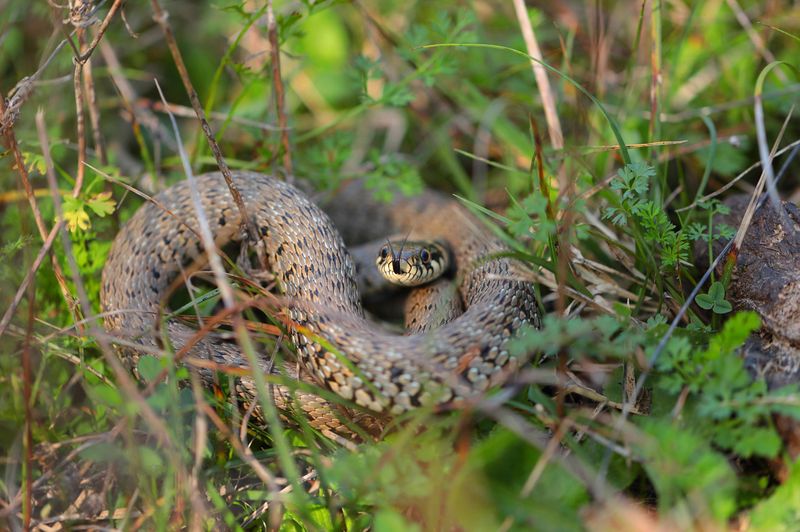
A phone camera with zoom is your best identification tool. Snap a photo from where you already stand, no closer.
Note the color, pattern, rough length, and head shape if you can see it clearly. Those details help experts confirm the species later.
Never step forward for a better angle. A blurry photo taken safely beats a sharp one taken carelessly.
Learn Which Snakes Live in Georgia
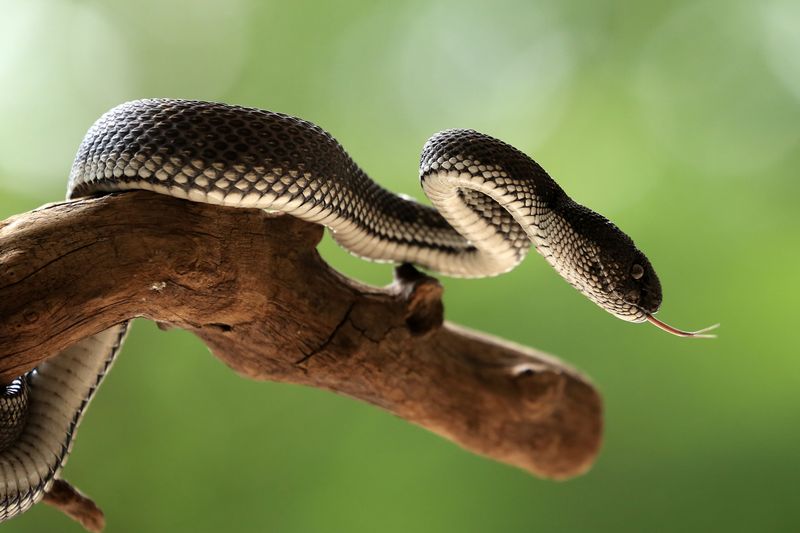
Georgia hosts more than forty snake species, and only a handful are venomous. Rat snakes, king snakes, and garter snakes turn up in yards constantly.
King snakes are especially handy neighbors since they prey on other snakes and rodents.
Spending twenty minutes with a Georgia species guide changes everything. Recognition replaces guesswork, and familiar shapes feel far less unsettling the next time one appears.
Know the Signs of a Venomous Snake
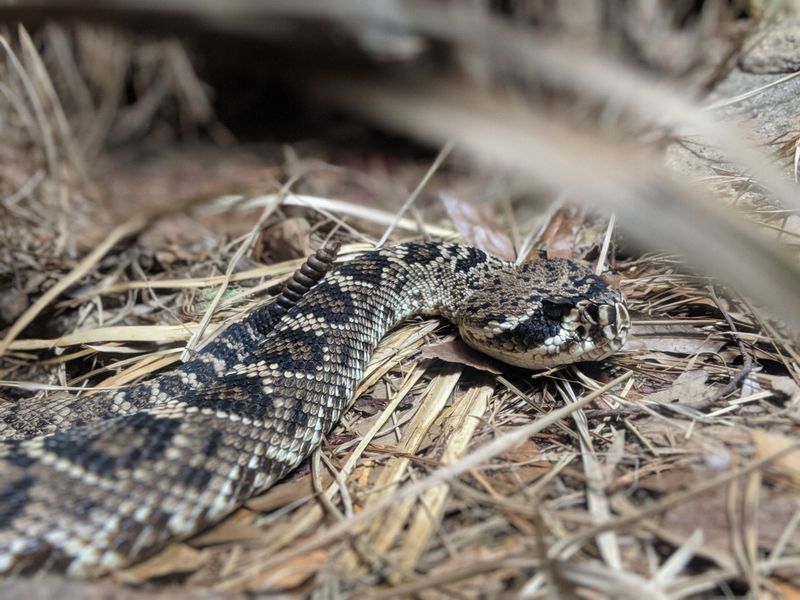
Georgia’s venomous species include copperheads, cottonmouths, rattlesnakes, and the coral snake. Field guides mention traits like broad heads or particular color bands.
Those clues help, but they mislead people often. Several harmless snakes flatten their heads or mimic warning colors quite convincingly.
Here is the rule that never fails: do not step closer to check markings. Treat any unidentified snake as one to leave alone.
Do Not Block Its Escape Route
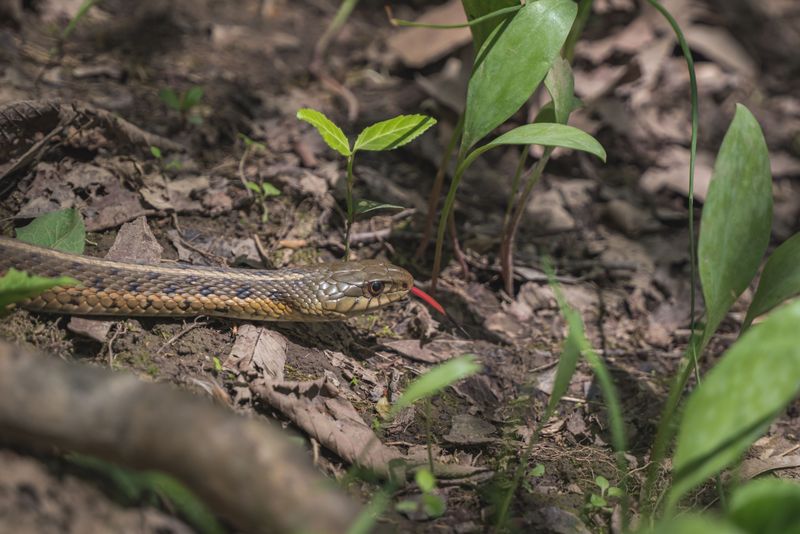
Picture the yard from the snake’s point of view. It is looking for the nearest way out, not a confrontation.
Standing between the animal and the tree line turns a simple exit into a standoff. Same goes for gathering family members in a circle to watch.
Clear the path, step aside, and let the departure happen. Open space solves most of these situations on its own.
Give the Snake Time to Move Along
Snakes settle and relocate when the surrounding area goes quiet. Constant foot traffic keeps them frozen in place.
Head inside for thirty minutes or so. Grab a glass of tea, let the yard rest, then look again from a window.
More often than not, the spot is empty when you return. Doing nothing is frequently the smartest move available.
Remove Places Where Snakes Can Hide
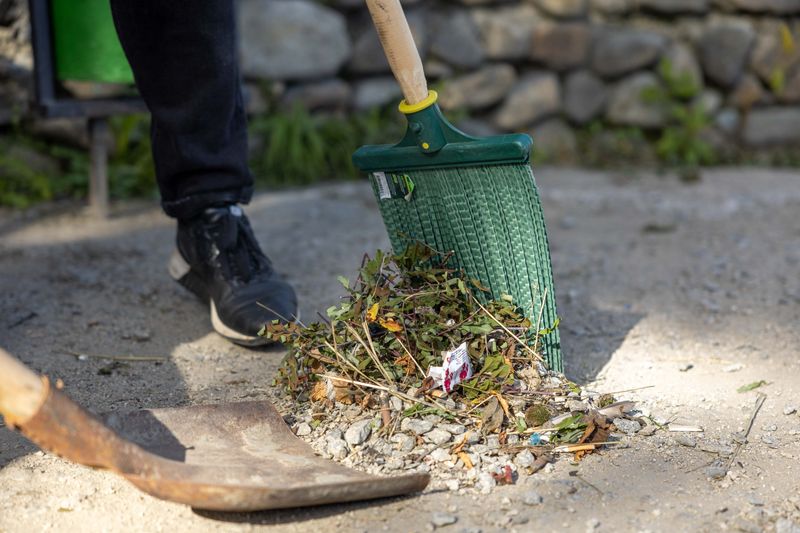
Once the yard is clear, walk it with fresh eyes. Leaf piles, scrap lumber, old flowerpots, and dense ground cover all offer shelter.
Snakes choose spots that stay cool, shaded, and undisturbed. Take those away and your property gets far less interesting to them.
Wear gloves and boots while you tidy up. A rake is better than bare hands for shifting unknown piles.
Keep Grass and Vegetation Trimmed

Tall grass does two favors for snakes: cover for them and cover for the mice they follow. Regular mowing removes both.
Trim shrub bottoms so you can see the ground underneath. Visibility around walkways and play areas matters most.
A tidy lawn will not guarantee a snake-free yard, but it makes spotting one much easier before anyone gets close.
Secure Potential Food Sources
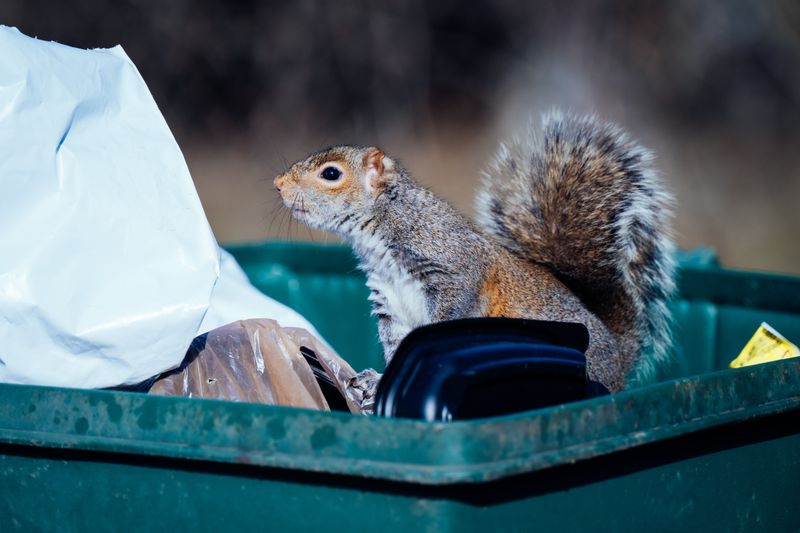
Follow the food and you find the reason snakes visit. Rodents are the main draw on most residential lots.
Lock down garbage bins, sweep up spilled birdseed, and store pet food in sealed containers. Fallen fruit under trees counts too.
Fewer mice means fewer reasons for a snake to stick around. Rodent control is quietly the most effective snake deterrent there is.
Seal Gaps Around the Home
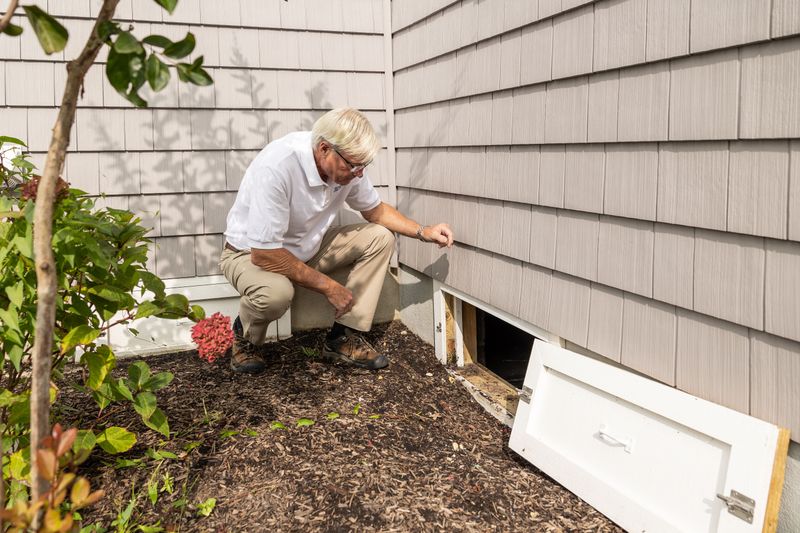
A gap the width of your thumb can be enough for a small snake. Foundations, crawlspace vents, garage door edges, and utility line openings all deserve a look.
Hardware cloth and quality sealant handle most of these jobs in an afternoon.
Check door sweeps while you are at it. Keeping wildlife outside the garage saves you a much stranger surprise later.
Use Caution Around Woodpiles and Storage Areas
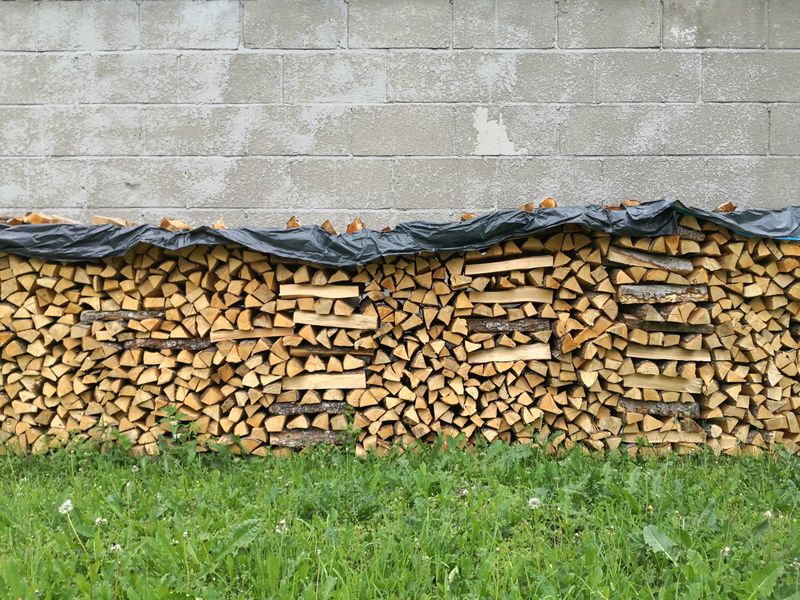
Woodpiles rank near the top of favorite snake real estate. Shade, cover, and a steady rodent supply make them ideal.
When you need firewood, use a rake or gloved hands and move logs one at a time. Skip the blind reach into a dark stack.
Store wood on a raised rack away from the house. Sheds and tarps deserve the same careful approach.