What To Do If An Alligator Is Near Your Dog In South Carolina
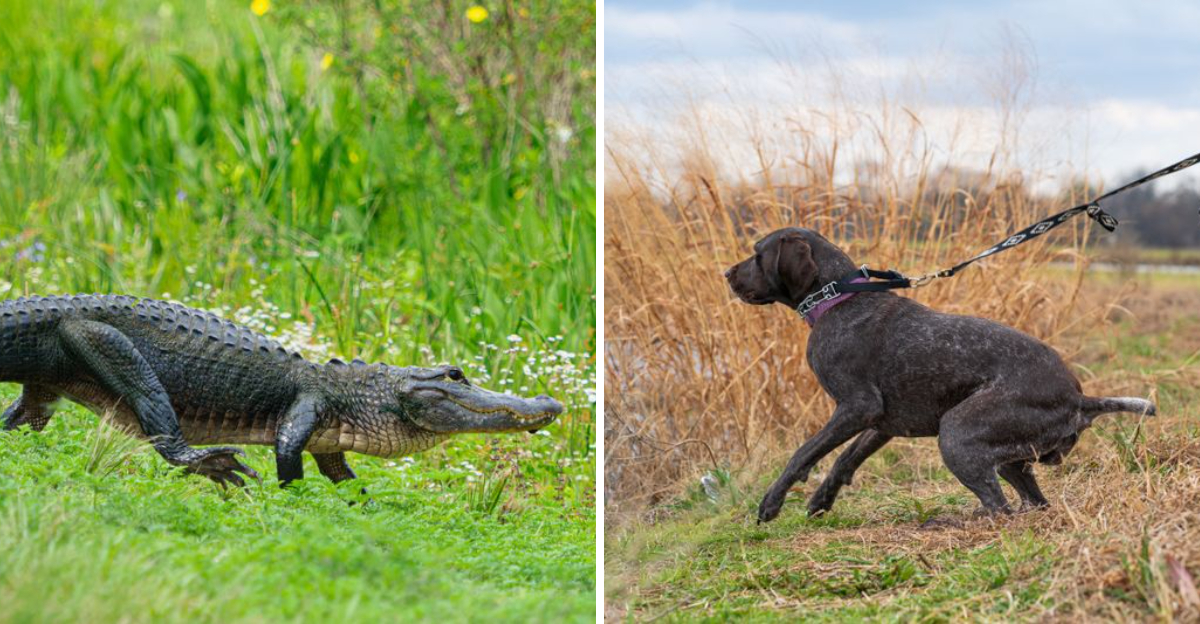
If you walk your dog anywhere along the South Carolina coastal plain, you share the neighborhood with alligators. Ponds, canals, marsh edges, and golf course lagoons are all normal habitat, and most alligators want nothing to do with you.
Still, a calm plan matters more than luck. Here is what local dog owners should know, from the first moment you spot one to the phone numbers worth saving.
Steady, simple steps keep both of you safe.
1. Shorten the leash before anything else
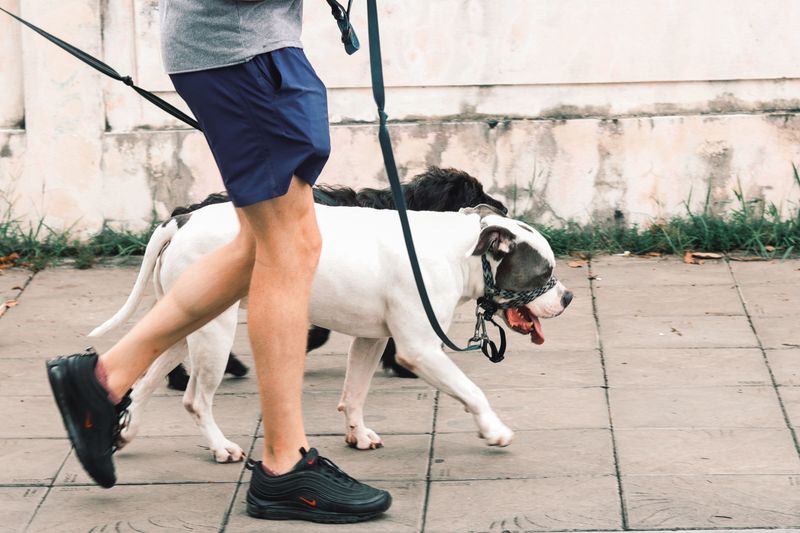
Your leash is the fastest safety tool you own. Gather it up short, four to six feet, and keep your dog beside your leg rather than out ahead.
Retractable leads give far too much slack near water. Locked short, a leash stops sudden dashes toward the bank before they start.
Many coastal communities also require leashes on shared paths. Check your local rules, since leash length and off-leash areas vary by county and city.
2. Point yourselves away from the water’s edge
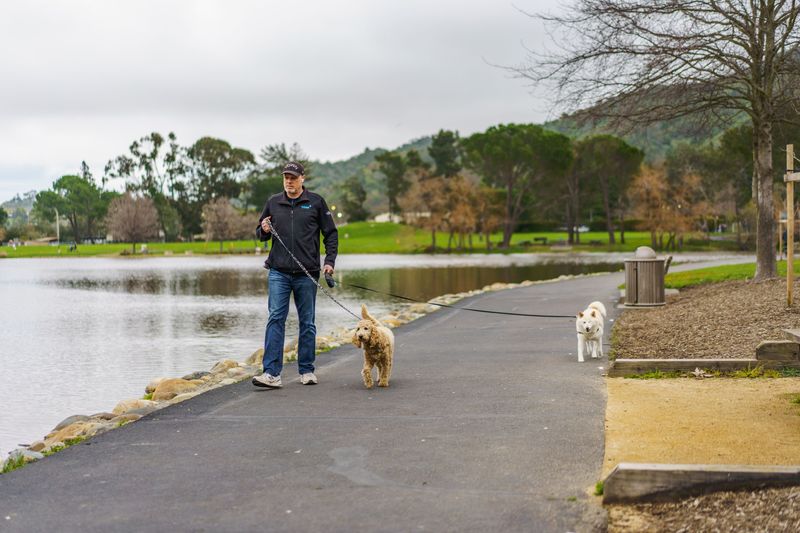
Alligators hunt by ambush, so the shoreline is the riskiest strip of ground. Turning inland removes you from that zone immediately.
Move onto pavement, a sidewalk, or a mowed path. Solid footing helps you stay balanced while you guide your dog.
Wildlife officials suggest keeping well back from any bank in gator country, even when you see nothing. Roughly sixty feet of separation is a comfortable habit worth building.
3. Add distance without cutting toward the animal
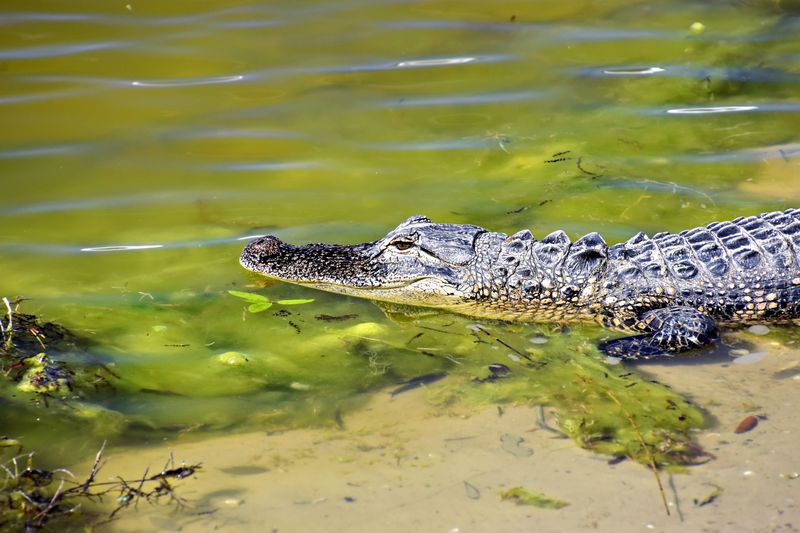
Distance is your best friend, but the path you take matters. Never travel toward the alligator to reach a gate, dock, or shortcut.
Walk a wide arc instead. Aim for open ground behind you and keep your dog on the far side of your body.
Guidance from South Carolina wildlife staff sets fifteen feet as an absolute minimum. Honestly, more is better, so keep walking until the animal looks small.
4. No splashing, swimming, or bank play
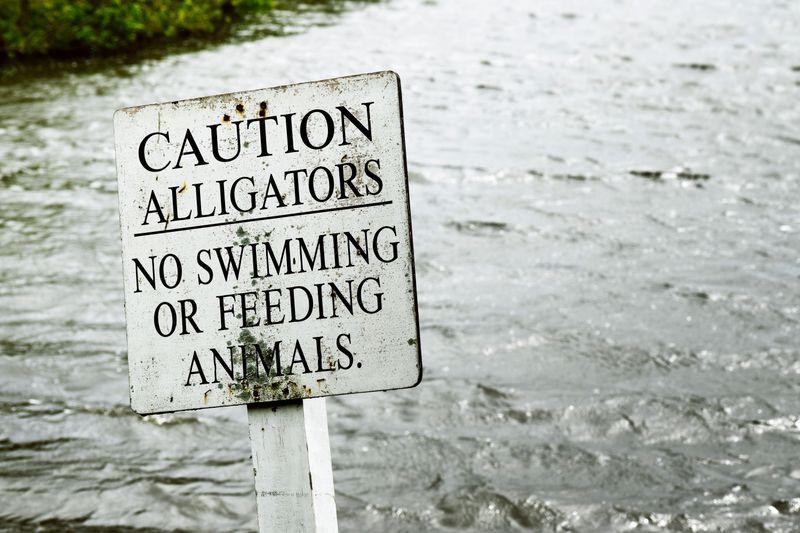
Splashing sounds a lot like a struggling animal, which is exactly what draws attention underwater. Keep those games far from any lagoon.
Tennis balls and sticks bounce toward water more often than we expect. Save fetch for a fenced yard or an inland field.
Retrievers need extra supervision here, since instinct pulls them straight into ponds. A long training line inland satisfies that urge safely.
5. Shut down barking, lunging, and chasing
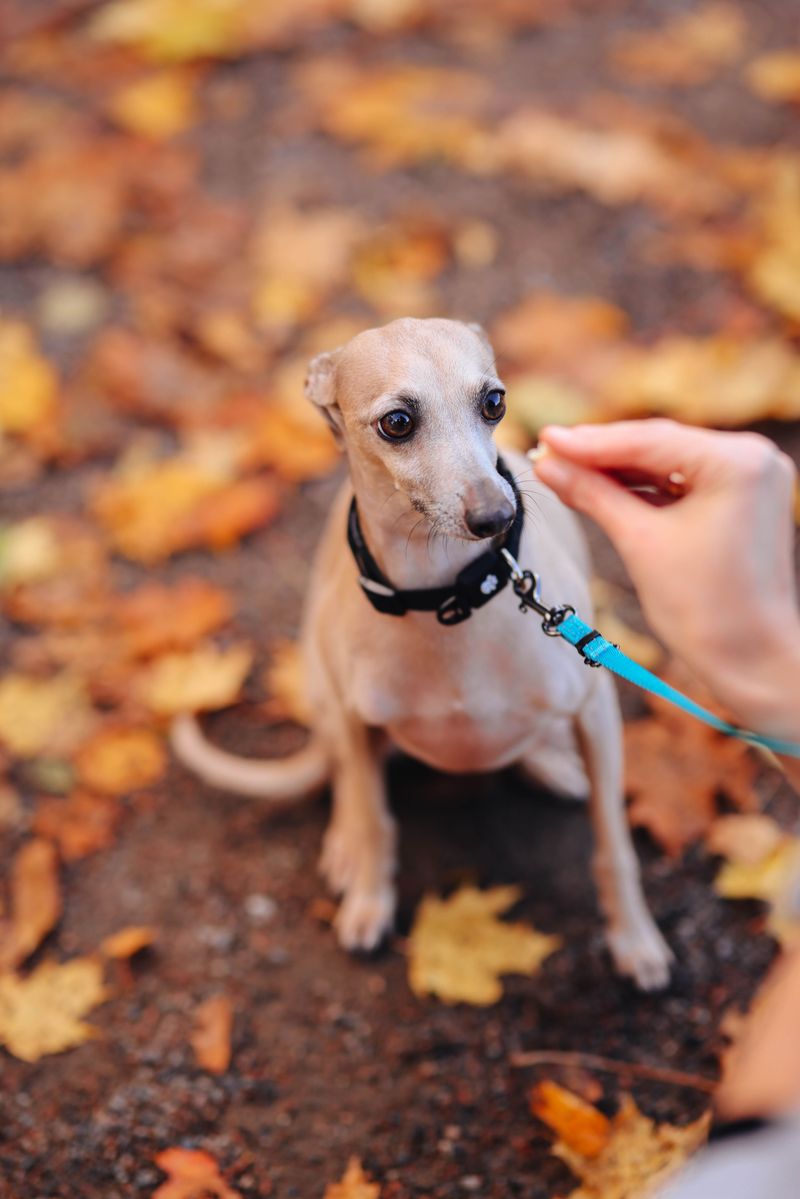
Loud, jumpy behavior turns a quiet moment into a confrontation. Redirect your dog with a treat, a body block, and a steady voice.
Practice a solid “let’s go” cue at home. Trained early, it works when you actually need it.
Worth knowing: harassing an alligator is unlawful in South Carolina, and that includes letting your dog torment one. Walking away protects everybody involved.
6. Skip the photo op entirely
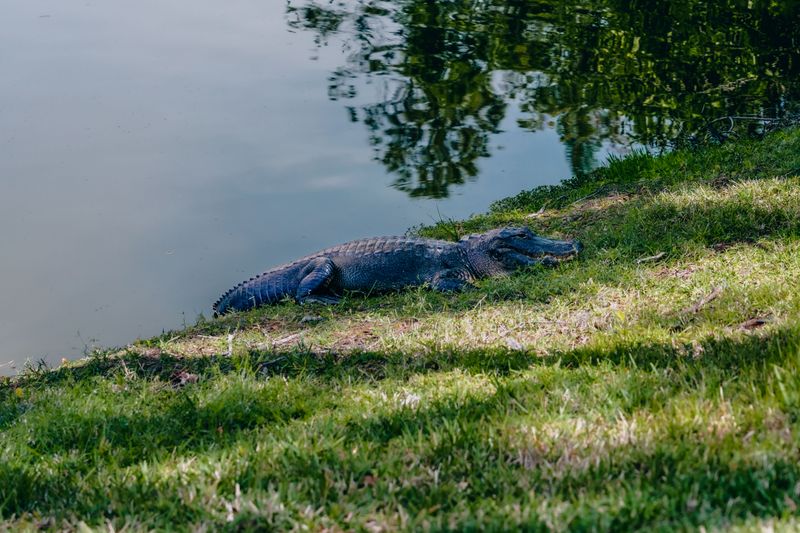
Curiosity is natural, and phone cameras make it tempting. Zoom in from a long way back instead of stepping closer.
Small alligators deserve the same respect as large ones. Size tells you very little about how an animal will react.
A neighbor of mine got a lovely shot from a second-floor porch. That is the right kind of vantage point: high, distant, and completely hands-off.
7. Gather children and other pets to your side
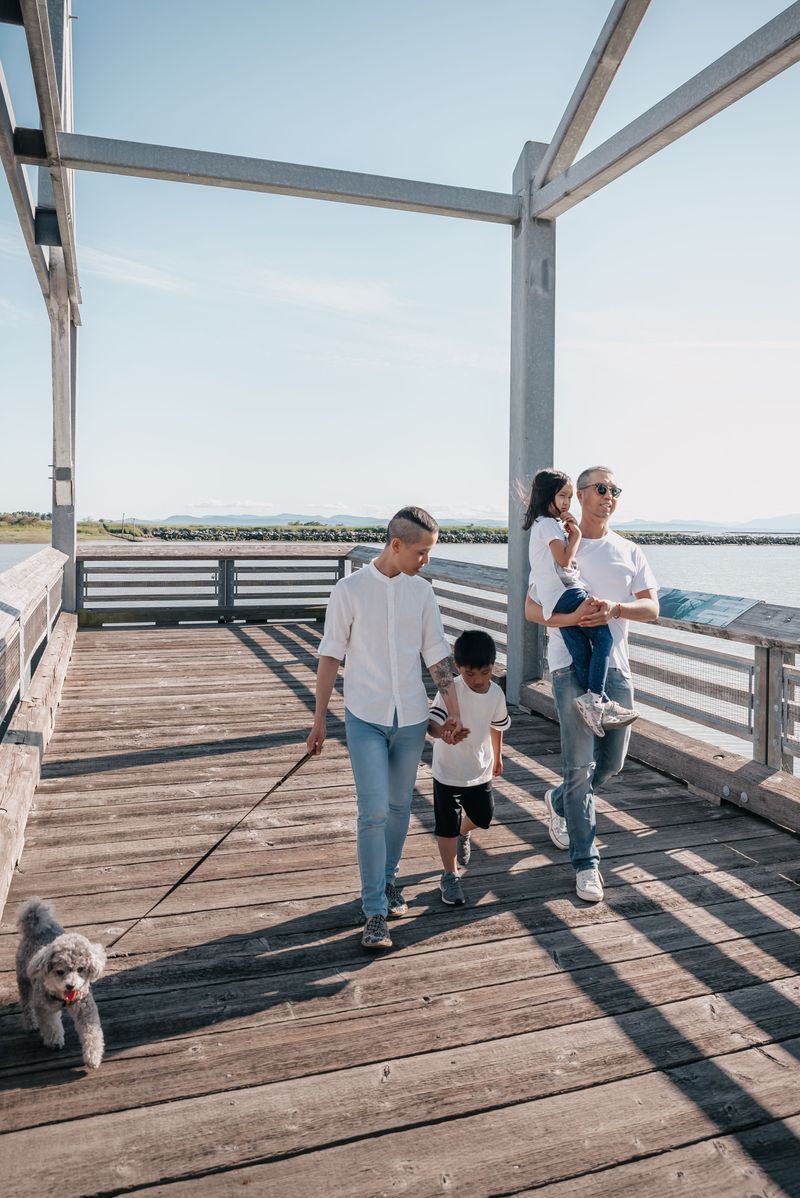
Kids drift toward interesting things, and second dogs follow the first. Bring everyone in close before you start moving.
Give one clear instruction: hold my hand, walk with me. Simple wording beats long explanations in the moment.
Cats and puppies are especially small and quick, so carry them if you can. Grouping up also makes your party look larger and less interesting to wildlife.
8. When one is basking on land, back away slowly
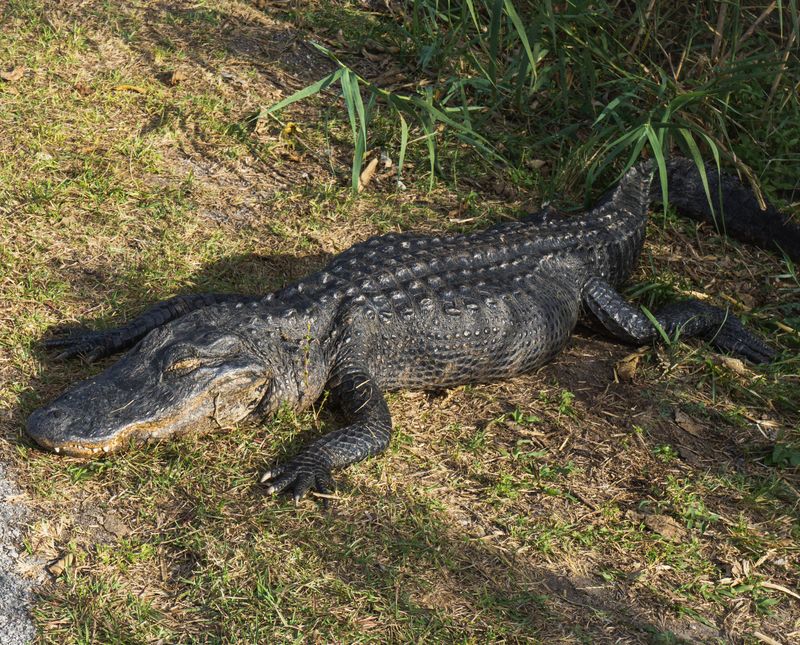
Sunbathing alligators are usually just warming up or traveling between ponds. They are not hunting you.
Step backward at a walking pace while keeping your dog tucked beside you. No running, no sudden pivots.
One important detail: never stand between the animal and the water. Blocking its escape route is what turns a calm encounter into a defensive one.
9. Let it choose its own exit
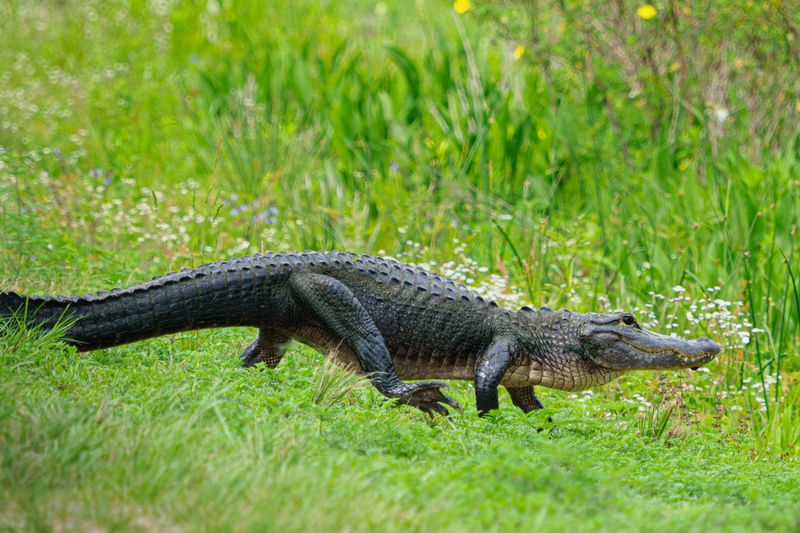
Patience solves most of these situations. Given open space, an alligator will slip back into the water on its own schedule.
Clear the area, then wait it out from somewhere well away. Alert neighbors if the path is popular.
Spring and early summer bring more movement as alligators travel between water bodies. Seeing one crossing a lawn during that stretch is fairly ordinary in the Lowcountry.
10. Hissing means step back farther
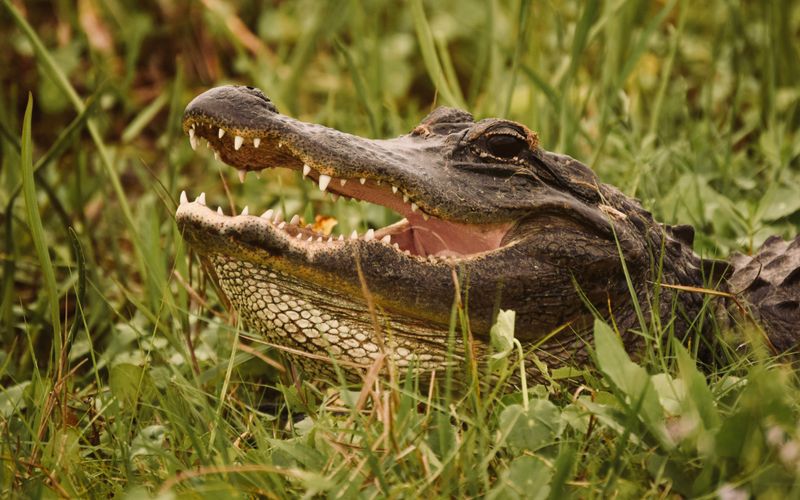
A hiss or an open mouth is plain communication. Translated, it says you are far too close.
Respond by increasing distance right away, not by freezing to watch. Keep your dog moving with you.
Alligators can cover short distances in quick bursts, which surprises people who assume they are slow. Treating that warning seriously ends the encounter before it becomes anything more.
11. Hands off: no scaring, touching, or moving
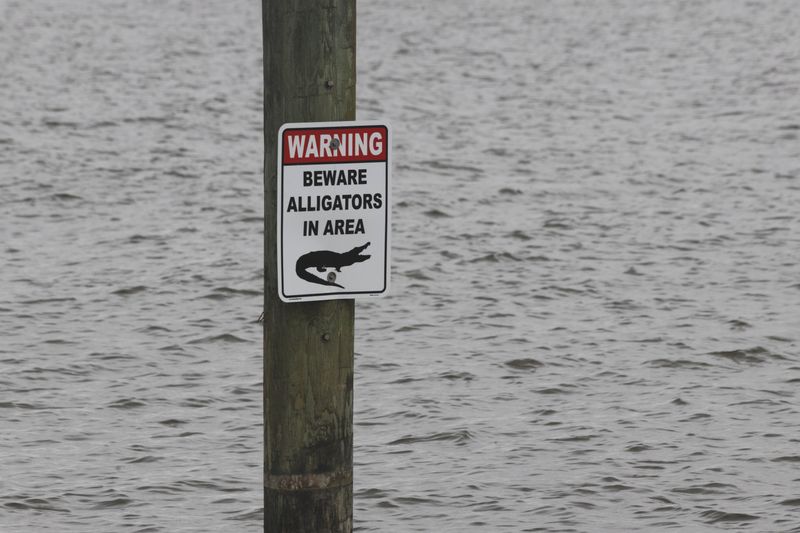
Hosing, poking, or shooing an alligator is both risky and illegal in South Carolina. State law protects them from harassment.
Capturing or relocating one yourself is off limits too. Trained, permitted professionals handle that work.
Well-meaning attempts to help an animal off a road often backfire. If a road crossing looks dangerous, keep back and call it in rather than intervening.
12. Nothing gets thrown, not even sticks
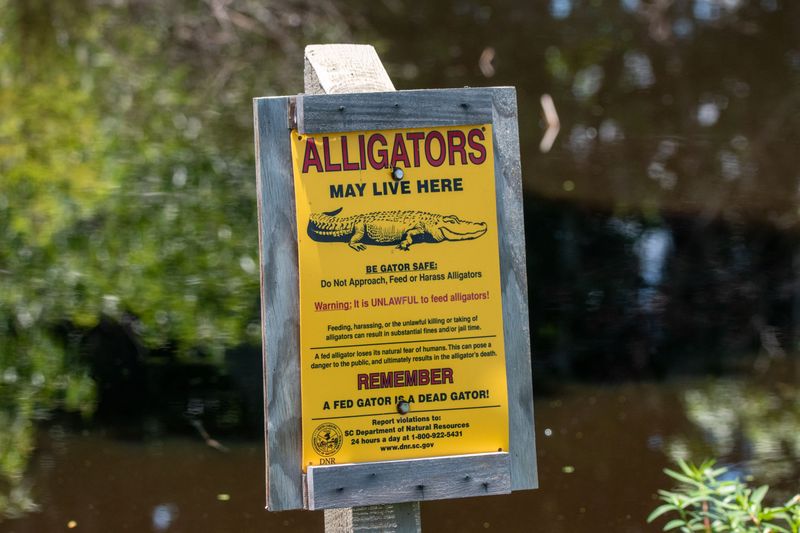
Tossing rocks or branches teaches an alligator that people are worth investigating. That lesson sticks.
Food scraps are worse. Even a dropped hot dog links humans with an easy meal.
Bag your trash, secure fish scraps, and rinse crab bait away from the bank. Around docks and fishing piers, careless leftovers are one of the biggest reasons alligators start hanging around.
13. Feeding is against the law here
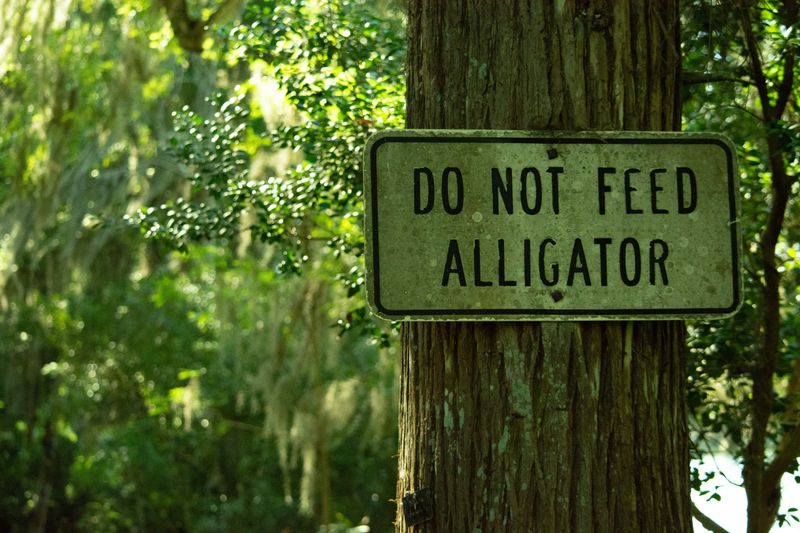
South Carolina law makes it unlawful to feed or entice an American alligator. Violations are treated as a misdemeanor.
Penalties commonly include a fine plus possible jail time, and proposals have pushed those amounts higher. Confirm current figures with SCDNR if you need specifics.
Beyond the ticket, fed alligators lose their natural wariness. That change in behavior rarely ends well for the animal, which is reason enough to keep food away.
14. Give that spot a rest for the day
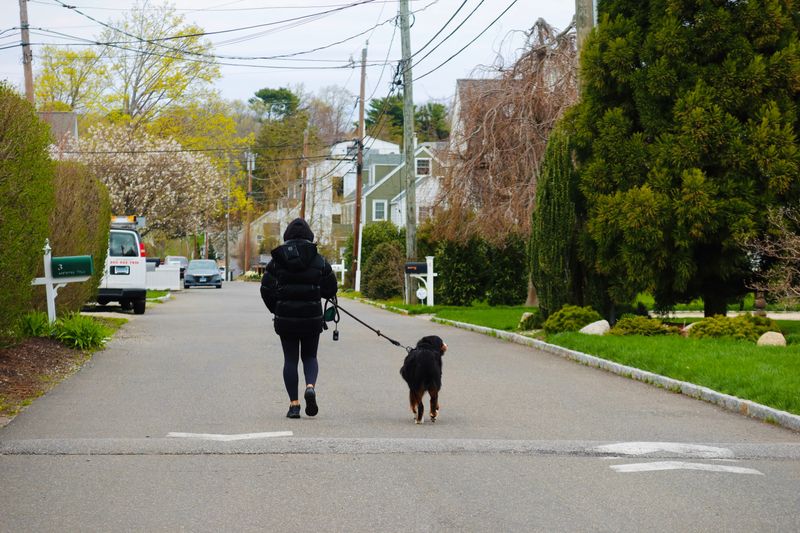
Once you know an alligator is using a pond, canal, or dock, cross it off the day’s route. Same water, same day, same risk.
Pick an inland loop instead. Sidewalks, quiet streets, and fenced parks all work fine.
Sharing the sighting with neighbors helps more than you might think. A quick group text spares somebody else an unexpected surprise on their evening walk.
15. Keep drinking and wading out of the picture
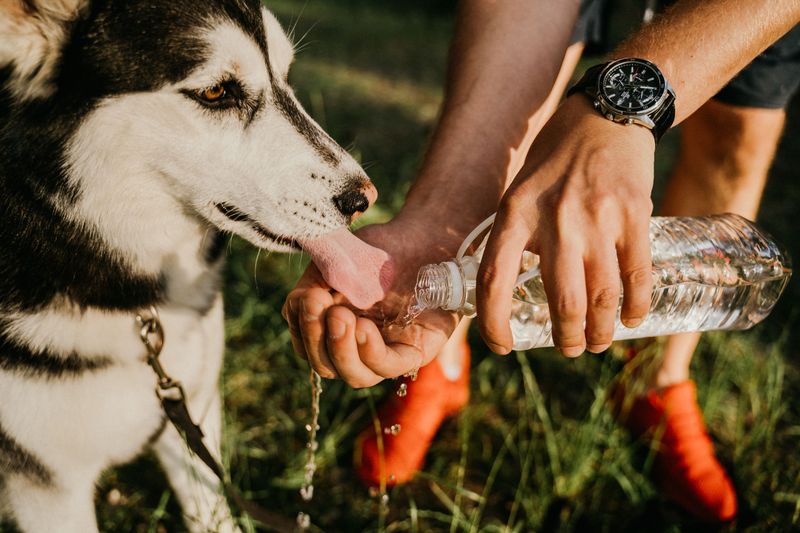
Thirsty dogs head straight for the nearest water, and pond edges are exactly where you do not want them. Carry a collapsible bowl and fresh water.
Wading counts as risk too, even in ankle-deep shallows. Movement at the surface reads as prey from below.
Brackish and stagnant water can also upset a dog’s stomach. Bottled water on walks solves two problems at once.
16. If your leashed dog is grabbed, release the leash
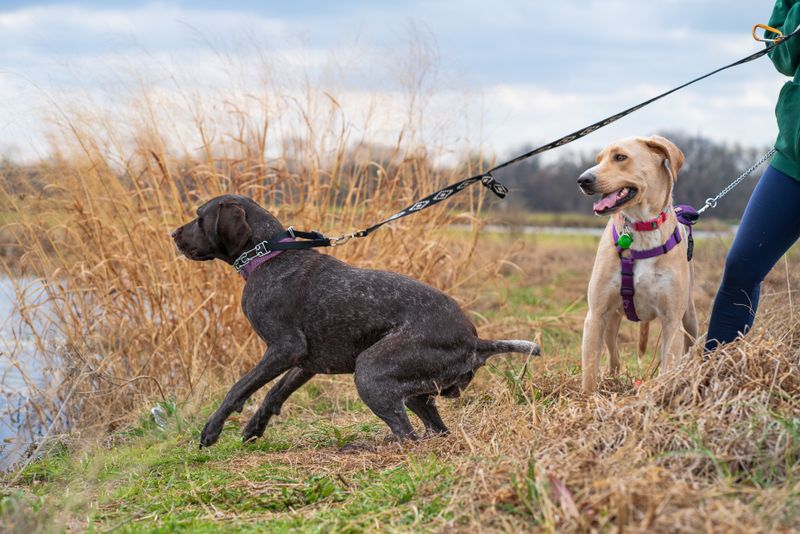
Hard as it sounds, letting go is the correct move. Holding on pulls you into reach, and that helps no one.
Drop the loop, step back, and get others away from the bank. Loud noise from a safe distance is fine.
Afterward, call SCDNR and your local animal control to report what happened. Documentation helps officials assess the animal and warn the neighborhood.
17. Save the SCDNR hotline in your phone

Program 1-800-922-5431 now, before you ever need it. That is SCDNR’s Operation Game Thief line.
Use it when an alligator creates an immediate hazard: stuck near a home, pool, road, school, or parking area with no safe way back to water.
Give the dispatcher a precise location and a size estimate. For anything involving injury, call 911 first, then report to SCDNR.
18. Get injuries checked by a vet right away
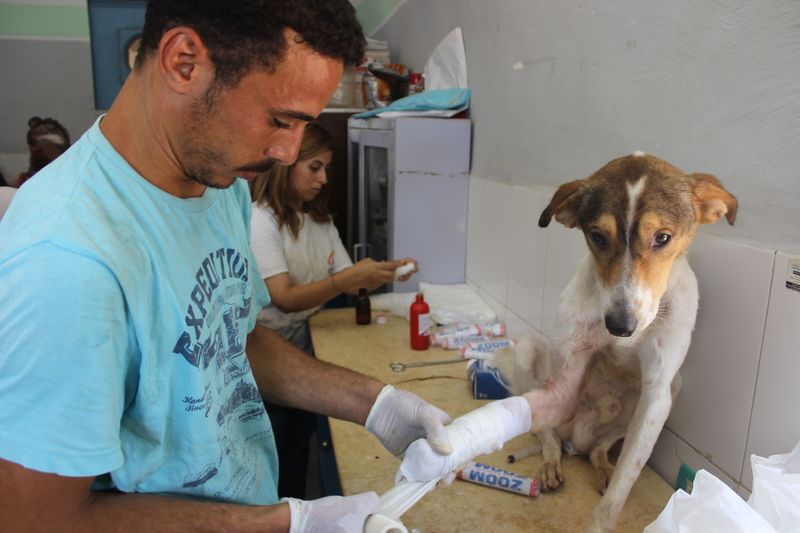
Any wound from an alligator needs urgent professional care, even small punctures. Mouth bacteria cause serious infections quickly.
Wrap your dog in a towel, keep them warm and still, and drive to the nearest emergency clinic. Call ahead so staff can prepare.
Steady, informed owners make the best decisions in these moments. Know your route, know the numbers, and enjoy your Lowcountry walks with confidence.